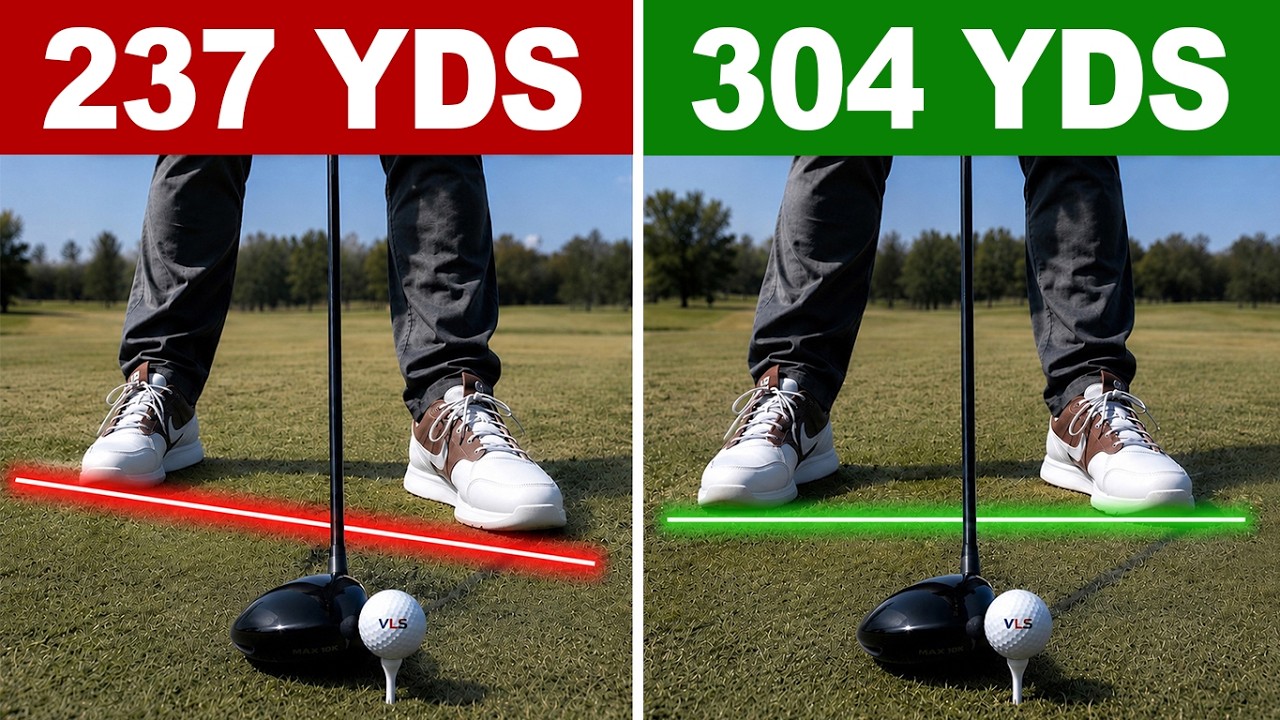
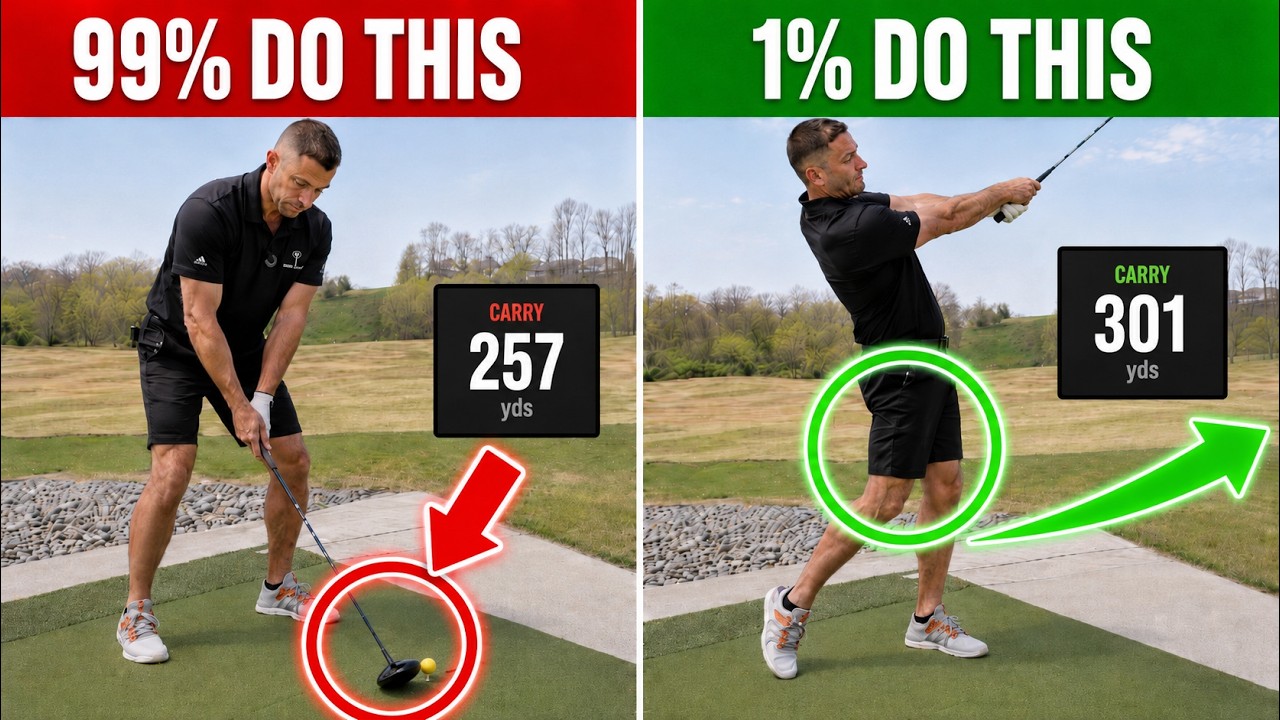
Here is the honest diagnosis for every golfer stuck in the yearly cycle of losing more distance.
The swing that got you here is not the swing that will get you there.
That sounds harsh. The good news is in the second half of the diagnosis. Losing distance is not because of age. Dr. Berman says he has a 97 year old golfer doing this exact same thing right now, at the time of the recording.
So if age is not the cause, what is? The body has stopped leading the swing. The hands have taken over. Fix that, and the downward spiral stops.
At Berman Golf, that fix comes down to three moves, trained in a specific order.
Why Your Distance Disappears
Here is the first thing to understand.
Most senior golfers keep swinging the way they always have and expect different results. But the swing built at 35 does not work with the body at 70. Distance does not disappear because of a birthday. It disappears because the way the body is being used no longer fits the body.
The fix is not swinging harder. It is changing what leads the swing.
Move #1: Initiate With the Belt Buckle, Not the Hands
Here is what most golfers are doing on the way back. The hands start the backswing.
Here is what to do instead. Start the backswing with the belt buckle.

An alignment stick makes this easy to see. It shows exactly when the body is moving the club and when it is not.
Here is why it matters. If the hands start the swing, the brain decides the hands are the primary driver of the movement. If the body starts the swing, the brain decides the body is the primary driver, and the hands are just along for the ride.
The Easy Distance Fix
Here is what a correct start looks like.
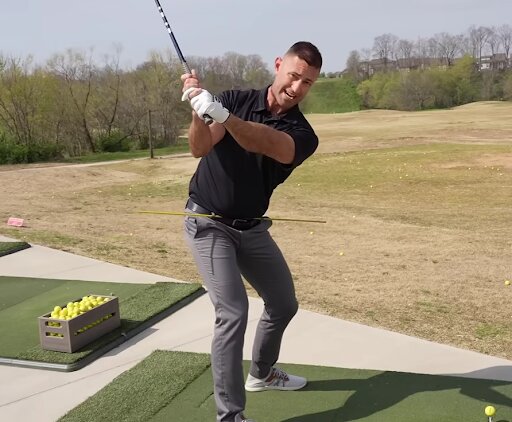
The clubhead is barely off the ground, but the belt buckle, hands, club shaft, and clubhead are all in perfect alignment.
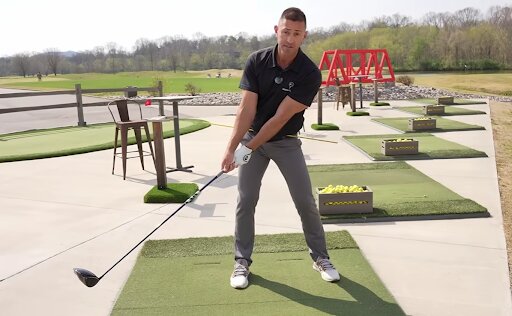
Compare that to what most golfers look like at the same point. The belt buckle has not moved. The wrists have already hinged. The club shaft is already parallel to the ground, and the body has done nothing.
The body might move a little at the top as the right knee straightens, but that is not enough to stop the flip coming back down. So step one is simply to get the belt buckle going.
Move #2: Fix This Knee Mistake
Here is the second move. As the backswing starts, think about increasing the bend in the right knee.
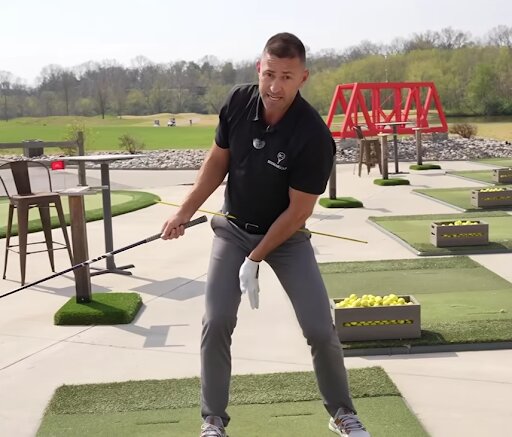
The reason is simple. The moment the right knee straightens, the right glute loses any chance of firing. Dr. Berman, a doctor of physical therapy, says it is biomechanically not possible to fire that glute with a straightened right knee in the backswing.
Do not overdo it. The goal is not to duck down. It is simply to increase the bend a little. Belt buckle starts the motion, and the right knee bends more.
Move #3: Turn More Without Pain
Here is the hardest one. Push the left knuckles away from the target.
This gives the body more rotation. Compare that with what most golfers do, which is take the hands up and wrap the club around the neck. There is no body motion in that move. Zero.

The club will still go up. That is fine. But now the body has turned too. Look at how far the belt buckle has moved.
Put it together. The belt buckle initiates. The club reaches away. The right knee bends more. The left elbow stays straight. The core is firing and the glutes are activated. Then reverse it and go back the other way.
Stop Practicing This Wrong
Here is the part that surprises most golfers.
Saying it is simple. Doing it is not. It is actually very challenging, especially for golfers who try to learn it on the driving range.
Dr. Berman’s pro tip is this. If the problem is losing distance, do not try to get the distance back on the range. Train it inside, in the air conditioning, with no golf ball in sight.
Train them one at a time, in order.
Step one: Focus only on the belt buckle initiating the motion. Belt buckle. Belt buckle. Belt buckle.
Step two: Once that feels comfortable, add a small bend in the right knee. Just a smidge. Belt buckle and knee bend. Belt buckle and knee bend.
Step three: After that feels comfortable, add pushing the knuckles away from the target. Not up and around. Away.
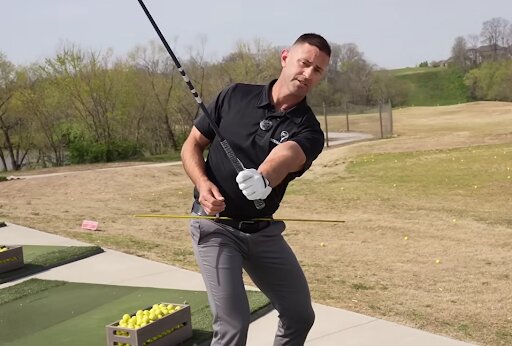
Now the focus is on core activation, glute activation, the stability of the right leg, loading the trail leg, and keeping the spine angle instead of standing up. Once these muscles are trained away from the range, it is time to bring it to the range.
The 5-Rep Distance Fix
Here is how to bring it to the range.
Tee a ball up and set up to it. Then make five practice reps. On each one, focus on three things.
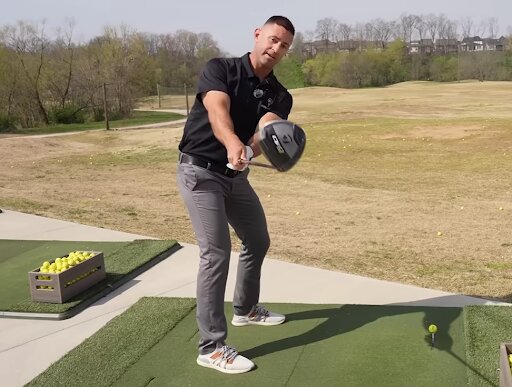
Belt buckle turning. Right knee bending. Arm staying extended.
Let the Body Do This
Then on the sixth swing, let it rip.
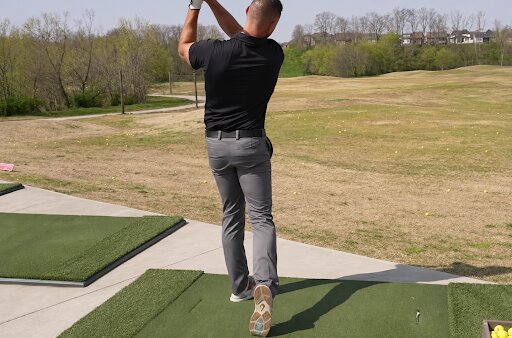
Five reps to remind the body what to do. One swing to let the body do it.
Get a Free Swing Analysis
Want to know whether the hands are starting the backswing and the right knee is straightening right now?
Set the camera or phone up at two angles. One from the front, face on. One from behind, down the line. Film in slow motion. Swing.
Send both videos to gaindistance.com and Dr. Berman will give a free swing analysis. The first one is on him.
See exactly what the camera shows, not what the brain thinks is happening. Whether the belt buckle moves first and whether the right knee straightens in the backswing are two of the clearest things visible in slow motion, and two of the most commonly missed from the inside.
Want a Step-by-Step Blueprint?
If this resonates and the advice out there feels designed for 25-year-old tour pros, there is a simple blueprint built specifically for senior golfers.
It breaks down:
How the aging body changes
Which muscles actually produce power
How to gain distance without swinging harder
How to improve consistency while reducing aches and pains
It is written at a fifth-grade reading level with clear visuals and practical drills that can start immediately.
A FREE digital copy is available at: 👉 gaindistance.com
No gimmicks. Just clarity on how the body should move to play better golf for years to come.
Bringing It All Together
Distance does not disappear because of age. It disappears because the hands took over from the body. Start the backswing with the belt buckle so the brain knows the body is in charge. Increase the bend in the right knee so the glute can fire. Push the left knuckles away from the target so the body actually turns.
Train it in that order, away from the range, with no ball in sight. Then five reps with focus and one swing to let it rip.
At Berman Golf, the focus is biomechanics first. Not cookie cutter swings. The goal is teaching the body how it should move, especially as it ages, so power can be generated safely and repeated under pressure.
The in-house and online coaching programs are built specifically for senior golfers who want more distance and better consistency without beating up their bodies.
For anyone tired of advice designed for tour pros and ready for a blueprint built for their body, help is available.
Because when the belt buckle leads and the body does the turning, losing distance is not something to accept anymore. The distance comes back.
And when the distance comes back, the game gets soooooo much easier!
If you enjoyed what you read and want to see it in action, watch the video below where Dr. Berman demonstrates the three moves and the 5-rep drill!