Fourteen tips. Five bonus practice strategies. One complete blueprint for building consistency from the ground up.
This is not a quick fix list. These tips are progressive, meaning each one builds on the one before it, and they cover the entire golf swing from setup posture all the way through to the finish. Skip one and the ones after it become harder to execute correctly.
At Berman Golf, this is the framework that has put names on the wall. Not after one session. After 24 grueling hour long sessions of training the body the right way. That is what real consistency takes. There is no shortcut. But there is a clear path, and here it is.
The 14 Tips
Tip 1, Posture
Everything starts here. Bad posture at address creates compensations before the swing even begins, and compensations make consistency nearly impossible.
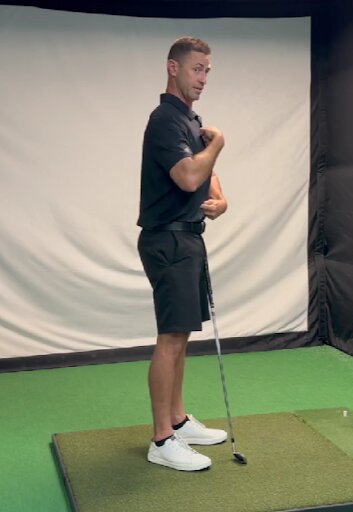
Here is the fix. One finger on the belly button. One finger on the chest. Pull the belly button in and raise the chest up simultaneously. Keep pulling the belly button in and keep raising the chest up while continuing to breathe. That is good posture. Chest tall, belly button in, no arching the low back.
Tip 2, Maintain Posture Getting Down to the Ball
Good posture at standing height means nothing if it gets lost on the way down to the address position.
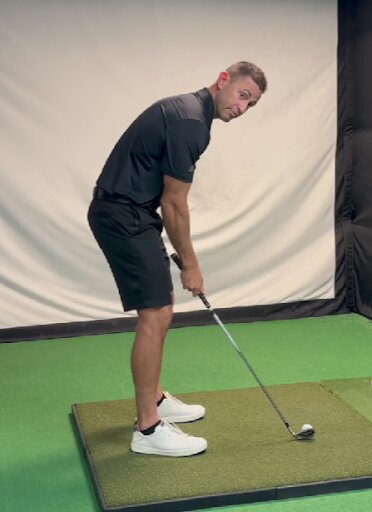
Most golfers round forward and fall down to the ball. The fix is to maintain the chest up and belly button in from tip one, then unlock the knees and reach the butt back toward the wall behind to get down to the ball. The club head falls to the ball as the butt goes back. Posture stays intact.
Tip 3, Engage the Core at Address
Once in address position, pull the belly button in a little more and engage the core before the backswing starts.
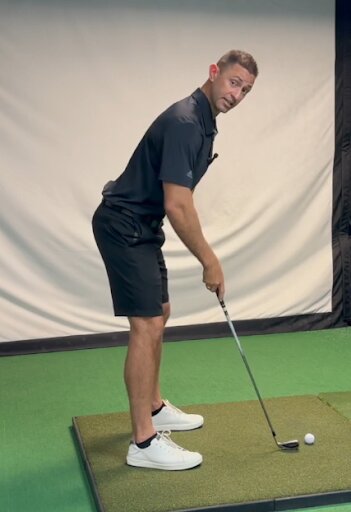
This has to happen before the swing begins. The golf swing happens too fast for the core to be engaged reactively during the motion. Set it first. Keep breathing. Then swing.
Tip 4, Get the Foot Muscles Working
Place a stress ball under the trail foot, between the middle of the foot and the big toe joint. Press down on it at address without letting the trail knee buckle inward.
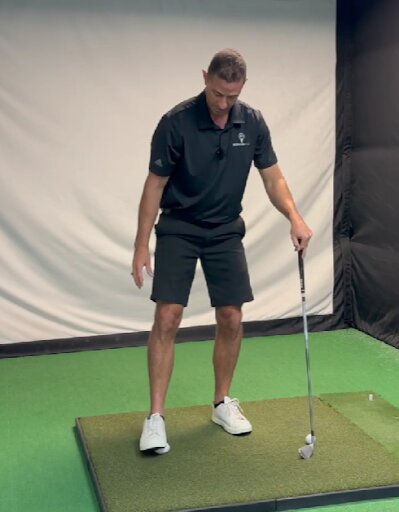
That pressing motion wakes up the 16 intrinsic muscles in the trail foot arch, which are the foundation of the entire ground force chain. If those muscles are not working, nothing above them in the chain fires the way it should.
Tip 5, Engage the Trail Glute
From the stress ball position, think about pushing the entire trail foot through the ground. As if the foot is on sand and trying to push through it.
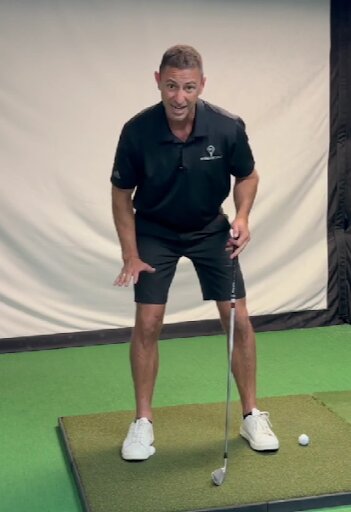
Core engaged. Foot engaged. Now the trail glute engages. All three working together at address before the backswing begins.
Tip 6, Initiate the Backswing With the Belt Buckle
Whatever moves first in the backswing, the brain registers as the primary mover for the entire swing. Hands go first and the brain decides the hands are in charge permanently.
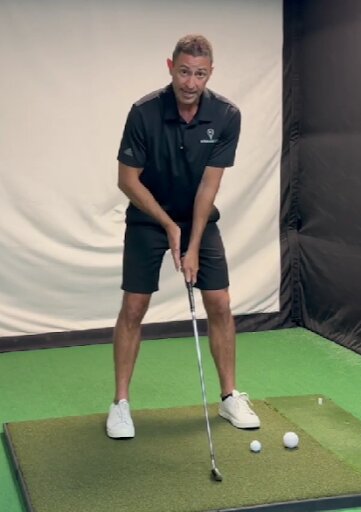
Initiate with the belt buckle. Keep the hands and belt buckle in alignment for as long as possible throughout the backswing. When the hips run out of room, the hands are still directly in front of the belt buckle. Then the shoulders finish the turn on top.
Tip 7, Maintain Width of the Arc
As the backswing builds, keep the hands as far away from the chest as possible. Do not fold the arms across the body and bring the hands in close. That shrinks the arc and reduces club head speed instantly.
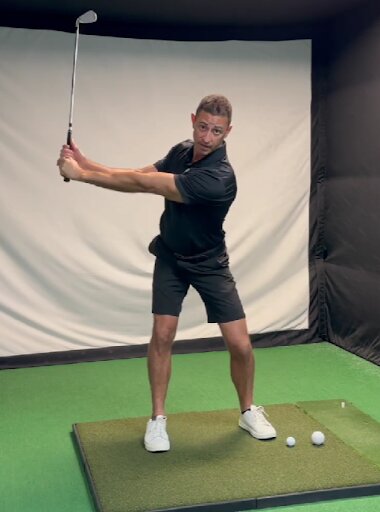
Think about keeping the hands away from the chest throughout the entire backswing. Bigger arc equals faster club head. It is that direct.
Tip 8, Maintain Core and Glute Activation Throughout the Backswing
The core and glutes engaged at address have to stay engaged all the way to the top of the backswing, not just at setup.
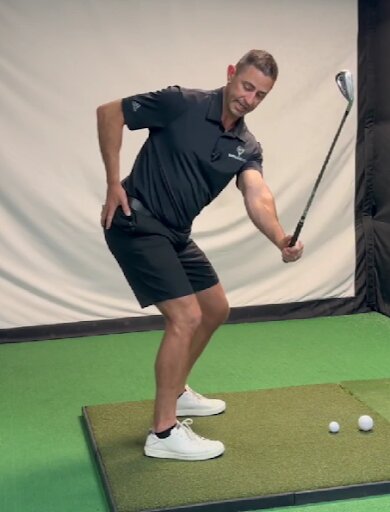
For training purposes, exaggerate a squat into the backswing. The right butt cheek reaches back as the rotation builds. This keeps the trail knee bent, which keeps the foot pressure alive, which keeps the glute firing. Straightening the trail knee at the top shuts the glute off completely.
Tip 9, Keep the Lead Elbow Straight
A bending lead elbow adds an unnecessary moving part to an already complicated motion. Less moving parts means more consistency.

Push the lead knuckles directly away from the target instead of lifting the club. That single cue keeps the lead elbow from bending, because the arm has to extend outward to push the knuckles away. Lifting the club bends the elbow. Pushing the knuckles away keeps it straight.
Tip 10, Keep the Trail Elbow Close to the Body
When the trail elbow flares out during the backswing, the body naturally wants to reverse and curve backward into a reverse C. The elbow coming up creates the conditions for it.
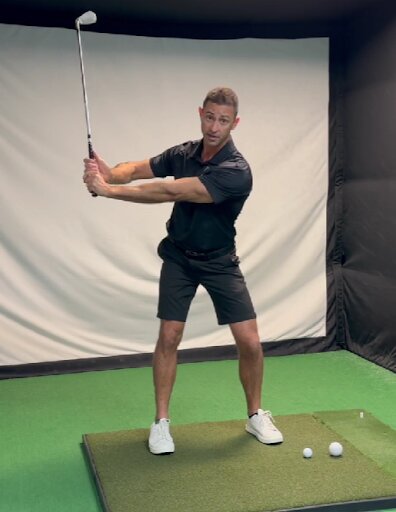
Keep the trail elbow as close to the body as possible without gluing it there. Not a towel drill. Just awareness that the closer it stays, the easier pure rotation becomes and the harder the reverse C becomes.
Tip 11, Keep the Head Still
Twenty five percent of golfers whose swings have been reviewed over the years are moving their heads during the backswing without realizing it. Most have no idea.

Pick a specific marking on the golf ball, the logo, a letter, any small detail, and fixate on it throughout the entire backswing. That single focal point gives the brain something concrete to anchor the head to instead of allowing it to drift or sway.
Tip 12, Initiate the Downswing With the Belt Buckle and Squat
At the top of the backswing, the downswing initiates with the belt buckle just like the backswing did.

Think of it as rotate and lift on the way back, drop and rotate back on the way through. As the belt buckle reverses toward the target, squat the hips back slightly at the same time. That squat creates room for the club to shallow, making the inside out path automatic rather than forced.
Tip 13, Keep the Lead Foot Planted
A dancing lead foot during the swing tells the brain the left side is unstable. The brain responds by refusing to let the weight transfer there. Weight stays stuck on the trail side. Chunking, topping, and no follow through.
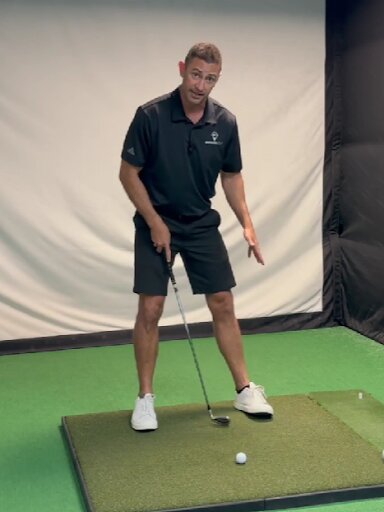
The lead foot does not need heavy weight on it during the backswing. It just needs to stay planted and stable. That stability is the signal the brain needs to allow the weight transfer to the lead side when the downswing begins.
Tip 14, Finish With Belt Buckle to the Target and Weight on the Lead Side
At the finish, the belt buckle points at the target and at least 95% of the weight is on the lead foot. The trail foot should be light enough to dance.
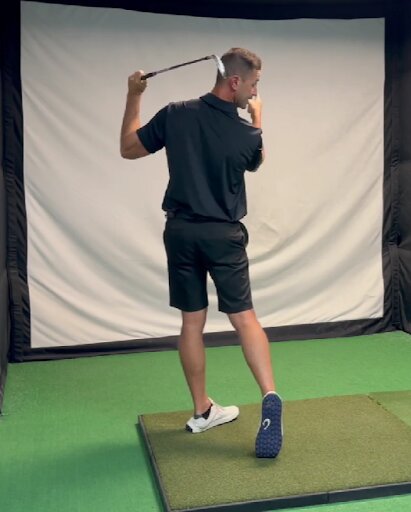
If the trail foot cannot be danced at the finish, the weight never fully transferred to the lead side. That is the confirmation the swing needs to work on tips 12 and 13 before anything else.
The 5 Practice Tips
Practice Tip 1, Fix the Grip
A grip that does not connect the hands as one unit tells the brain there are two separate moving objects. The interlock or overlap grip tells the brain it is one unit, which simplifies everything that comes after it.
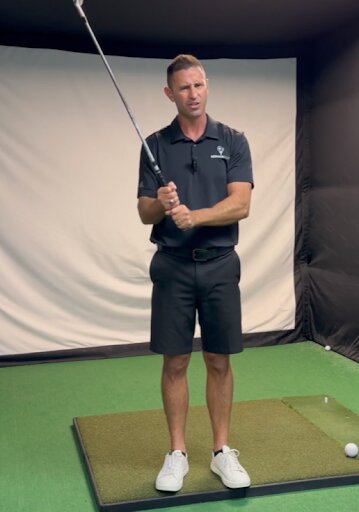
Get someone qualified to look at the grip. Or use a training grip aid. Do not overlook it because it does not feel urgent. The grip is touching the club on every single swing.
Practice Tip 2, Shoes Matter
The shoes worn during practice and play determine how much the foot muscles can contribute to the swing. Tight shoes with orthotics shut those muscles down. Shoes that allow the forefoot and toes to splay let them work.

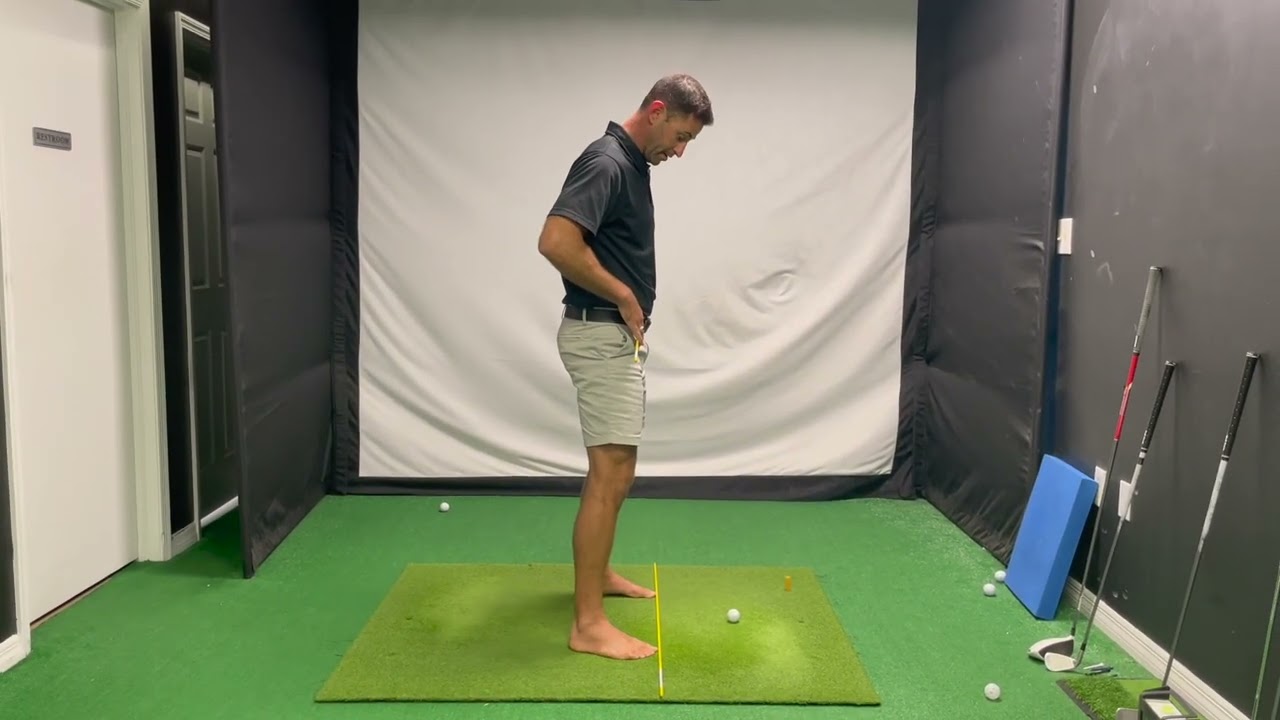
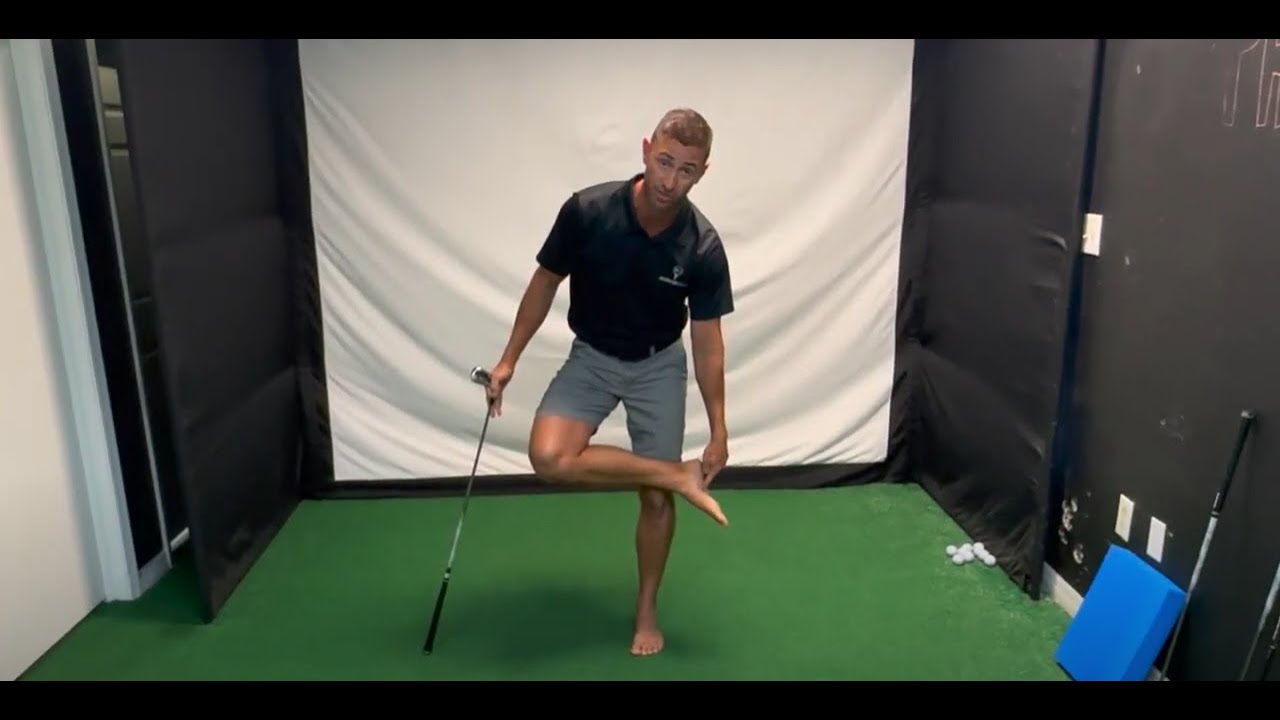
Test the shoes. Practice barefoot as much as possible so the foot muscles are actually being trained and not just passively supported.
Practice Tip 3, Tee Up the Ball With the Trail Leg
This one sounds small. The results are not.
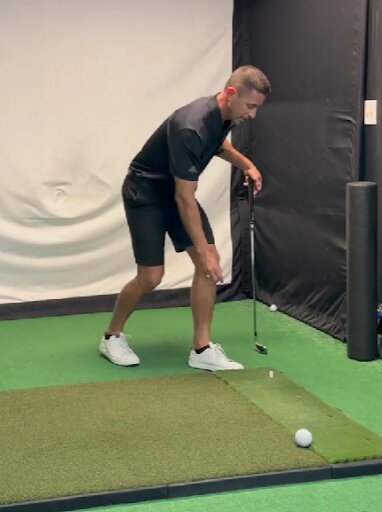
Every time the ball gets teed up using the trail leg to squat down, the brain gets a repetition reinforcing that the trail leg is important and should be used. Eighteen times per round, every round, the brain gets reminded. Switch legs and the pattern strengthens every time.
Practice Tip 4, Tempo With a Name
Use a three part name said at a steady rhythm to set backswing tempo. First name and middle name take the swing to the top. Last name initiates the downswing.

Say it out loud. Hearing the name while swinging trains the brain faster than thinking it silently. Most golfers will discover they are trying to hit the ball halfway through the middle name. That is how fast the backswing has been. Slow it down. Complete the name. Then swing.
Practice Tip 5, The 95 to 5 Rule
This is the most important practice tip of all five.
Ninety five percent of practice time should be spent on biomechanics without hitting a ball. Only five percent should be spent actually hitting balls.
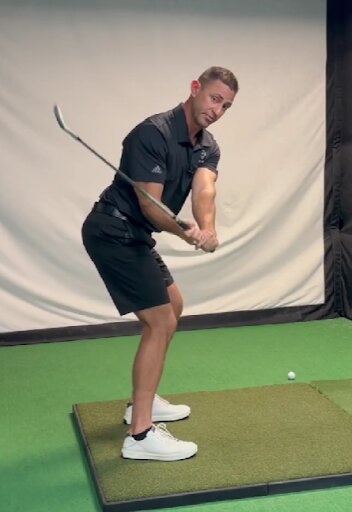
The moment a ball is introduced, the brain shifts from process to result. Everything being built through reps gets overridden by the desire to see the ball go somewhere good. The motor patterns that were developing get abandoned in favor of whatever gets the ball airborne fastest.
Build the pattern first. A hundred reps without the ball. If fatigue sets in before a hundred, that is the signal that the muscles are not strong or conditioned enough yet. Keep going. Build the endurance. When a hundred clean reps are achievable without a ball, the pattern is ready to survive contact with a real golf ball.
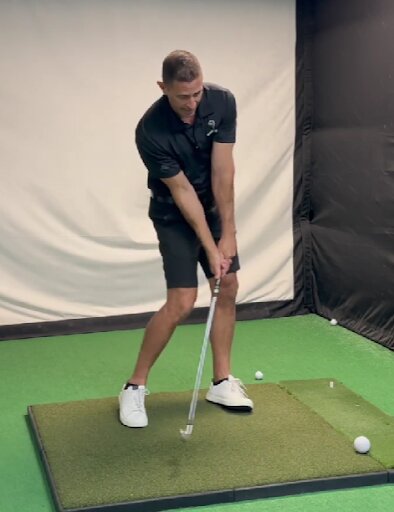
Trust the process. Results will get worse before they get better. That is normal when real mechanics are being built on top of old compensations. Stay in the process. The results follow.
Get a Free Swing Analysis
Want to know which of the fourteen tips is the biggest priority right now and exactly where the swing is breaking down?
Set the camera or phone up at two angles. One from the front, face on. One from behind, down the line. Film in slow motion. Swing.
Send both videos to gaindistance.com and Dr. Berman will give a free swing analysis. The first one is on him.
See exactly what the camera shows, not what the brain thinks is happening. Then the fourteen tips have a starting point and a clear order to work through.
Want a Step-by-Step Blueprint?
If this resonates and the advice out there feels designed for 25-year-old tour pros, there is a simple blueprint built specifically for senior golfers.
It breaks down:
How the aging body changes Which muscles actually produce power How to gain distance without swinging harder How to improve consistency while reducing aches and pains
It is written at a fifth-grade reading level with clear visuals and practical drills that can start immediately.
A FREE digital copy is available at: 👉 gaindistance.com
No gimmicks. Just clarity on how the body should move to play better golf for years to come.
Bringing It All Together
Fourteen progressive tips. Posture. Posture into address. Core engagement. Foot muscles. Trail glute. Belt buckle backswing initiation. Arc width. Core and glute throughout the backswing. Straight lead elbow. Trail elbow close to the body. Head still. Belt buckle and squat downswing initiation. Lead foot planted. Belt buckle to target at the finish.
Five practice strategies to make all fourteen stick. Fix the grip. Choose the right shoes. Tee up with the trail leg. Use a name for tempo. Follow the 95 to 5 rule.
There is no shortcut. There is no quick fix. But there is a clear path, and every rep without a ball is a step further down it.
At Berman Golf, the focus is biomechanics first. Not cookie cutter swings. The goal is teaching the body how it should move, especially as it ages, so power can be generated safely and repeated under pressure.
The in-house and online coaching programs are built specifically for senior golfers who want more distance and better consistency without beating up their bodies.
For anyone tired of advice designed for tour pros and ready for a blueprint built for their body, help is available.
Because when all fourteen tips are working together and the practice follows the 95 to 5 rule, consistency stops being something that happens by accident and starts being something that gets built on purpose.
And when consistency is built on purpose, the game gets soooooo much easier!
If you enjoyed what you read and want to see it in action, watch the full video below where Dr. Berman walks through all fourteen tips and all five practice strategies!