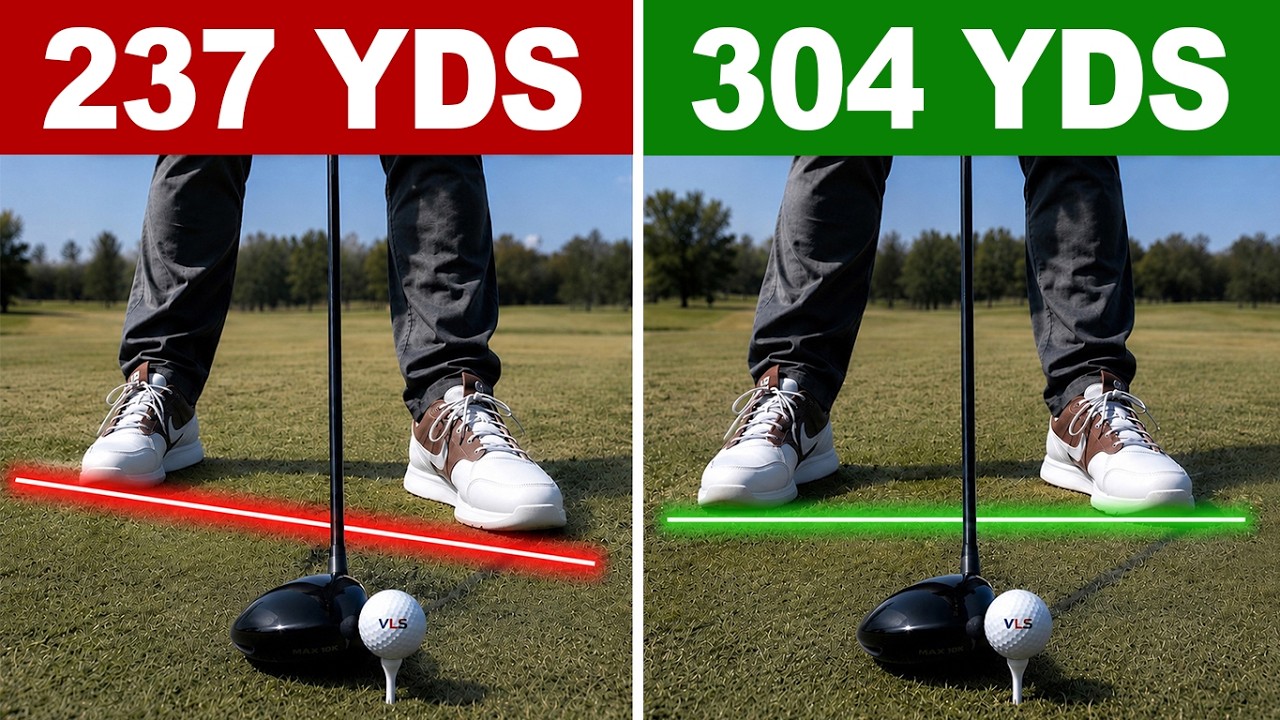
Here is the honest diagnosis for every golfer who strips it on the driving range and chunks it on the course.
The ball is being picked, not hit down on.
That sounds obvious. Most golfers still do not realize it. With an iron, the club should be hitting down on the ball. What is really happening is that the ball is being picked off the turf. And a picked shot has two outcomes: thin or chunk.
Dr. Berman says the reason ball striking is not great is that golfers are not hitting down on the golf ball. At Berman Golf, the fix is a simple drill that gives honest feedback, followed by training the body to produce the right impact position.
Why Ball Striking Breaks Down
Here is what is going on.
Most senior golfers hit up at the ball instead of down. When a golfer picks it, there are two options. Pick it and thin it, or pick it and chunk it. Both wreck ball striking.
The Driving Range Mat Trap
Here is where it gets worse.
Most seniors around the world are stuck hitting off mats at the driving range. Dr. Berman calls mats a double-edged sword. A golfer can hit behind the ball, the clubhead bounces on the mat and into the ball, and it feels like a great shot.
Then the golfer goes out to play, chunks the ball all over the place, and wonders what happened. The range felt like striping it. But it all happened in a fraction of a second and a fraction of an inch, and it was giving false positive feedback.
The Broken Tee Drill
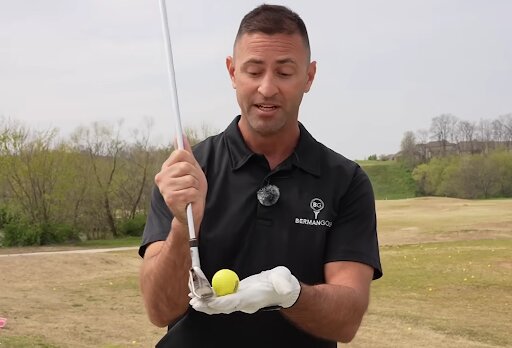
Here is the fix, and it takes one thing most golfers already have lying around: a broken tee head.
Tee the ball up just barely. Minimal height. It should be really level with the grass.
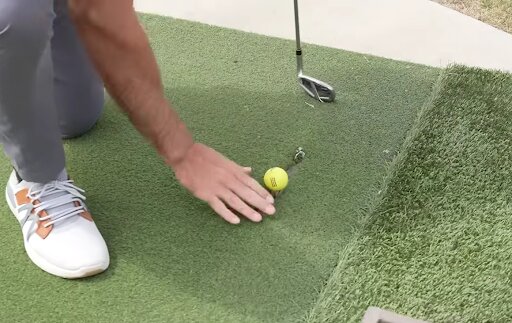
Now take a full swing. After the ball is gone, the tee should still be there. If the tee is still there, the golfer knows for a fact that the ball was hit first and the ground second.
Why This Drill Gives Honest Feedback
Here is why it works.
With the ball teed that low, there are only two outcomes. Either the golfer compresses the ball, which is what a mid iron is supposed to do, or the golfer skulls it by hitting it right in the middle. Both are better than chunking it.
A chunk does nothing. The ball did not go anywhere, and a chunk cannot be played. A skull is not ideal, but it can be played. And that is how the golfer starts to refine contact.
What Success Looks Like
Here is the drill in action.
Tee it up. Think ball first, ground second. Swing.
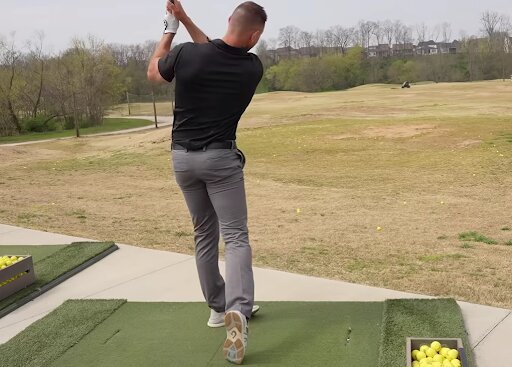
The tee is still there. Great ball contact.
What Most Golfers Will See
Here is the more common result.
Most golfers will hit the ball, and the tee will be gone. Or it will technically still be there, but laid over. Either way, the golfer knows that the ball was not hit first. If it was, there was some aspect of ground in it.
Try It on Grass
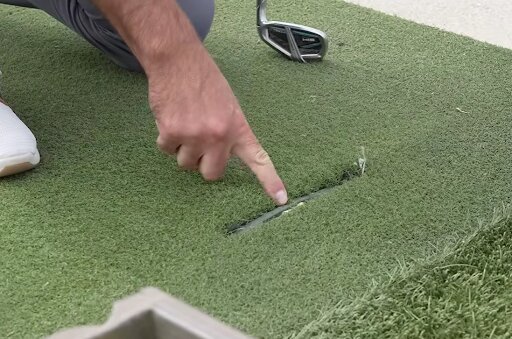
If you are lucky enough to hit off grass, do the exact same drill. It is crystal clear on grass. Tee the ball up, hit it, and within half a second, you know whether you hit the ball first.
If the ball was hit first, there is grass and dirt past the tee, and the tee is still standing there, nice and pretty.
Knowing the Drill Is Not the Same as Doing It
Here is the honest part.
Knowing that the ball should be hit first, ground second, and the tee should still be standing is one thing. Being able to physically execute it is a completely different beast. So the next question is why most golfers cannot.
Why You Cannot Hit Down on the Ball
Here is the reason ball striking is not as good as it should be.
At the impact position, most golfers’ bodies look one specific way, and it makes hitting down physically impossible. In that position, the golfer is actually swinging up.
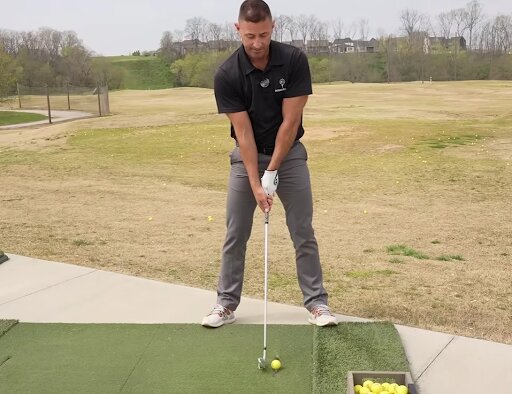
A golfer may finish in a way that looks like hitting down. But in slow motion, the belt buckle, hands, club shaft, and clubhead are all in one straight line.
The Belt Buckle Has to Lead
Here is what has to change.
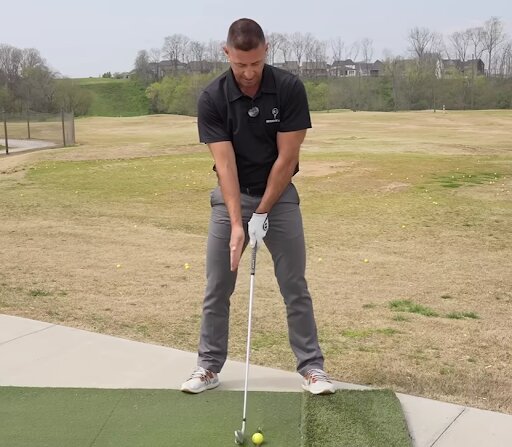
To hit the ball first, the belt buckle has to be ahead of the hands. The hands have to be ahead of the golf ball.
Look at what happens when the belt buckle turns. The hands are able to forward press. With the hands forward pressed, the low point of the swing moves forward. It is no longer at the golf ball.
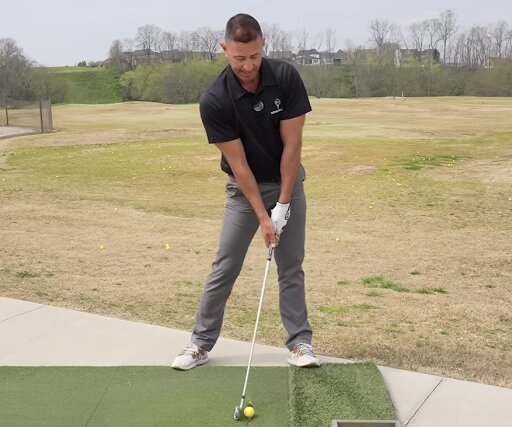
Maybe you are thinking, “I’m 70 or 80 years old. My body doesn’t move that way.” That is not true. The body just has to be trained to do it.
The Belt Buckle and Hands Drill
Here is the drill, and no ball is needed.
Get into the address position. Then move only the belt buckle. Move the hands. That puts the golfer in a forward press position. Come back. Move the belt buckle. Move the hands.
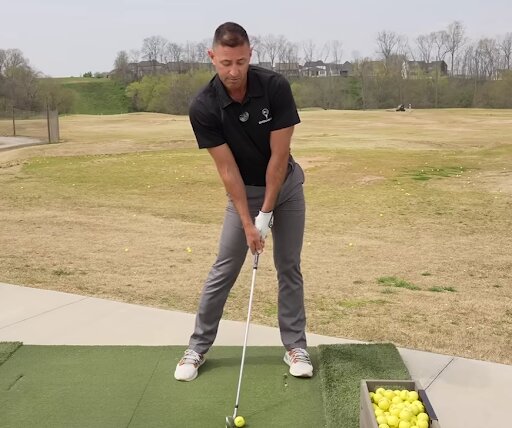
Now do them at the same time. Belt buckle and hands. Belt buckle and hands. Belt buckle and hands.
Straighten the Left Knee to Make It Easier
Here is the tip that makes this drill much easier.
Straighten the left knee. With a straight left knee, belt buckle and hands is much easier. With a bent knee, it is very difficult.
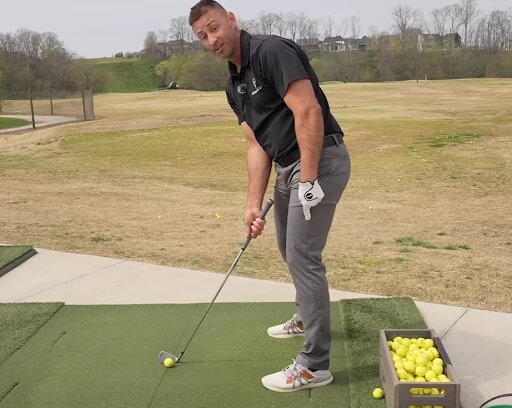
The goal is to train the brain that it is safe for the body to move in that way. Then slow it down. Get to the impact position. Belt buckle, hands, forward press. The golfer is not hitting the ball. It is just training. The brain is learning how to move the body before the golfer ever thinks about hitting a golf ball.
Put It Back Into the Drill
Once all of that feels more comfortable, go back to the broken tee drill and see if the swing can actually execute it.
Get a Free Swing Analysis
Want to know whether the belt buckle is ahead of the hands at impact right now?
Set the camera or phone up at two angles. One from the front, face on. One from behind, down the line. Film in slow motion. Swing.
Send both videos to gaindistance.com and Dr. Berman will give a free swing analysis. The first one is on him.
See exactly what the camera shows, not what the brain thinks is happening. The relationship between the belt buckle, the hands, and the clubhead at impact is one of the clearest things visible in slow motion, and one of the most commonly missed from the inside.
Want a Step-by-Step Blueprint?
If this resonates and the advice out there feels designed for 25-year-old tour pros, there is a simple blueprint built specifically for senior golfers.
It breaks down:
How the aging body changes
Which muscles actually produce power
How to gain distance without swinging harder
How to improve consistency while reducing aches and pains
It is written at a fifth-grade reading level with clear visuals and practical drills that can start immediately.
A FREE digital copy is available at: 👉 gaindistance.com
No gimmicks. Just clarity on how the body should move to play better golf for years to come.
Bringing It All Together
Irons are inconsistent because the ball is being picked instead of hit down on. Mats hide the problem by letting the clubhead bounce into the ball. The broken tee drill reveals it honestly: tee the ball barely up, and if the tee is still standing after the ball is gone, the ball was hit first.
The reason most golfers cannot do it is the impact position. The belt buckle, hands, shaft, and clubhead are in one straight line, which makes hitting down impossible. The fix is to get the belt buckle ahead of the hands and the hands ahead of the ball. Train it away from the ball. Belt buckle and hands. Straighten the left knee. Then go back to the tee.
At Berman Golf, the focus is biomechanics first. Not cookie cutter swings. The goal is teaching the body how it should move, especially as it ages, so power can be generated safely and repeated under pressure.
The in-house and online coaching programs are built specifically for senior golfers who want more distance and better consistency without beating up their bodies.
For anyone tired of advice designed for tour pros and ready for a blueprint built for their body, help is available.
Because when the belt buckle leads and the hands are ahead of the ball, hoping for good contact is not something to do anymore. The ball first, ground second contact just happens.
And when solid contact becomes the default, the game gets soooooo much easier!
If you enjoyed what you read and want to see it in action, watch the video below where Dr. Berman demonstrates the broken tee drill and the belt buckle and hands drill!