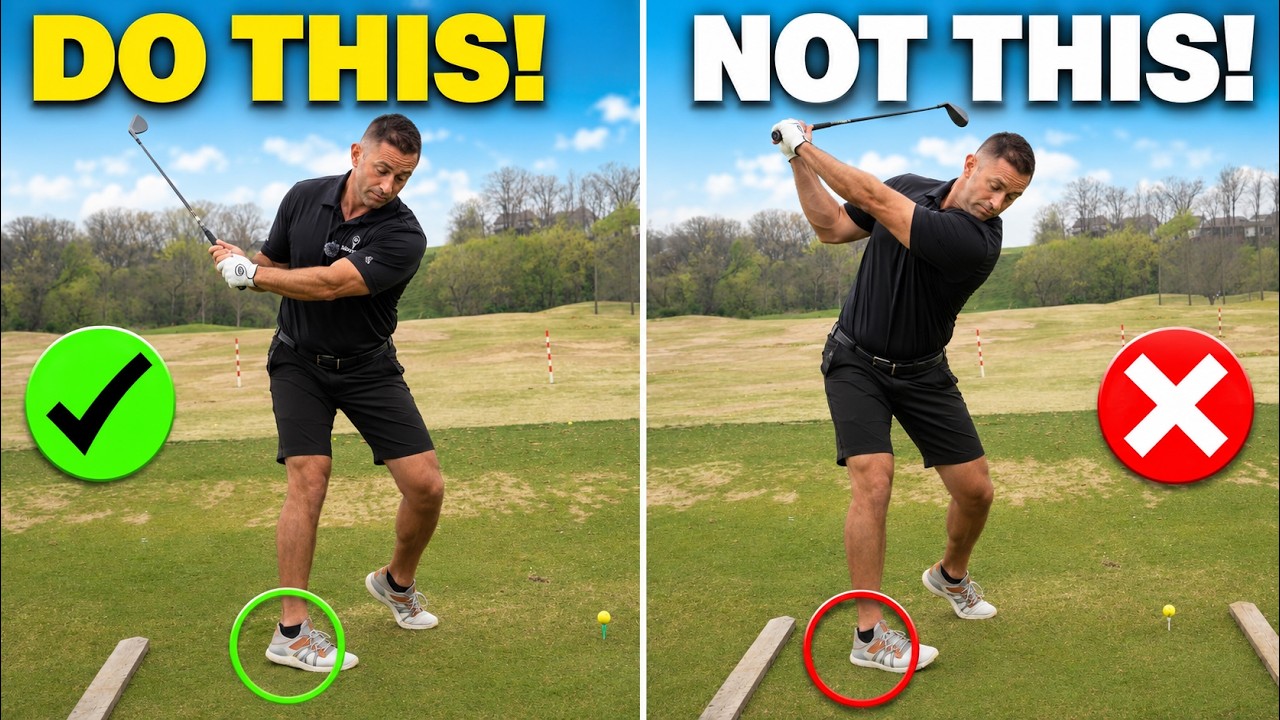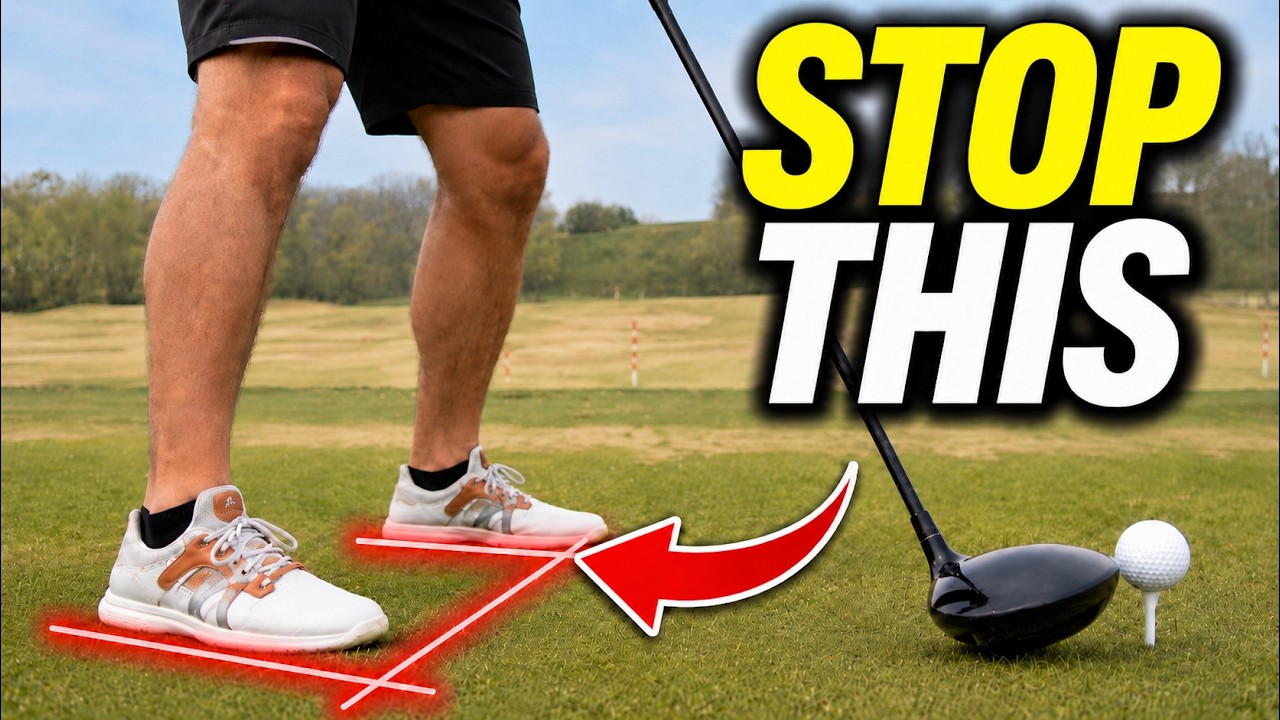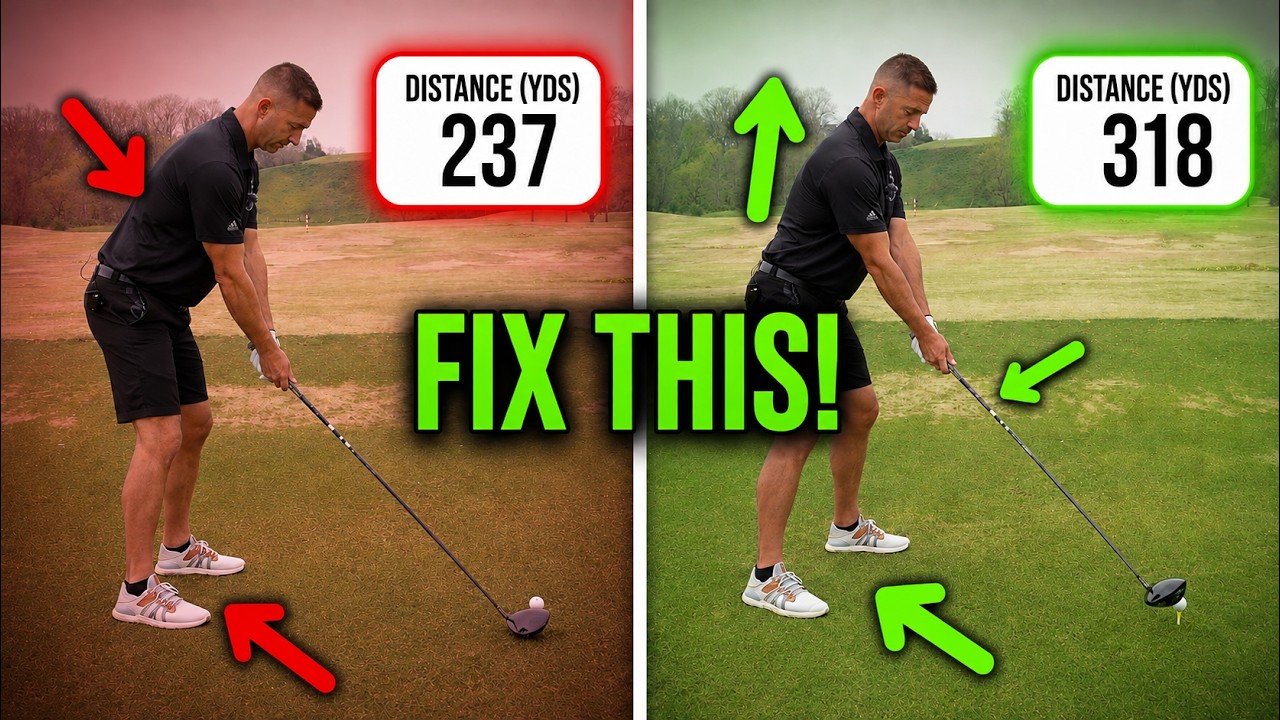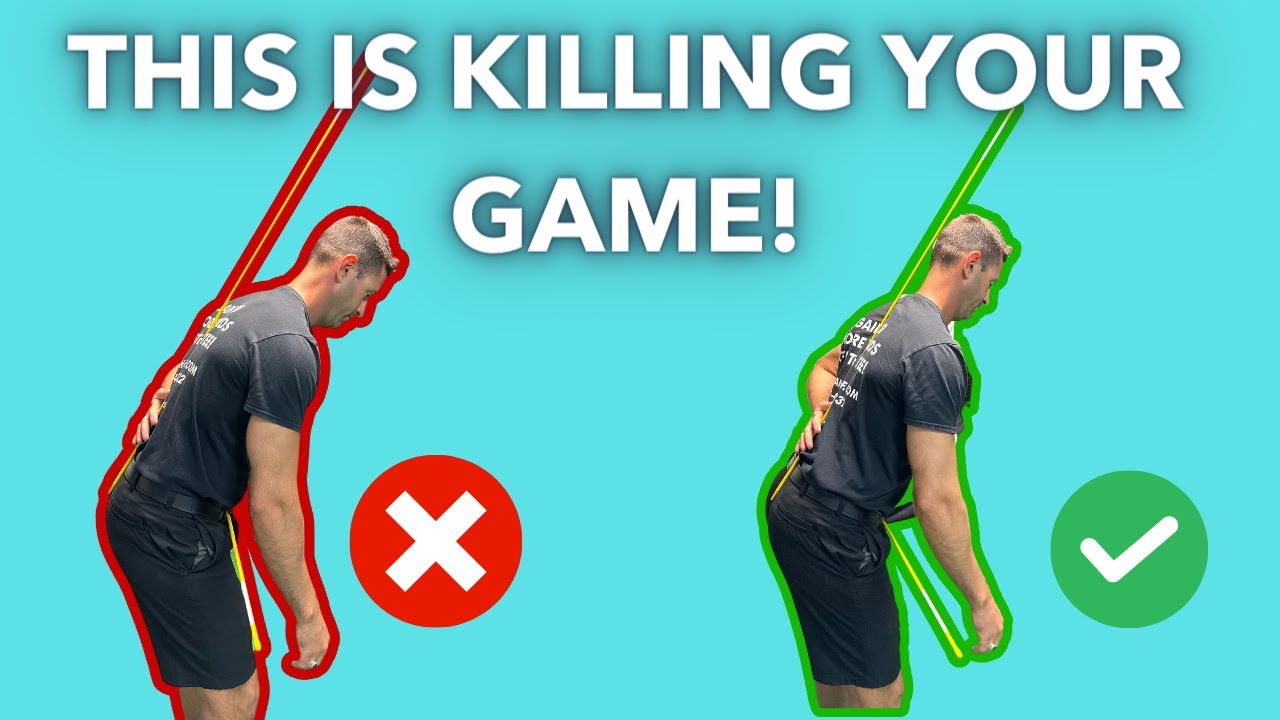
Here is something worth testing right now before reading another word.
Stand up. Round the upper back forward just a small amount, barely noticeable, not an exaggerated hunch. Now try to rotate the shoulders as far as possible.
Feel how restricted that rotation is.
Now stand tall. Chest up. Belly button in. Try to rotate again.
That difference, the shoulder turn available in good posture versus slightly bad posture, is the difference between a powerful golf swing and one that forces compensations, over the top moves, and back pain just to get the club back to the ball.
At Berman Golf, this is one of the most immediate and dramatic demonstrations available. A tiny change in posture does not slightly reduce shoulder turn. It cuts it in half. Sometimes more.
What a Small Posture Change Actually Does to Shoulder Turn
Here is the demonstration that makes this impossible to argue with.
Standing with an alignment stick behind the hips to prevent any pelvic movement, cross a club across the chest and try to turn the shoulders as far as possible with slightly rounded posture. Not dramatically bad posture. Just a small forward rounding.
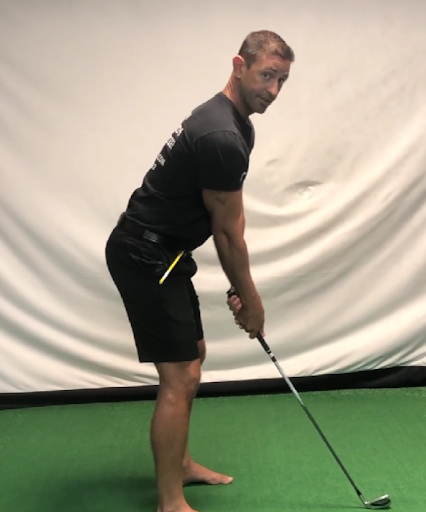
The shoulder turn available from that position is approximately 20 degrees. Maybe less. Barely any rotation at all.
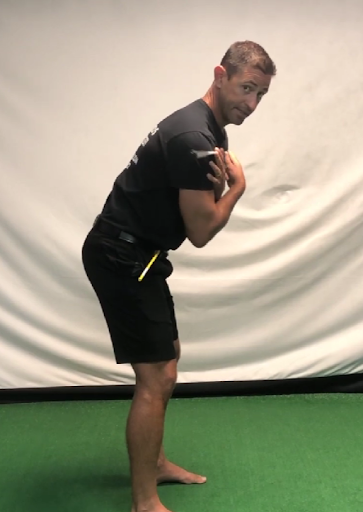
Now fix only the posture. Nothing else changes. Hips stay in the same place. The only variable is posture.
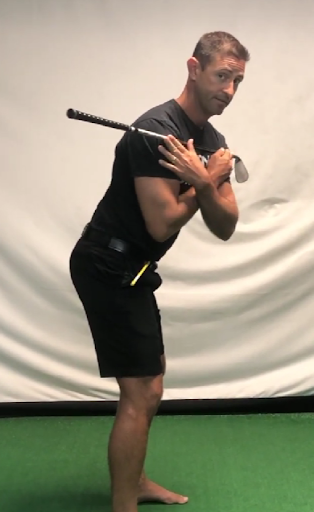
The shoulder turn doubles. Sometimes triples. From the same starting position, with the same hips, with no other change in the swing.
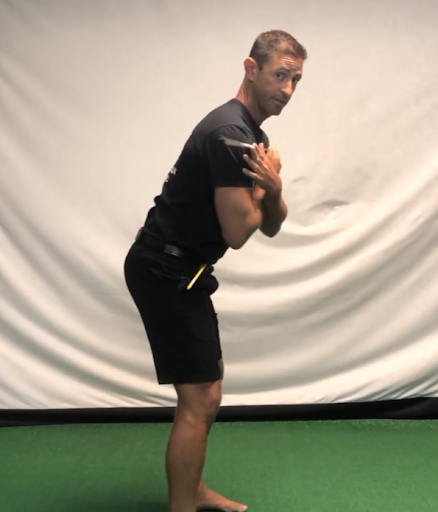
That is not a slight improvement. That is the difference between a golf swing that has room to generate power and one that is physically incapable of producing the rotation needed to swing the club correctly.
What Severely Rounded Posture Does
Here is what the extreme version of this looks like, which is where some golfers are starting from without realizing it.
With severely rounded posture, the shoulders can barely move. Five degrees. Maybe ten if the back is arching to compensate. That is it.
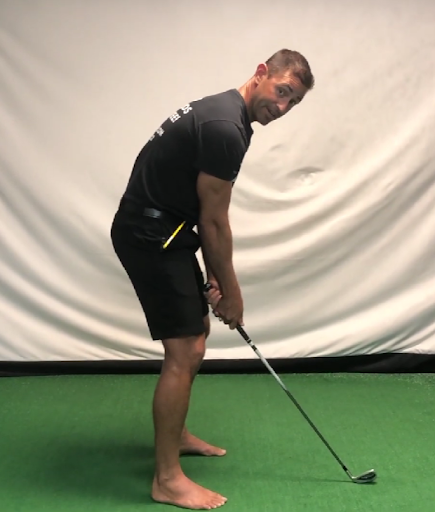
From that position, getting the club back at all requires the legs to straighten, the low back to arch, the head to move, and the body to do some version of the reverse C just to create any backswing length. None of those compensations produce power. All of them produce inconsistency, back pain, and the over the top move coming down because the only backswing that was possible was one the body cannot unwind from correctly.
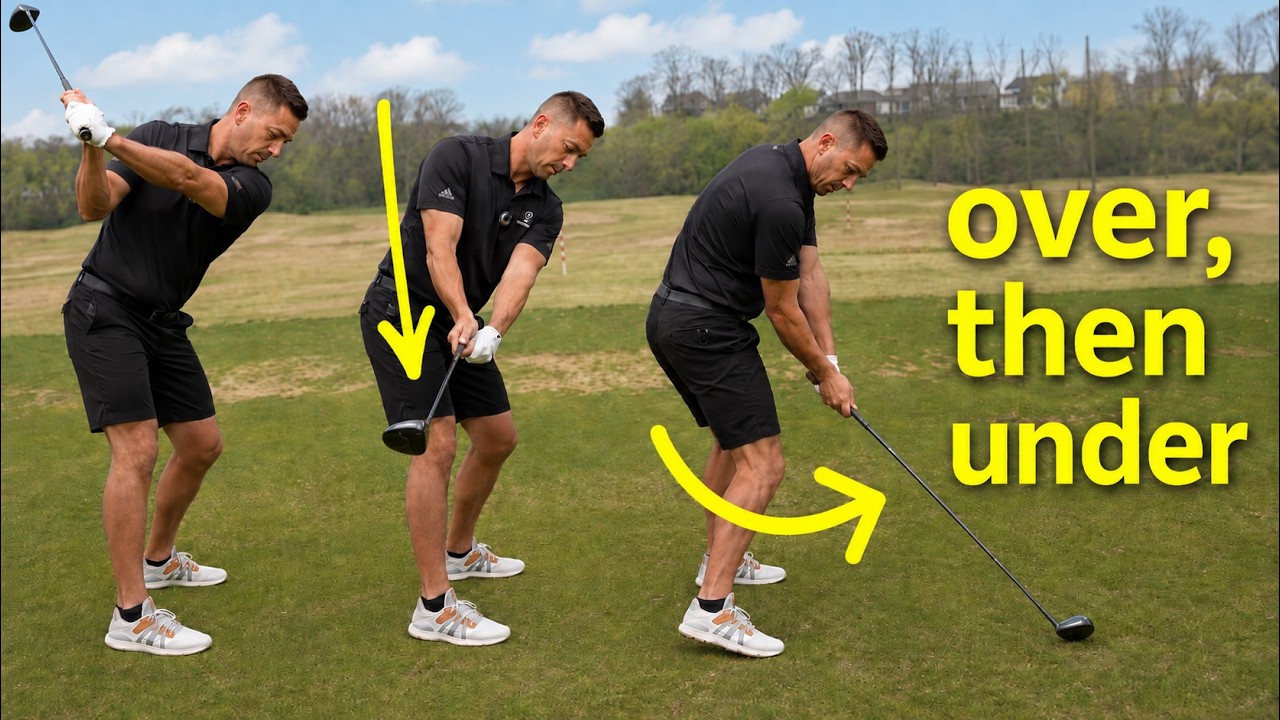
The over the top move, the slice, the lack of distance, all of these can start with posture. Not with swing mechanics. Not with club path. With the position the body is in before the club ever moves.
The Club Behind the Back Test
Here is the simplest way to assess posture right now.
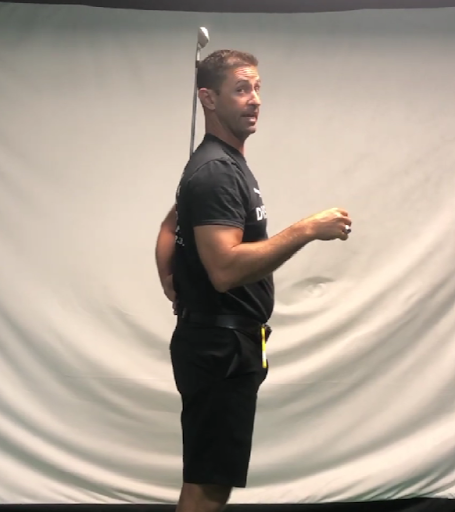
Take a golf club and place it behind the back. The shaft should touch the belt loop, the middle of the back, and the back of the head simultaneously.
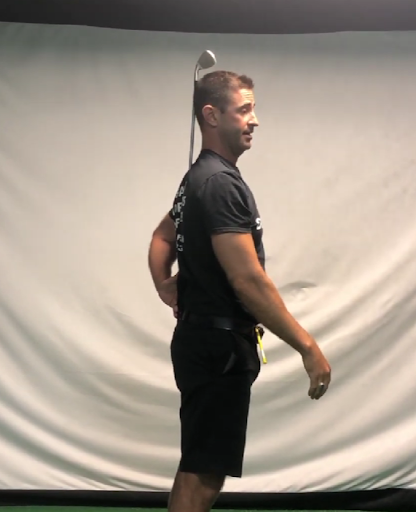
If any of those three points of contact cannot be reached, the spine is not in the correct position for the golf stance. The back is either rounding forward or the head is jutting forward, or both.
Do not reach or strain to force the contacts. Get to whatever tall position is achievable naturally and use that as the starting point. Then see if that same position can be maintained when getting into the golf stance. If the posture collapses going from standing to address, the address position is where the shoulder turn is being lost.
The Two Finger Drill
Here is the drill that builds good posture into a habit instead of something that requires conscious effort on every shot.
One finger on the belly button. One finger on the chest.
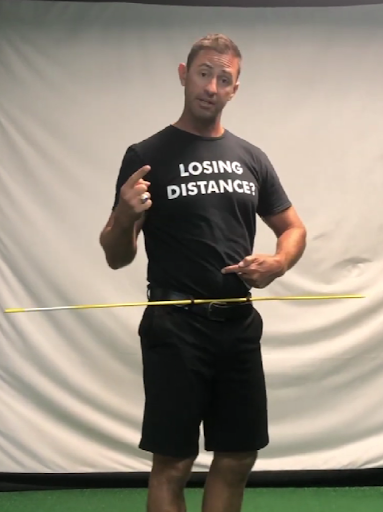
Pull the belly button finger toward the spine. That engages the core. Keep breathing, do not hold the breath. Then lift the chest finger toward the ceiling. The chest rises. The spine straightens. The posture improves.
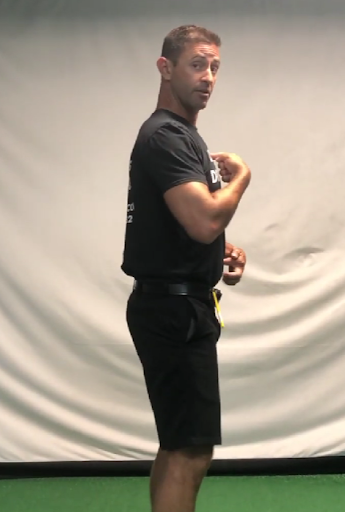
Hold both cues at the same time. Belly button in and chest up. Then soften the knees, reach the hips back slightly, and hold that position.
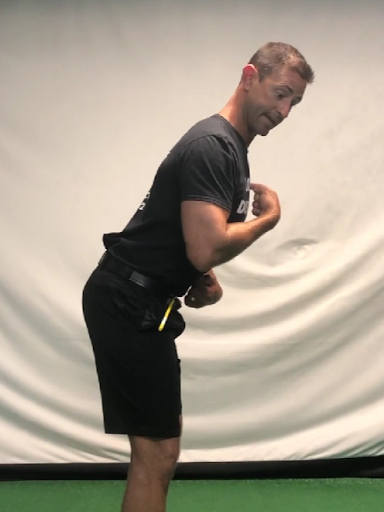
That is good golf posture. The goal is to be able to get into this position without thinking about it. When the core muscles and postural muscles are strong enough to maintain this automatically, the address position becomes consistent and the shoulder turn is available on every single swing without having to consciously remind the body to stand tall.
Practice this drill daily. Not just before golf. Daily. The endurance in those postural muscles is what allows the address position to be maintained through all 18 holes without the posture collapsing on the back nine when fatigue sets in.
How Posture Connects to the Over the Top Move
Here is the connection between posture and the slice that most golfers never make.
When posture is poor, shoulder turn is limited. But the brain still wants to get the club back somewhere. So it borrows from the wrong places, straightening the legs, arching the low back, swaying. The club gets back, but not through rotation.
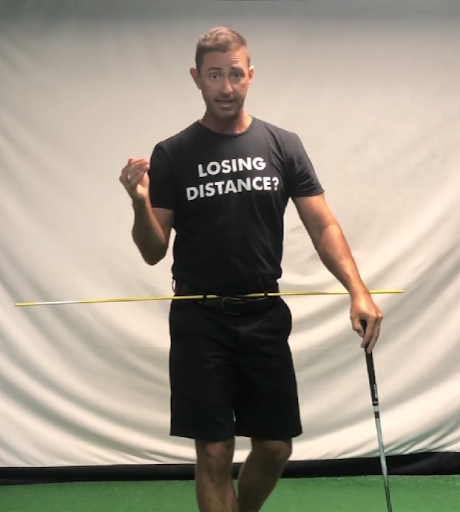
Now the downswing has to reverse that borrowed position. And since the backswing was not created by real rotation, the downswing cannot be created by real rotation either. The arms take over. The club comes over the top. The slice is the result.
Fix the posture and the shoulder turn is available. When real shoulder turn is available, the backswing can be created by rotation. When the backswing is rotational, the downswing can reverse that rotation and produce an inside out path naturally.
Posture is not a separate issue from the slice. For many golfers, posture is the root cause of the slice.
Get a Free Swing Analysis
Want to know whether posture is limiting shoulder turn right now and contributing to the over the top move?
Set the camera or phone up at two angles. One from the front, face on. One from behind, down the line. Film in slow motion. Swing.
Send both videos to gaindistance.com and Dr. Berman will give a free swing analysis. The first one is on him.
See exactly what the camera shows, not what the brain thinks is happening. Posture at address and its effect on shoulder turn is one of the first and most revealing things visible in any swing video.
Want a Step-by-Step Blueprint?
If this resonates and the advice out there feels designed for 25-year-old tour pros, there is a simple blueprint built specifically for senior golfers.
It breaks down:
How the aging body changes Which muscles actually produce power How to gain distance without swinging harder How to improve consistency while reducing aches and pains
It is written at a fifth-grade reading level with clear visuals and practical drills that can start immediately.
A FREE digital copy is available at: 👉 gaindistance.com
No gimmicks. Just clarity on how the body should move to play better golf for years to come.
Bringing It All Together
A small amount of bad posture cuts shoulder turn in half. Severely bad posture eliminates it almost entirely. Without shoulder turn, the only backswing available is built from compensations the downswing cannot unwind correctly, which forces the over the top move and produces the slice.
Test current posture with the club behind the back, three contact points, belt loop, mid spine, back of head. Then use the two finger drill daily, belly button in and chest up simultaneously, to build the postural endurance that makes good address position automatic.
Fix posture first. Then work on swing mechanics. Because swing mechanics built on top of bad posture are just compensations stacked on top of compensations.
At Berman Golf, the focus is biomechanics first. Not cookie cutter swings. The goal is teaching the body how it should move, especially as it ages, so power can be generated safely and repeated under pressure.
The in-house and online coaching programs are built specifically for senior golfers who want more distance and better consistency without beating up their bodies.
For anyone tired of advice designed for tour pros and ready for a blueprint built for their body, help is available.
Because when posture is right and shoulder turn is available, the over the top move loses its reason to exist and the ball finally starts going where it is supposed to go.
And when the ball goes where it is supposed to go, the game gets soooooo much easier!
If you enjoyed what you read and want to see it in action, watch the video below where Dr. Berman demonstrates exactly how much bad posture reduces shoulder turn and walks through the two finger drill fix!