Here is the honest diagnosis for every golfer who keeps coming over the top no matter how many times they work on it.
The arms are swinging the club. The body is not moving it.
That sounds simple. The implications are not. Because when the arms are in charge of moving the club, the brain has no interest in routing the club on an inside path. The arms want the most direct route to the ball. And the most direct route from the top of the backswing is straight down and over the top.
No technique tip fixes the over the top move when the arms are still running the show. Because the arms will keep finding the over the top path regardless of what they are told to do differently. The only permanent fix is getting the body to move the club instead of the arms.
At Berman Golf, the swing plate drill described here is one of the most direct ways to make that shift happen, with immediate feedback that cannot be argued with.
Why the Inside Takeaway Guarantees an Over the Top Downswing
Here is the mechanical chain that almost every over the top golfer is running on every single swing.
The takeaway goes inside. The club moves behind the body, tracking below the correct plane in the first few feet of the backswing. From that inside position at the top, the only available path back to the ball is over the top. The club has to come from outside to in because it went too far inside going back.
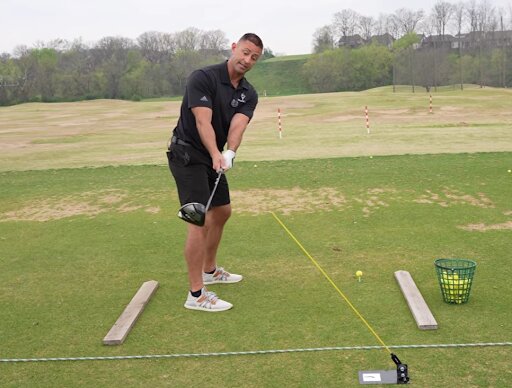
This is why the over the top move is so persistent. It is not random. It is the direct mechanical consequence of the inside takeaway. Fix the takeaway and the over the top move loses its mechanical reason to exist.
The swing plate with an alignment stick positioned at the angle of the club shaft at address provides the tool that makes the correct takeaway immediately trainable.
Setting Up the Drill
Here is the exact setup.
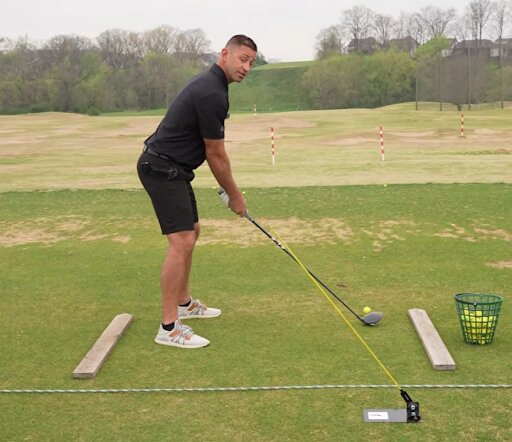
Tee a ball up. Place the swing plate approximately five feet directly behind the golf ball. Set the alignment stick in the swing plate at an angle as close as possible to the angle of the club shaft at address.
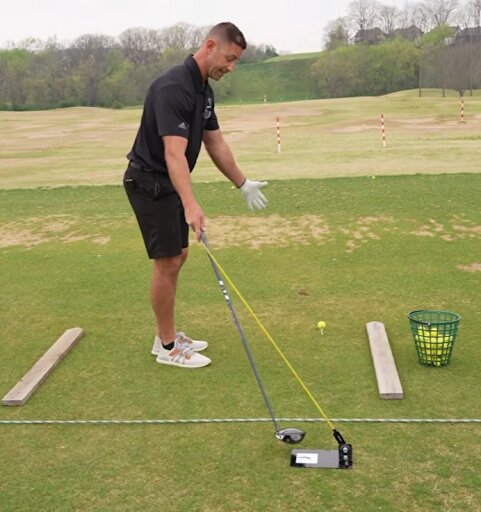
Get into address position. The alignment stick is now right there, just behind the ball on the inside path. Close enough to touch.
That stick represents the inside path. If the takeaway goes inside it, the over the top downswing is coming. The stick provides immediate, visual, honest feedback about exactly where the club is going on the takeaway.
The Over Under Move
Here is the drill itself, and it is less about a perfect golf swing and more about getting the body to move instead of the arms.
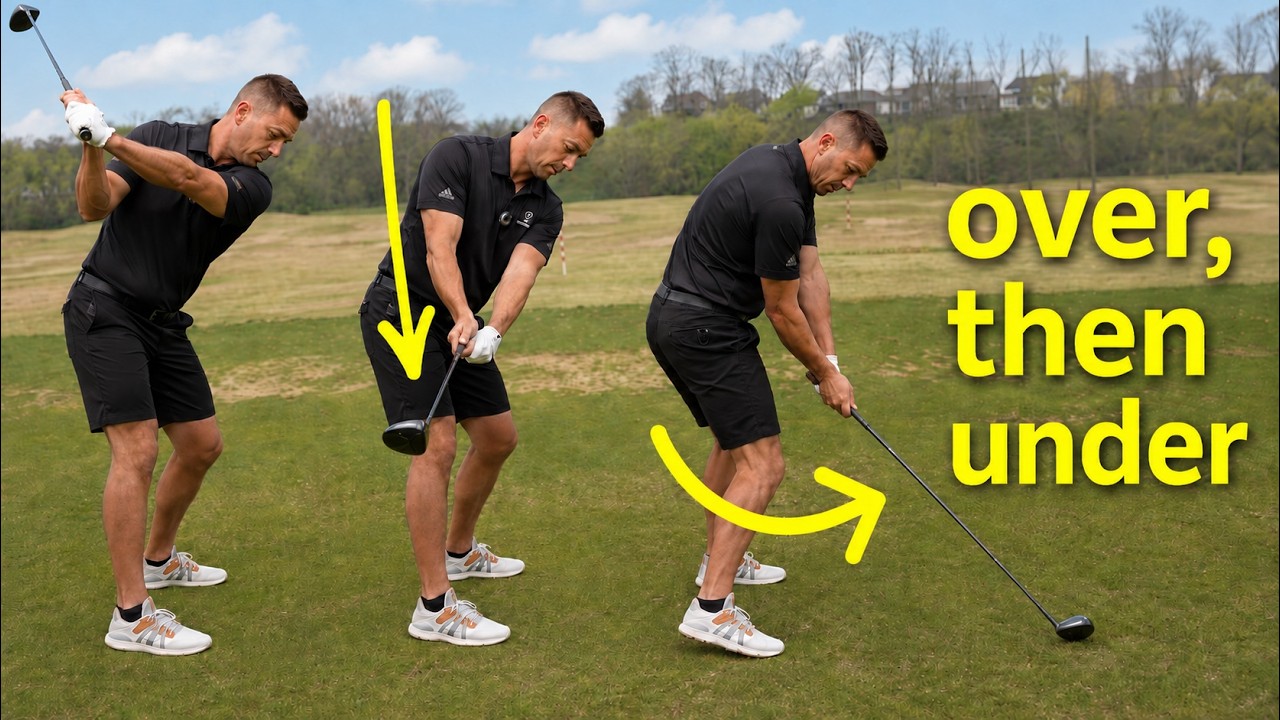
From address, reach the club head straight back from the ball, going over the top of the alignment stick on the way back. Then swing under the stick on the way through.
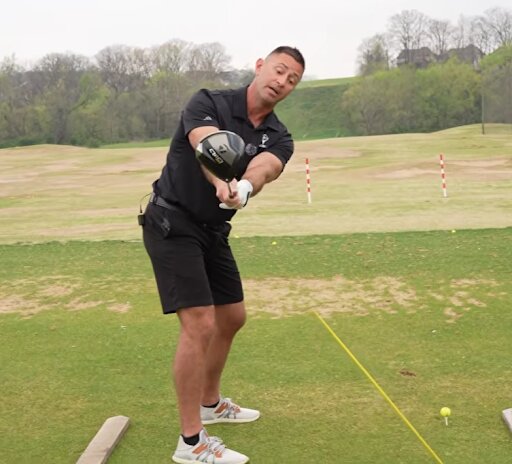
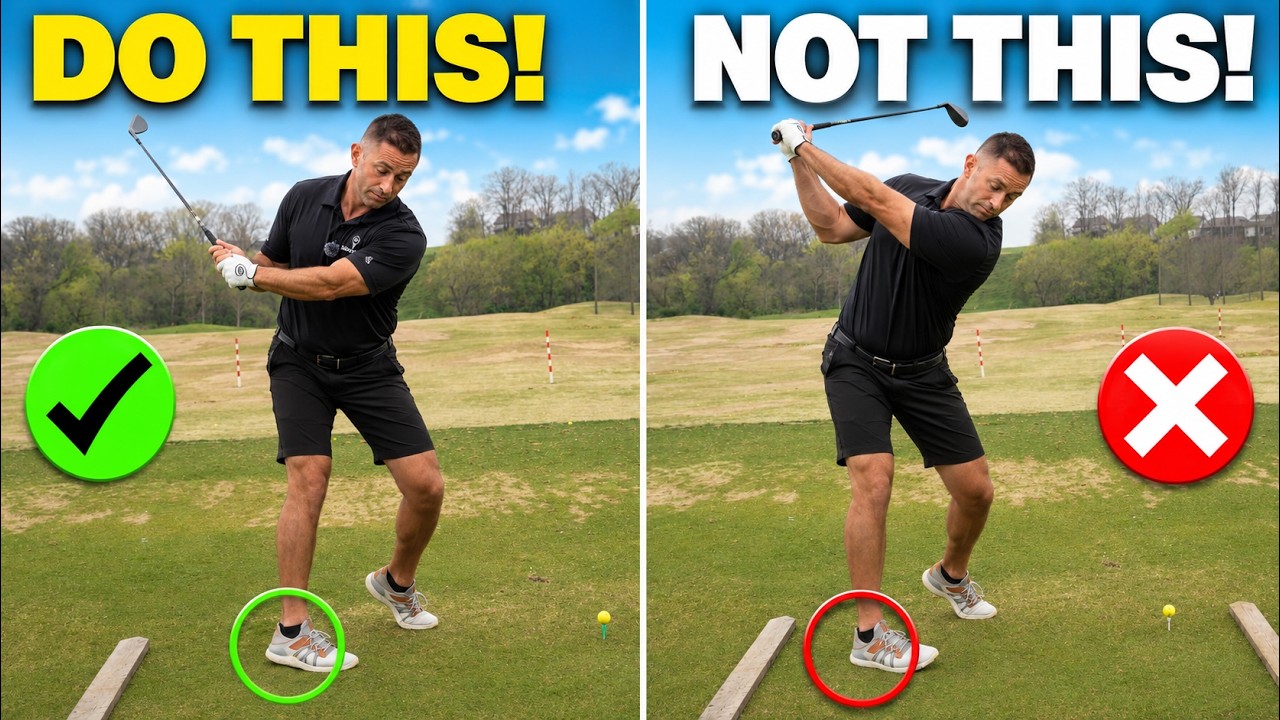
Over the stick going back. Under the stick coming through. That motion trains the body to move in a way that produces an inside out club path, because the only way to go over the stick on the backswing and under it on the downswing is to rotate the body rather than swing the arms.
Here is where it gets exaggerated deliberately. At the beginning, sway. Move all over the place. The body swaying during this drill is not a flaw to correct. It is the brain starting to understand that the body needs to move instead of the arms.
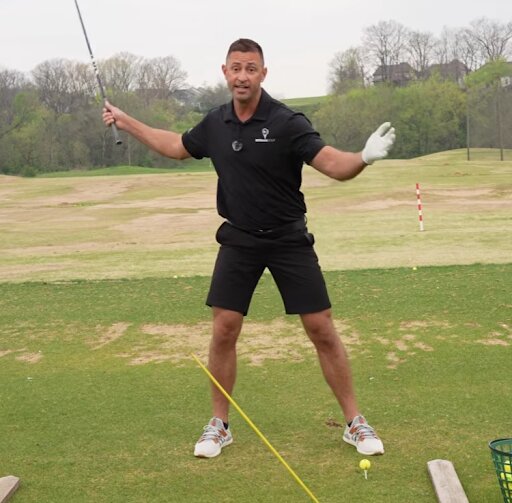
The arms are used to running the show. The brain has wired them as the primary movers. Getting that wiring to change requires giving the body permission to move in ways that feel exaggerated and wrong at first. The exaggerated motion is the body learning a new pattern. It gets more refined over time.
The 50 Yard Rule
Here is the practice prescription that makes this drill actually transfer to a real shot.
If the driver normally goes 200 yards, hit this drill at 50 yards. Not 100. Not 150. Fifty.
At 50 yards, the brain is not trying to generate power. It is not trying to kill the ball. It is just making contact with a swing that feels unfamiliar and awkward. That low pressure contact is exactly what gives the brain confidence that the new pattern can produce a result.
Ten reps at 50 yards before trying to increase distance. Not three reps. Not five. Ten reps where the alignment stick is cleared correctly and contact is made, however ugly the contact looks.
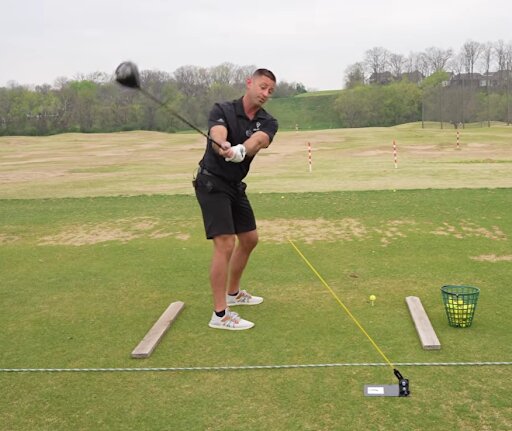
A shank during this drill does not mean the drill is wrong. It means the pattern is being learned. Make contact. Give the brain the experience of delivering the club from inside out to a ball. The quality of contact improves as the reps accumulate.
Once ten reps at 50 yards feel manageable, start building distance. Not immediately to full power. Gradually. 75 yards. Then 100. Then full distance. Each increase in speed should still feel like the body is rotating and the arms are following, not the arms swinging harder.
What the Alignment Stick Reveals
Here is the honesty that makes this drill different from most over the top fixes.
The alignment stick does not care about intentions. It does not respond to thinking about swinging inside out. It responds to where the club actually goes.
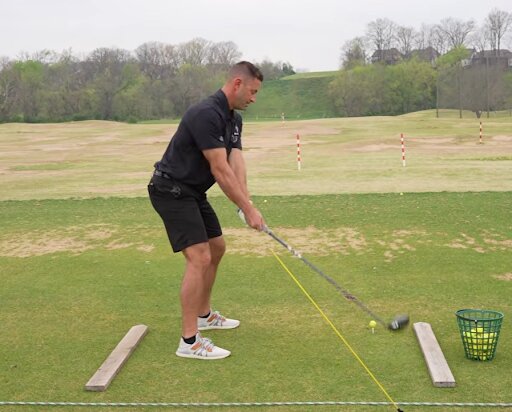
If the club keeps hitting the stick on the takeaway, the takeaway is going inside. Full stop. No debate. No question about whether the path is better or whether it felt more inside out. The stick provides the truth.
For golfers who keep hitting the stick, a pool noodle on top of it prevents the stick from breaking every time. The noodle provides softer contact and allows more reps without destroying equipment.
The drill is not about perfect mechanics immediately. It is about getting enough reps with the club going over the stick and under it on the way through that the body starts to understand what rotation actually feels like compared to arm swinging.
Get a Free Swing Analysis
Want to know whether the takeaway is going inside and exactly what the over the top path looks like in real time on the current swing?
Set the camera or phone up at two angles. One from the front, face on. One from behind, down the line. Film in slow motion. Swing.
Send both videos to gaindistance.com and Dr. Berman will give a free swing analysis. The first one is on him.
See exactly what the camera shows, not what the brain thinks is happening. The takeaway path is one of the clearest things visible in slow motion and almost always reveals whether the inside path is what is causing the over the top move.
Want a Step-by-Step Blueprint?
If this resonates and the advice out there feels designed for 25-year-old tour pros, there is a simple blueprint built specifically for senior golfers.
It breaks down:
How the aging body changes
Which muscles actually produce power
How to gain distance without swinging harder
How to improve consistency while reducing aches and pains
It is written at a fifth-grade reading level with clear visuals and practical drills that can start immediately.
A FREE digital copy is available at: 👉 gaindistance.com
No gimmicks. Just clarity on how the body should move to play better golf for years to come.
Bringing It All Together
The over the top move is caused by an inside takeaway. The inside takeaway is caused by arms initiating the backswing. Fix the takeaway and the over the top move loses its mechanical reason to happen.
The swing plate drill makes the fix trainable and immediate. Stick angled to the shaft angle at address, five feet behind the ball. Club goes over the stick on the takeaway, under the stick on the downswing. Exaggerate the body motion at first. Practice at 50 yards. Ten consecutive reps before increasing distance.
The stick does not lie. Hit it and the takeaway went inside. Clear it and the path was correct. Repeat until clearing it becomes the automatic default.
At Berman Golf, the focus is biomechanics first. Not cookie cutter swings. The goal is teaching the body how it should move, especially as it ages, so power can be generated safely and repeated under pressure.
The in-house and online coaching programs are built specifically for senior golfers who want more distance and better consistency without beating up their bodies.
For anyone tired of advice designed for tour pros and ready for a blueprint built for their body, help is available.
Because when the takeaway goes over the stick and the body rotates instead of the arms swinging, the inside out path is not something to think about anymore. It just happens.
And when the inside out path becomes automatic, the game gets soooooo much easier!
If you enjoyed what you read and want to see it in action, watch the video below where Dr. Berman demonstrates the full over under drill with the swing plate!