Here is the honest diagnosis for every golfer who hits one great drive and then cannot find it again.
The big power muscles are turning off during the swing. They are not being kept on.
That sounds simple. The implications are not. Because when the core, glutes, and feet shut off before the downswing begins, the arms are left to do all the work. And arms that are doing all the work cannot repeat anything.
Most advice makes it worse. Stay loose. Swing easy. Feel effortless. But 99% of amateur golfers do not have the technique to pull off the effortless swing, and 90% of amateur senior golfers do not have the flexibility. The effortless swing may feel nice, but it is not reproducible.
At Berman Golf, the activated swing is the alternative. It is built on activating the right muscles before the swing starts and keeping them activated through the most important moment of the golf swing.
Why the Effortless Swing Is Not Reproducible
Here is why the “loosey goosey” swing breaks down.
When the arms are loose and noodle-like, the swing can feel smooth and easy. But there is nothing tying the body together. A senior golfer without the flexibility or technique to put it all together has to generate power from somewhere, and it ends up coming from a whack and a flip at the ball.
That may feel effortless on the one swing that works. It will not show up again on the next one.
The activated swing is different. It will not feel effortless. It will feel connected. And a connected swing can be repeated over and over, which is what gets a golfer to the back nine feeling great and to the 19th hole feeling proud of their game.
Step 1: Activate the Right Muscles Before You Move
Here is the setup that turns the big muscles on before the club ever moves.
Start with the core. At address, pull the belly button in. Now the core is activated. This is huge, and it has to happen before the swing begins.
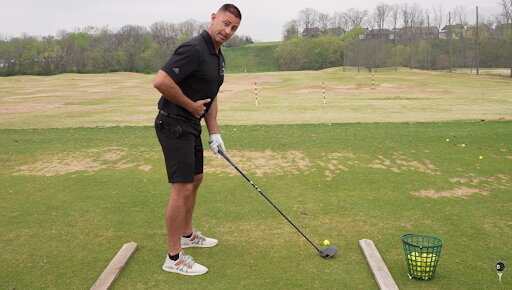
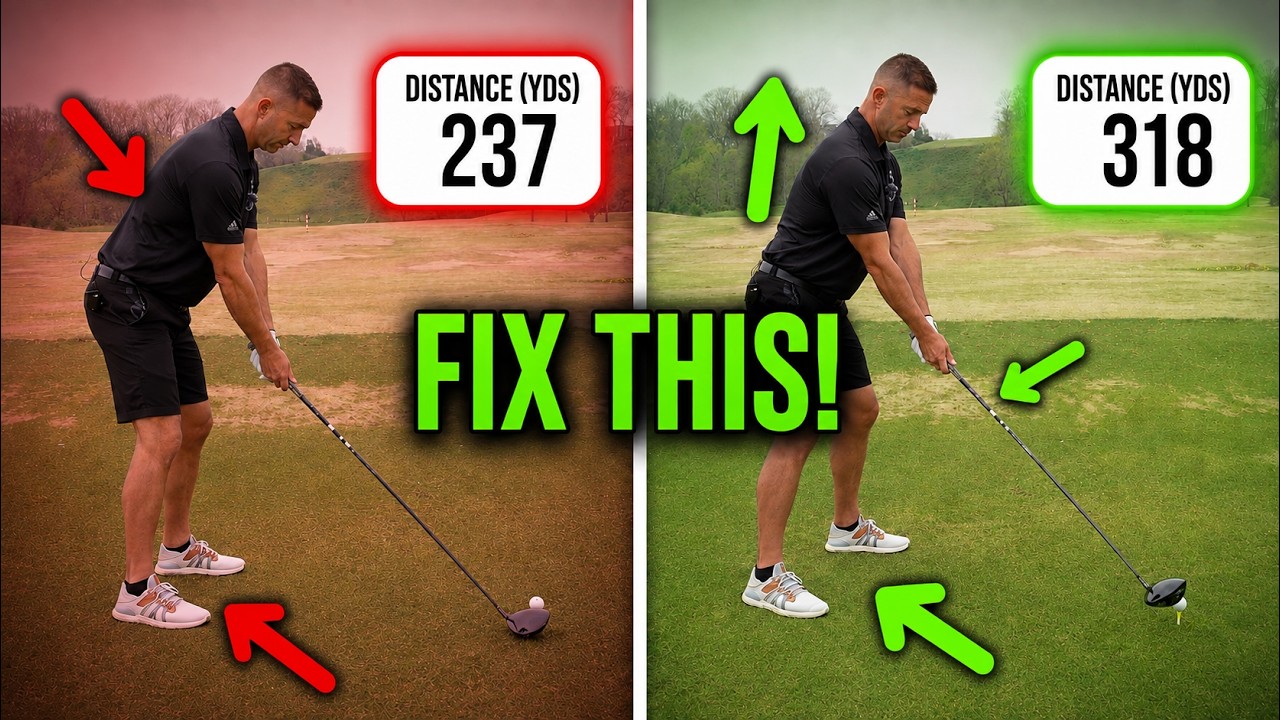
Next, the foot. Think about increasing the pressure through the arch of the right foot. A simple way to feel it is to put the head of a tee right underneath the arch of the right foot and press into it. This is how the golfer finds the ground.
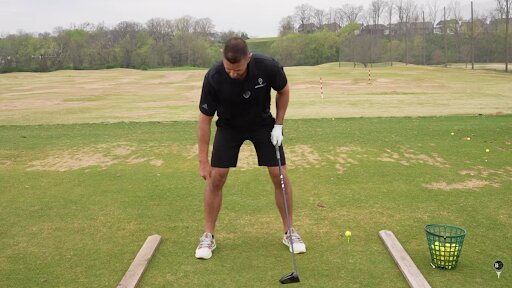
Then the glute. The glute sits in the middle, between the foot and the core. When the foot is activated and the core is activated, the glute comes on with them.
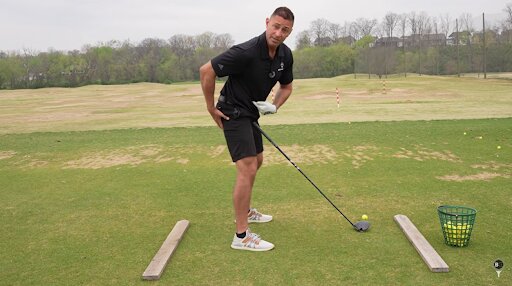
Now the foot, the glute, and the core are all active before the golfer has even moved. From here, the job is simply to keep them activated. That is far easier than trying to activate them in the middle of the swing while the club is coming down at the ball. By then it is just too hard.
Step 2: Slow Down the Backswing to Protect the Transition
Here is where the activation either survives or disappears.
The most important part of the golf swing for keeping the big power muscles activated is the transition from the backswing to the downswing. To protect that moment, the backswing has to slow down.
That one change is what makes the muscles stay on when they matter most.
The Backswing Mistake Killing Distance
Here is the chain reaction that happens when a senior golfer takes the club back too far.
The core lengthens and the golfer reverse pivots. The core turns off.
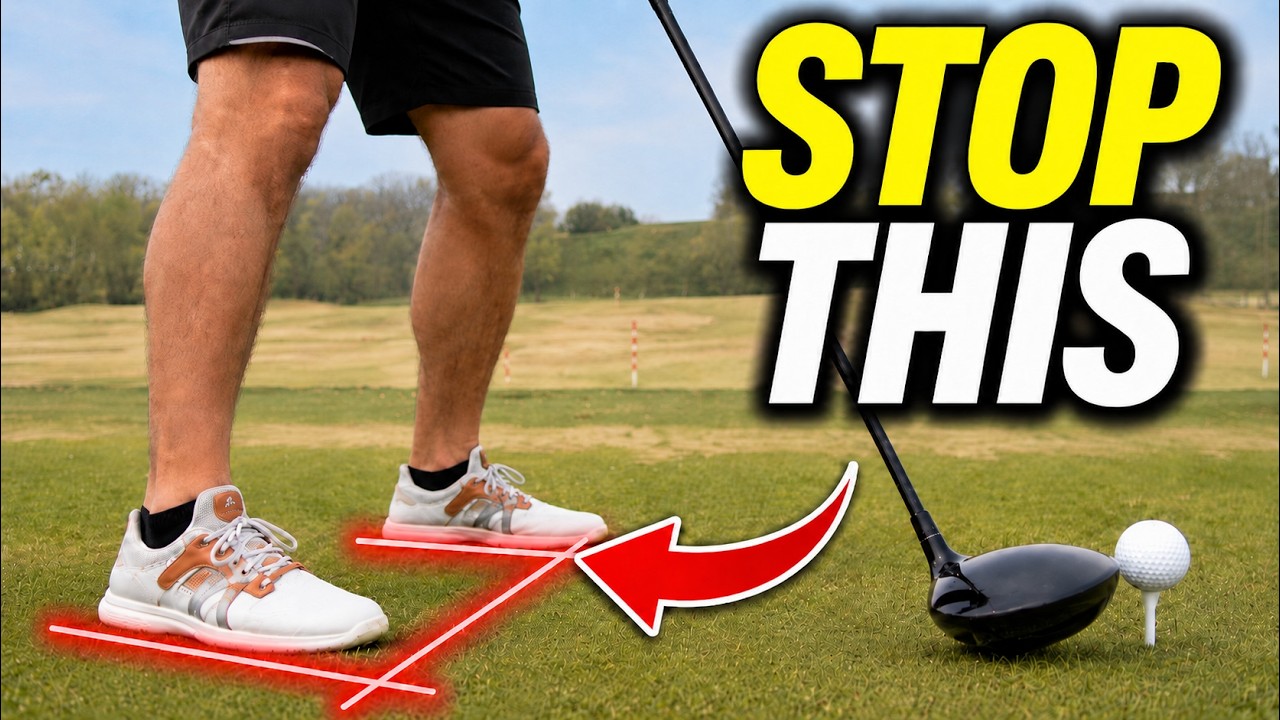
At the same time, the golfer rolls out onto the outside of the right foot. The glute turns off. The connection with the ground is gone.
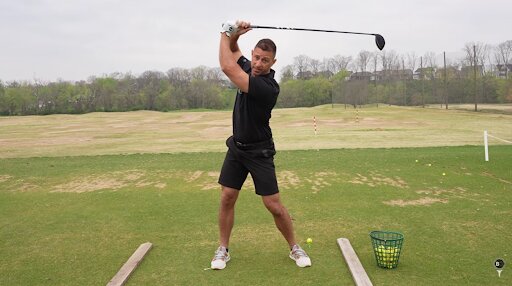
Now there are no big power muscles left to start the downswing. The golfer is left to whack and flip at the ball with the arms. That is the move that produces one good drive and nine bad ones.
This is why the discipline matters. The golfer has to know exactly where the top of the backswing is.
Where the Backswing Should Really Stop
Here is the checkpoint.
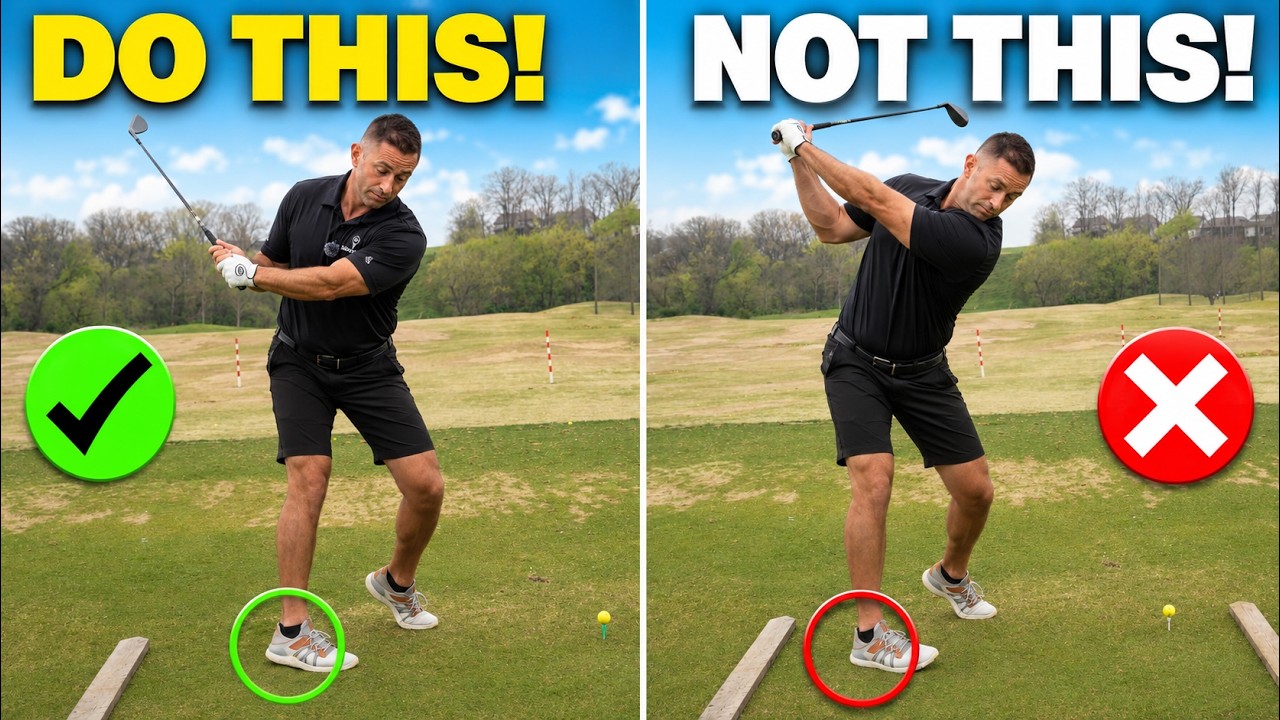
The top of the backswing should be where the left arm is parallel to the ground. That is the top of the backswing for the body.
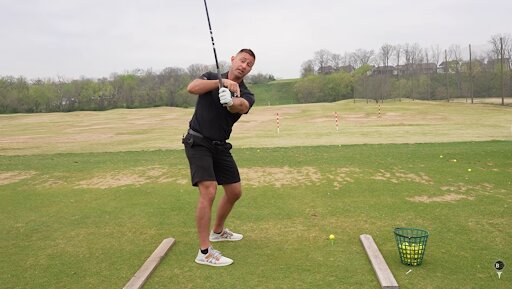
In real time, the arms will travel higher. That is fine. But the body should only go as far as that parallel position. When the arms go higher and the body never went there, the elbow bends, the knee straightens, and the only option left is to whack and flip at it.
That is not reproducible. And it is very hard to generate power with it as a senior, because the flexibility and technique to piece it together are not there.
The Move That Puts Your Body in Control
Here is the detail most golfers never think about.
Whatever body part initiates the swing, the brain decides that part is the primary mover.
If the hands initiate the backswing, the brain believes the hands are in charge. That works for a 20 or 30 year old playing on tour for money on Sundays. For everyone else, it is a problem.
The fix is to let the belt buckle initiate the backswing.
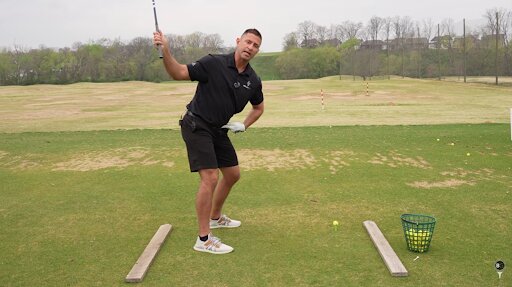
When the belt buckle initiates the move, the brain gets a different message. The body is in control. The body is leading the way. And if the body can lead the way going back, it can lead the way coming forward too.
The Knee Move That Unlocks Rotation
Here is a pro tip that is crucial for senior golfers.
Many seniors deal with knee pain, osteoarthritis, bone on bone, a knee replacement, or a hip replacement. They say they cannot get the lead knee straight through impact.
The reality is that most can get it straighter than what they are currently doing. When the lead knee stays bent through impact, it blocks the hips and forces the body to come up.
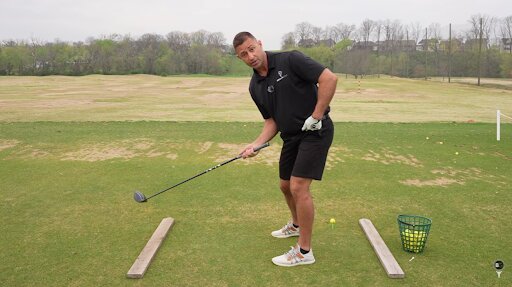
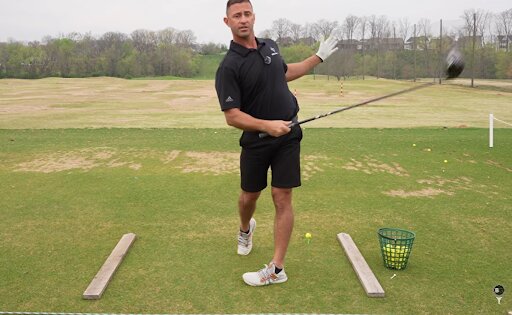
The same big power muscles used going backwards can be used to straighten the lead knee coming forward. It does not have to go completely straight. With knee issues, that is understood. It just has to be straighter than before. That is what allows the golfer to come forward and actually complete the swing.
Why “Swing Easy” Is Bad Advice
Here is why traditional golf lessons do not work for seniors.
They tell golfers to stay loose and swing easy. That advice does nothing but kill distance and destroy the back.
A different method is needed. Not an effortless swing. An activated swing.
Putting the Activated Swing Together
Here is the full sequence from start to finish.
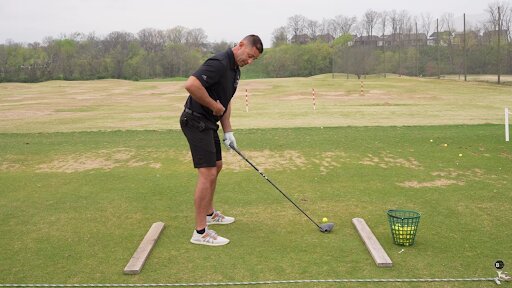
Set up to the ball. Pull the belly button in. Increase the pressure through the arch of the right foot. The core is engaged, the foot is engaged, and the glutes start to engage.
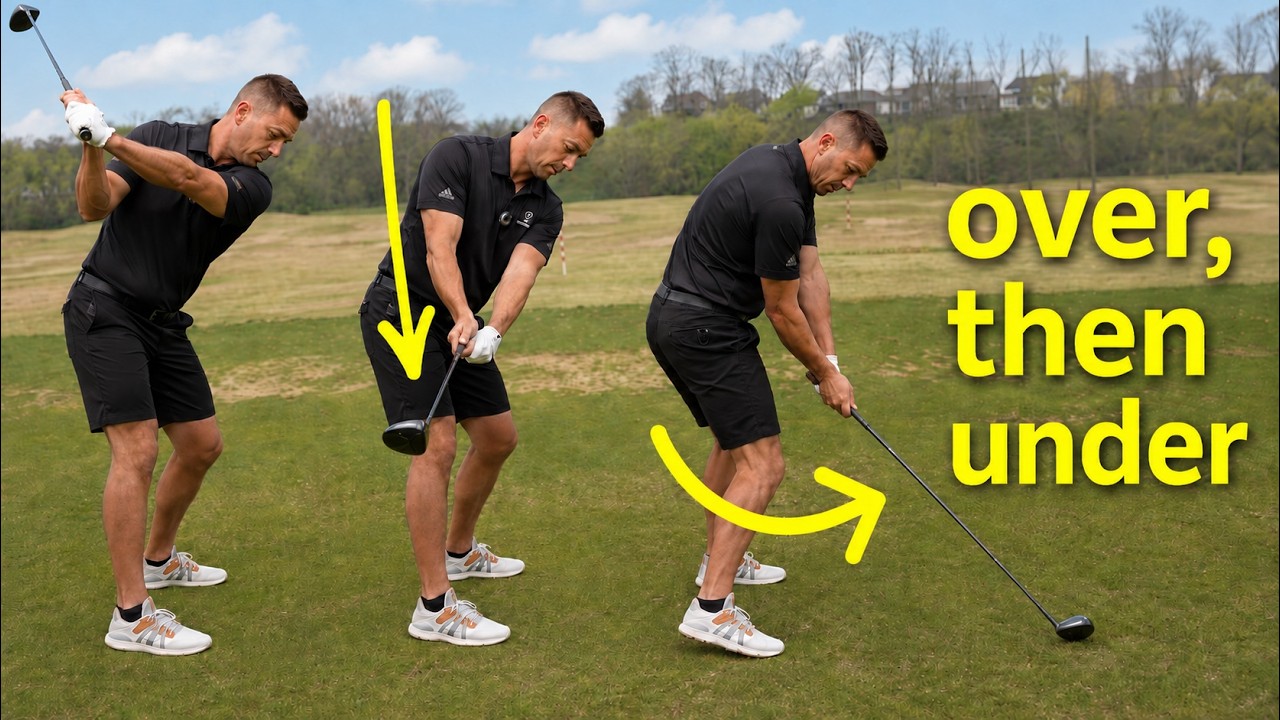
Take the clubhead away from the ball so the body turns. Do not take the clubhead inside, which forces the club over the top.
Take it away. Stop when the left arm is parallel. Come back through the other way. Get the lead knee straight so the belt buckle can get to the target.
Get a Free Swing Analysis
Want to know whether the core and glutes are shutting off in the backswing right now?
Set the camera or phone up at two angles. One from the front, face on. One from behind, down the line. Film in slow motion. Swing.
Send both videos to gaindistance.com and Dr. Berman will give a free swing analysis. The first one is on him.
See exactly what the camera shows, not what the brain thinks is happening. The length of the backswing and the roll onto the outside of the right foot are two of the clearest things visible in slow motion, and two of the most commonly missed from the inside.
Want a Step-by-Step Blueprint?
If this resonates and the advice out there feels designed for 25-year-old tour pros, there is a simple blueprint built specifically for senior golfers.
It breaks down:
How the aging body changes
Which muscles actually produce power
How to gain distance without swinging harder
How to improve consistency while reducing aches and pains
It is written at a fifth-grade reading level with clear visuals and practical drills that can start immediately.
A FREE digital copy is available at: 👉 gaindistance.com
No gimmicks. Just clarity on how the body should move to play better golf for years to come.
Bringing It All Together
The one good drive cannot be repeated because the big power muscles turn off before the transition. Activate the core, the foot, and the glute before moving. Keep them activated by slowing the backswing and stopping when the left arm is parallel. Let the belt buckle initiate the move so the brain knows the body is in control. Then straighten the lead knee so the body can finish the swing.
Belly button in. Pressure through the arch of the right foot. Slow backswing. Left arm parallel. Belt buckle leads. Lead knee straightens. Repeat.
At Berman Golf, the focus is biomechanics first. Not cookie cutter swings. The goal is teaching the body how it should move, especially as it ages, so power can be generated safely and repeated under pressure.
The in-house and online coaching programs are built specifically for senior golfers who want more distance and better consistency without beating up their bodies.
For anyone tired of advice designed for tour pros and ready for a blueprint built for their body, help is available.
Because when the big muscles stay activated through the transition, the good drive is not something to hope for anymore. It just happens.
And when the good drive becomes repeatable, the game gets soooooo much easier!
If you enjoyed what you read and want to see it in action, watch the video below where Dr. Berman demonstrates the full activated swing!