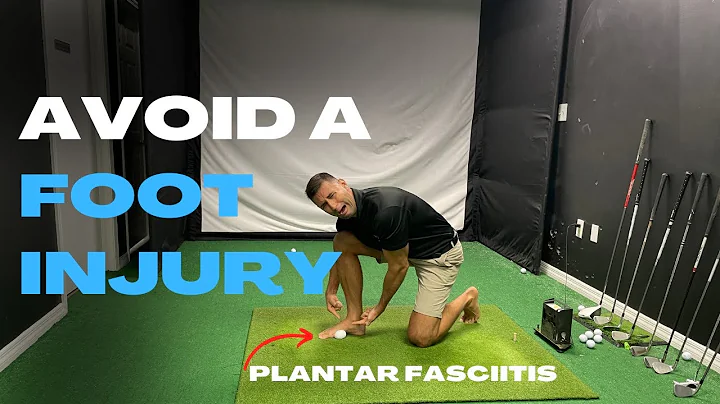
If foot pain is keeping golfers off the course or making every step from the cart to the green a miserable experience, this is the most important blog in this entire series.
Plantar fasciitis is one of the most common reasons golfers stop playing as frequently as they want to. Sometimes it sidelines them completely. Even tour professionals are not immune. Tiger Woods pulled out of a tournament recently because of plantar fasciitis, which tells you everything about how debilitating it can become when it is not addressed properly.
At Berman Golf, the approach to plantar fasciitis is rooted in the same principle that applies to everything else. The symptom has a cause. The cause is almost always the same. And a stress ball placed under the foot arch for a few minutes a day is the most direct path to addressing it.
What Actually Causes Plantar Fasciitis
Here is the explanation most golfers with foot pain have never heard from their doctor or podiatrist.
There are 16 muscles in the arch of each foot. Four layers of four muscles. Their job is to support the arch from the inside, generating what is called intrinsic arch support.
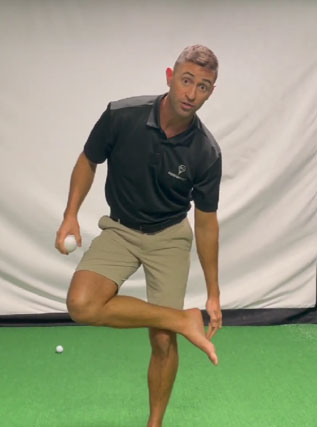
When those 16 muscles are doing their job, the arch has internal support. The plantar fascia, the band of tissue running along the bottom of the foot, is not under excessive tension. It can handle the load of walking, standing, and the rotational forces of the golf swing without breaking down.
When those 16 muscles stop doing their job, the arch loses its internal support. All of that load transfers to the plantar fascia. Over time, the plantar fascia becomes strained, inflamed, and painful. That is plantar fasciitis.
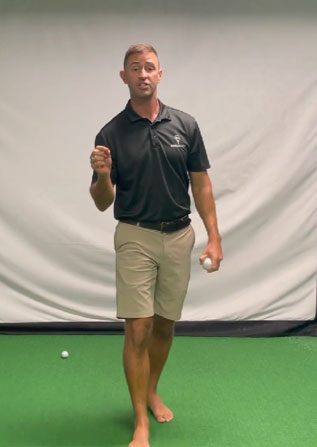
And here is the reason those 16 muscles stop doing their job in the first place. Supportive shoes. Orthotics. Tightly laced footwear that acts like a cast around the foot.
When external support is provided under and around the foot, the internal muscles have no reason to work. The brain sees that the arch is being supported externally and stops recruiting the muscles that were supposed to do that job internally. Over weeks, months, and years, those muscles become weaker and less responsive. The arch support they were supposed to provide disappears. The plantar fascia takes on load it was never designed to handle alone.
Orthotics and supportive shoes do not fix plantar fasciitis. For most golfers, they are a contributing cause of it.
The Stress Ball Drill, The Fix
Here is the drill. One stress ball, or a rolled up washcloth if a stress ball is not available. That is the only equipment needed.
Place the stress ball on the edge of the foot, not completely under the arch but right on the inside edge where the arch begins.
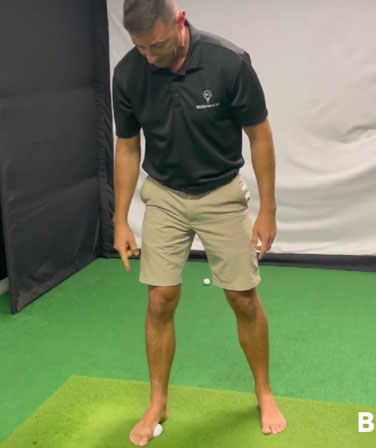
Get into golf stance. Then think about smashing the stress ball with the foot muscles. Not by buckling the knee inward. Not by pushing down with the leg. Just the intrinsic muscles of the foot pressing the ball into the ground.
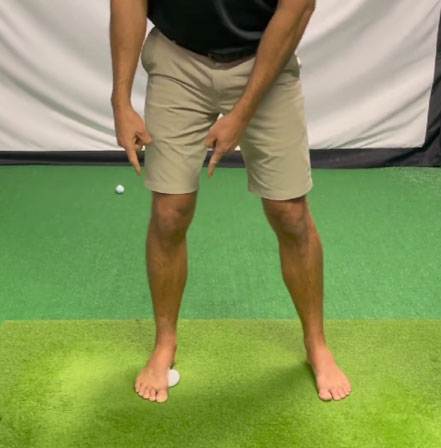
Zoom in on the foot during this drill and here is what should be visible. The knee is not moving significantly. The foot is moving. The arch is pressing and changing shape as those 16 muscles activate. That movement in the foot without corresponding movement in the knee is confirmation that the intrinsic muscles are doing the work rather than the larger leg muscles compensating.
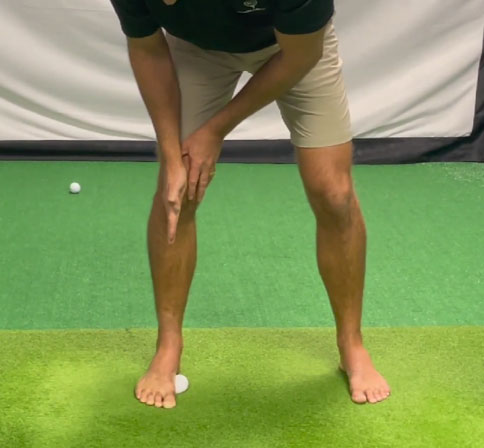
Hold the squeeze for five to ten seconds. Then relax. Breathe. Then squeeze again
.
Do this ten times. The foot should feel tired afterward. If it does not, the muscles are not engaging hard enough or the ball is not positioned correctly.
Why the Foot Will Be Tired and What That Means
Here is what foot fatigue after this drill actually indicates.
If the foot muscles fatigue quickly during this drill, it means those muscles have been dormant for a significant amount of time. They have lost both strength and endurance. And dormant, weak muscles are exactly what allow the plantar fascia to take on excessive load.
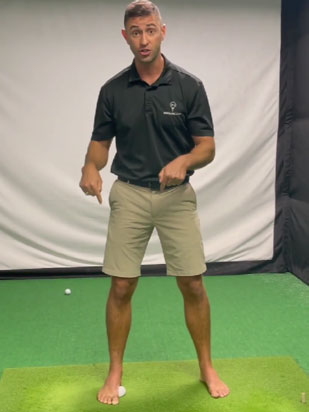
That fatigue is not a sign to stop. It is a sign to keep going, because those muscles need to be trained back to functional strength. Every day. Not just before golf. Every single day, because the process of rebuilding dormant foot muscle strength takes weeks and months, not a single session.
Here is the progression to expect over time. The first week, the drill feels very difficult and the foot tires quickly. After a few weeks, it becomes more manageable. After a few months, the muscles are noticeably stronger and the foot pain starts to decrease. After several months of consistent daily work, the plantar fascia is no longer being overloaded because the arch muscles are finally providing the internal support they were designed to provide.
What to Do About Shoes and Orthotics
Here is the practical guidance on footwear that almost nobody in the conventional medical world offers.
If orthotics were prescribed for plantar fasciitis, they were prescribed to offload the plantar fascia while it heals. That is appropriate in the short term. But if orthotics become a permanent solution, the arch muscles continue to be bypassed, and the plantar fasciitis comes back the moment the orthotics are removed because nothing about the underlying weakness was addressed.
The long term goal is to build enough intrinsic foot strength that external arch support is no longer required. That takes time and consistent daily training. But it is achievable for most golfers who do not have structural foot abnormalities.
In the meantime, choose shoes that allow the foot to move. Wide toe boxes. Looser lacing. Anything that reduces the cast effect of tight, supportive footwear and allows the foot muscles to contribute even a little bit during daily activity.
Practice the stress ball drill barefoot as much as possible. The barefoot environment is where those muscles get the direct sensory feedback they need to wake up and get stronger.
Get a Free Swing Analysis
Want to know whether foot instability and weak arch muscles are contributing to pain and affecting the golf swing?
Set the camera or phone up at two angles. One from the front, face on. One from behind, down the line. Film in slow motion. Swing.
Send both videos to gaindistance.com and Dr. Berman will give a free swing analysis. The first one is on him.
See exactly what the camera shows. Trail foot rolling, balance breaks at transition, and weight staying on the trail side at impact all trace directly back to what the foot muscles are or are not doing.
Want a Step-by-Step Blueprint?
If this resonates and the advice out there feels designed for 25-year-old tour pros, there is a simple blueprint built specifically for senior golfers.
It breaks down:
How the aging body changes Which muscles actually produce power How to gain distance without swinging harder How to improve consistency while reducing aches and pains
It is written at a fifth-grade reading level with clear visuals and practical drills that can start immediately.
A FREE digital copy is available at: 👉 gaindistance.com
No gimmicks. Just clarity on how the body should move to play better golf for years to come.
Bringing It All Together
Plantar fasciitis is not bad luck or inevitable aging. It is the predictable result of 16 arch muscles going dormant from years of supportive shoes and orthotics, leaving the plantar fascia to handle load it was never designed to carry alone.
The stress ball drill wakes those muscles up. Inside edge of the foot arch. Golf stance. Smash the ball with the foot muscles without the knee buckling. Hold five to ten seconds. Relax and repeat. Ten reps. Daily.
The foot will be tired after the first sessions. That tiredness is the muscles doing real work for the first time in years. Keep training. Keep building. The pain decreases as the muscles get stronger and the plantar fascia stops being overloaded.
At Berman Golf, the focus is biomechanics first. Not just for the golf swing but for the body that has to sustain the golf swing across years of play.
The in-house and online coaching programs are built specifically for senior golfers who want more distance and better consistency without beating up their bodies.
For anyone tired of sitting out rounds because of foot pain, help is available.
Because when the foot muscles are strong enough to support the arch internally, the plantar fascia stops hurting and walking 18 holes becomes something the body can do again.
And when 18 holes is possible without pain, the game gets soooooo much easier!
If you enjoyed what you read and want to see it in action, watch the video below where Dr. Berman demonstrates the stress ball drill and explains exactly why foot muscle weakness causes plantar fasciitis!