The draw is one of the most chased ball flights in golf. That gentle right to left curve that adds distance, rolls out on the fairway, and makes the game look and feel the way it is supposed to feel.
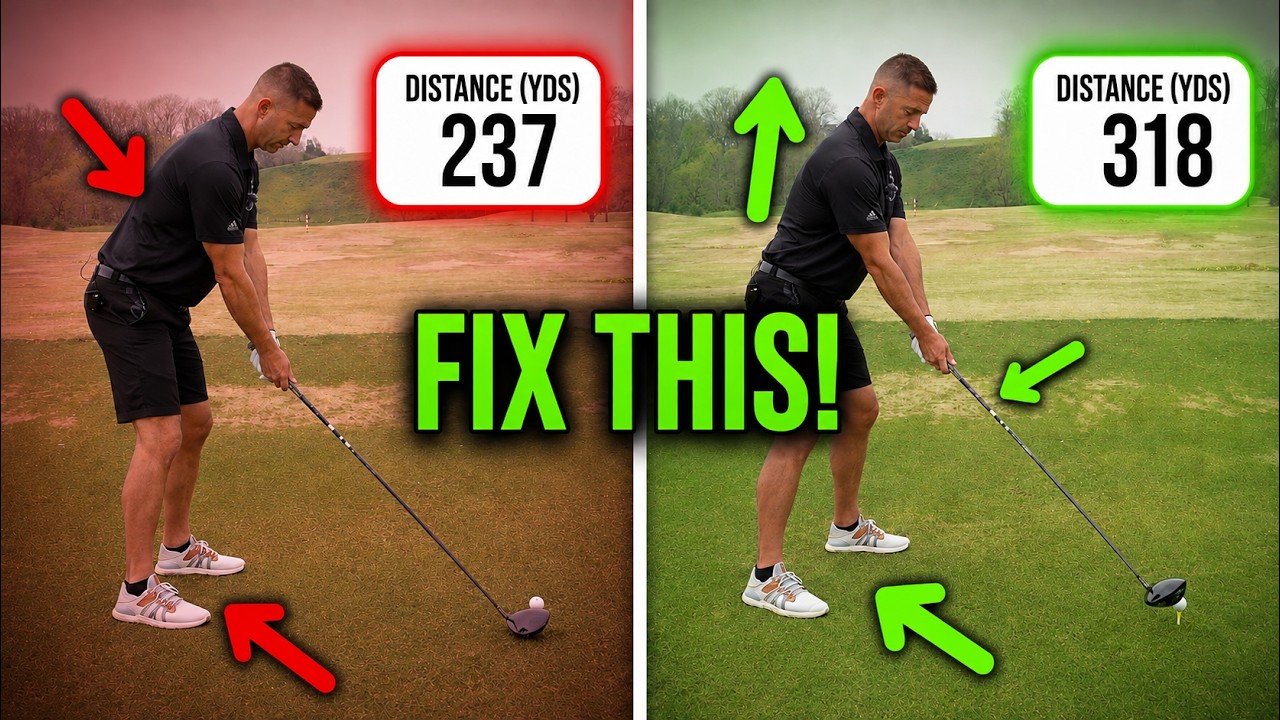
And for most senior golfers, it remains consistently out of reach. Not because the draw is physically impossible. Because the fix being attempted, closing the stance, is a compensation that creates a new problem without solving the original one.
At Berman Golf, the draw comes from one thing. An inside out club path at impact. And for senior golfers, the only reliable way to produce that path is through body initiation and a correct takeaway, not through stance manipulation.
Why Closing the Stance Does Not Work for Senior Golfers
Here is the logic behind closing the stance and why it fails for most golfers over 60.
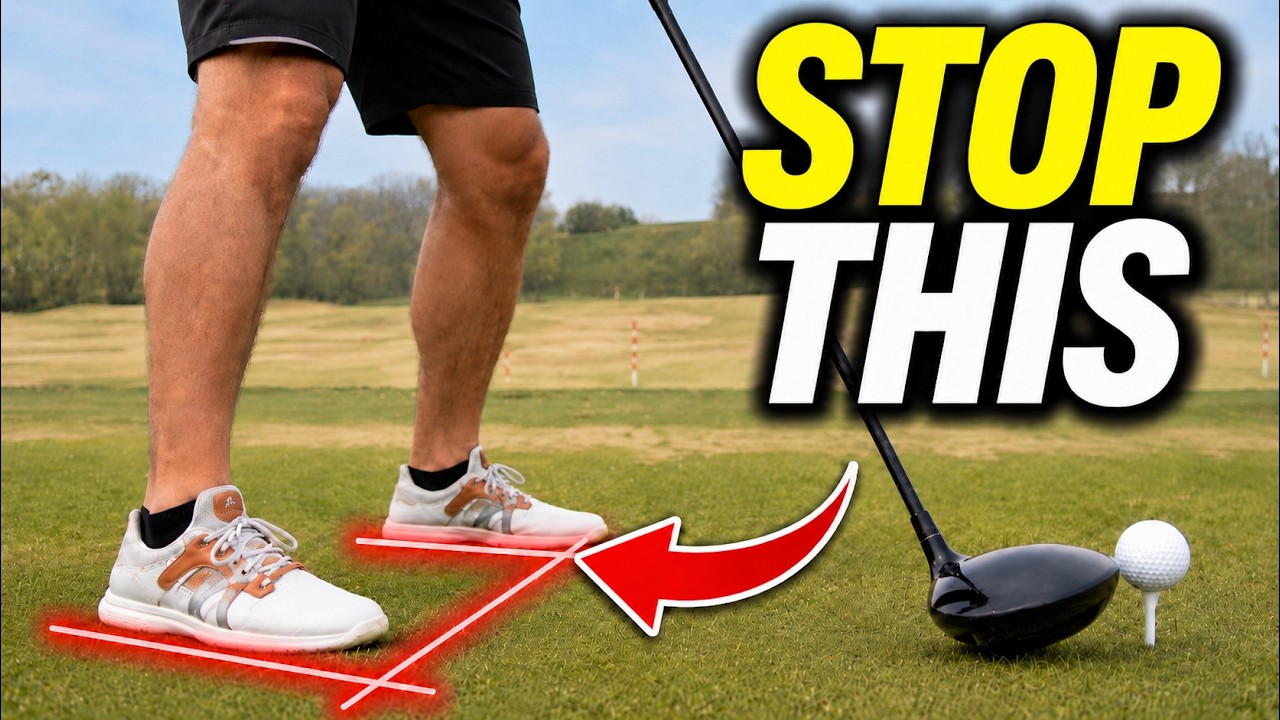
A closed stance, trail foot pulled back, is supposed to promote an inside out swing path by pre-rotating the body toward the target. In theory, the body is already partially turned through, making it easier for the club to come from inside to out.
In practice, for senior golfers, it does not work that way.
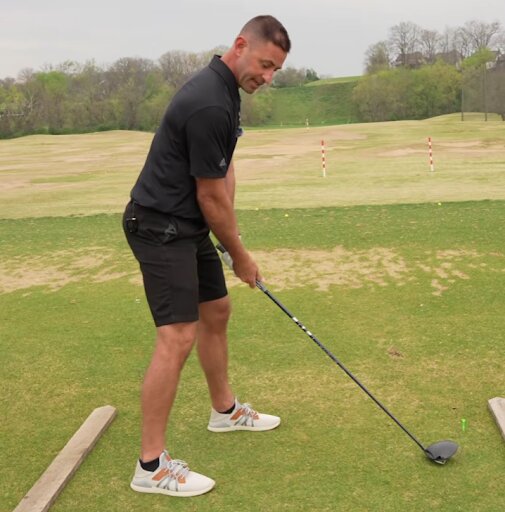
Here is why. The senior golfer who closes the stance typically still has the same swing they always had, arms initiating, over the top path, outside to in delivery. A closed stance does not change that swing. It just changes where the body is aimed. The arms still go up and come back down on the same steep path. The result is the same over the top move, just from a different starting position.
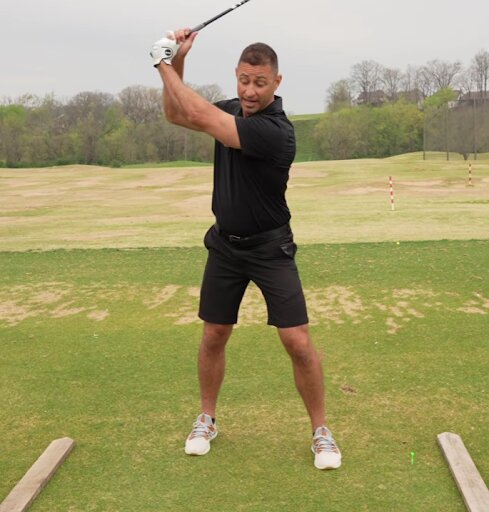
One compensation leads to another. The closed stance is a compensation for an over the top swing. The over the top swing is a compensation for poor initiation and takeaway. Stacking compensations on top of each other never produces the consistent draw. It produces one lucky draw every fourteen shots and confusion about why it is not repeatable.
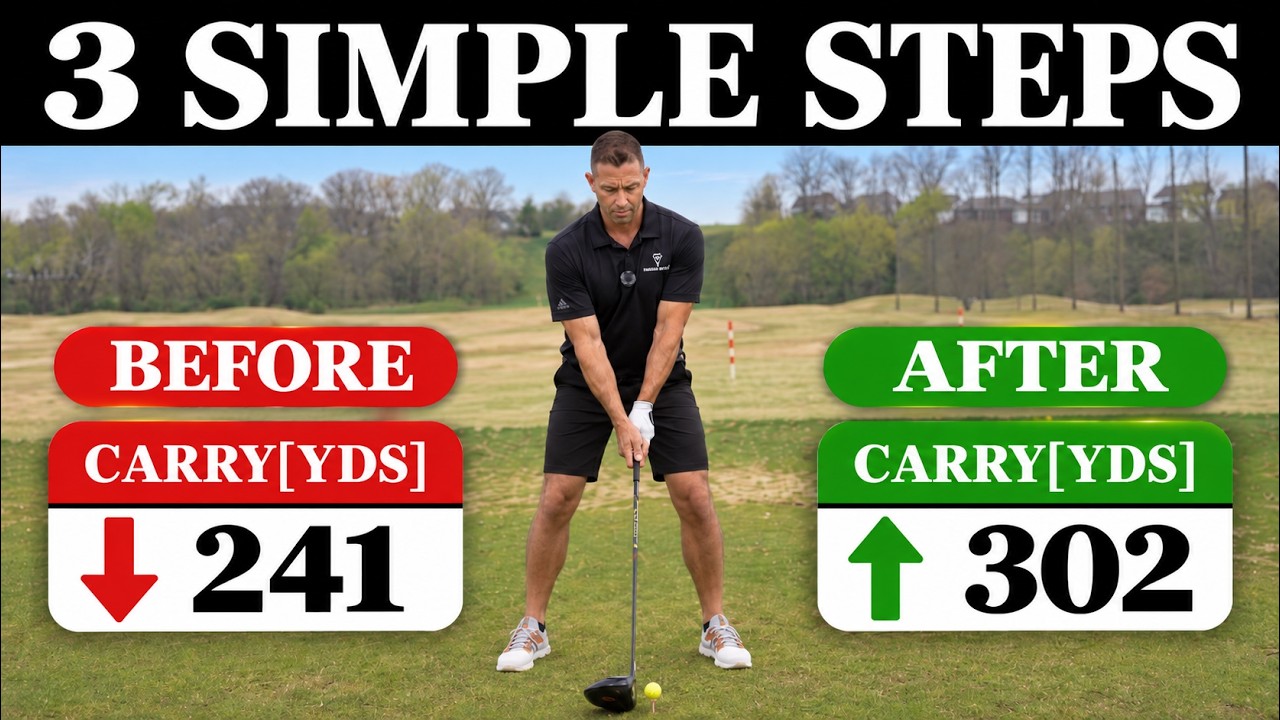
Start in neutral. Fix the root cause. The draw follows automatically.
The Root Cause, Hands Initiating and Club Going Inside
Here is where the over the top move actually starts. Not at the top of the backswing. At the very beginning of the takeaway.
When the hands initiate the backswing, the club naturally goes inside, behind the body, on the way back. That inside takeaway puts the club in a position at the top where the only available downswing path is over the top and outside to in. The club went inside on the way back and has to go outside on the way down to get back to the ball.
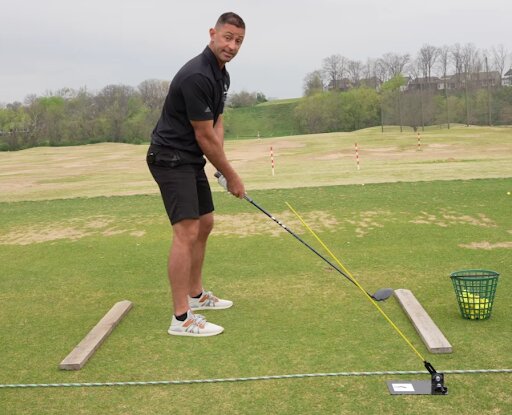
The fix requires two things working together. The belt buckle initiating the backswing instead of the hands. And the club head going over the swing plate alignment stick on the takeaway instead of inside it.
The Swing Plate, Immediate Takeaway Feedback
Here is the tool that makes the correct takeaway immediately trainable.
Place a swing plate with an alignment stick in it directly behind the golf ball, roughly three to four feet back. The stick is now in the path that the club would take if the takeaway went inside.
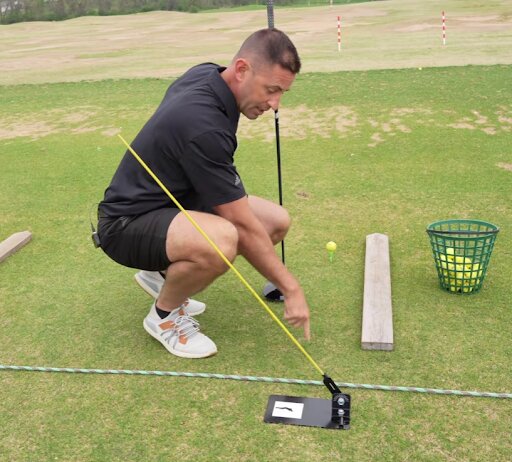
In the correct takeaway, the club head goes over the stick, not inside it. Not dramatically outside it. Just over it, tracking on the correct path that keeps the club on a plane that allows shallowing on the way down.
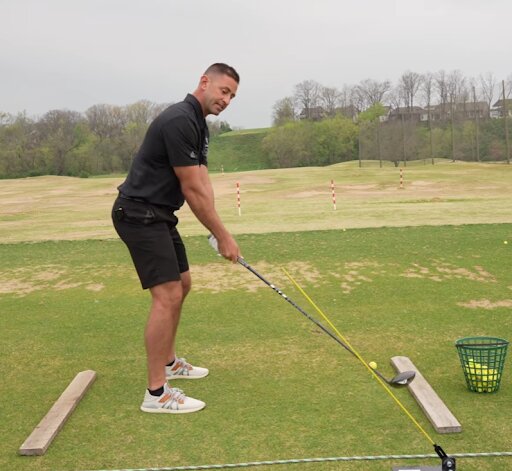
When the club goes inside the stick during the takeaway, it is immediate, visible, unchallengeable feedback. The path was wrong. The stick proves it. When the club goes over the stick, the path was correct. The stick confirms it.
This is the difference between knowing intellectually that the takeaway should not go inside and having immediate, real time feedback every single rep.
Belt Buckle First, Both Directions
Here is the sequence that shallows the club automatically without any arm manipulation.
Initiate the backswing with the belt buckle. Not the hands. The belt buckle turns first and the hands follow. As the backswing builds, the club head goes over the alignment stick and the belt buckle reaches the top of its rotation.
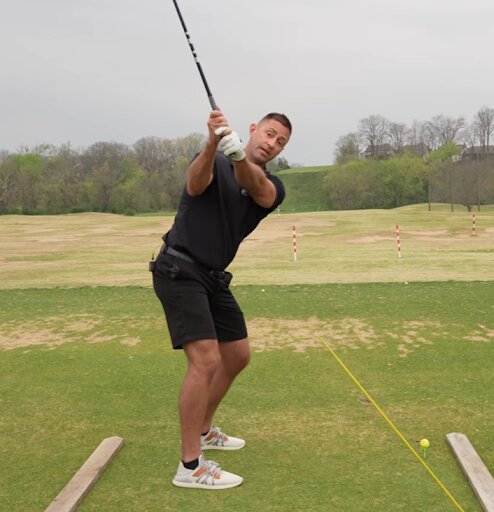
At the top of the backswing, initiate the downswing with the belt buckle in the opposite direction. This is the key moment. The belt buckle reverses toward the target before the arms or hands do anything.
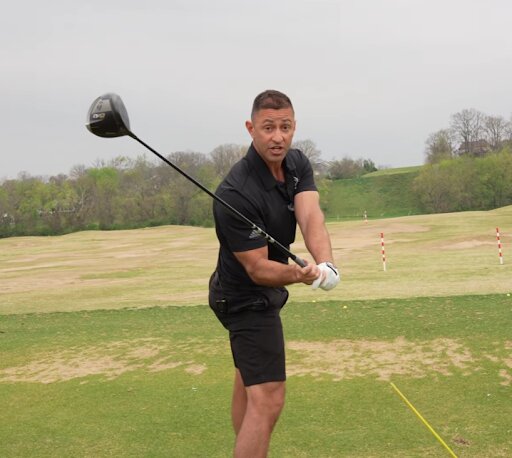
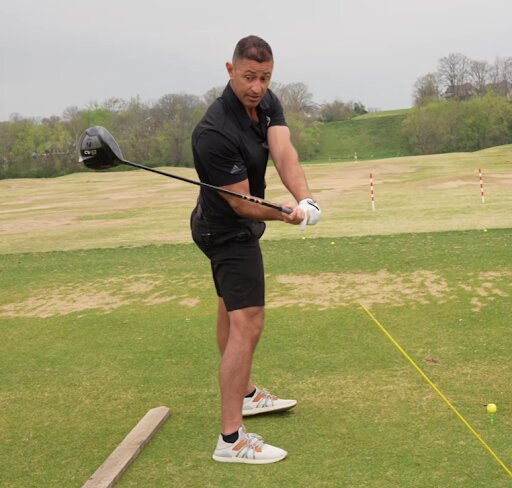
Here is what happens to the club when the belt buckle leads the downswing and the arms are left behind. The club shaft shallows. Not because the hands manipulated it. Because the lower body cleared first and created the room for the club to drop onto a shallower plane naturally.
No arm action. No conscious hand move to shallow the club. Belt buckle leads, club shallows. Then from that shallow position, the release naturally goes from inside to out. That inside out release produces the draw.
The 25 Percent Speed Rule
Here is the practice prescription that makes this pattern actually stick.
Do not try to hit full power shots with this swing immediately. Practice at 25 percent of normal distance.
If the driver normally goes 200 yards, practice this swinging to produce 50 yard shots. Not 100 yards. Fifty.
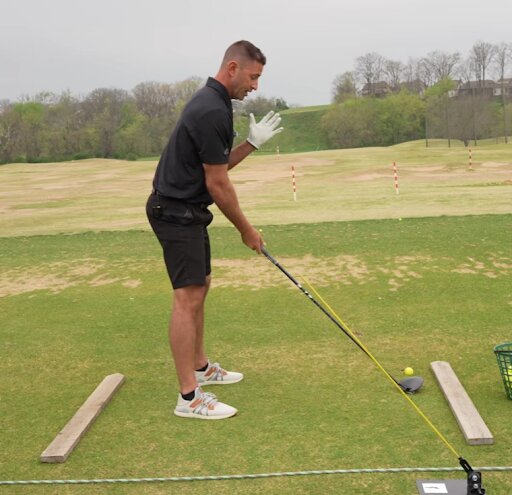
At 25 percent speed, the brain has time to feel the belt buckle initiating, to feel the club going over the stick, to feel the shallow shaft at transition, and to feel the inside out release. The pattern gets built at a speed where the brain can learn it.
The same pattern at full speed requires the brain to already know the movement well enough to execute it in less than two seconds. That only comes from hundreds of 25 percent reps first.
Exaggerate the body motion at 25 percent. Get the body used to moving. Feel the body driving the swing instead of the arms. That exaggerated feeling at 25 percent is what becomes the normal feeling at full speed once the pattern is established.
The Proof That It Works
Here is what happened during the demonstration in this video.
Belt buckle initiating the backswing. Club going over the swing plate stick. Belt buckle initiating the downswing. Club shallowing. Release inside out. 50 yard shot.
And it drew.
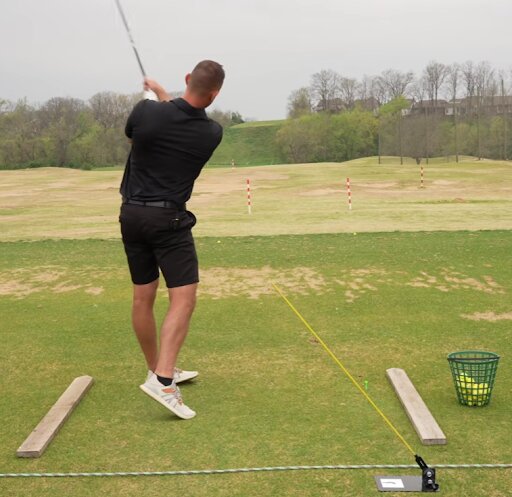
Not because of a closed stance. Not because of a hand manipulation. Because the body led both the backswing and the downswing, the takeaway went over the stick instead of inside it, and the shallow club had no choice but to come from inside to out.
That is a repeatable draw. Not a lucky one. A mechanical, body driven, inside out draw that happens every time the belt buckle leads and the takeaway is correct.
Get a Free Swing Analysis
Want to know whether the takeaway is going inside and whether the belt buckle is actually initiating or the hands are still going first?
Set the camera or phone up at two angles. One from the front, face on. One from behind, down the line. Film in slow motion. Swing.
Send both videos to gaindistance.com and Dr. Berman will give a free swing analysis. The first one is on him.
See exactly what the camera shows, not what the brain thinks is happening. The takeaway path and the initiation sequence are both clearly visible in slow motion and immediately reveal whether the inside out path is mechanically possible from the position the club is in.
Want a Step-by-Step Blueprint?
If this resonates and the advice out there feels designed for 25-year-old tour pros, there is a simple blueprint built specifically for senior golfers.
It breaks down:
How the aging body changes
Which muscles actually produce power
How to gain distance without swinging harder
How to improve consistency while reducing aches and pains
It is written at a fifth-grade reading level with clear visuals and practical drills that can start immediately.
A FREE digital copy is available at: 👉 gaindistance.com
No gimmicks. Just clarity on how the body should move to play better golf for years to come.
Bringing It All Together
Closing the stance is a compensation that creates more compensations. Start in neutral. Fix the root cause.
The root cause is the hands initiating the backswing and the club going inside on the takeaway. The fix is the belt buckle initiating both the backswing and the downswing, combined with the club head going over the swing plate alignment stick on the takeaway.
When the belt buckle leads the downswing and the arms stay back, the club shallows automatically. From that shallow position, the release goes inside to out. The draw happens not because of a trick or a stance manipulation but because the mechanics finally put the club in the right position to produce it.
Practice at 25 percent speed until the pattern is clear. Then build speed gradually. The draw follows the pattern, not the other way around.
At Berman Golf, the focus is biomechanics first. Not cookie cutter swings. The goal is teaching the body how it should move, especially as it ages, so power can be generated safely and repeated under pressure.
The in-house and online coaching programs are built specifically for senior golfers who want more distance and better consistency without beating up their bodies.
For anyone tired of advice designed for tour pros and ready for a blueprint built for their body, help is available.
Because when the belt buckle leads and the takeaway goes over the stick, the inside out path is not something to chase anymore. It just happens.
And when the draw shows up consistently instead of accidentally, the game gets soooooo much easier!
If you enjoyed what you read and want to see it in action, watch the video below where Dr. Berman demonstrates the full draw sequence with the swing plate and hits the ball to prove it works!