Here is the pivot that changes everything for senior golfers.
Stop chasing speed. Start chasing activation.
Those two goals feel similar. They are not. They require completely different approaches, produce completely different results, and one of them is appropriate for the aging body while the other is fighting it.
Most senior golfers are chasing speed. More flexibility so the shoulder turn gets bigger. Faster hip rotation. More club head speed so the ball goes farther. These are all speed pursuits. And for a 25 year old body with fast twitch muscle fiber and natural elasticity, chasing speed makes sense.
For a senior golfer, speed without activation is a small fast cartridge with no knockdown power. It gets there but does not do anything when it arrives.
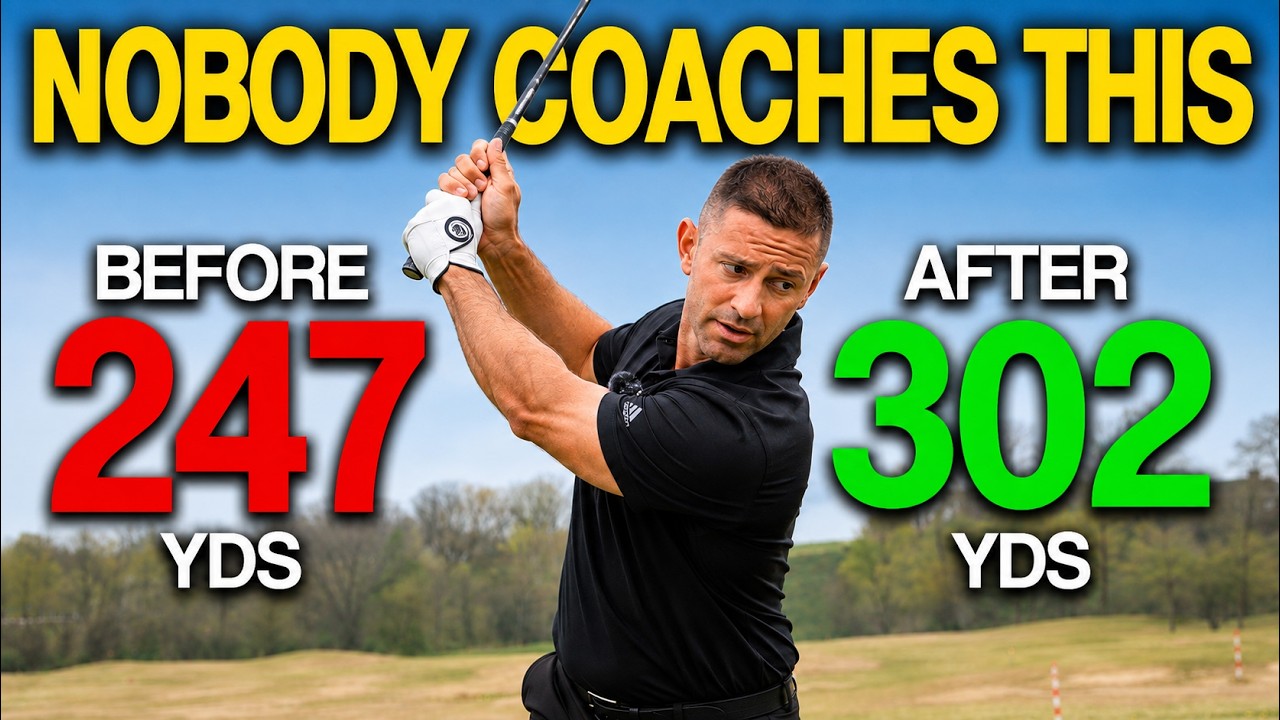
Activation is different. Activation is finding the muscles that are already there, already capable of generating power, and switching them on. And when they switch on, distance follows without any additional speed required.
At Berman Golf, this is the central idea behind everything. Not chasing what the body used to be able to do. Working with what the body can do right now, with the right muscles turned on.
Why Posture Unlocks Everything Downstream
Here is the biomechanical reality that most senior golfers have never had explained to them by someone with a physical therapy doctorate rather than a golf certification.
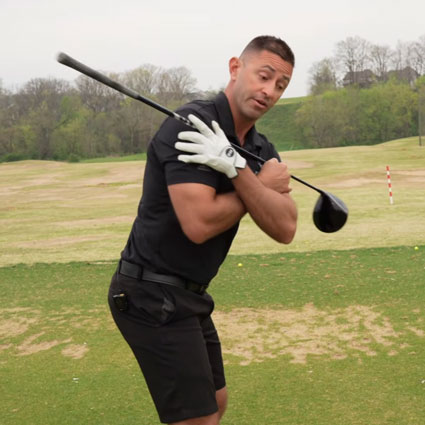
When the spine is flexed forward in a rounded posture, the joints are locked. The shoulder girdle cannot rotate freely because the thoracic spine underneath it is stuck in a flexed position. The rotation available from that flexed position is a fraction of what is available when the spine is upright.
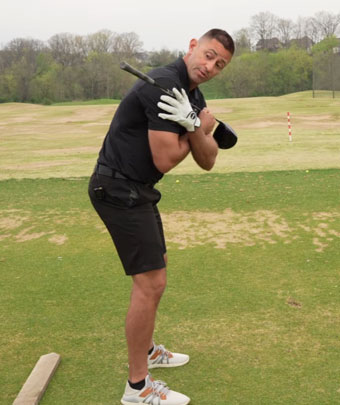
Fix the posture and shoulder turn doubles or triples without any additional flexibility work. Not because the body got more flexible. Because the joints got unlocked by putting the spine in the position it was designed to rotate from. Flexed equals locked. Upright equals free. That is not a golf principle. That is a biomechanical fact that applies to every human spine regardless of whether golf is involved.
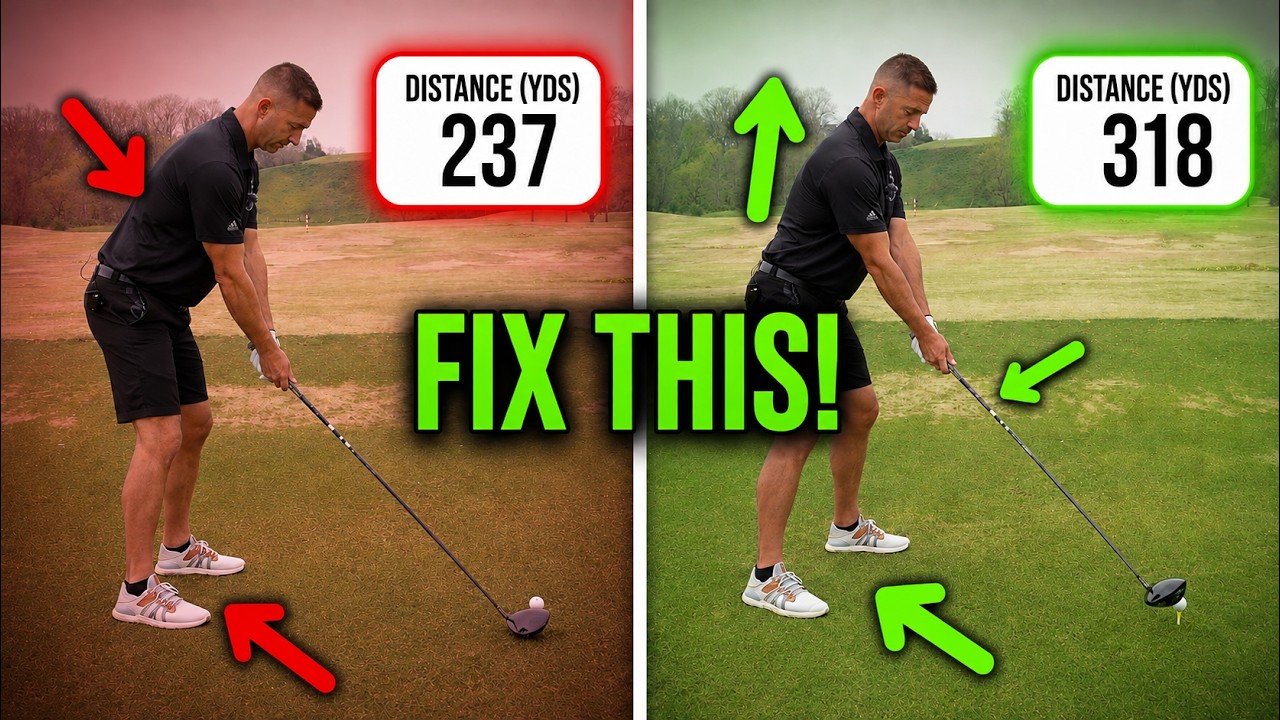
Stand tall to the ball. Chest up. Belly button in. Soft knees. Hips pushed back to get down to the ball instead of rounding forward. That single postural change unlocks shoulder turn that was always there but unavailable.
The Activation Chain That Speed Training Misses
Here is what speed training programs do not address and why they fall short for senior golfers.
Speed comes from muscles working efficiently and in the right sequence. But if the muscles that are supposed to generate speed are not activated at address, speed training just teaches those muscles to move faster without being switched on. The result is faster arm swings with the same dormant core and glutes that were producing weak contact before.
Activation training does something different. It switches the muscles on first. Then whatever speed already exists goes through activated, engaged muscles instead of dormant ones. The same swing speed now produces significantly more power because the transfer efficiency from body to club is dramatically higher.
Here is the activation sequence that makes this happen.
Pull the belly button in toward the spine at address. Core engaged. Keep breathing.
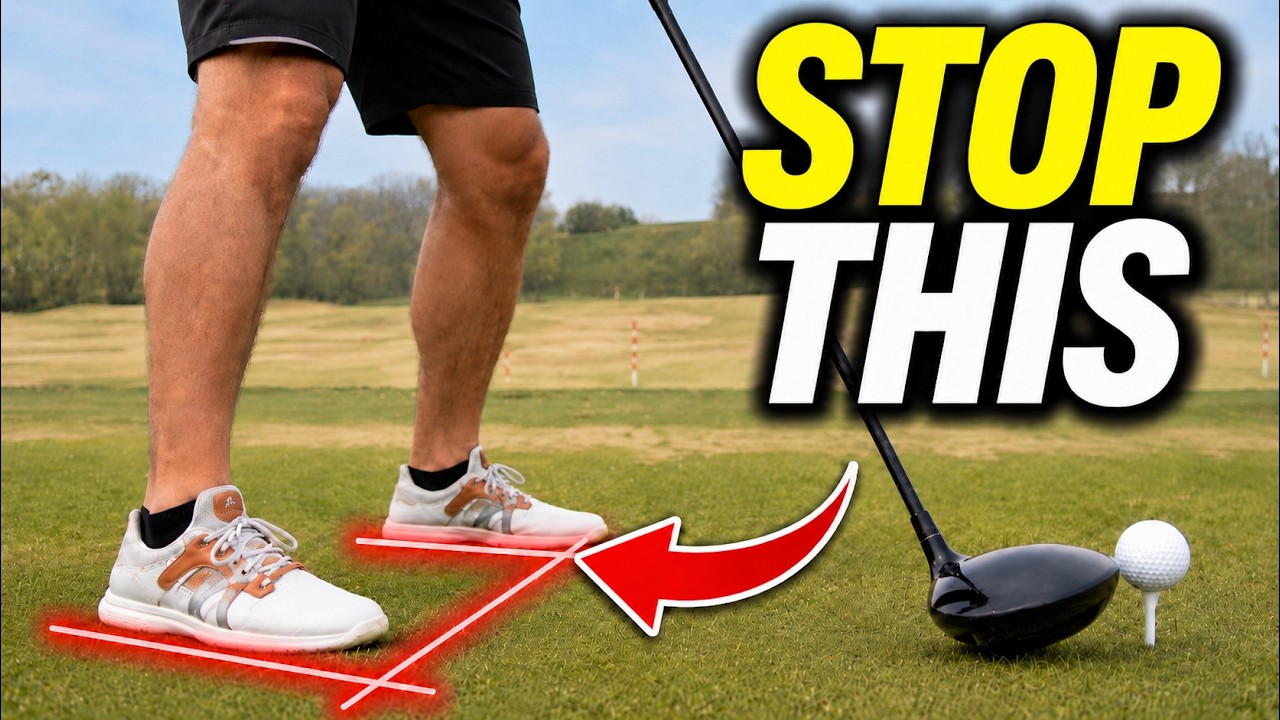
Flatten the arch of the trail foot into the ground. Think about finding the ground with the arch. Not pressing hard. Just connecting.
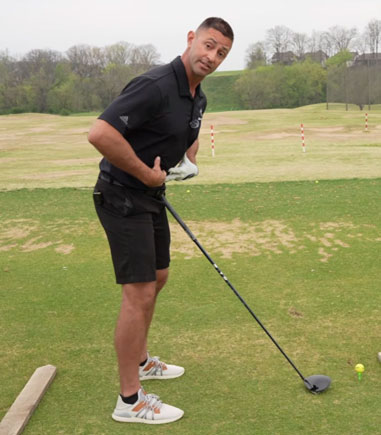
Here is the anatomy that makes those two things so powerful together. The foot is connected to the ground. The belly button is connected to the core. What is in between? The glute. When the foot is connected below and the core is engaged above, the glute activates in between them as the bridge that links ground force to rotational power.
Foot engaged. Glute engaged. Core engaged. That is the activation chain. And it all happens before the first movement of the swing.
Why the Belt Buckle Has to Move First
Here is the third piece, and it is the one that determines whether the activation chain built at address actually contributes to the swing or gets bypassed the moment the club starts moving.
When the hands initiate the backswing, the brain registers the hands as the primary driver. The activation chain that was just built at address becomes irrelevant because the brain has already decided the hands are in charge.
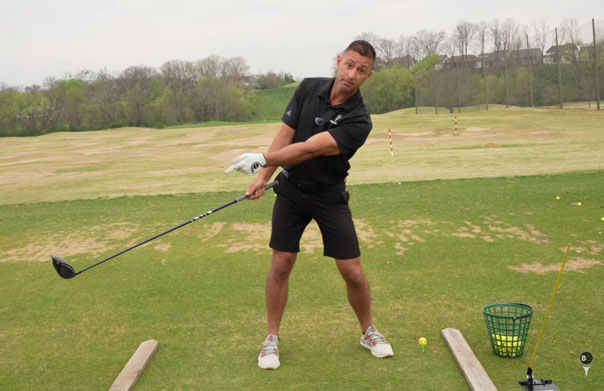
When the belt buckle initiates the backswing, the brain registers the body as the primary driver. The activation chain that was built at address gets recruited because the body is leading and the muscles are being asked to contribute.
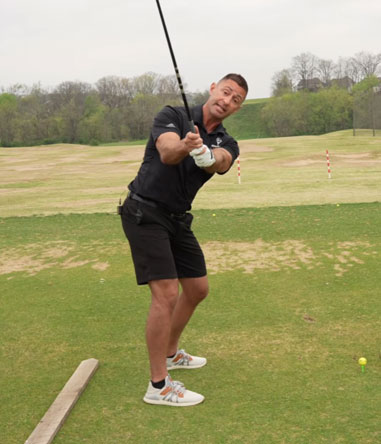
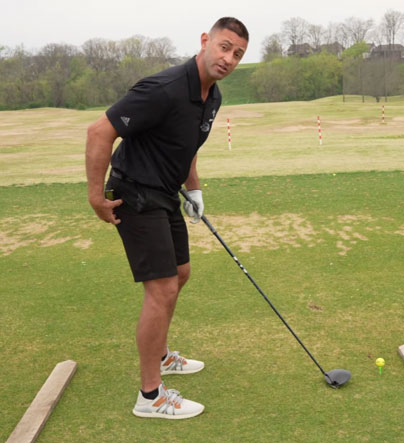
The visual test is simple. In the correct initiation, the belt buckle, hands, club shaft, and club head are all in alignment at the first quarter of the backswing. The belt buckle moved. The hands moved with it. Everything is connected.
In the incorrect initiation, the hands are ahead and the belt buckle has not moved. The hands went first. The body is following instead of leading. And from that moment, the power generated by the activation chain has nowhere to go because the brain is not routing it through the swing.
Belt buckle to the right. Body to the right. Belt buckle to the left. Body to the left. That is the entire swing reduced to its most essential instruction. The body moves and the hands follow. Not hands first with the body trying to catch up.
The Effortless Feel That Follows Activation
Here is what surprises most senior golfers when they first experience an activated swing. It feels easier. Not harder. The ball does not feel like it was hit harder. It feels like it was delivered more efficiently. The contact is more solid. The ball flight is more penetrating. And the body feels like it worked with the swing instead of against it.
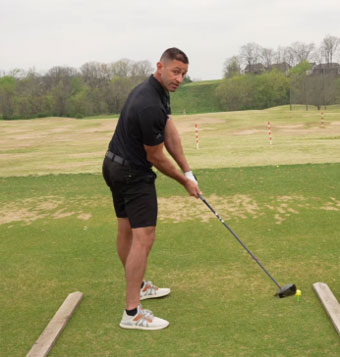
That effortless quality is the payoff of activation. When the right muscles are doing the work they were designed to do, the wrong muscles stop compensating. Arms that were flailing around trying to generate power that the core and glutes should have been providing become quiet and relaxed. The swing gets simpler. Less moving parts. More repeatability.
And repeatability is what produces consistency. Not a perfect swing on one shot. The same activated, body driven swing on every shot.
Get a Free Swing Analysis
Want to know whether the activation chain is actually switched on at address and whether the belt buckle is initiating the backswing or the hands are going first?
Set the camera or phone up at two angles. One from the front, face on. One from behind, down the line. Film in slow motion. Swing.
Send both videos to gaindistance.com and Dr. Berman will give a free swing analysis. The first one is on him.
See exactly what the camera shows, not what the brain thinks is happening. The first movement of the backswing, whether the belt buckle or the hands go first, is one of the clearest diagnostic points in the entire swing video.
Want a Step-by-Step Blueprint?
If this resonates and the advice out there feels designed for 25-year-old tour pros, there is a simple blueprint built specifically for senior golfers.
It breaks down:
How the aging body changes Which muscles actually produce power
How to gain distance without swinging harder
How to improve consistency while reducing aches and pains
It is written at a fifth-grade reading level with clear visuals and practical drills that can start immediately.
A FREE digital copy is available at: 👉 gaindistance.com
No gimmicks. Just clarity on how the body should move to play better golf for years to come.
Bringing It All Together
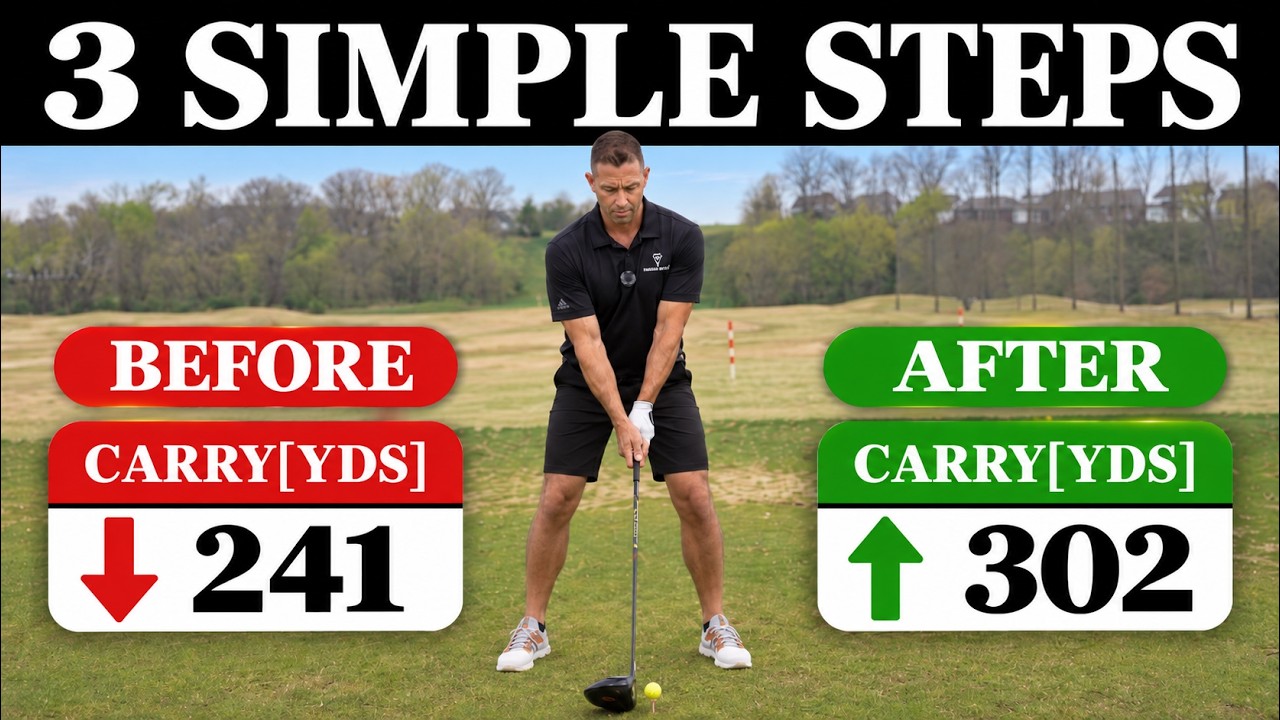
Three things. Posture that unlocks the spine so rotation is available. Activation chain that switches on the foot, glute, and core before the swing starts. Belt buckle initiation that routes the power from those activated muscles through the swing instead of bypassing it.
Stop chasing speed. Chasing speed with dormant muscles produces faster arm swings. Chasing activation with existing swing speed produces more power because the transfer efficiency from body to ball improves dramatically.
The swing does not need to get faster. It needs to get more activated.
At Berman Golf, the focus is biomechanics first. Not cookie cutter swings. The goal is teaching the body how it should move, especially as it ages, so power can be generated safely and repeated under pressure.
The in-house and online coaching programs are built specifically for senior golfers who want more distance and better consistency without beating up their bodies.
For anyone tired of advice designed for tour pros and ready for a blueprint built for their body, help is available.
Because when the right muscles are activated and the body is driving the swing instead of the hands, the distance that was always possible finally shows up in the ball flight.
And when distance comes from activation instead of effort, the game gets soooooo much easier!
If you enjoyed what you read and want to see it in action, watch the video below where Dr. Berman demonstrates all three activation steps and shows what the belt buckle led swing feels like!