Here is a blunt suggestion.
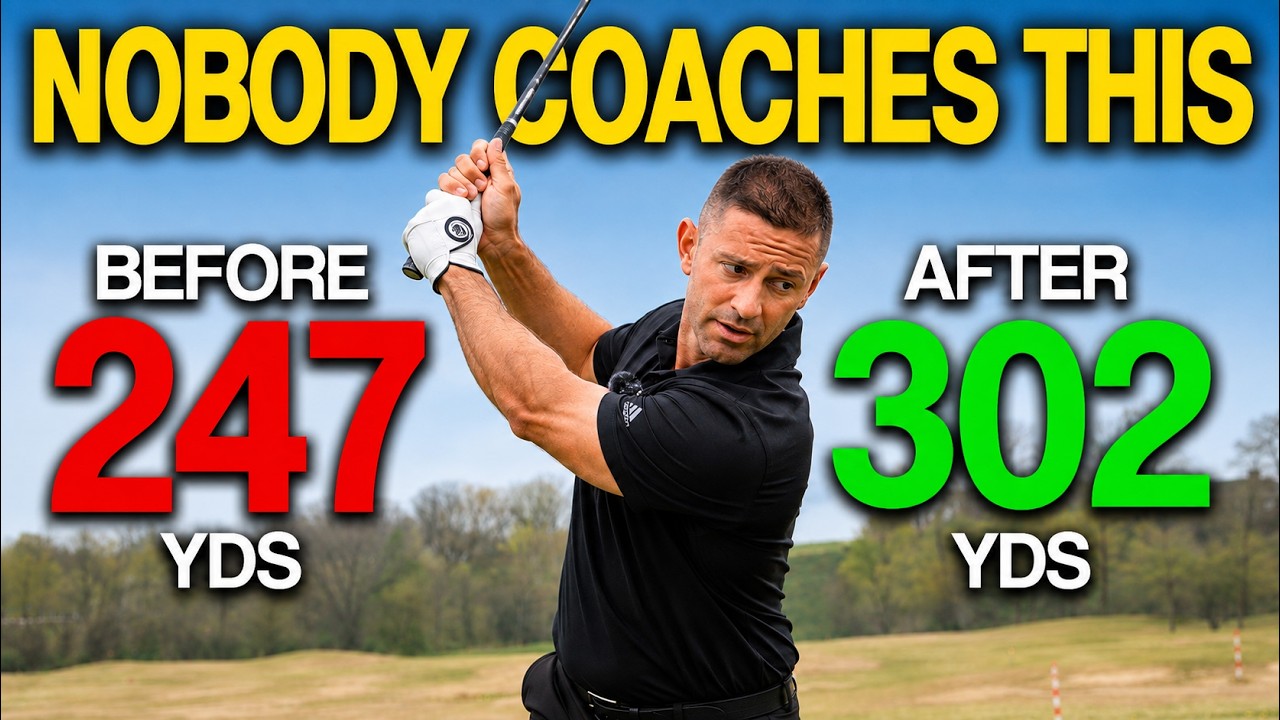
Skip the next golf lesson. Save the $150. And do two specific things instead that will produce more distance improvement than most lessons ever deliver for golfers over 60.
Golf lessons evolved to help young, athletic, flexible bodies make it onto the PGA Tour. The entire system of instruction was built around that body type and those goals. When a 70 year old golfer sits down in front of a screen showing a tour pro’s swing and is told to make the swing look more like that, the instruction is being applied to the wrong body with the wrong goals in mind.
At Berman Golf, the approach is different from the ground up. Not technique first. Body first. And the two things that produce the most immediate improvement for senior golfers have nothing to do with swing path, club face angle, or any of the technical elements that dominate conventional golf instruction.
The Setup That Is Already Working Against the Swing
Here is the most important thing to understand before the first swing thought gets applied.
Proper preparation prevents poor performance. And for most senior golfers, the preparation is already setting the swing up to fail before the club ever moves.
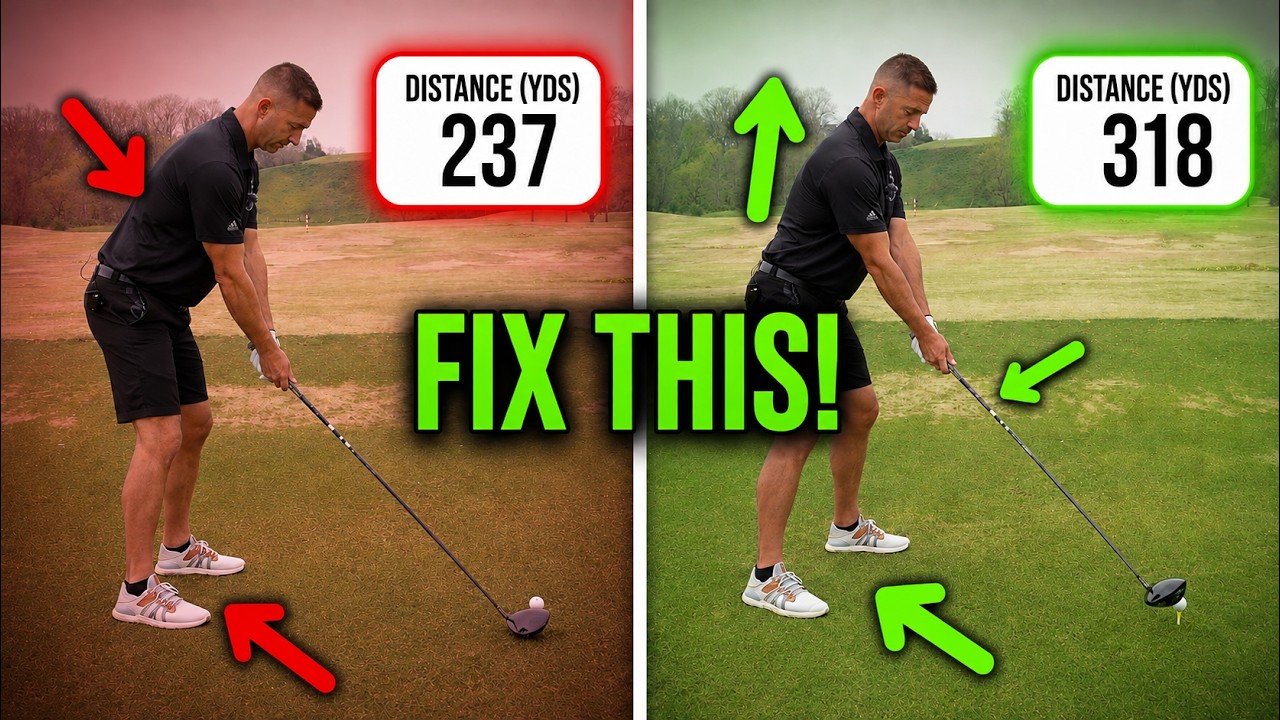
The most common setup issue is rounding down to the golf ball. The upper back curves forward, the shoulders hunch, and the spine gets locked in flexion before the first movement of the swing happens.
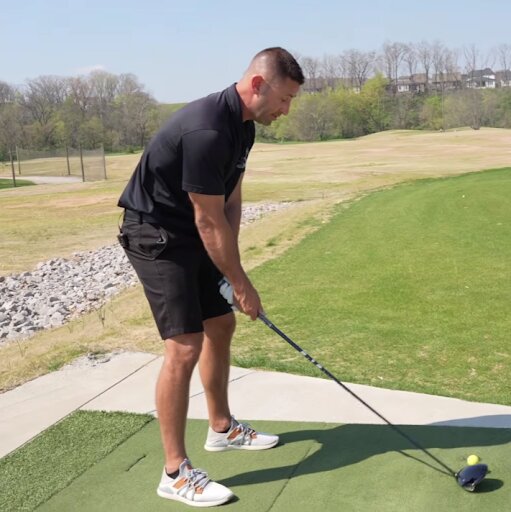
Here is the biomechanical consequence of that rounded posture. The spine is locked. The shoulder girdle cannot rotate freely because the thoracic spine underneath it is flexed and stuck. Shoulder turn from a rounded posture is a fraction of what is available from an upright posture.
Fix only the posture. Nothing else. The shoulder turn doubles or triples instantly.
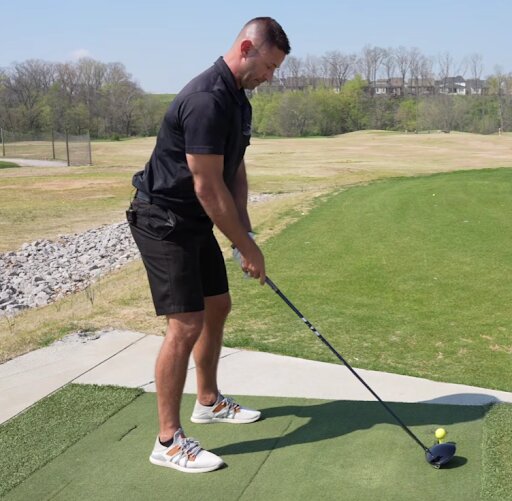
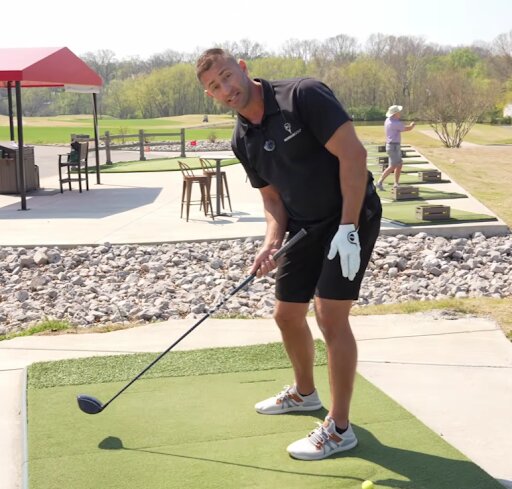
Here is how to set up correctly. Stand tall. Place the club head where it needs to be. Then stand tall with the chest up and the belly button pulled in. Soften the knees. Push the hips back to get down to the ball rather than rounding the spine forward.
That is it. The club head is at the ball. The spine is upright. The body is free to rotate. This is proper preparation.
Activate Before Moving, The Step Most Golfers Never Take
Here is the second thing. And it is the one that makes everything downstream of it work.
The big power muscles, core, glutes, and feet, have to be switched on before the first movement of the swing begins. Not during the backswing. Not at transition. Before anything moves.
The golf swing takes roughly 1.2 seconds from start to finish. There is no time to recruit dormant muscles during that window. The muscles that are not switched on at address will not contribute to the swing. This is not a motivation problem or an effort problem. It is a neurological reality.
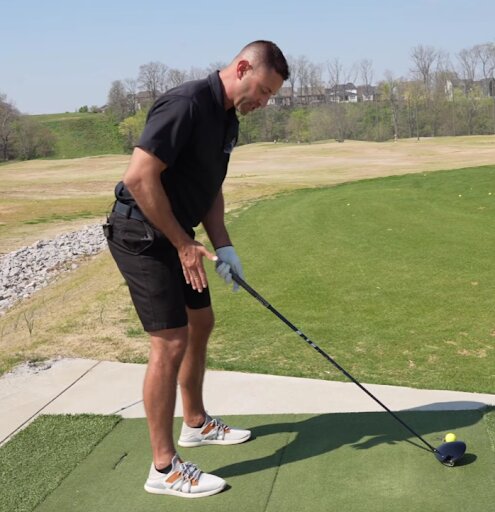
Pull the belly button in toward the spine. Core engaged.
Squeeze the imaginary tomato under the arch of the trail foot. The arch presses into the ground. Foot connected. Glute fires between the foot and the core.
All three working before the swing starts. That is the activation that makes the body driven swing possible.
What the Backswing Should Actually Look Like
Here is where most senior golfers make the mistake that undermines the activation they just built.
The instinct is to wrap the club around the head to create what feels like a big backswing. The club goes up and around, the arms take over, and the activation built at address gets bypassed because the arms are now running the show.
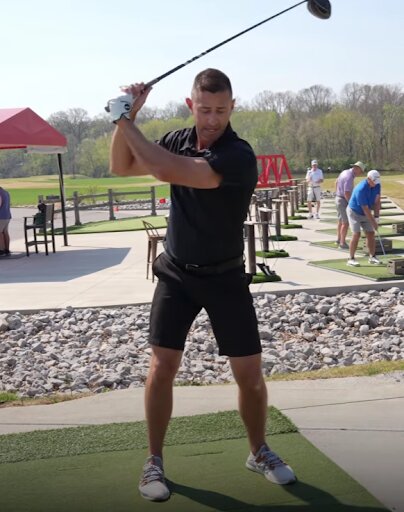
Here is the alternative. Think about taking the club head away from the ball and away from the target, rather than up and around. Flat and extended, not steep and wrapped.
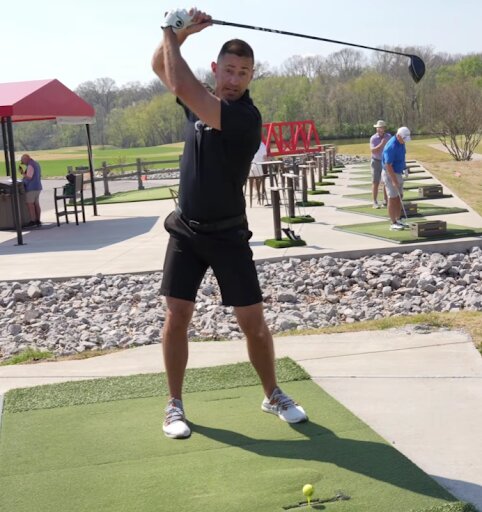
When the takeaway is flat and the body rotates to create the backswing rather than the arms lifting the club, the core stays engaged, the trail foot keeps pressing, and the glutes keep loading. The activation is not bypassed. It is used.
And when the activation is used during the backswing, the downswing becomes a rotation in the other direction instead of a desperate flip trying to compensate for a body that was never recruited.
Rotate right. Rotate left. That is the whole swing when the body is driving it and the activation is present.
The Lead Knee, The Most Commonly Missed Key to Hip Rotation
Here is the piece that is new, important, and applies to virtually every senior golfer who has ever been through this program.
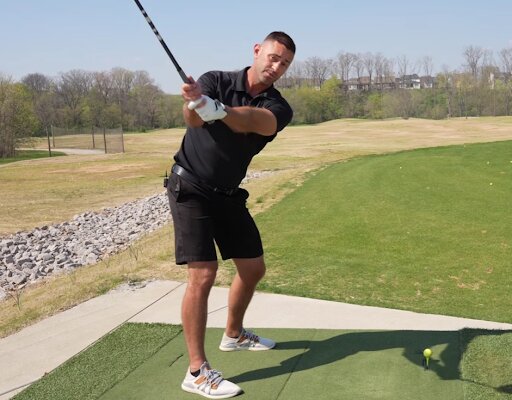
One hundred percent of the senior golfers worked with over the years, when they get through the golf ball, have the lead knee still bent.
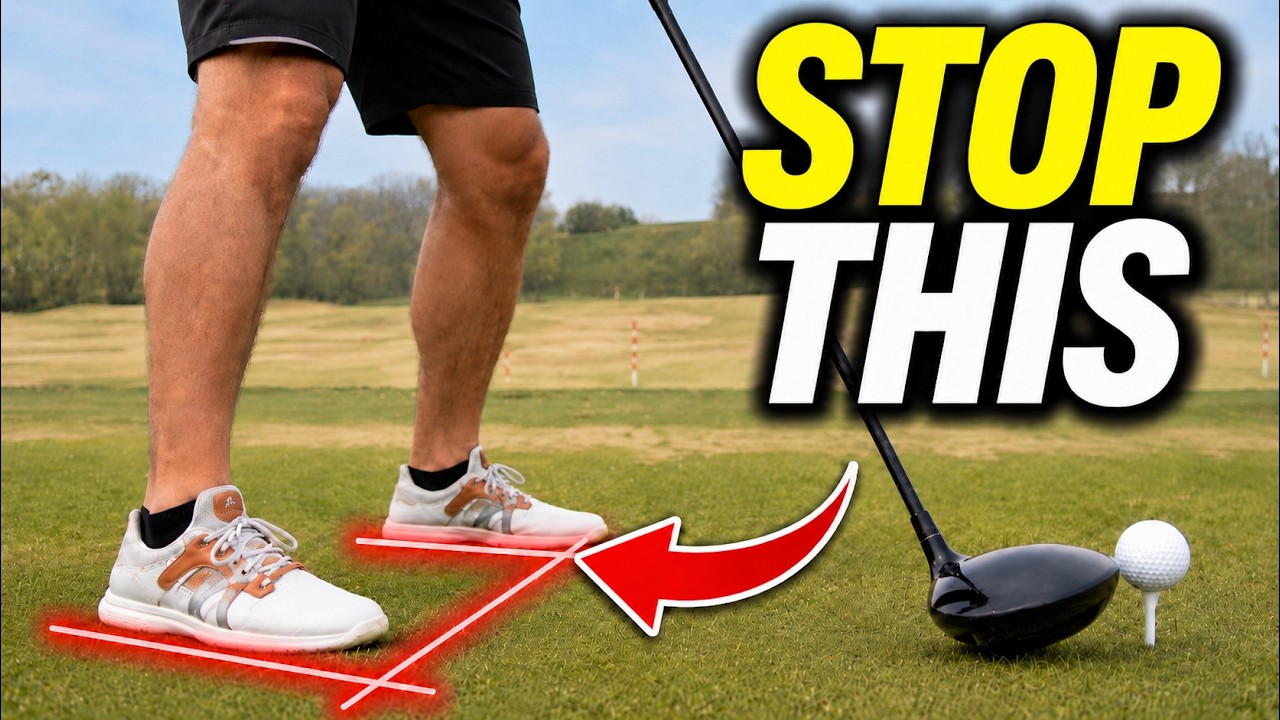
That bent lead knee is what stops hip rotation through impact. Not slows it. Stops it. The hips cannot keep rotating if the lead knee is not straightening as the downswing progresses through impact and into the finish.
Here is the biomechanics behind it. The lead leg acts as the post that the pelvis rotates around during the downswing. For the pelvis to rotate freely through and past impact, the lead leg needs to straighten and become a stable, firm post. When the lead knee stays bent, the post is soft. The pelvis cannot pivot around it. The rotation stalls. The hips stop moving and the hands have to take over and flip to finish the swing.
That flip at impact is not the primary problem. The bent lead knee that stopped the hip rotation is the primary problem. Fix the lead knee and the flip reduces or disappears because the hips finally have a stable post to rotate around.
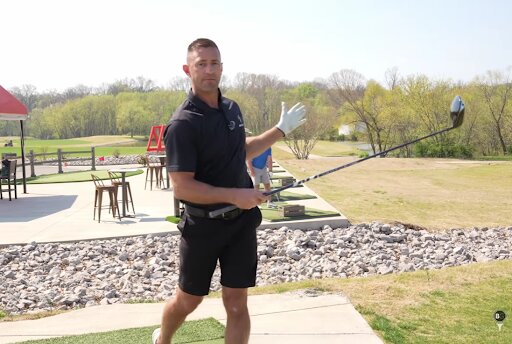
Focus on straightening the lead knee as the downswing comes through. Not locking it out aggressively before impact. Straightening it naturally as the belt buckle rotates toward the target. The straightening should happen through impact and into the finish, allowing the hips to keep rotating all the way until the belt buckle points at the target.
Slow Down the Backswing to Keep the Muscles On
Here is the phrase worth waking up in the middle of the night thinking about.
The slower the backswing, the farther the ball will go.
Here is why. When the backswing goes fast, the body comes up out of the posture, the spine extends, the core turns off. The trail foot rolls to the outside, the glute turns off. With both major power muscles deactivated by a fast backswing, all that is left is arms and hands flipping at the ball.
When the backswing goes slow, the posture can be maintained, the belly button can stay pulled in, the trail foot can keep pressing. The activation built at address survives the backswing and arrives at the top still intact.
Slow the backswing down to the point where it feels almost painfully deliberate. That feeling is confirmation that the muscles are working throughout instead of momentum taking over and switching them off.
Put It All Together
Here is the full sequence without a single technical swing thought about club face, swing path, or hand position.
Stand tall to the ball. Push the hips back. Maintain the upright spine. Belly button in. Tomato squeezed under the trail foot arch. Activation confirmed.
Slow backswing with the belt buckle initiating, the club going away from the target rather than up and around. Core staying engaged. Trail foot staying pressed. Trail glute staying loaded.
Downswing initiated with the belt buckle reversing. Lead knee straightening as the hips rotate through impact. Belt buckle finishing at the target.
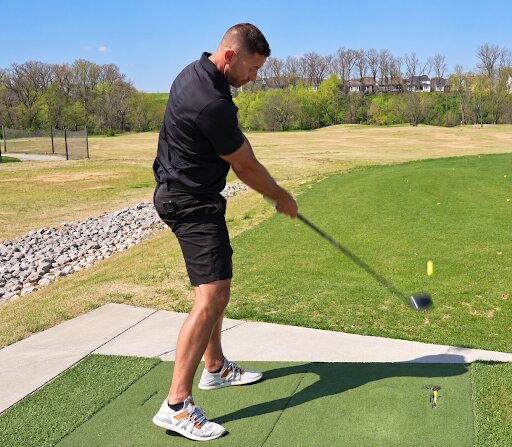
That is the activated swing. No technical positions to find mid swing. Just muscles switched on, body rotating in both directions, lead knee straightening to allow the rotation to complete.
Get a Free Swing Analysis
Want to know whether the setup is costing shoulder turn, whether the muscles are activated at address, and whether the lead knee is blocking hip rotation through impact?
Set the camera or phone up at two angles. One from the front, face on. One from behind, down the line. Film in slow motion. Swing.
Send both videos to gaindistance.com and Dr. Berman will give a free swing analysis. The first one is on him.
See exactly what the camera shows, not what the brain thinks is happening. The lead knee position through impact and the posture at address are both clearly visible in slow motion and almost always reveal the most direct path to improvement.
Want a Step-by-Step Blueprint?
If this resonates and the advice out there feels designed for 25-year-old tour pros, there is a simple blueprint built specifically for senior golfers.
It breaks down:
How the aging body changes
Which muscles actually produce power
How to gain distance without swinging harder
How to improve consistency while reducing aches and pains
It is written at a fifth-grade reading level with clear visuals and practical drills that can start immediately.
A FREE digital copy is available at: 👉 gaindistance.com
No gimmicks. Just clarity on how the body should move to play better golf for years to come.
Bringing It All Together
Two things. Proper preparation and muscle activation before the swing starts.
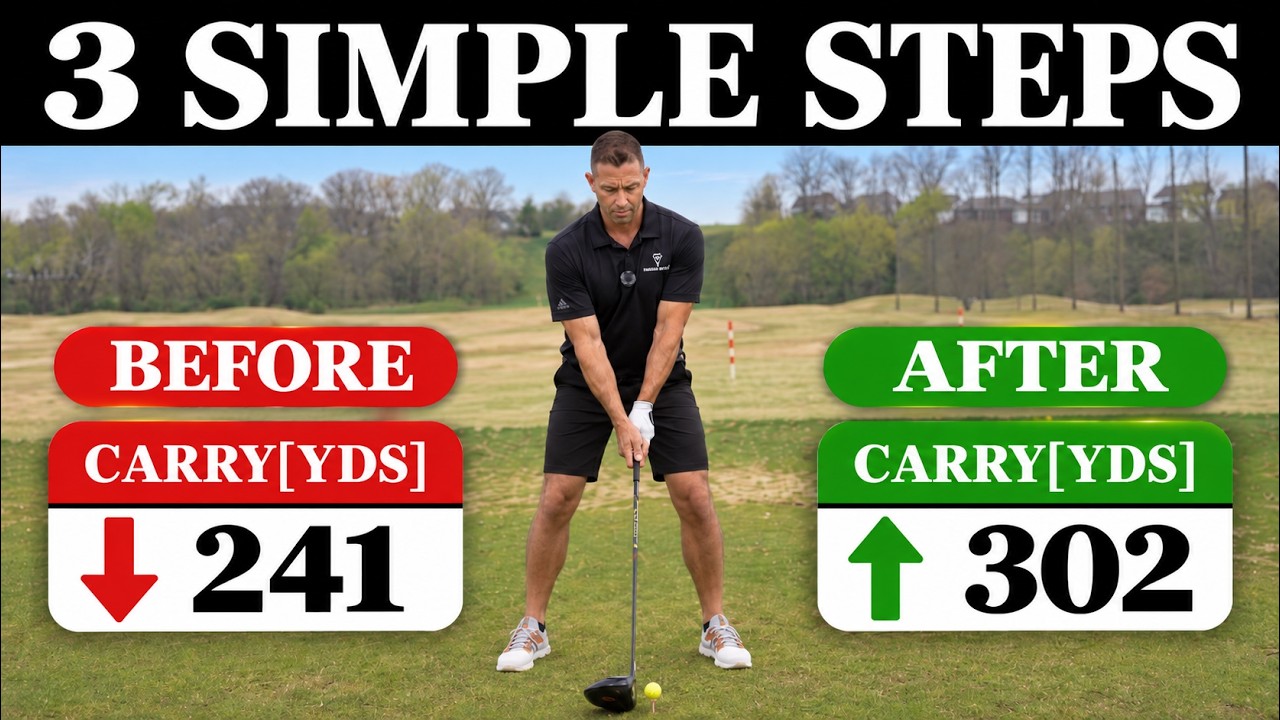
Preparation means standing tall, pushing the hips back, maintaining the upright spine that allows the thoracic spine to rotate freely. That single posture change doubles or triples shoulder turn without any additional flexibility.
Activation means belly button in and tomato squeezed under the trail foot arch before anything moves. Core, foot, and glute all switched on. Slow backswing keeping them on. Belt buckle initiating both directions. And critically, lead knee straightening through impact so the hips can keep rotating all the way to the finish instead of stalling with a bent knee and forcing a flip.
At Berman Golf, the focus is biomechanics first. Not cookie cutter swings. The goal is teaching the body how it should move, especially as it ages, so power can be generated safely and repeated under pressure.
The in-house and online coaching programs are built specifically for senior golfers who want more distance and better consistency without beating up their bodies.
For anyone tired of advice designed for tour pros and ready for a blueprint built for their body, help is available.
Because when the setup is right, the muscles are on, and the lead knee straightens through impact, the hips finally finish rotating and the ball goes where it is supposed to go.
And when the hips rotate all the way through, the game gets soooooo much easier!
If you enjoyed what you read and want to see it in action, watch the video below where Dr. Berman demonstrates the full activated swing and the lead knee fix!