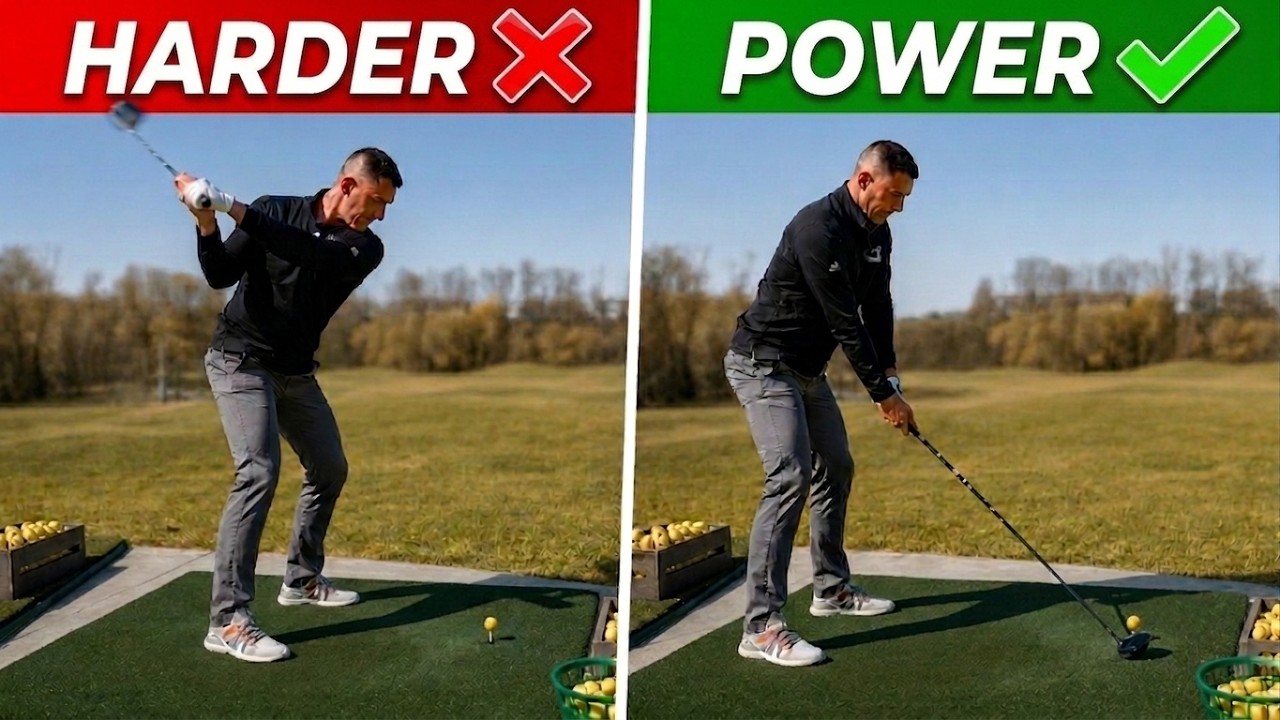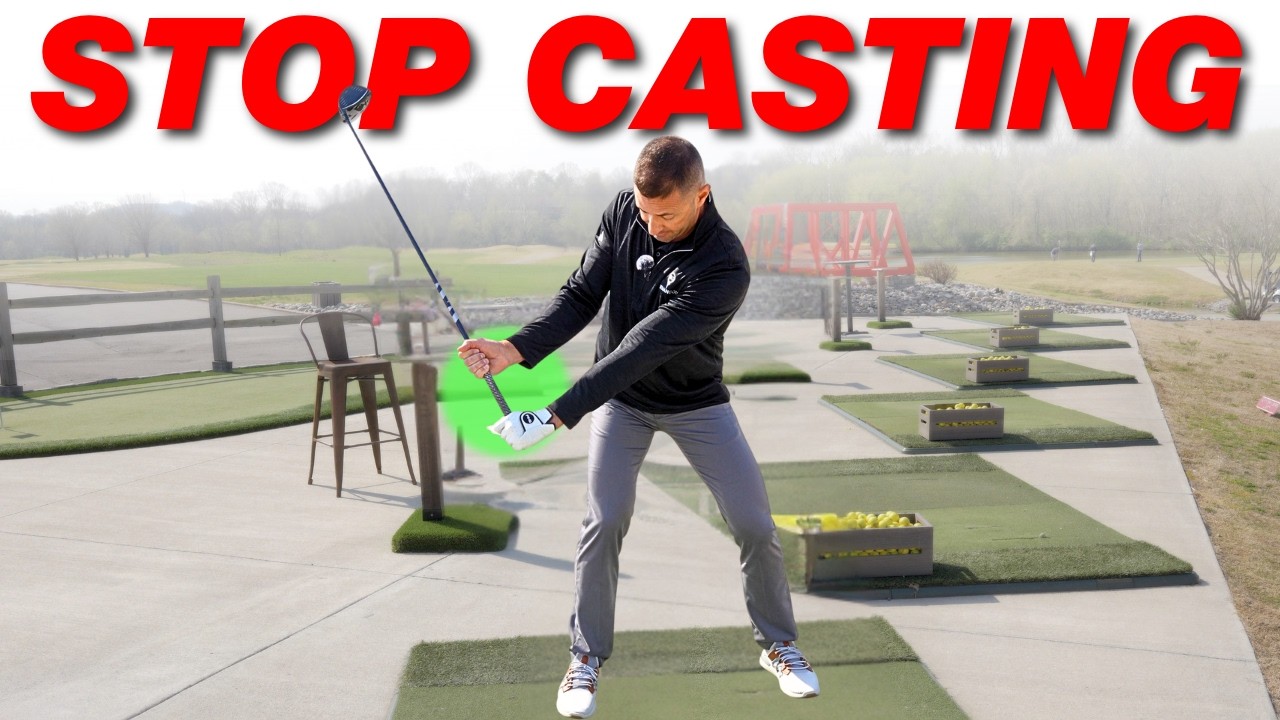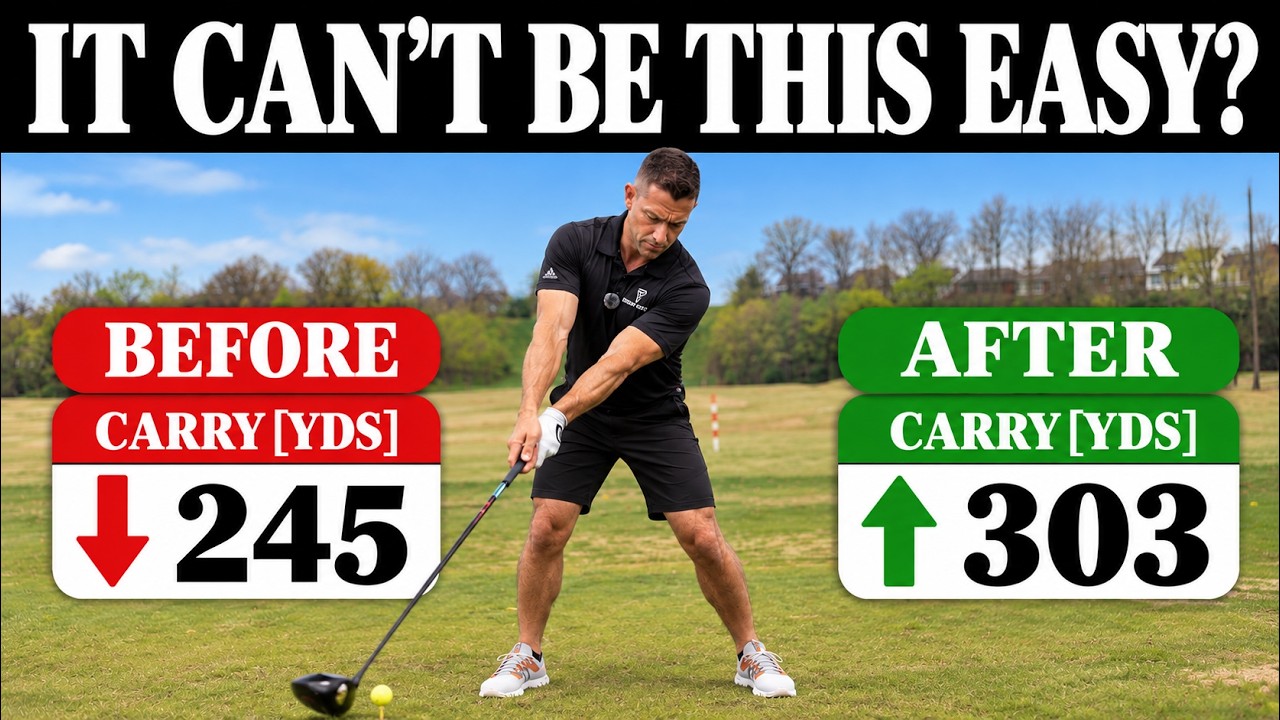
Here is the honest diagnosis for every senior golfer who cannot hold a good swing together for a full round.
The big power muscles are not on at the one moment they matter most.
That moment is the transition from the backswing to the downswing. Dr. Berman says that if the big power muscles are not turned on right there, there is no chance at a consistent golf shot throughout the entire round. And no chance of arriving at the 19th hole feeling good about it.
At Berman Golf, the fix is a drill that takes one broken tee and a few minutes, built on the method that has helped thousands of seniors use the big power muscles to swing the club more efficiently.
Why Your Downswing Loses Power
Here is what is going on.
The downswing does not start at the top. It starts with what the body is doing before the top. If the core, glutes, and foot are off, nothing powerful is left to start the club back down. The result is an inconsistent swing, all round long.
The golfer needs those muscles on and kept on. That is what the drill trains.
The Broken Tee Power Drill
Here is what is needed. One broken tee.
Get into the address position. Take the head of the broken tee and put it right underneath the arch of the trail foot. For a right handed golfer, that is the right foot.
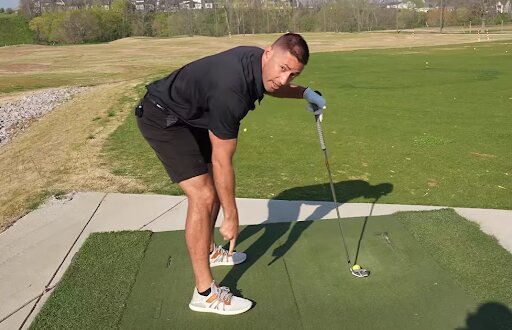
Wake Up Your Core Instantly
Here is step one.
Pull the belly button in. That turns the core on. No bracing is needed. Dr. Berman says it is not like a Mike Tyson punch. Just pull the belly button in, and the core is activated.

Unlock Power Through Your Trail Foot
Here is step two, and Dr. Berman calls this the magic part.
Try to smash the head of the tee with the arch of the foot. Not the toes. Not the heel. Do not straighten the knee. Do not buckle the knee. Just think about smashing the tee and feeling it with the arch of the foot.

Smash the arch down without buckling the knee. That allows the golfer to find the ground and turn the glutes on.
So the sequence is: belly button in, find the tee, glutes on. Now the only job is to keep them on through the transition.
The Backswing Mistake Killing Consistency
Here is the problem the golfer is going to run into.
The backswing goes too far. When it does, core activation is lost. The core has to keep firing through the whole move.

The Halfway-Back Power Check
Here is how to practice it.
Go halfway back and hold. Now really focus on smashing the tee. Really pull the belly button in. Keep breathing.

There should be a lot of muscles working. Smash the tee. Pull the belly button in. Dr. Berman says he is pushing so hard through the right leg that he can pick the left leg up and dance it right there.
Test If You Are Truly Loaded
Here is the checkpoint.
Go halfway back. Push hard through the right foot. Belly button in. Feel the glute kick in. Then try to pick the left foot up.
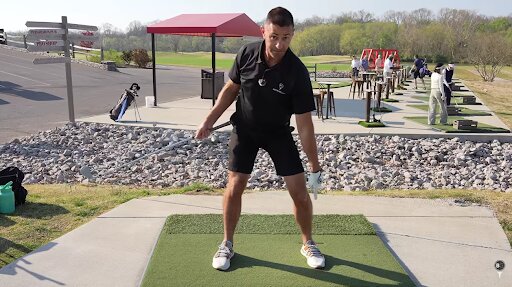
If the left foot can come up, the trail leg is loaded. And if the trail leg is loaded, the big power muscles are working. If the left foot cannot come up, the push through the right foot is not hard enough yet.
Find Your Powerful Backswing Limit
Here is how far to go.
From the halfway-back position, go slowly, slowly, slowly as high as possible. It will probably be about where Dr. Berman stops. Go any higher and the golfer will lose either the core, the foot, or the glute.
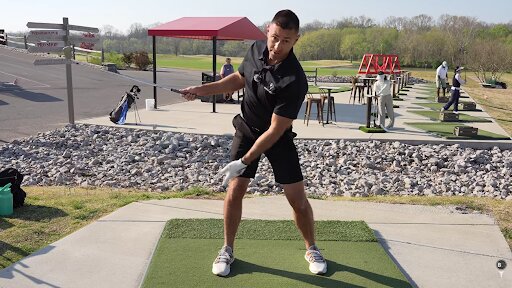
That is how to train the big power muscles going into the backswing.
Stop Leaking Power at the Top
Here is what the golfer should not be doing.
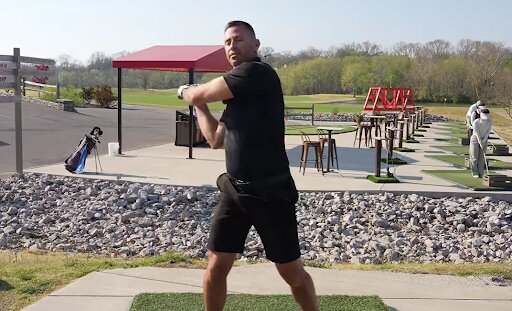
Do not stand up. Do not wrap the club around the body. And definitely do not straighten the right knee and bend the left elbow.
Build a Stronger Backswing Pattern
Here is the pattern to repeat.
Address. The head of the tee under the arch of the right foot. Slowly go back. Bend. Reach the hands away. The core is firing like crazy.
Dr. Berman says the golfer should not be able to go much further than this. That is it. This is not the entire golf swing. It is how to train the brain to use the big power muscles.
Turn the Drill Into Your Swing
Here is how to build from there.
Once enough repetitions are done and the feeling is clear, go a little farther. Then a little farther. Then a little farther. Do it gradually.
Why Traditional Lessons Keep Failing
Here is the question worth asking.
If traditional golf lessons actually worked, there would be no distance loss and no reaching for the ibuprofen when making the turn heading into the back nine. It is time for a different approach. It is time for an activated approach.
The Core Cue That Protects Your Power
Here is a cue that makes the whole drill safer and stronger.
Think about pulling the belly button in so hard that it is actually what stops the golfer from going back further. If the golfer goes so far that the belly button lets go, the back starts to arch. The body lengthens through the stomach. The core is lost.

Dr. Berman says that is when the game is over. There are only so many times a golfer can swing the club that way before the back, the knees, or the shoulders give out.
Swing Smarter With Bigger Muscles
Here is the point of the whole drill.
The goal is to work smarter, not harder. Use the big power muscles to go into the backswing, so the same big power muscles keep working as the club comes through.
Get a Free Swing Analysis
Want to know whether the core and glute are turning off before the transition right now?
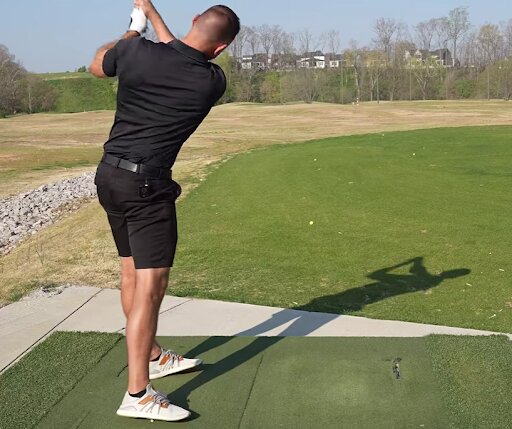
Set the camera or phone up at two angles. One from the front, face on. One from behind, down the line. Film in slow motion. Swing.
Send both videos to gaindistance.com and Dr. Berman will give a free swing analysis. The first one is on him.
See exactly what the camera shows, not what the brain thinks is happening. How far the backswing travels and whether the back starts to arch are two of the clearest things visible in slow motion, and two of the most commonly missed from the inside.
Want a Step-by-Step Blueprint?
If this resonates and the advice out there feels designed for 25-year-old tour pros, there is a simple blueprint built specifically for senior golfers.
It breaks down:
How the aging body changes
Which muscles actually produce power
How to gain distance without swinging harder
How to improve consistency while reducing aches and pains
It is written at a fifth-grade reading level with clear visuals and practical drills that can start immediately.
A FREE digital copy is available at: 👉 gaindistance.com
No gimmicks. Just clarity on how the body should move to play better golf for years to come.
Bringing It All Together
Without the big power muscles on at the transition, there is no chance of a consistent round. Put the head of a broken tee under the arch of the trail foot. Pull the belly button in. Smash the tee with the arch of the foot, without buckling the knee. Go halfway back and hold, and check the load by picking up the left foot. Then go slowly as high as the core, foot, and glute stay on, and no higher.
Repeat it, and go a little farther over time. Use the belly button pull as the limiter. Work smarter, not harder.
At Berman Golf, the focus is biomechanics first. Not cookie cutter swings. The goal is teaching the body how it should move, especially as it ages, so power can be generated safely and repeated under pressure.
The in-house and online coaching programs are built specifically for senior golfers who want more distance and better consistency without beating up their bodies.
For anyone tired of advice designed for tour pros and ready for a blueprint built for their body, help is available.
Because when the big power muscles stay on through the transition, a consistent swing is not something to hope for anymore. It just happens.
And when the swing becomes consistent, the game gets soooooo much easier!
If you enjoyed what you read and want to see it in action, watch the video below where Dr. Berman demonstrates the broken tee drill and the halfway-back check!