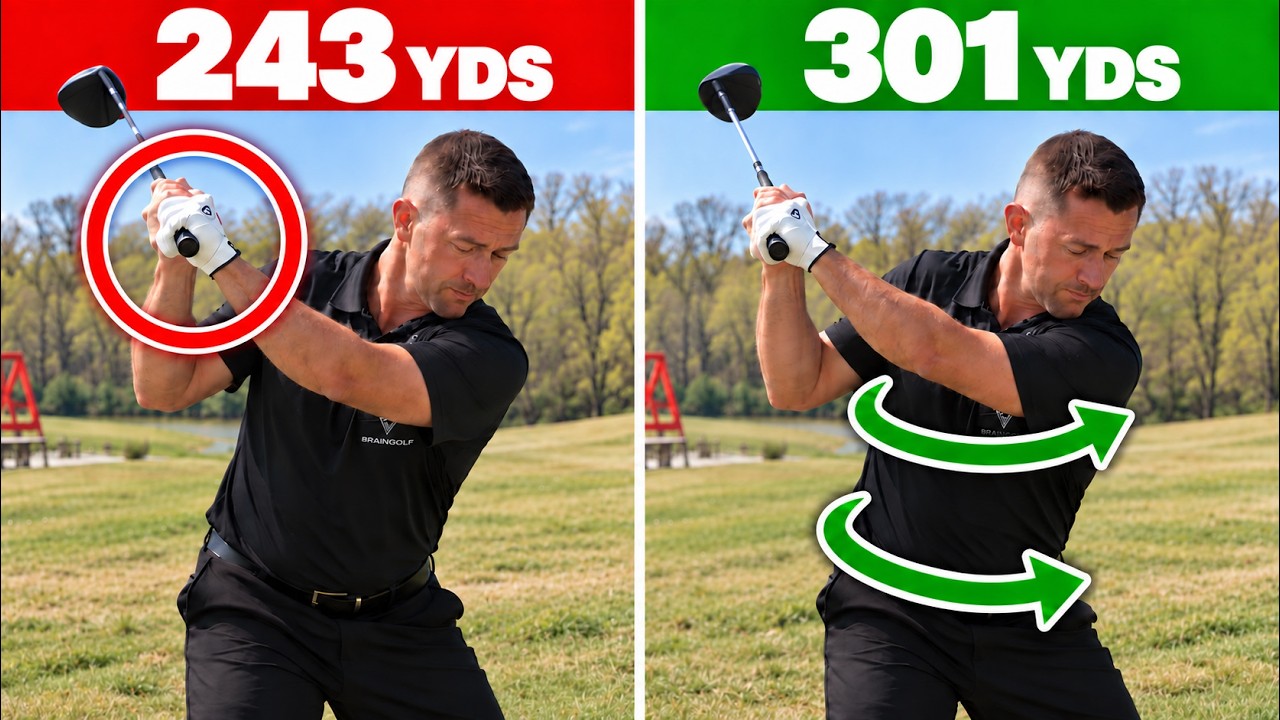
Here is an uncomfortable truth for most senior golfers.
The swing that feels controlled at the top of the backswing is almost certainly not controlled. There is a delta, a gap, between what the swing feels like and what the camera actually shows. And that gap almost always reveals the same two things happening at the top.
The elbow breaking down. The right knee straightening. The head rising. The whole thing going a little farther back than the body can actually control, and the brain having no idea it is happening because it happens in less than two seconds.
At Berman Golf, this is the number one thing the slow motion video reveals that surprises golfers the most. Not that the technique is wrong. That the backswing is bigger than they thought, and that their body is not actually going where they think it is.
The fix has two parts. Activate before moving. And use the belly button to stop the backswing at the right place.
The Delta Between Feel and Reality
Here is the simplest way to see this for yourself.
Take a slow motion video of the swing and pause it at the exact top of the backswing, right at the transition from backswing to downswing.
Take a screenshot.
Now go to the top of the backswing slowly and hold it statically. Take a photo of that position.
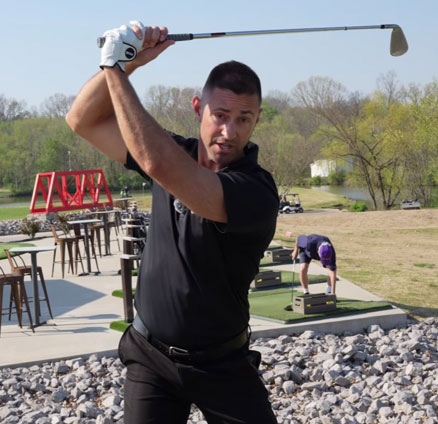
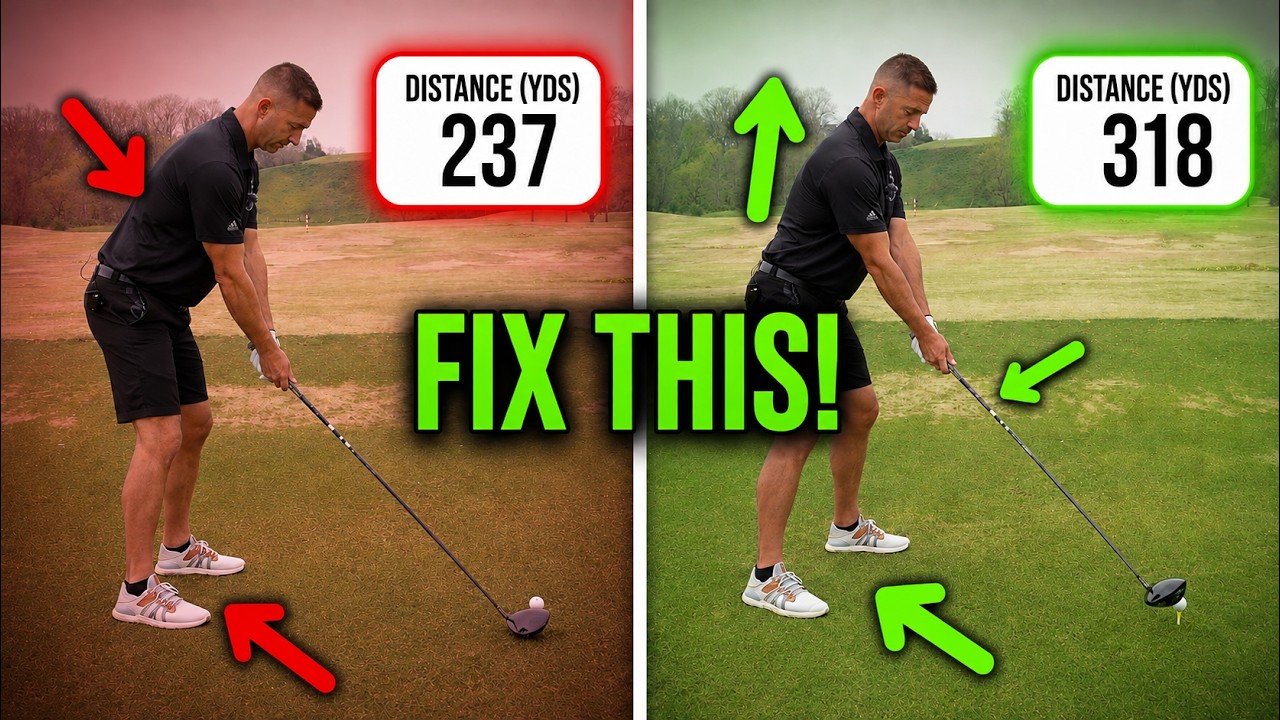
Compare the two. Almost every golfer will see a significant difference. The dynamic swing goes farther back, the elbow breaks down more, the body has moved into compensations that the static hold does not require because the static hold happens slowly enough for the brain to control it.
That comparison is the delta. What the brain thinks is happening versus what the camera shows is actually happening. Once that gap is visible, the two fixes make immediate sense.
Fix 1, Activate Before Moving
Here is the most important and most consistently skipped step in the entire golf swing.
Before the backswing starts, the power muscles have to be switched on. Not during the backswing. Before it.
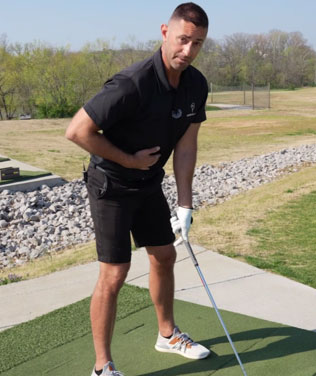
Pull the belly button in. Core engaged. Keep breathing.
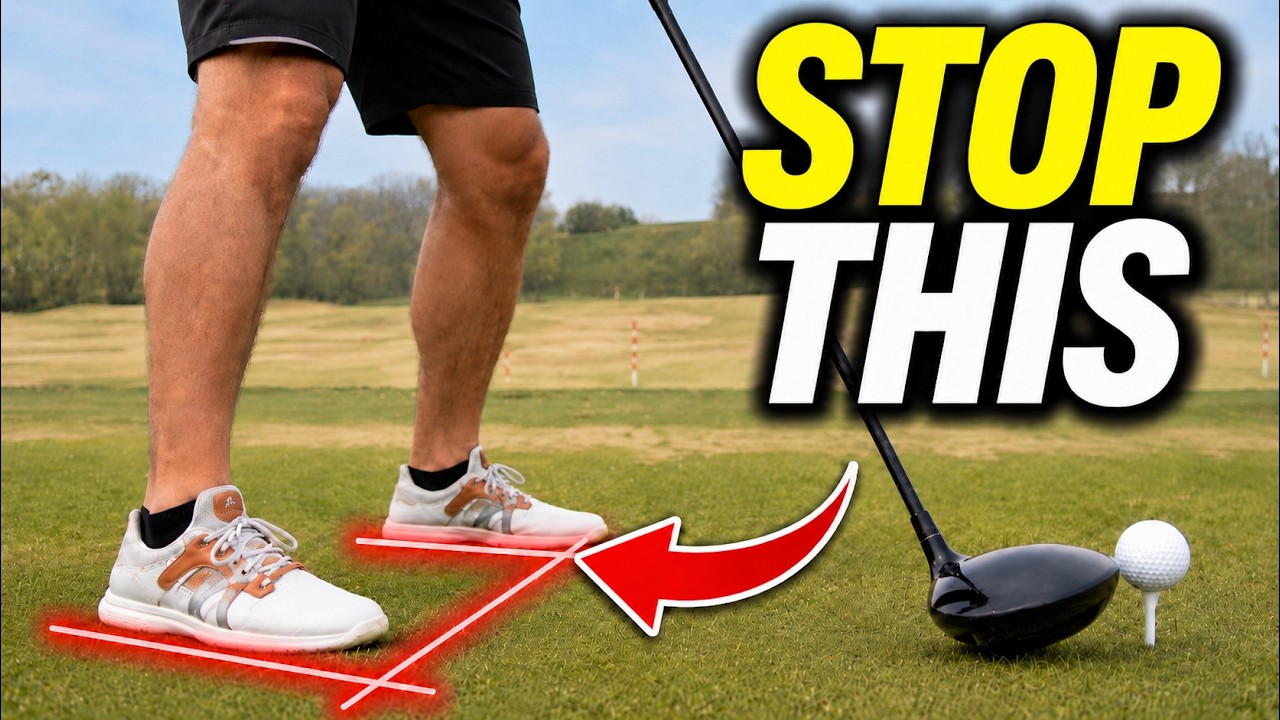
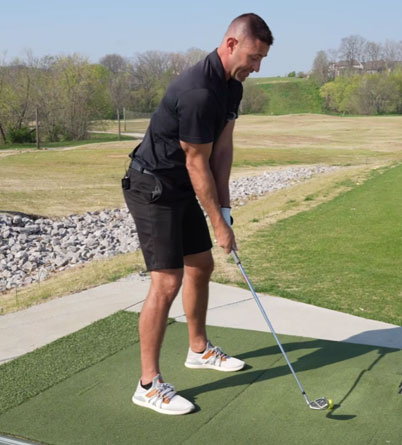
Then think about a tomato under the arch of the trail foot. Squeeze it. Not by buckling the knee inward. Just squeezing the arch down toward the ground with gentle but deliberate pressure.
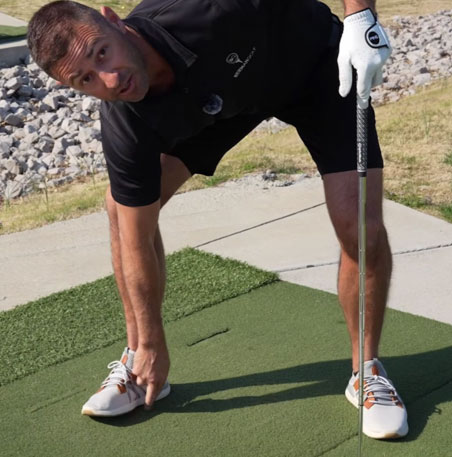
Those two things together, belly button in and tomato squeezed, activate three things simultaneously before a single inch of backswing happens. Core engaged. Trail foot connected to the ground. Trail glute firing.
That is what an activated swing feels like at address. And an activated swing is fundamentally different from what traditional golf lessons produce, which is a technically described swing performed by muscles that were never switched on in the first place.
Nobody teaches this. The instruction world says swing and perfect the technique. But technique performed by dormant muscles produces the same result every time. Inconsistency and lost distance.
Activate first. Then move.
The Reverse Club Drill
Here is the drill that makes step two, controlling the transition, trainable without a full swing.
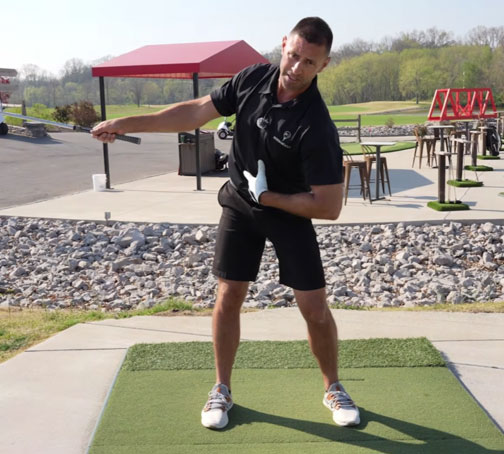
Flip the club over so the grip is pointing toward the ground. Place the butt end of the grip against the chest. Reach the hands out so the elbows are straight.
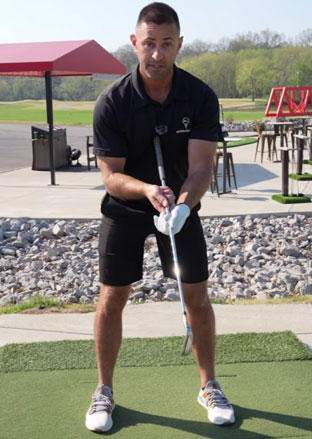
Now go into the backswing. Focus on two things only. Trail knee staying bent. Lead shoulder going down toward the ground rather than up and around.
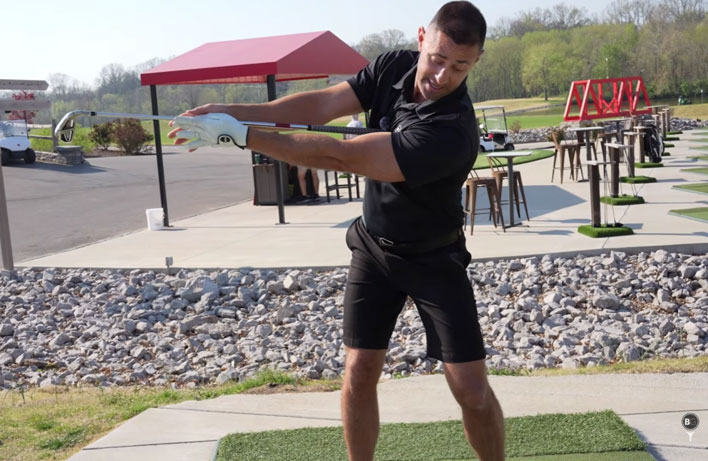
This drill removes the club head from the equation entirely. There is no temptation to get the club farther back because the club is not pointing in that direction. All attention goes to body motion, specifically the two things that most commonly break down, the trail knee straightening and the lead shoulder rising instead of turning.
Then at the top, smash the tomato as hard as possible. Squeeze the arch of the trail foot so hard that the lead foot can be picked up and danced without the head shifting or the hips sliding.
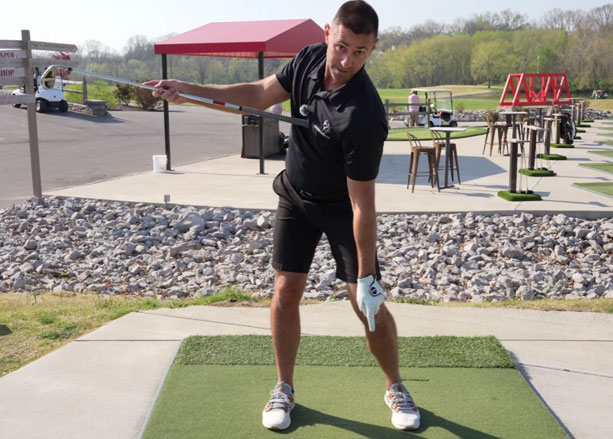
If the lead foot can be picked up without any lurching or head movement, the trail leg is truly loaded. That loading is the confirmation that the backswing transition was controlled and real.
Fix 2, The Belly Button Stop
Here is the pro tip that changes everything about backswing control.
Most golfers reach the top of the backswing and then try to control the transition by yanking or pulling the downswing. The timing of that yank is almost impossible to get right consistently.
The alternative is to use the belly button to stop the backswing before the downswing ever needs to start.
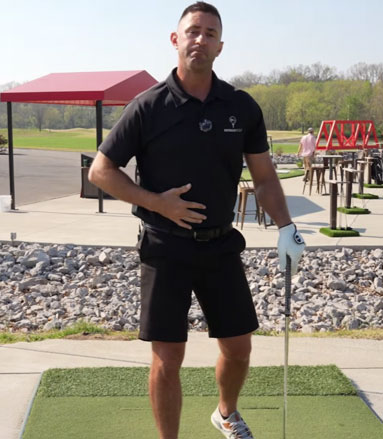
Here is what this means in practice. As the backswing builds, keep pulling the belly button in harder and harder. Pull it in. Pull it in harder. Pull it in even harder.
At some point, the belly button being pulled in so tight physically prevents the backswing from going any farther. The core is so engaged that continuing the backswing would require releasing that engagement. That moment, when the belly button stops the backswing, is the correct top of the backswing for that body on that day.
This is the Matsuyama approach referenced in the video. A deliberate pause at the top. Not a rushed transition from backswing to downswing. A controlled stop where the muscles are loaded and the brain has a fraction of a second to register the position before reversing.
Slow the backswing down. Let the belly button stop it. Then let it go.
Ten Reps Before the Real Swing
Here is the practice sequence that builds this pattern before applying it to a full swing.
Ten reps of the belly button stop, reaching the top of the backswing and holding at the same stopping point every single time. Not going to the top and immediately reversing. Getting there, feeling the belly button tight, holding that stopping point, then returning to address.
Ten reps. Same stopping point every time. That consistency is what makes the transition controllable. The brain needs to know where the top is before it can sequence the downswing correctly from it.
After ten consistent holds, on the eleventh rep, let it go. From the same stopping point, from the belly button pulled in, from the loaded trail leg, unwind and swing through.
That eleventh rep has a real foundation to work from. All ten of the preceding reps built the pattern. The eleventh one gets to execute it.
Get a Free Swing Analysis
Want to know how big the delta is between what the backswing feels like and what the camera actually shows at the top?
Set the camera or phone up at two angles. One from the front, face on. One from behind, down the line. Film in slow motion. Swing.
Send both videos to gaindistance.com and Dr. Berman will give a free swing analysis. The first one is on him.
See exactly what the camera shows, not what the brain thinks is happening. The transition from backswing to downswing is one of the clearest things visible in slow motion and almost always reveals exactly where and why the swing is going past the point the body can control.
Want a Step-by-Step Blueprint?
If this resonates and the advice out there feels designed for 25-year-old tour pros, there is a simple blueprint built specifically for senior golfers.
It breaks down:
How the aging body changes
Which muscles actually produce power
How to gain distance without swinging harder
How to improve consistency while reducing aches and pains
It is written at a fifth-grade reading level with clear visuals and practical drills that can start immediately.
A FREE digital copy is available at: 👉 gaindistance.com
No gimmicks. Just clarity on how the body should move to play better golf for years to come.
Bringing It All Together
Two fixes. Activate before moving and use the belly button stop.
Activate by pulling the belly button in at address and squeezing the tomato under the trail foot arch. Core on. Trail glute firing. Everything connected before the first movement. Then use the reversed club drill to work on body motion specifically, trail knee bent and lead shoulder going down, with the lead foot lift test confirming real trail leg loading.
Then slow the backswing down and let the belly button stop it naturally. Pull it in harder and harder until the core engagement prevents the backswing from going any farther. That stopping point is the correct top. Hold it ten times consistently. On the eleventh, let it go.
At Berman Golf, the focus is biomechanics first. Not cookie cutter swings. The goal is teaching the body how it should move, especially as it ages, so power can be generated safely and repeated under pressure.
The in-house and online coaching programs are built specifically for senior golfers who want more distance and better consistency without beating up their bodies.
For anyone tired of advice designed for tour pros and ready for a blueprint built for their body, help is available.
Because when the muscles are activated before the swing starts and the belly button controls where it stops, the transition finally becomes something the body can repeat.
And when the transition is controlled, the game gets soooooo much easier!
If you enjoyed what you read and want to see it in action, watch the video below where Dr. Berman demonstrates both fixes and the full ten rep sequence!