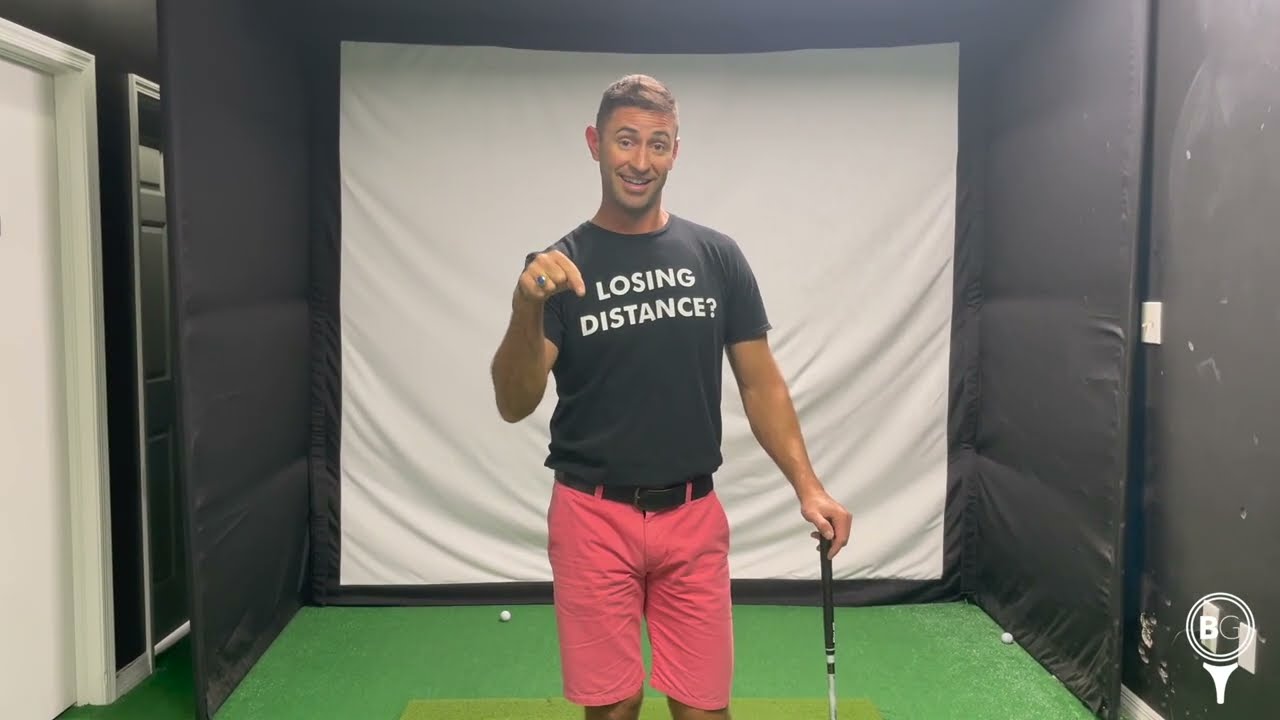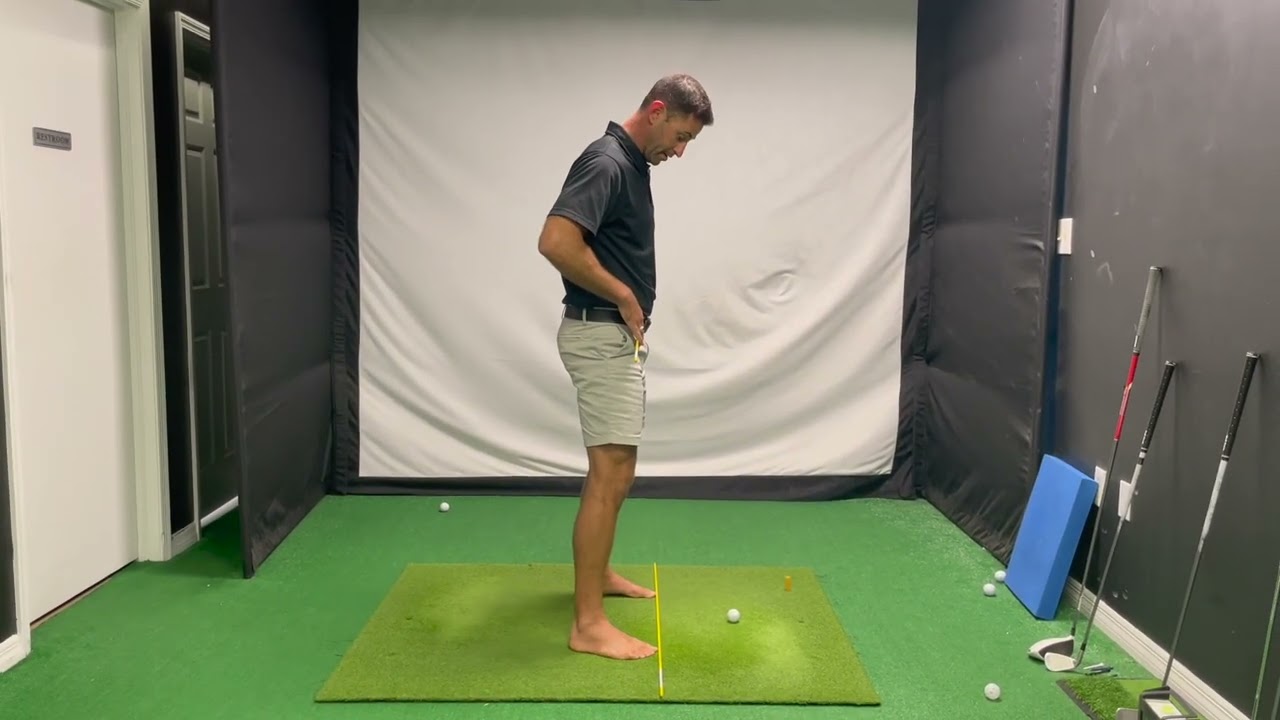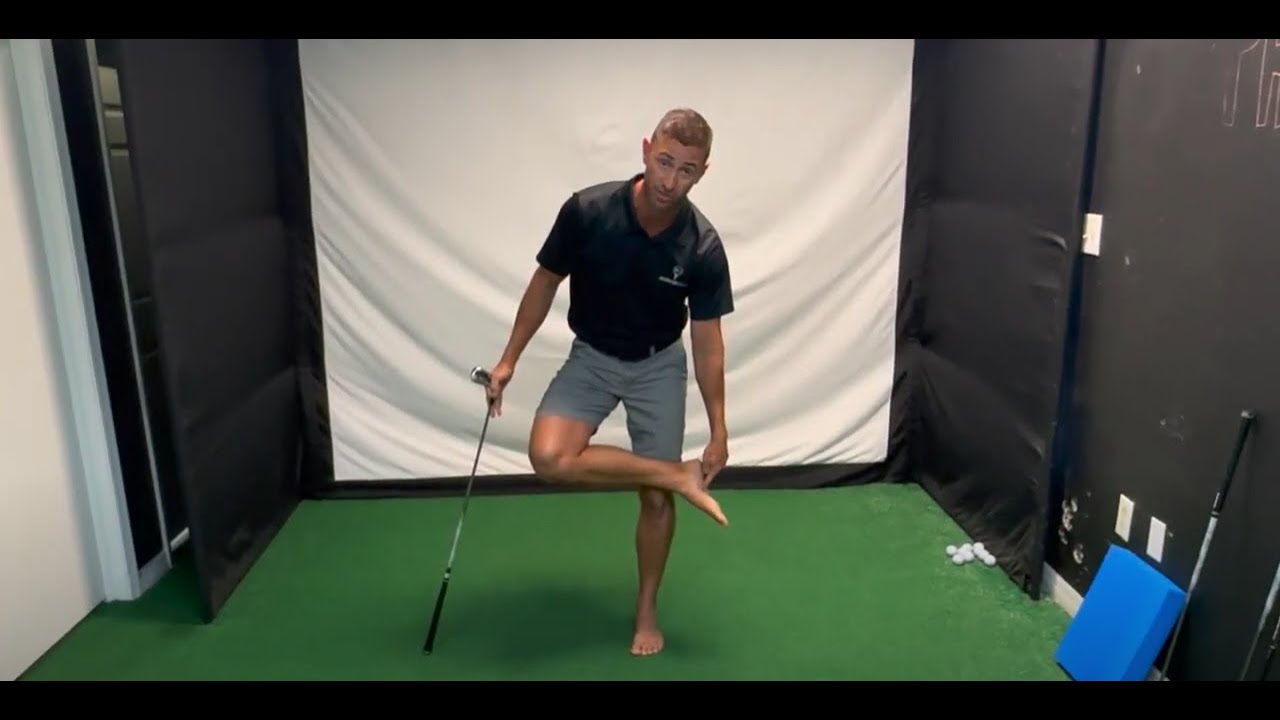
Two swing plates. Two alignment sticks. One noodle on top of the back one so real swings do not result in a broken wrist.
That is the setup. And the feedback these two plates provide together is some of the most immediate and honest available in any training tool, because the sticks either get hit or they do not. There is no ambiguity. No guessing whether the sequence was right or the path was inside out. The equipment tells the truth instantly.
At Berman Golf, these swing plates have been in rotation for a few weeks and they have already become one of the go to tools for fixing the two most common problems seen on the simulator. Wrong sequencing. Wrong club path. Both happening together. Both fixable with the same drill.
What the Two Plates Are Each Doing
Here is the job each plate is performing and why both are needed.
The front plate has an alignment stick pointing up directly in the path of the hands and club. Its job is to expose wrong sequencing on the downswing. When the downswing initiates with the shoulders instead of the hips, the club and hands come over the top and run straight into that stick. No avoiding it. The shoulders initiating means the stick gets hit every time.
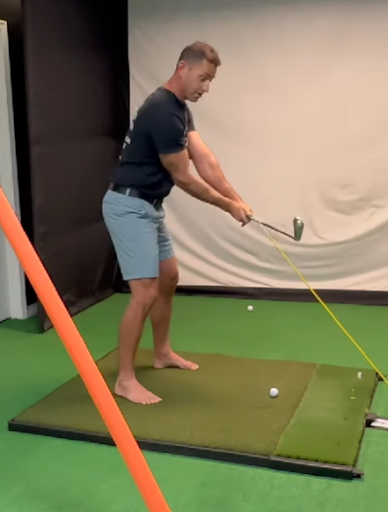
When the hips initiate instead, they clear and make space. The club shallows. The hands drop. The front stick does not get touched.
The back plate has an alignment stick with a pool noodle on top of it. Its job is to expose a club path that is too far inside on the takeaway. When the club gets dragged way inside on the backswing, the only path available coming down is over the top. Steep. Outside in. The noodle is positioned so that a correct straight back takeaway keeps the club on the outside of it, confirming the right path.
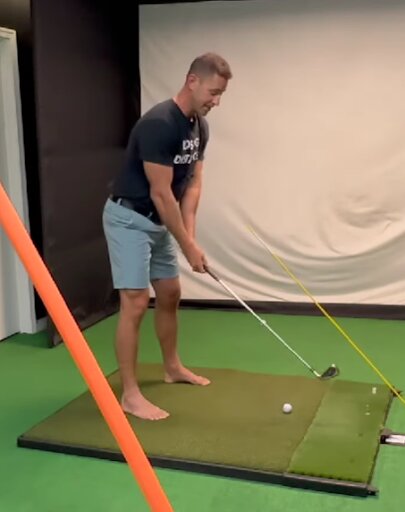
Front plate catches wrong sequencing. Back plate catches wrong takeaway path. Both working together train the brain to fix the root causes of the over the top swing simultaneously.
The Takeaway, Draw a Line Directly Away From the Target
Here is where the drill starts, and it begins in the very first inch of the backswing.
The club head draws a line directly away from the target on the takeaway. Not inside. Not around the body. Directly away, keeping the club face square to the path and staying on the outside of the back plate noodle the entire time.
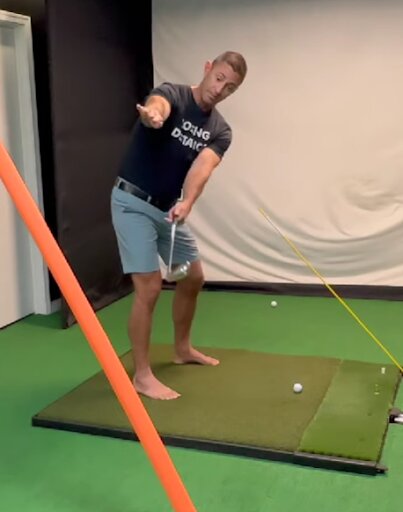
As the backswing builds, the belt buckle initiates and turns as far as it can go. When the hips run out of room, the knuckles push away from the target to keep going with the shoulders, not lifting the arms up. Lifting the arms up is wasted energy and makes the club steeper. Pushing the knuckles away keeps the arc wide and the plane correct.
Trail elbow stays soft and hanging down. No chicken wing. No arm lift. Just the belt buckle turning, the knuckles pushing away, and the trail elbow relaxed.
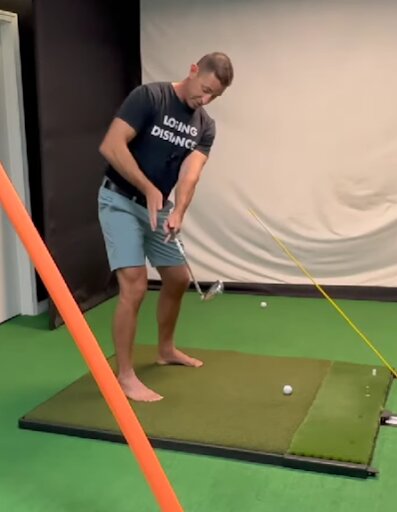
The Downswing, Squat Rotate Drop
Here is the three word sequence that fixes both problems the swing plates are designed to catch.
Squat. Rotate. Drop the hands.
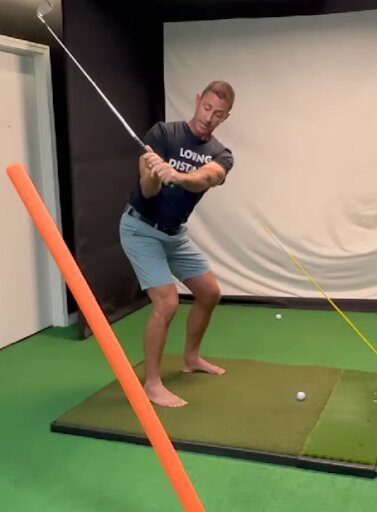
From the top of the backswing, the first move is a squat. Hips move back and down, creating room for the club to shallow and approach from the inside. That squat is what clears the front stick. When the shoulders initiate instead, there is no squat, no room created, and the hands run straight into the front alignment stick.
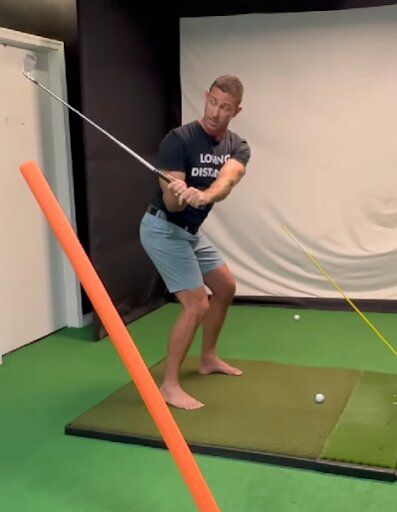
From the squat, the belt buckle rotates toward the target. That rotation combined with the squat shallows the club automatically. No hand manipulation required. The club finds the inside path because the hips created the room for it to get there.
At the same time, the hands drop. Squat, rotate, and drop the hands all happening together as one connected movement.

Then come through leading with the hands. Hitting down on the iron. Compressing the ball. Front stick untouched. Back noodle untouched.
What the Wrong Way Looks Like
Here is the comparison that makes the correct sequence unmistakable.
The wrong way. Club drags way inside on the takeaway, coming in on the wrong side of the back noodle. From that inside position, the only path down is over the top. Hands run into the front stick. Early extension kicks in to try to shallow it out. Flip at impact. Banana slice, thin shot, or chunk depending on which compensation takes over.
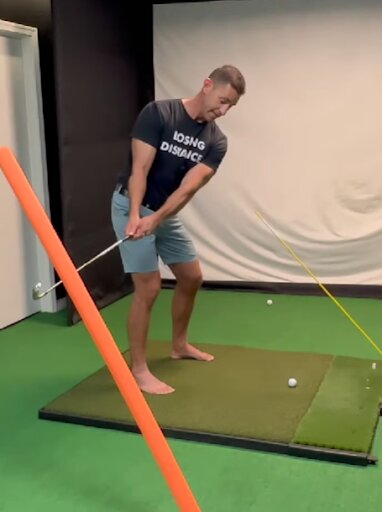
That chain of compensations is exactly what the two swing plates expose and interrupt. The back plate catches the inside takeaway before it can create the over the top path. The front plate catches the shoulder initiation before the hands can flip.
Fix the takeaway and the sequencing and the rest of the chain has no reason to exist.
The 95 to 5 Rule Again
Here is the practice prescription that makes this drill actually transfer to the course.
Do fifty reps slowly. Really slowly. Feel every part of the squat, rotate, and drop sequence separately. Let the brain register each piece.
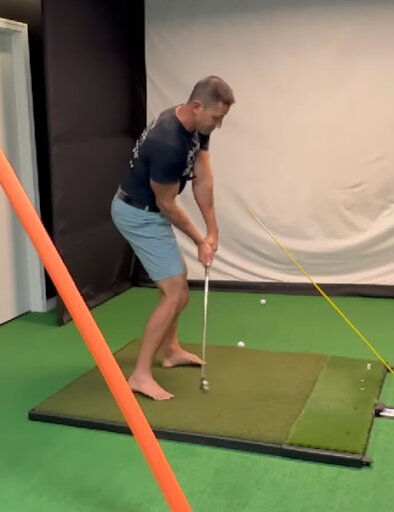
Then fifty reps at moderate tempo. Back and forward. Back and forward. Not full speed yet. Just controlled, repeatable motion with the same sequence.
Then fifty reps at normal tempo.
One hundred and fifty reps without a ball before a single ball gets introduced. And when the ball does come in, do not expect perfection immediately. The brain will try to revert because the result suddenly matters. That is normal. Keep doing the reps without the ball as the majority of practice and let the pattern build over time.
This is the 95 to 5 rule. Ninety five percent of practice time on biomechanics and motion without a ball. Five percent actually hitting balls. Most golfers do the exact opposite and wonder why range work never transfers to the course.
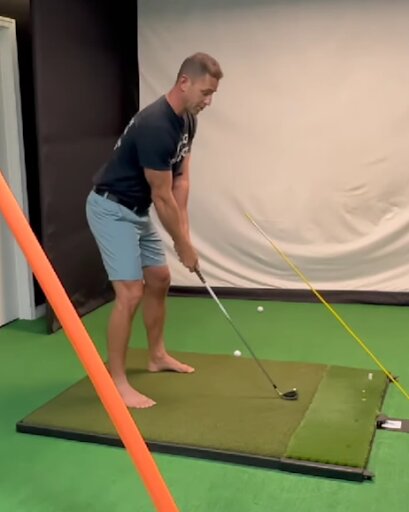
Practice barefoot during these reps whenever possible so the foot muscles are contributing and the glutes can fire properly from a stable base.
The Proof That It Is Working
Here is how to know the sequence and path are both correct without needing anyone else to watch.
The front stick does not get hit. That is proof the hips initiated and cleared instead of the shoulders coming over the top.
The back noodle does not get touched. That is proof the takeaway went straight back instead of inside, keeping the club on the correct path all the way through.
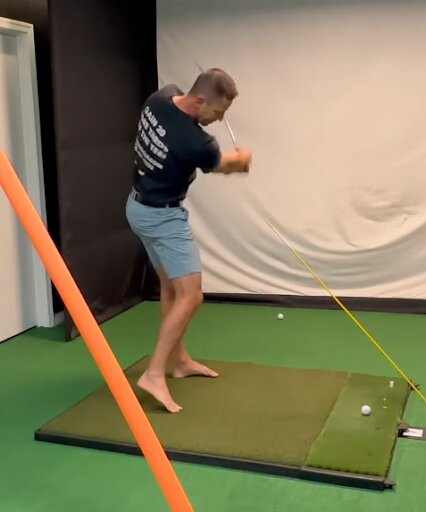
Both pieces together confirm an inside out swing path with correct hip sequencing. No camera needed at that point. The equipment provides all the feedback required.
Get a Free Swing Analysis
Want to know whether the downswing is being initiated with the shoulders or the hips, and whether the takeaway is going inside or straight back right now?
Set the camera or phone up at two angles. One from the front, face on. One from behind, down the line. Film in slow motion. Swing.
Send both videos to gaindistance.com and Dr. Berman will give a free swing analysis. The first one is on him.
See exactly what the camera shows, not what the brain thinks is happening. Then there is clarity on whether the front stick or the back noodle would be getting hit and why.
Want a Step-by-Step Blueprint?
If this resonates and the advice out there feels designed for 25-year-old tour pros, there is a simple blueprint built specifically for senior golfers.
It breaks down:
How the aging body changes Which muscles actually produce power How to gain distance without swinging harder How to improve consistency while reducing aches and pains
It is written at a fifth-grade reading level with clear visuals and practical drills that can start immediately.
A FREE digital copy is available at: 👉 gaindistance.com
No gimmicks. Just clarity on how the body should move to play better golf for years to come.
Bringing It All Together
Two swing plates. Two jobs. Front plate catches shoulder initiation on the downswing. Back plate with noodle catches the inside takeaway that forces the over the top path.
Straight back takeaway, club staying outside the noodle. Belt buckle initiates, hips turn as far as they go, knuckles push away from target, trail elbow soft. At the top, squat, rotate, drop the hands all at once. Come through leading with the hands. Front stick untouched. Noodle untouched. Inside out path confirmed.
Fifty slow reps. Fifty moderate reps. Fifty normal tempo reps. Then and only then introduce a ball. Ninety five percent of practice time is motion without a ball. Five percent is hitting.
At Berman Golf, the focus is biomechanics first. Not cookie cutter swings. The goal is teaching the body how it should move, especially as it ages, so power can be generated safely and repeated under pressure.
The in-house and online coaching programs are built specifically for senior golfers who want more distance and better consistency without beating up their bodies.
For anyone tired of advice designed for tour pros and ready for a blueprint built for their body, help is available.
Because when the sequencing is right and the path is inside out, the club shallows automatically, the ball compresses, and the swing finally does what it was always supposed to do.
And when the swing does what it is supposed to do, the game gets soooooo much easier!
If you enjoyed what you read and want to see it in action, watch the video below where Dr. Berman demonstrates the full swing plate drill from setup to real time swings!