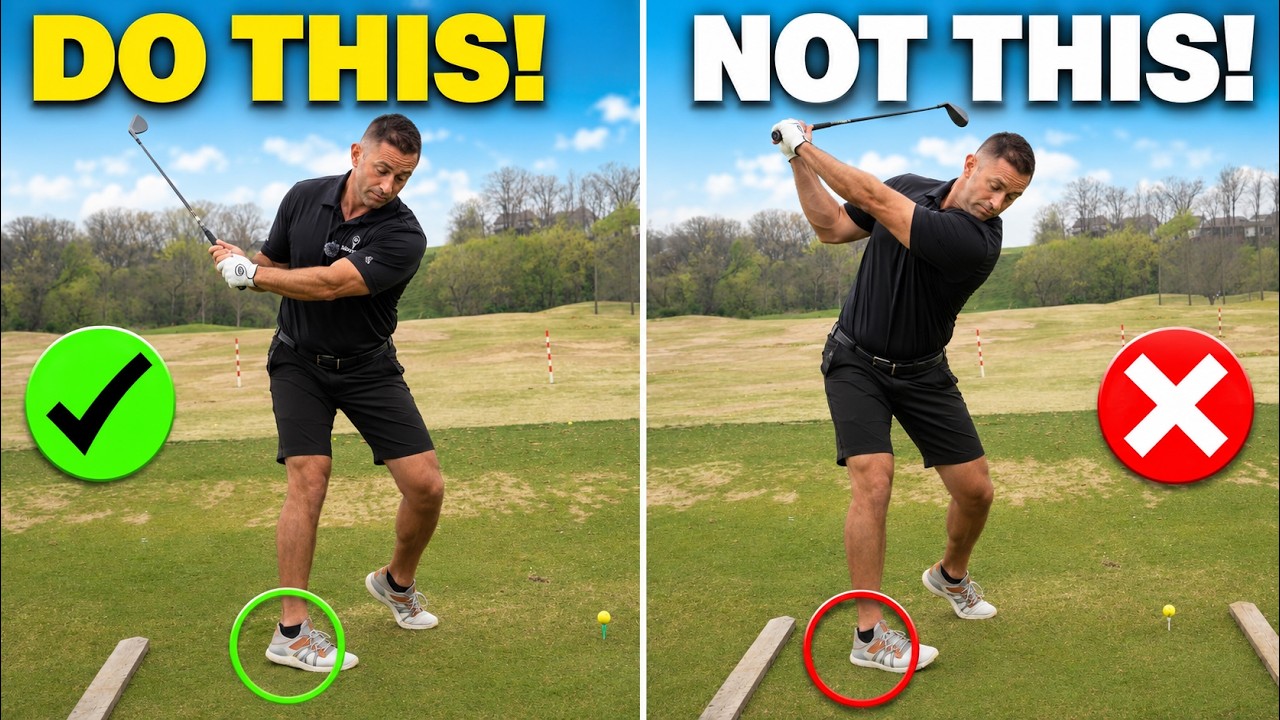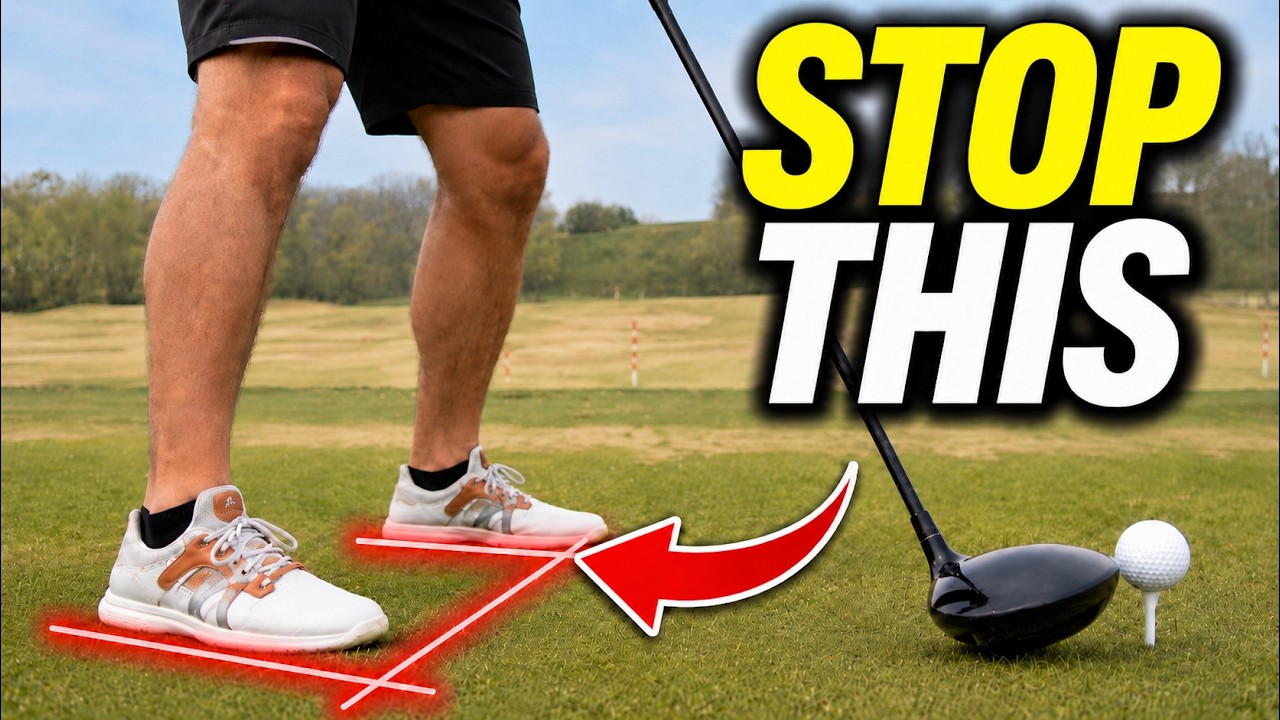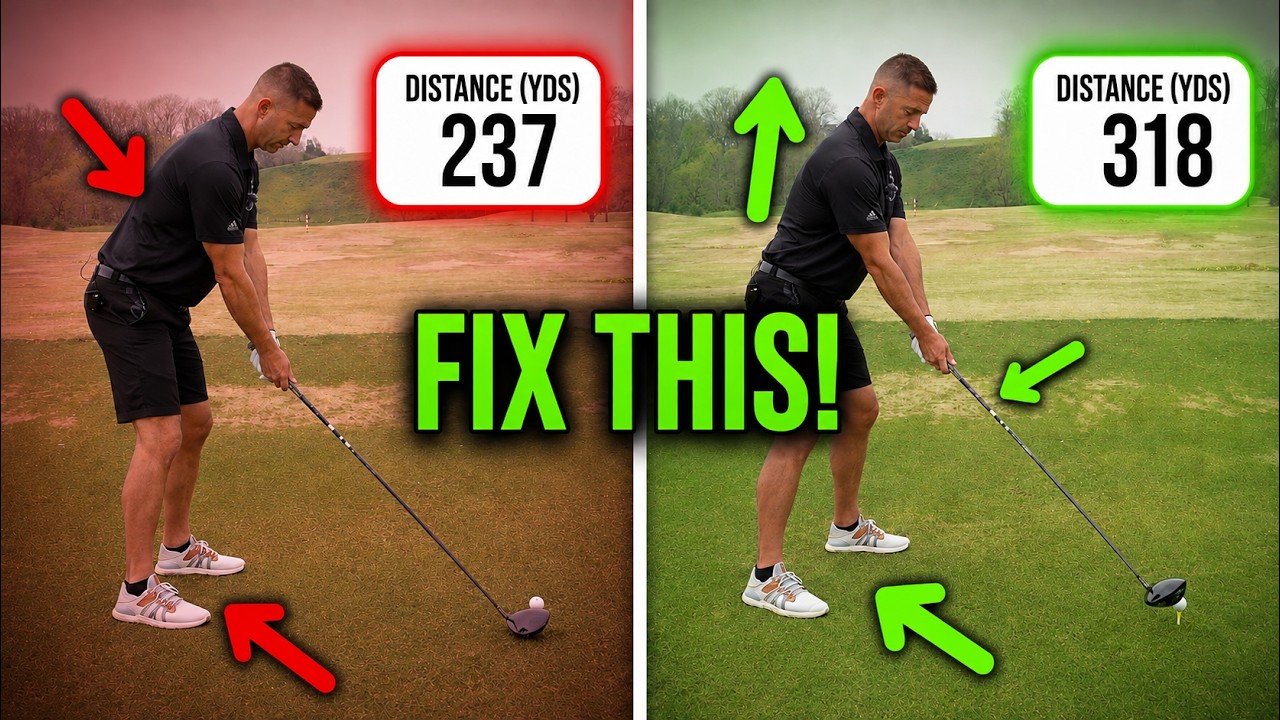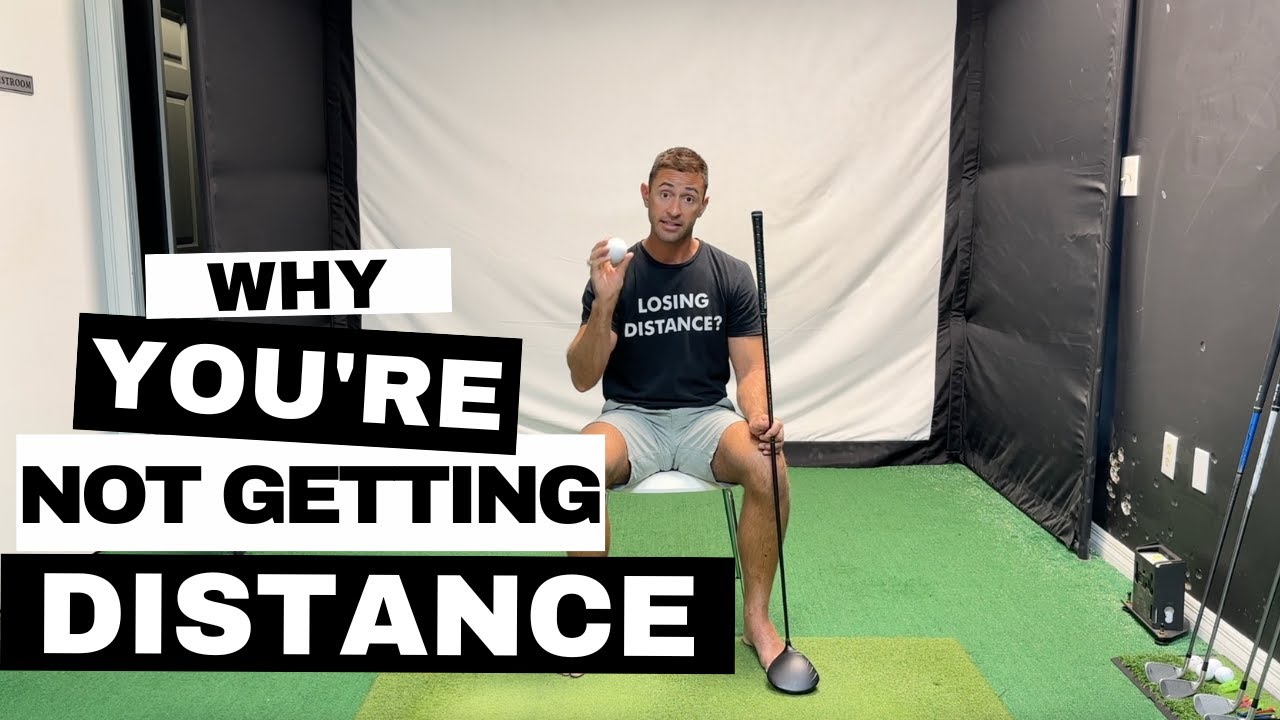
Balance is not a golf skill. It is a physical foundation. And without it, distance drops, consistency disappears, and the ability to play as much as intended becomes limited by a body that cannot sustain the demands of a full round.
At Berman Golf, balance is talked about in the context of foot pressure and ground connection constantly. This video takes it a step further and explains exactly why balance affects all three of those outcomes, and exactly which muscles need to be trained to build it back.
The answer is not core strength. Not glute work. Not flexibility. It starts in the arch of the foot, with 16 muscles most golfers have never consciously activated in their lives.
Why Balance Affects Distance, Consistency, and Frequency
Here is the biomechanical chain that connects foot balance to all three outcomes.
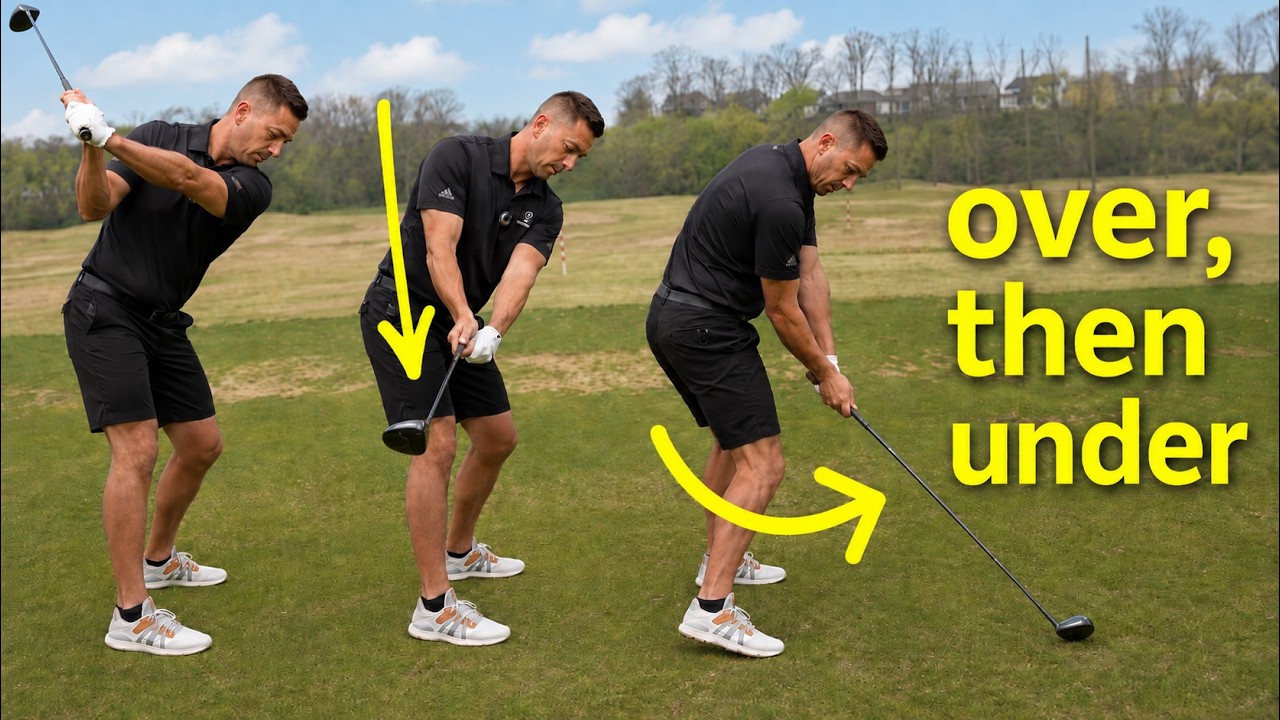
When balance is compromised at any point in the swing, particularly at the transition from backswing to downswing, the brain activates a protective mechanism. It shuts down the muscles that were firing to protect the body from falling or losing control.
Those shut down muscles are the glutes, the core, the trail leg. The exact muscles that generate power. When the brain turns them off for balance protection, the power goes with them. Distance drops.
Consistency requires muscles working the same way on every swing. When balance is unreliable, the brain turns different muscles on and off at different moments on different swings to compensate. The swing changes shot to shot because the muscle recruitment pattern is constantly being adjusted. Inconsistency is the direct result.
Frequency, the ability to play 18 holes two days in a row, to play as often as wanted, depends on a body that is not exhausted by compensating for poor balance throughout the round. When the foot muscles are doing their job, the larger muscles above them are not working overtime to maintain stability. The body conserves energy. More rounds become possible.
Fix the balance and all three improve. And fixing the balance starts with the 16 muscles sleeping in the arch of the foot.
Why Those 16 Muscles Are Not Working
Here is why most golfers have never consciously activated the arch muscles in their feet.
Four layers of four muscles sit in the arch of each foot. Thirty two total across both feet. These muscles are designed to be the primary stabilizers of the foot and ankle, the foundation everything above them depends on.
But the moment those feet go into a supportive shoe, laced tightly, with orthotics providing arch support from below, those 32 muscles stop having to work. The external support does the job the muscles were designed to do. The muscles go dormant. And dormant muscles are muscles the brain cannot recruit when the golf swing needs them.
The shoes and orthotics are not solving a problem. They are creating one by removing the stimulus the foot muscles need to stay active and strong.
The Three Part Foot Activation Drill
Here is the drill that wakes those muscles up. Three layers. Each one harder than the last.
Start seated. Place the stress ball under the arch of the trail foot, in the front half of the arch, not completely under the arch and not under the heel. Elbows resting on knees. Upper body relaxed.
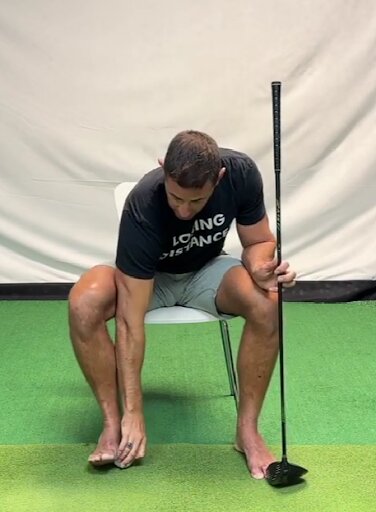
Layer 1, Smash the ball. Think about pressing the arch down into the stress ball as hard as possible. Not the glutes pushing the leg down. Not the quads extending the knee. Just the muscles in the arch pressing the ball into the floor.
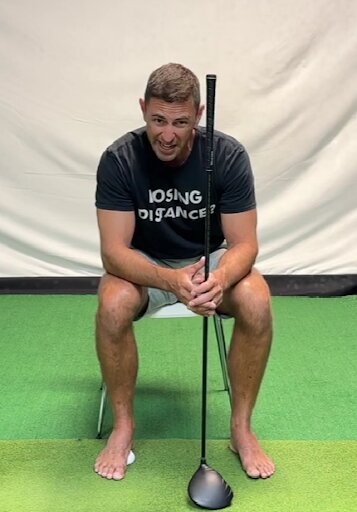
The knee should not move in or out during this. If the knee is moving, larger muscles are compensating. Isolate it to the foot.
Layer 2, Big toe into the ground. As the arch is pressing the ball, actively push the big toe down into the mat at the same time. The natural tendency as the arch presses is for the big toe to rise. Fight it. Big toe presses down while the arch presses into the ball simultaneously.
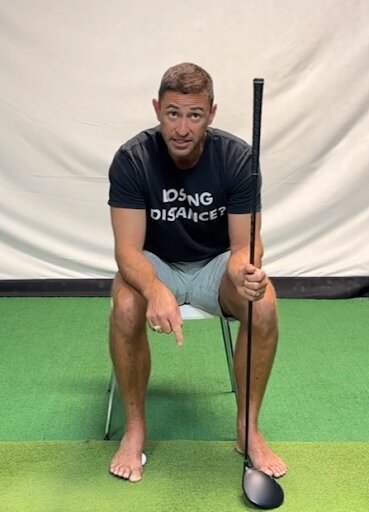
Layer 3, Splay the pinky toe. Here is where it gets genuinely difficult. While pressing the arch into the ball and the big toe into the ground, try to splay the pinky toe outward to the side. Spreading the toes wider.
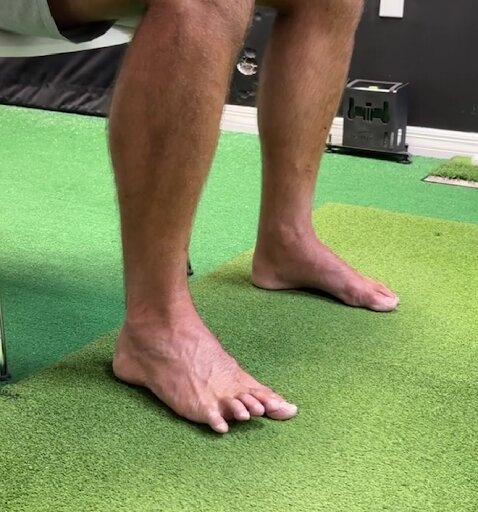
Most golfers will find this nearly impossible at first. That difficulty is the point. It is direct evidence of how dormant these muscles have become. The brain has lost the motor pathway to move individual toes independently because those muscles have not been asked to work in years.
Do not give up on it. The pathway comes back with repetition.
The Prescription
Here is exactly how to train this drill.
Three sets. Sixty seconds of maximum effort pressing all three layers simultaneously. Sixty seconds of rest between sets.
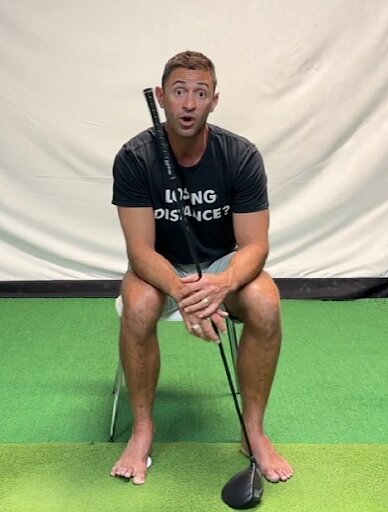
Sixty seconds on. Sixty seconds off. Repeat three times.
Do this daily. Not just before golf. Daily. Two to three minutes invested every day over the course of weeks and months is what brings those 32 dormant muscles back to life.
Here is the realistic timeline. After a few weeks, the three layer activation will start to feel more connected. After a few months, doing all three simultaneously while holding the position becomes sustainable for the full sixty seconds. After a year, the foot muscles will be strong enough to contribute automatically to every golf swing without conscious thought.
A year sounds like a long time. But for anyone planning to play golf a year from today, would better balance, more distance, more consistency, and the ability to play more frequently be worth sixty to ninety seconds of daily foot work?
That is the return on investment.
Get a Free Swing Analysis
Want to know whether balance is breaking down at the transition point in the swing and which muscles are being shut down as a result?
Set the camera or phone up at two angles. One from the front, face on. One from behind, down the line. Film in slow motion. Swing.
Send both videos to gaindistance.com and Dr. Berman will give a free swing analysis. The first one is on him.
See exactly what the camera shows, not what the brain thinks is happening. Balance issues at transition almost always show up as a visible shift, sway, or muscle dropout that is clear in slow motion even when it feels completely undetectable from the inside.
Want a Step-by-Step Blueprint?
If this resonates and the advice out there feels designed for 25-year-old tour pros, there is a simple blueprint built specifically for senior golfers.
It breaks down:
How the aging body changes Which muscles actually produce power How to gain distance without swinging harder How to improve consistency while reducing aches and pains
It is written at a fifth-grade reading level with clear visuals and practical drills that can start immediately.
A FREE digital copy is available at: 👉 gaindistance.com
No gimmicks. Just clarity on how the body should move to play better golf for years to come.
Bringing It All Together
Balance affects distance, consistency, and how frequently golf can be played. All three trace back to the same root cause. The 16 muscles in the arch of each foot are dormant from years of supportive shoes and orthotics, and the brain cannot fully recruit the larger power muscles when the foot foundation is unstable.
Three layers of foot activation. Arch pressing the stress ball. Big toe pressing into the ground. Pinky toe splaying outward. Three sets. Sixty seconds on, sixty seconds off. Daily, not just before golf.
It will take weeks to feel connected. Months to feel strong. A year to feel automatic. But that investment pays out in more distance, better ball striking, and the ability to play as much as the body will allow.
At Berman Golf, the focus is biomechanics first. Not cookie cutter swings. The goal is teaching the body how it should move, especially as it ages, so power can be generated safely and repeated under pressure.
The in-house and online coaching programs are built specifically for senior golfers who want more distance and better consistency without beating up their bodies.
For anyone tired of advice designed for tour pros and ready for a blueprint built for their body, help is available.
Because when the foot muscles are working and the balance is real, the brain stops shutting down the power muscles and the golf swing finally gets to use everything it was always capable of.
And when all the muscles are working, the game gets soooooo much easier!
If you enjoyed what you read and want to see it in action, watch the video below where Dr. Berman walks through all three layers of the foot activation drill!