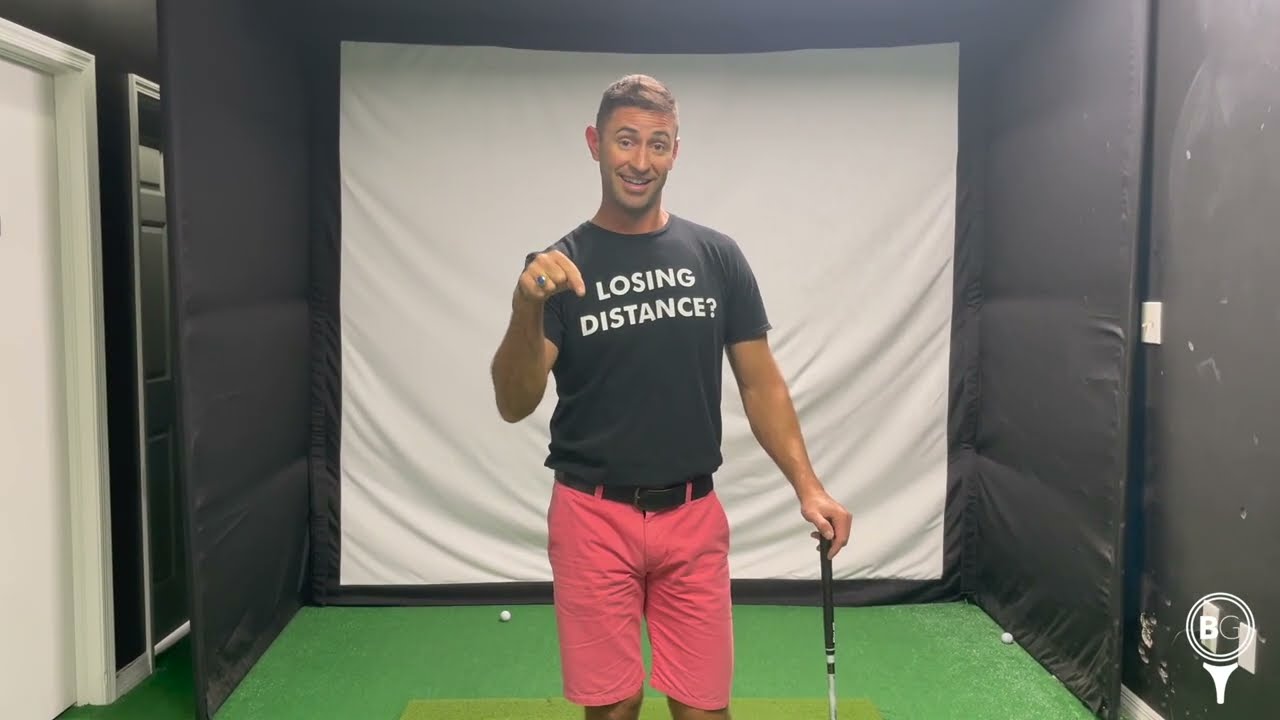
Here is a pattern that plays out constantly at Berman Golf.
A golfer goes through the program. They learn to engage the core. They learn to activate the glutes. They start hitting the ball farther. Contact improves. The game gets better.
Then life happens. They go out and practice on their own for a while. Months pass. A year goes by. Then they come back in and things have gone sideways again.
Every single time, the diagnosis is the same.
They stopped engaging the core and glutes at address.
Not because they forgot the concept. They know exactly what it is. They just stopped doing it on every shot, every practice session, every time they picked up a club. And once it stopped happening at address, everything built on top of it started breaking down too.
At Berman Golf, this is the number one thing that gets re-taught when golfers come back after time away. And it is the most important reminder to write down and keep visible, because it will be forgotten. That is not a pessimistic statement. It is a pattern that holds across nearly everyone who has ever gone through this program.
Why Address Is the Only Chance to Get It Right
Here is the biomechanical reality that makes this non-negotiable.
The golf swing happens in less than two seconds. Not two minutes. Not two opportunities to adjust. Two seconds from the start of the backswing to impact.
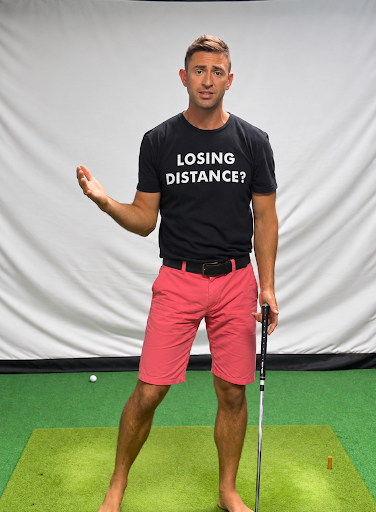
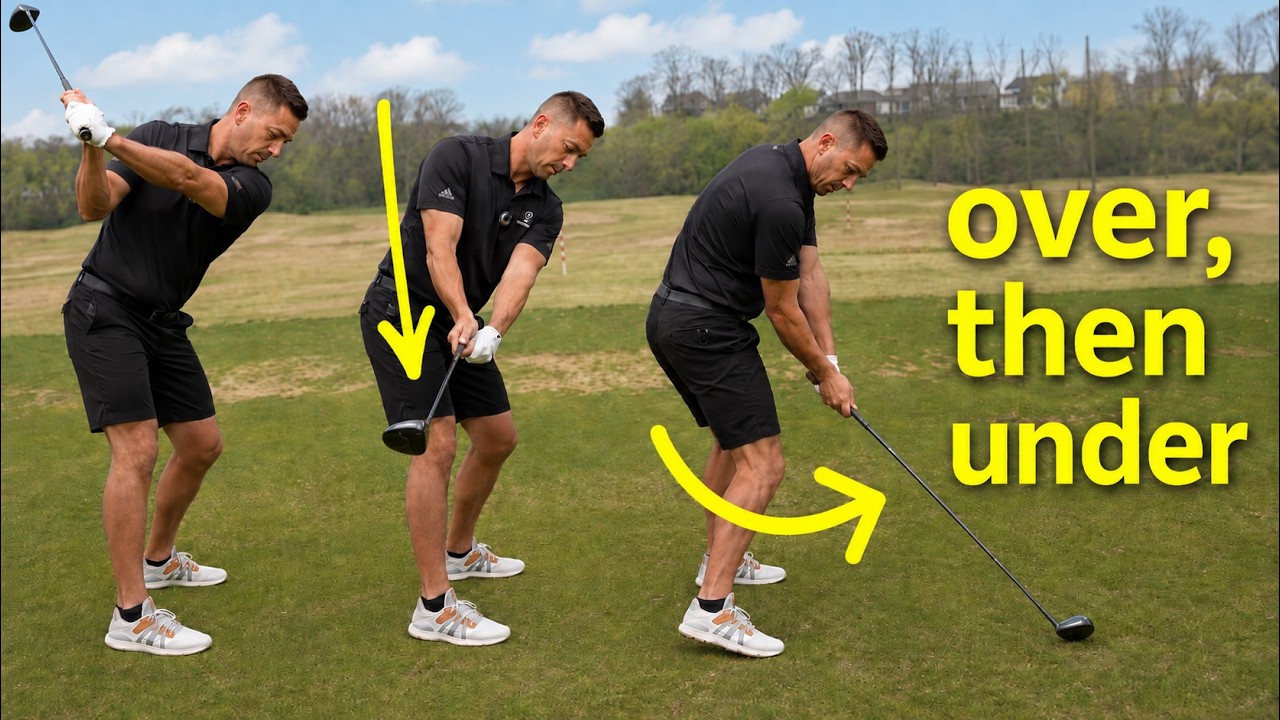
In that two seconds, the brain does not have time to recruit new muscles that were not already engaged at address. The motor program fires in sequence based on what was already active when the swing began. If the core is not engaged at address, the chances of the core contributing during the swing approach zero.
If the glutes are not firing at address, the chances of the glutes being recruited to load the trail side correctly during the backswing approach zero.
The core and glutes that are supposed to generate and transfer power have to be switched on before the first movement of the swing. Not during the backswing. Not at transition. Before anything moves.
Address is the only window. That is why it is the most important thing to get right and the most costly thing to forget.
The Correct Address Position
Here is the complete setup sequence that gets everything working before the swing begins.
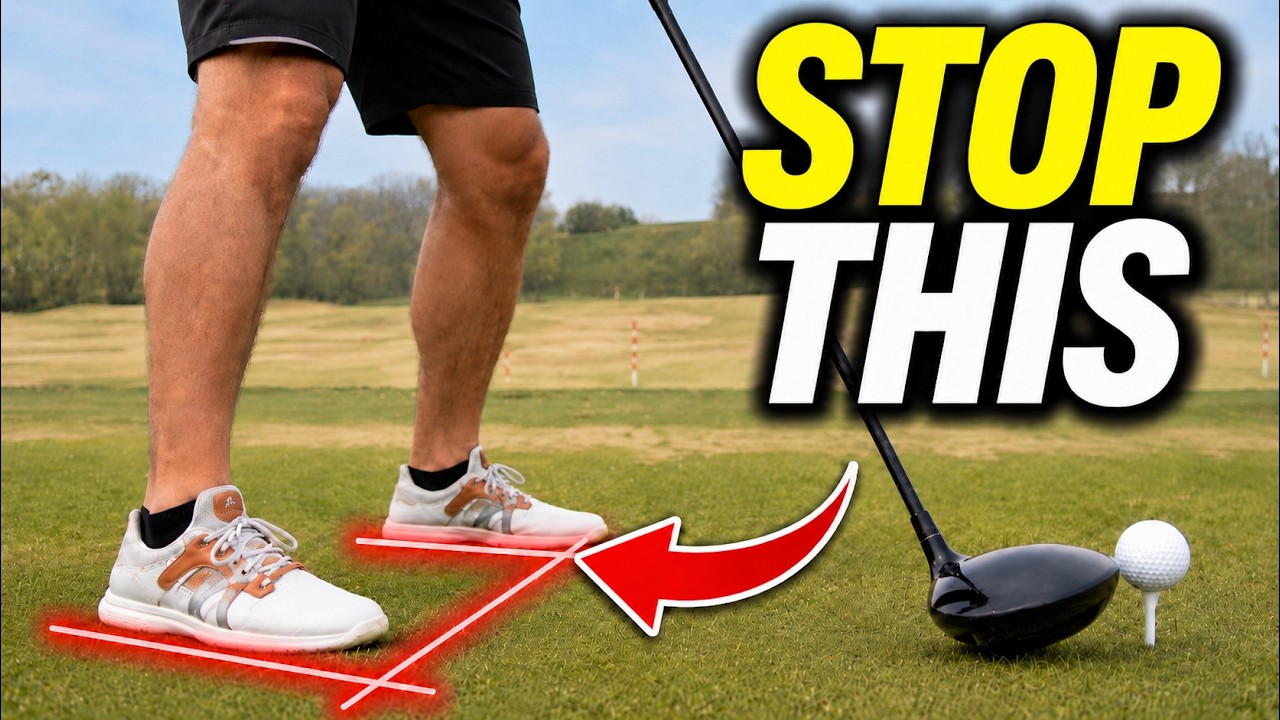
Stand tall. Chest up. Belly button in. This is not the rounded, hunched posture that sneaks in from years of desk work or phone use. This is a deliberate, tall spine with the belly button pulled in and the chest raised.
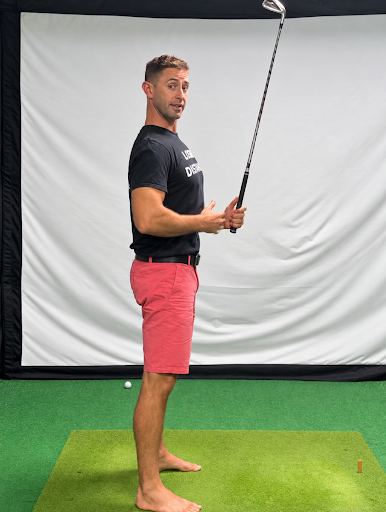
Unlock the knees. Not bent aggressively. Not straight. Just unlocked. Then shut the door with the butt, meaning push the hips back slightly so the club head drops down toward the ball while the spine angle stays intact.
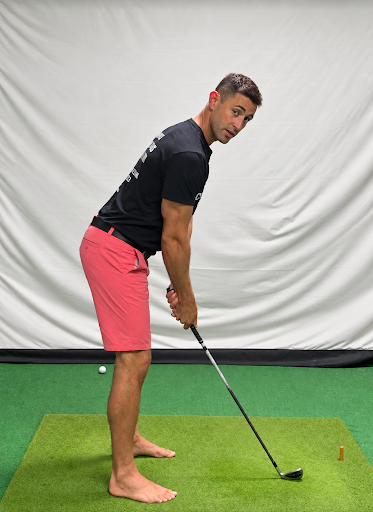
Arms relaxed. Club in the fingers. The toe of the club should be down, not up in the air. A club toe pointing up is one of the most common signs that something in the setup has already gone wrong.
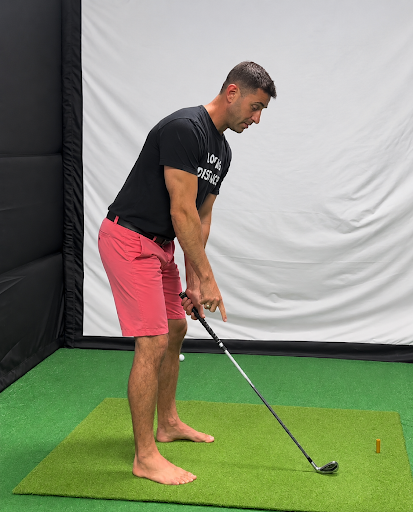
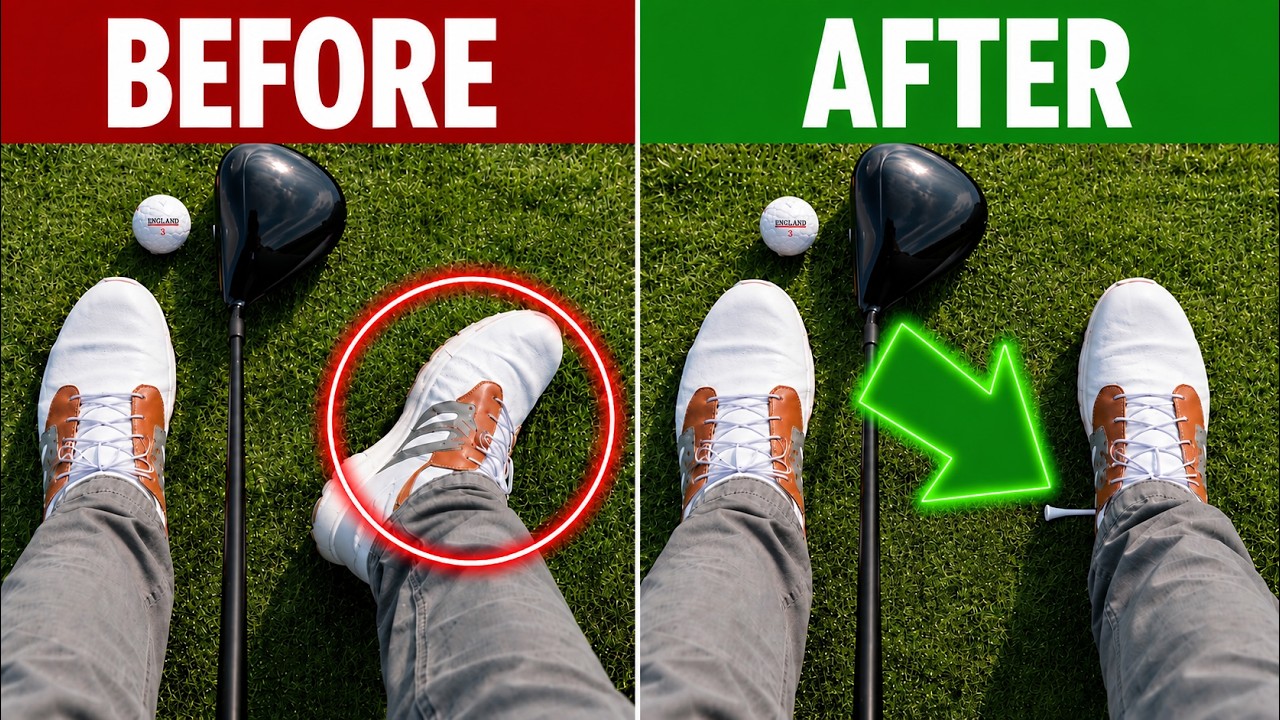
Weight in the middle of the foot. Not the heels. Not the toes. Right in the middle.
Activating the Core
Here is the specific cue that makes core engagement something the body can actually feel and reproduce consistently.
Pull the belly button in toward the spine. Not a dramatic, sucking-in movement. A deliberate, sustained inward drawing of the belly button. Like trying to get into a tight pair of pants. Or bracing for a punch to the stomach, but not at full intensity. Just enough to feel the muscles engage.
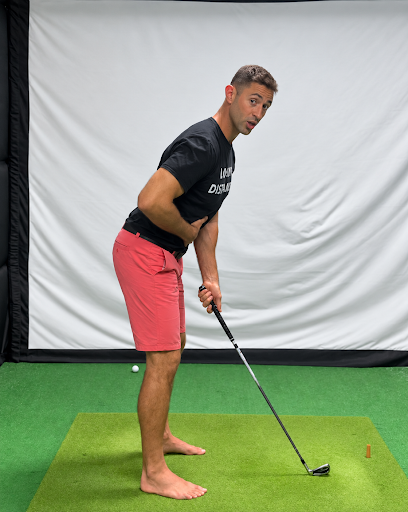
Keep breathing. This is the most commonly missed detail. The core should be engaged while breathing continues normally. Holding the breath is not core engagement. It is just held breath. The goal is sustained muscle activation while the respiratory system operates normally.
Pull it in. Keep breathing. That is the core engaged.
Activating the Glute Through the Foot
Here is where the chain completes itself.
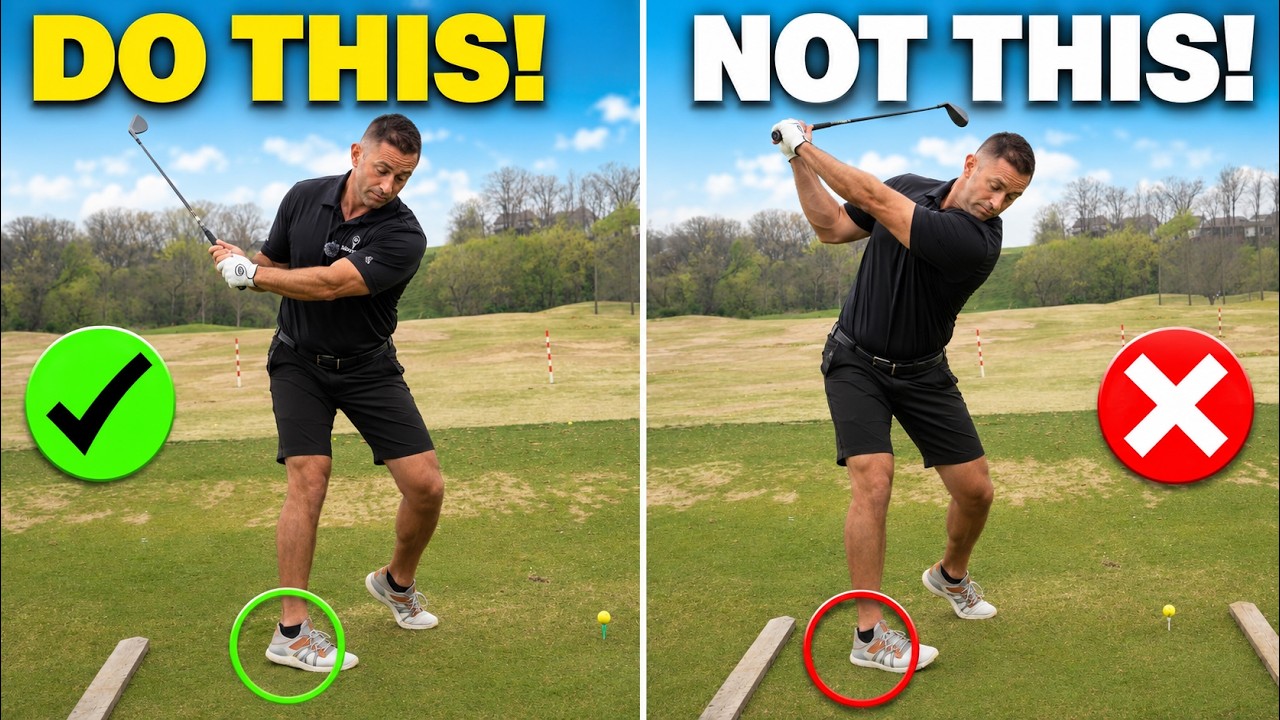
With the core engaged and the posture set, start increasing pressure through the inside of the trail foot. Think about squishing a tomato under the arch. Or pushing the foot through the floor with the weight centered on the inside of the arch.
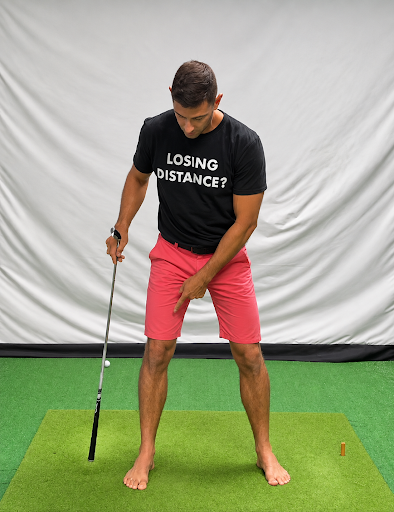
The trail knee must not buckle inward during this. The knee stays stable. The pressure goes through the inside of the arch with the knee tracking correctly over the foot.
When the foot is pressing correctly through the inside of the arch, the glute switches on. Not immediately in every case. But gradually, as the foot pressure increases and the connection from foot to glute activates.
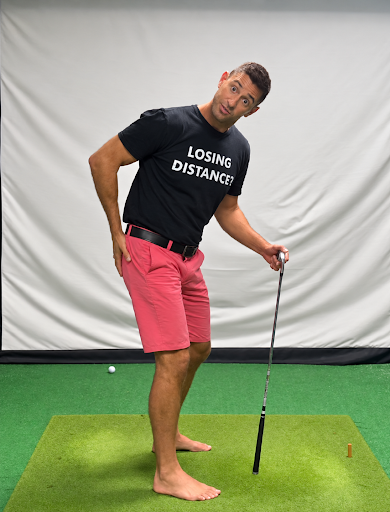
If the glute does not seem to be firing, try pushing the hips back just a little more. That slight additional hip push is often enough to jumpstart the glute activation. The hip position changes the angle of the hip joint just enough to allow the glute to fire more easily.
The 60 Second Hold Test
Here is the drill that confirms everything is working and builds the endurance to sustain it.
Get into the full address position. Core engaged. Trail foot pressing through the arch. Glutes firing. Keep breathing.
Hold it for 60 seconds.
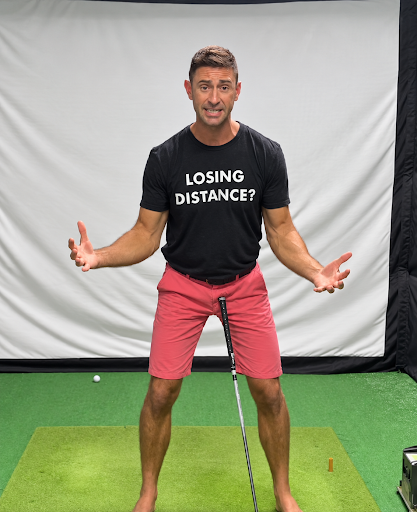
Sixty seconds is a long time to sustain this. If it cannot be held for sixty seconds without the muscles dropping out, the endurance is not there yet. And endurance is what allows these muscles to stay engaged through the entire swing, not just at address.
Do not try to cheat the sixty seconds. Really hold it. Really feel the core and glutes working the entire time. Really keep breathing.
That sixty second hold is the drill. Not a swing. Not a ball. Just address, muscles engaged, hold it. Repeat it throughout the day, not just before golf sessions.
Why This Will Be Forgotten and What to Do About It
Here is the honest reminder that comes with this drill.
This will be forgotten. Not intentionally. Not lazily. Just forgotten, the way all habits fade when life gets busy and the immediate feedback of correct execution is not there to reinforce it.
The golfers who maintain improvement are the ones who build this check into every single practice repetition, every range session, every pre shot routine on the course. Not occasionally. Every time.
Write it down. Put it somewhere visible. Core and glutes engaged before the swing starts. Every shot. Every practice repetition. Every time.
When it gets forgotten and the game starts going sideways again, come back to this. Check the address position. Check the core. Check the glute activation through the trail foot. Ninety percent of the time, getting those three things back is what gets the game back.
Get a Free Swing Analysis
Want to know whether core and glute activation is actually happening at address and throughout the swing right now?
Set the camera or phone up at two angles. One from the front, face on. One from behind, down the line. Film in slow motion. Swing.
Send both videos to gaindistance.com and Dr. Berman will give a free swing analysis. The first one is on him.
See exactly what the camera shows, not what the brain thinks is happening. Address position, posture, and the resulting muscle engagement pattern are all visible in slow motion and almost always reveal the exact point where things are breaking down.
Want a Step-by-Step Blueprint?
If this resonates and the advice out there feels designed for 25-year-old tour pros, there is a simple blueprint built specifically for senior golfers.
It breaks down:
How the aging body changes Which muscles actually produce power How to gain distance without swinging harder How to improve consistency while reducing aches and pains
It is written at a fifth-grade reading level with clear visuals and practical drills that can start immediately.
A FREE digital copy is available at: 👉 gaindistance.com
No gimmicks. Just clarity on how the body should move to play better golf for years to come.
Bringing It All Together
The most commonly forgotten fundamental in golf is core and glute activation at address. Not because golfers do not know it matters. Because it fades over time without consistent reinforcement.
Tall posture with chest up and belly button in. Knees unlocked, hips pushed back, club toe down. Belly button pulled in toward the spine while breathing continues. Trail foot pressing through the inside arch with the knee staying stable. Glute fires. Hold it for sixty seconds.
Do this before every swing, every practice session, every shot on the course. Build it into the pre shot routine so it becomes automatic rather than optional.
At Berman Golf, the focus is biomechanics first. Not cookie cutter swings. The goal is teaching the body how it should move, especially as it ages, so power can be generated safely and repeated under pressure.
The in-house and online coaching programs are built specifically for senior golfers who want more distance and better consistency without beating up their bodies.
For anyone tired of advice designed for tour pros and ready for a blueprint built for their body, help is available.
Because when the core and glutes are engaged at address, every muscle that needs to fire in the swing finally has a reason to be recruited.
And when the right muscles are working from the very first moment, the game gets soooooo much easier!
If you enjoyed what you read and want to see it in action, watch the video below where Dr. Berman walks through the full address activation sequence and the sixty second hold test!