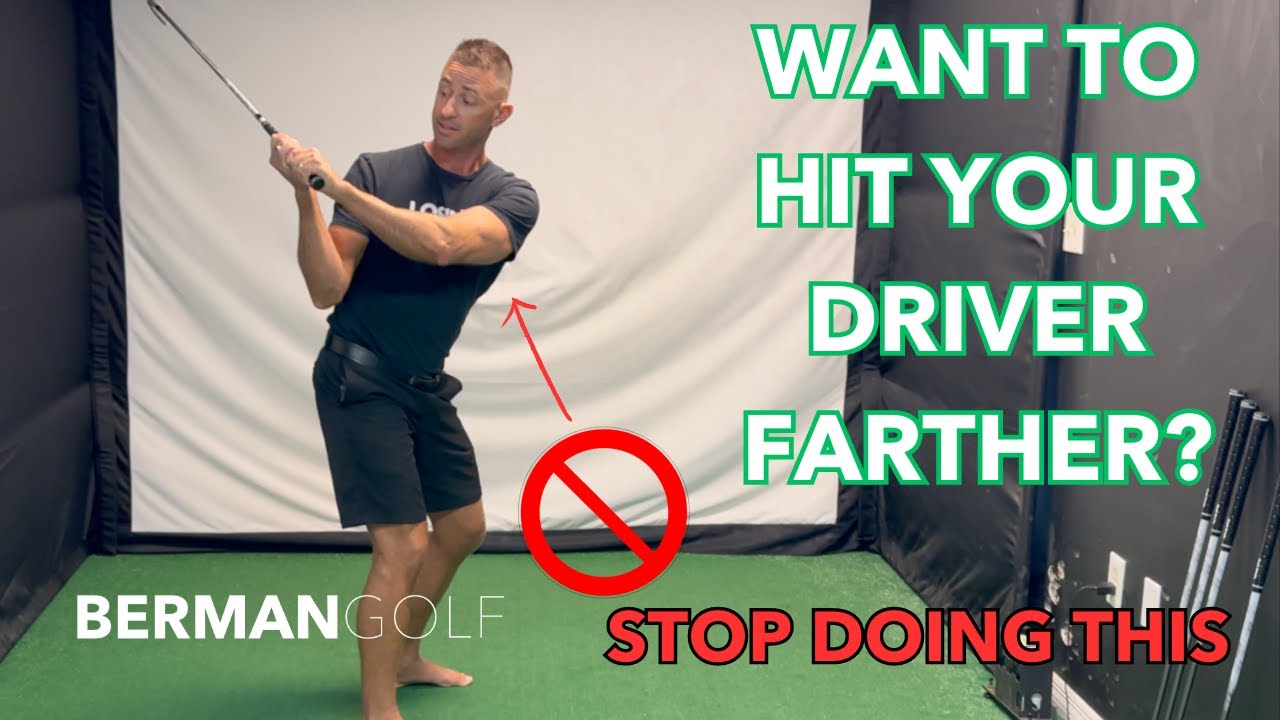
Three steps. One wall. That is the entire setup for a drill that builds more shoulder turn, maintains arc width, and trains the belt buckle to lead the downswing into an inside out path.
Most distance tips for senior golfers focus on what needs to happen at impact or through the swing. This one starts at the address and builds the correct foundation before anything moves. Because if the foundation is wrong, everything built on top of it compensates, and compensation is what costs distance.
At Berman Golf, this is one of the most direct and accessible drills for hitting the driver farther, because it combines three things that are usually taught separately into one connected sequence that can be practiced anywhere.
Step 1, Posture First, No Old Man Slouch
Here is the step that determines whether any of the rest of this drill can work.
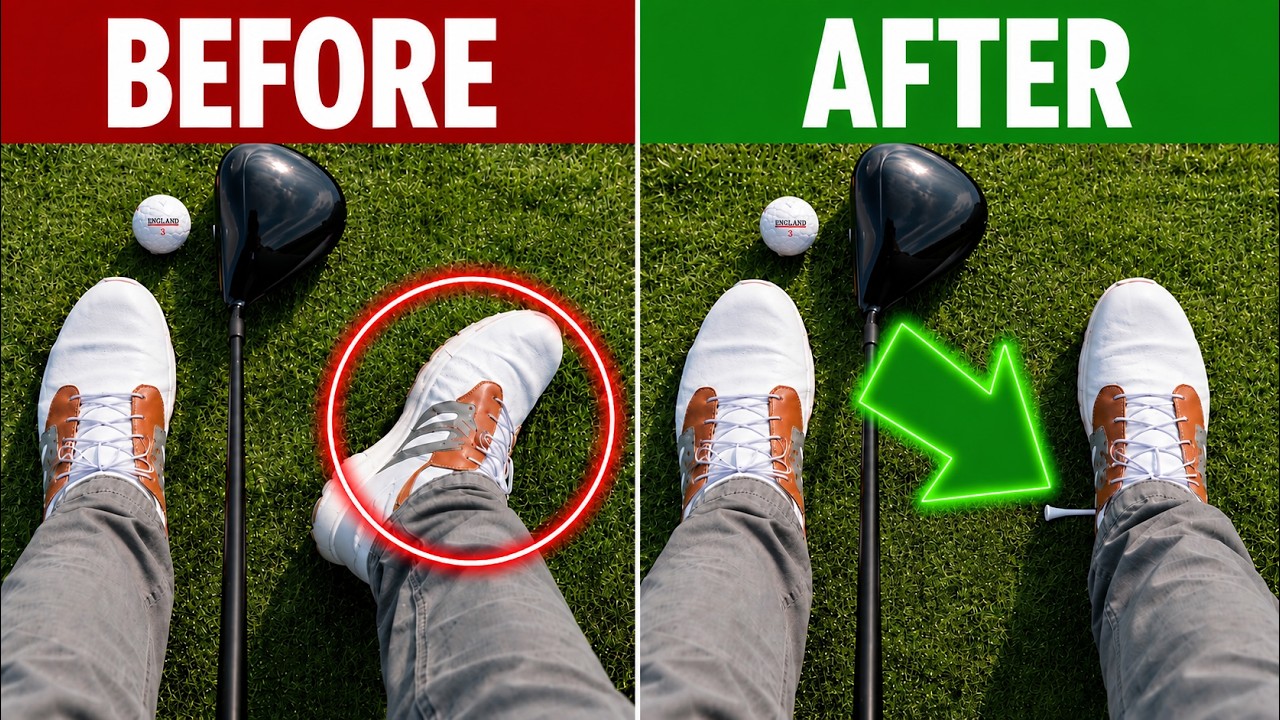
Tall to the ball. Chest up. Belly button in. Nice loose grip. Soft knees. Hips pushed back to get down to the ball instead of rounding forward.
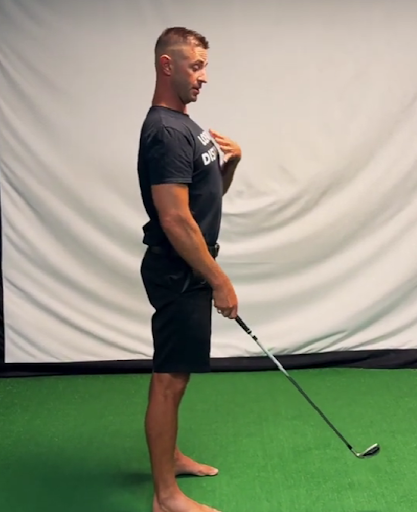
The rounded posture kills shoulder turn before the backswing even begins. As shown in previous content, even a small amount of rounding can cut shoulder turn in half. Starting tall is not optional. It is the prerequisite for everything else.
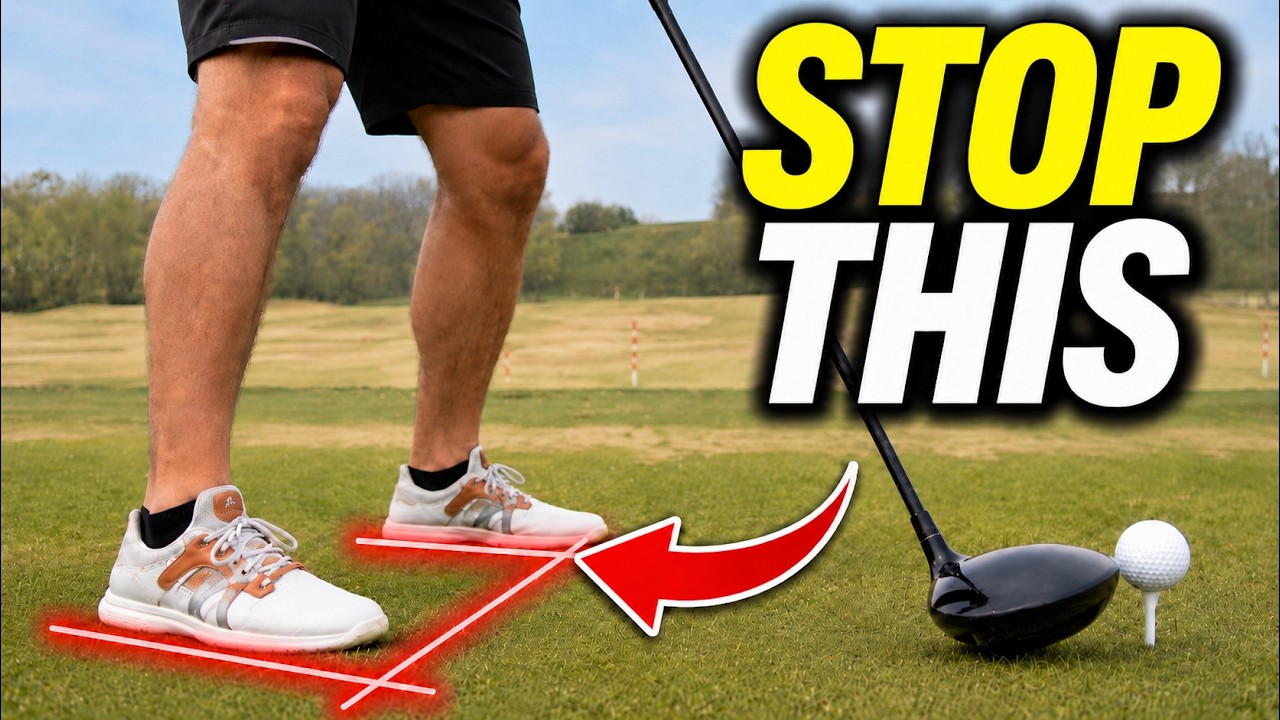
Once in tall posture, start increasing pressure through the inside of the trail foot. Push the arch into the ground without letting the trail knee buckle inward.
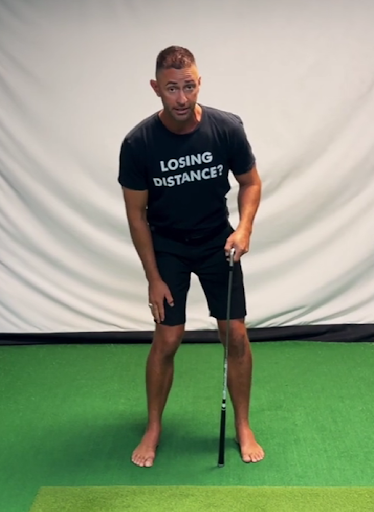
That foot pressure is the start of the power chain. Core engaged. Trail foot loading. Everything connected before the backswing begins.
Step 2, Left Hand Directly Away From the Target
Here is where most golfers leak power without realizing it.
The takeaway wraps the club around the body instead of extending the hands directly away from the target. That wrap shortens the arc. A shorter arc means a slower club head. Less distance, directly traceable to the first foot of the backswing.
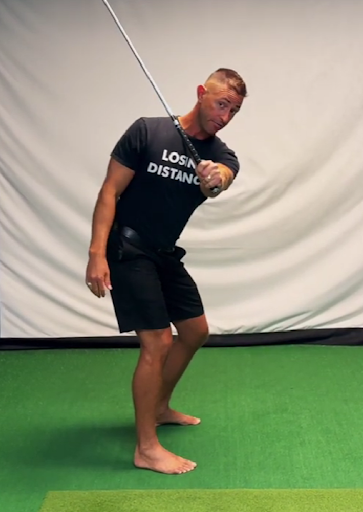
Think about taking the left hand directly away from the target on the takeaway. Not up. Not around. Away. Parallel to the ground initially, extending outward. This keeps the right elbow down and tucked instead of chicken winging out, which is exactly what flares when the hands wrap around the body.
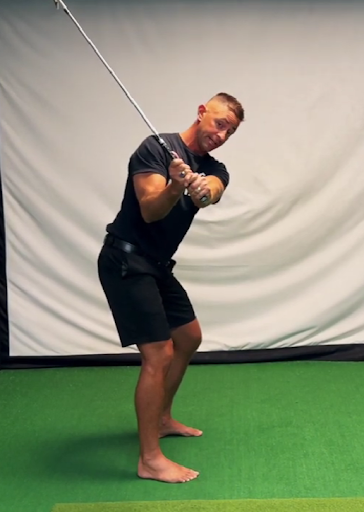
Here is the specific point that most golfers miss. Trying to get the club higher by lifting the arms early actually makes the arc smaller, not bigger. The hands going parallel away from the target and then the shoulders finishing the turn produces a wider arc than lifting the arms toward parallel.
The Wall Reach Drill
Here is the drill that makes step two trainable in just a few repetitions.
Stand close to a wall. Soft knees, hips back, right hand on the belt buckle. The target is behind and the wall is on the trail side.
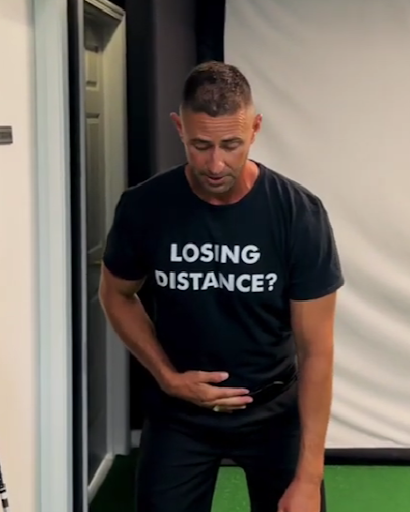
Take the left hand directly away from the target and reach for the wall. Without letting the head shift or sway. Without ducking, diving, or lifting. Just reaching the left hand straight back toward the wall while the body holds its posture and the head stays still.
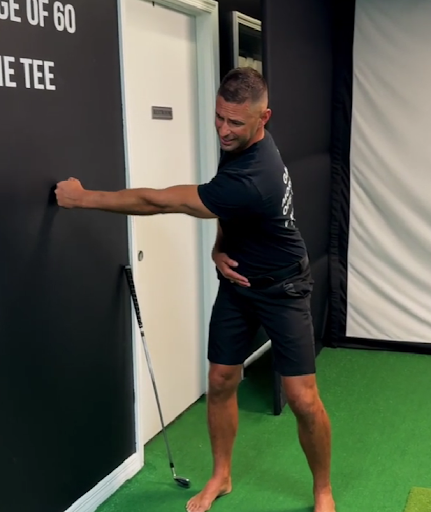
Here is what the wall reveals immediately. When the left hand goes directly away from the target instead of wrapping around the body, the shoulder turn happens naturally. The reach forces the shoulders to turn within the cylinder instead of the arms going around. The wall is the feedback tool. Touching it, or reaching close to it, confirms the path was correct.
The tension felt in that position is real. The muscles on the right side are loaded. The right side is wound up. Everything is ready to deliver power through the downswing.
Step 3, Belt Buckle Leads the Downswing
Here is where steps one and two pay off.
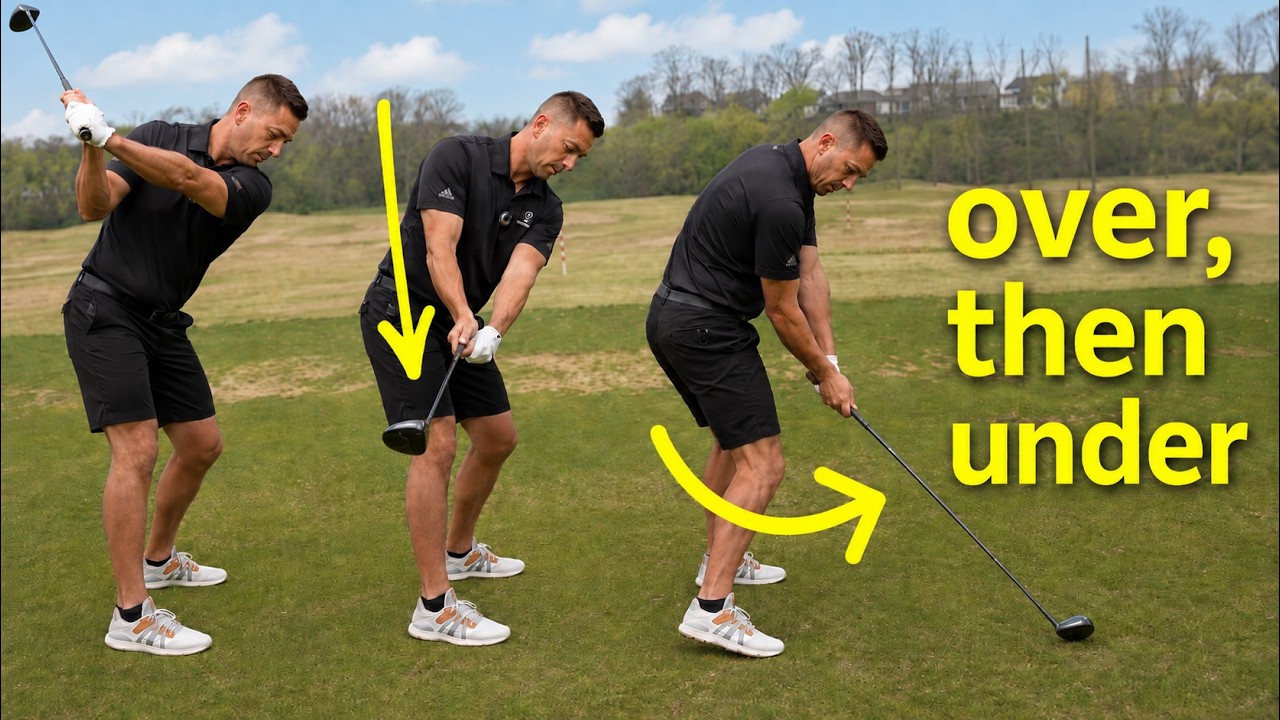
From the loaded position with the trail foot pressing, the left hand reached away from the target, the right elbow tucked, and the core tight, forget the arms exist. The only thought is letting the belt buckle lead the way.
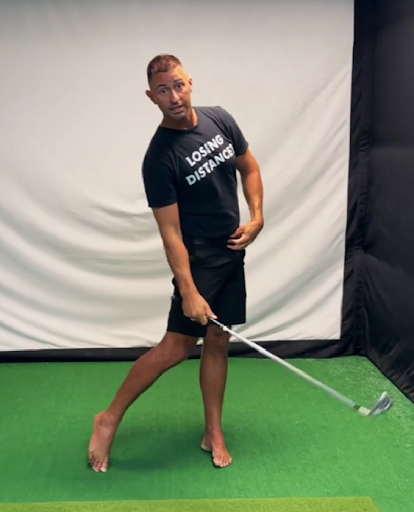
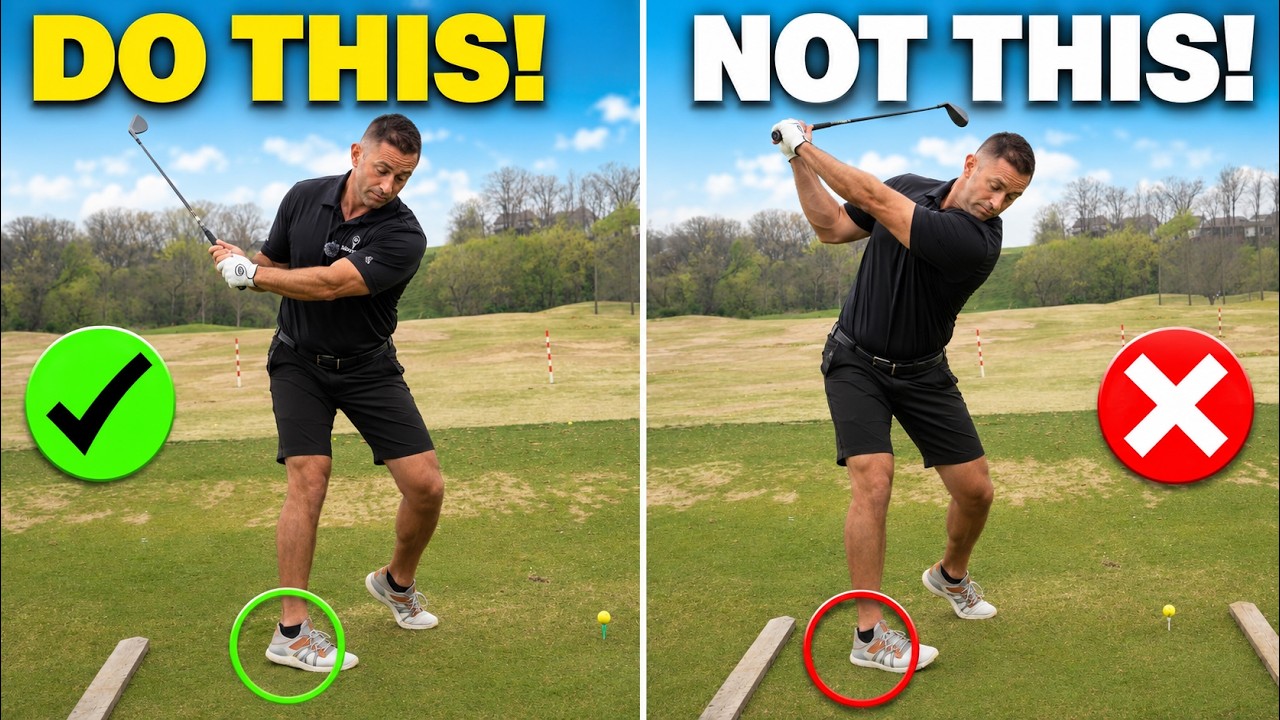
When the belt buckle leads, the brain registers the body as the primary mover. The hands follow instead of leading. The club approaches from the inside because the body cleared before the arms had a chance to throw the club over the top. The result is an inside out swing path, the path that produces compression, distance, and a draw instead of a slice.
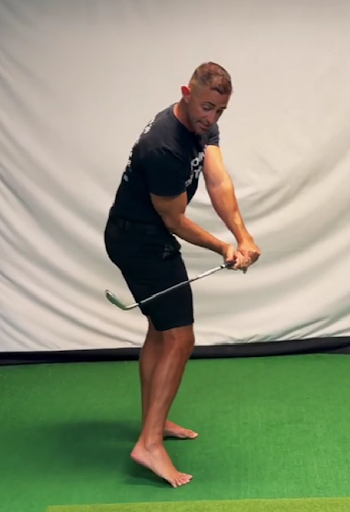
When the body swings the club instead of the arms, the contact is reproducible. Not dependent on timing an arm swing correctly. Not hoping the hands release at the right moment. The body rotation delivers the club to the same place on every swing.
The Prescription
Here is exactly how to practice this drill.
Ten reps. Full sequence every time. Posture set, trail foot pressing, left hand directly away from the target toward the wall, right elbow tucked, core engaged, shoulder turn completing, then belt buckle leading the downswing.
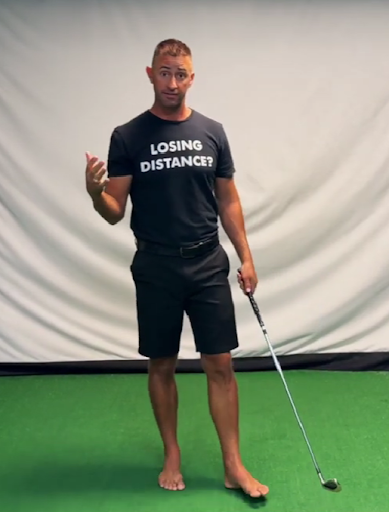
If ten reps do not produce real fatigue in the trail glute, core, and lead shoulder, the muscles were not engaged hard enough. The movement was sloppy or too easy. Real muscle engagement in this sequence produces real physical exertion. Not casual tiredness. Actual muscle fatigue.
Ten good reps are worth more than fifty sloppy ones. Make every rep count.
Get a Free Swing Analysis
Want to know whether the takeaway is wrapping instead of going away from the target, and whether the belt buckle is actually leading the downswing or the arms are still jumping in first?
Set the camera or phone up at two angles. One from the front, face on. One from behind, down the line. Film in slow motion. Swing.
Send both videos to gaindistance.com and Dr. Berman will give a free swing analysis. The first one is on him.
See exactly what the camera shows, not what the brain thinks is happening. The takeaway path and the initiation of the downswing are both clearly visible in slow motion and almost always reveal something the golfer did not know was happening.
Want a Step-by-Step Blueprint?
If this resonates and the advice out there feels designed for 25-year-old tour pros, there is a simple blueprint built specifically for senior golfers.
It breaks down:
How the aging body changes Which muscles actually produce power How to gain distance without swinging harder How to improve consistency while reducing aches and pains
It is written at a fifth-grade reading level with clear visuals and practical drills that can start immediately.
A FREE digital copy is available at: 👉 gaindistance.com
No gimmicks. Just clarity on how the body should move to play better golf for years to come.
Bringing It All Together
Three steps. Tall posture with trail foot pressing through the inside arch. Left hand going directly away from the target with the wall as feedback for the shoulder turn. Belt buckle leading the downswing while the arms stay passive.
The wall reach drill makes step two immediately trainable by giving the hands a physical target to reach toward, which forces the shoulder turn to happen from real rotation instead of arm movement.
Ten reps. Full engagement. If the muscles are not fatigued, the work was not hard enough.
At Berman Golf, the focus is biomechanics first. Not cookie cutter swings. The goal is teaching the body how it should move, especially as it ages, so power can be generated safely and repeated under pressure.
The in-house and online coaching programs are built specifically for senior golfers who want more distance and better consistency without beating up their bodies.
For anyone tired of advice designed for tour pros and ready for a blueprint built for their body, help is available.
Because when the posture is tall, the arc stays wide, and the belt buckle leads, the driver goes farther and the swing becomes something the body can actually repeat.
And when the swing is repeatable, the game gets soooooo much easier!
If you enjoyed what you read and want to see it in action, watch the video below where Dr. Berman demonstrates all three steps and the wall reach drill!