There are a billion answers out there on YouTube about how to gain distance in golf. Most of them are designed for golfers under 40 with fast twitch muscle fiber, tour level flexibility, and bodies that have not yet started working against them.
This one is not for those golfers.
This is specifically for aging golfers, 60 and older, who are losing distance, never had the distance they wanted, or both. And the answer is not what most distance instruction suggests.
At Berman Golf, after working with hundreds of senior golfers, the single most consistent distance killer in this age group is not swing speed. It is not flexibility. It is flipping at the ball. And until the flip gets fixed, nothing else about distance improvement is going to work.
How to Know If the Flip Is Happening
Here is the fastest way to confirm whether flipping is the problem.
Take a slow motion video of the swing from the face on angle. Pause it at impact. Look at where the belt buckle, hands, and club head are in relation to each other.
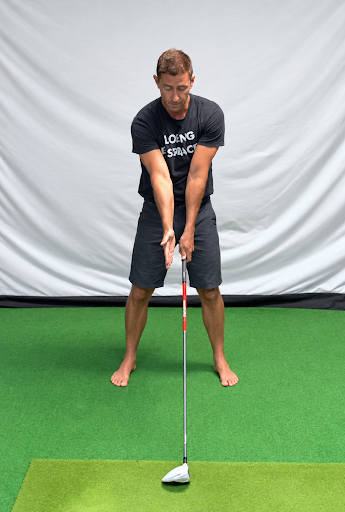
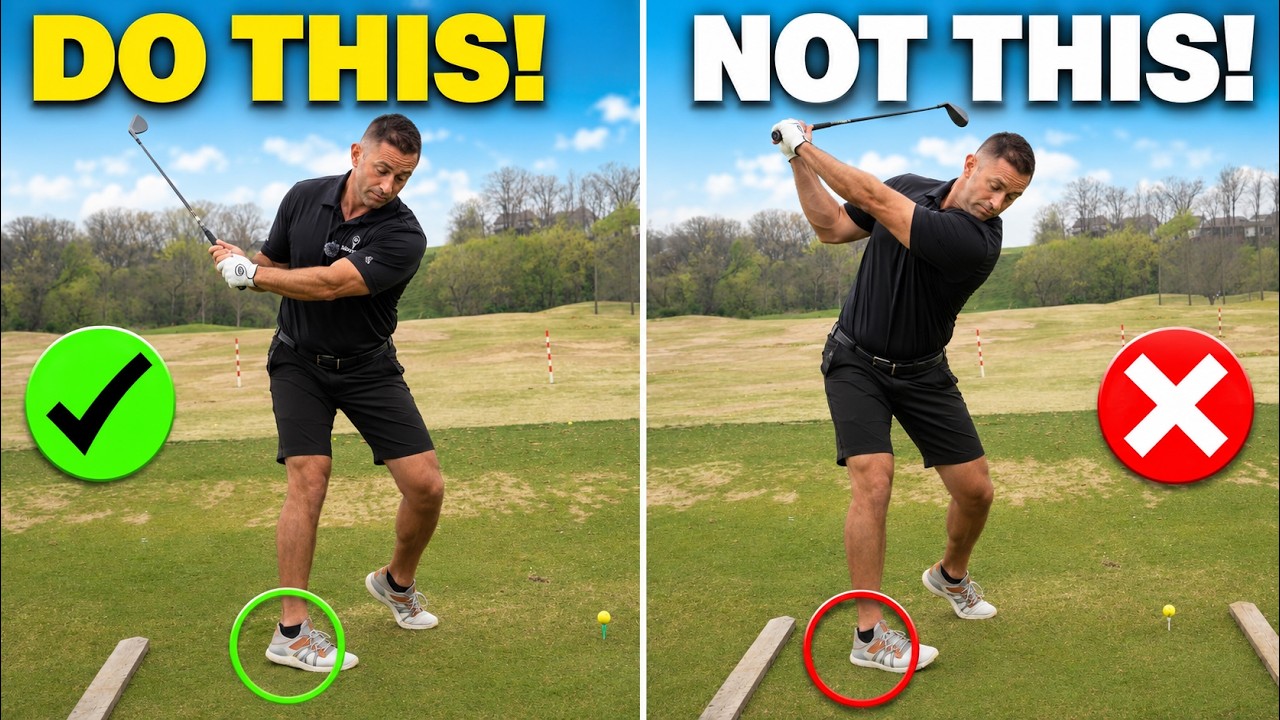
If the belt buckle, hands, and club head are all in a straight vertical line at impact, the flip is happening. If the club head is ahead of the hands at impact, the flip is even worse.
From that position, it is physically impossible to generate real distance. The club has already released before the ball was hit. The power that was supposed to transfer into the ball dissipated into thin air before impact.
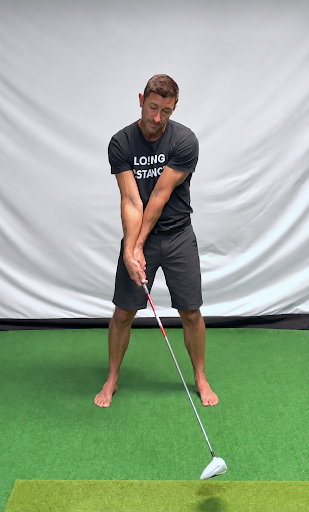
The slow motion video does not lie. Most golfers who say their belt buckle does move and their hands are ahead are surprised by what the camera actually shows. The feeling of correct and the reality of correct are two very different things until the pattern has been trained enough times to match.
Why the Flip Happens
Here is the root cause, and it is the same one that runs through almost every distance problem in aging golfers.
The downswing initiates with the hands.
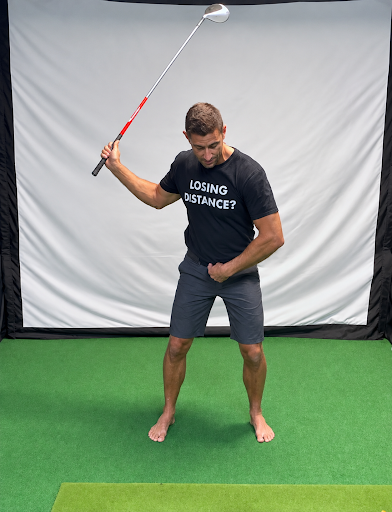
At the top of the backswing, the hands pull down or cast the club forward. The belt buckle barely moves. The brain was told the hands were the primary mover at the start of the backswing, so the hands are still the primary mover at the start of the downswing. And hands initiating the downswing means hands arriving at impact first, club head right behind them, and zero chance of real compression.
The same principle applies to the backswing. If the hands initiate the backswing, the brain registers the hands as the primary driver for everything that follows. Changing the downswing without changing the backswing initiation produces limited results because the brain is still running the same program.
The Two Step Fix
Here is the fix, and it is the same two step principle that runs through everything at Berman Golf, applied specifically to the distance problem for aging golfers.
Step 1. Get the belt buckle leading the backswing.
The backswing has to initiate with the belt buckle, not the hands. The belt buckle turns first. The hands follow. That single change tells the brain that the body is the primary mover. And when the body is the primary mover on the way back, it becomes the primary mover on the way down.
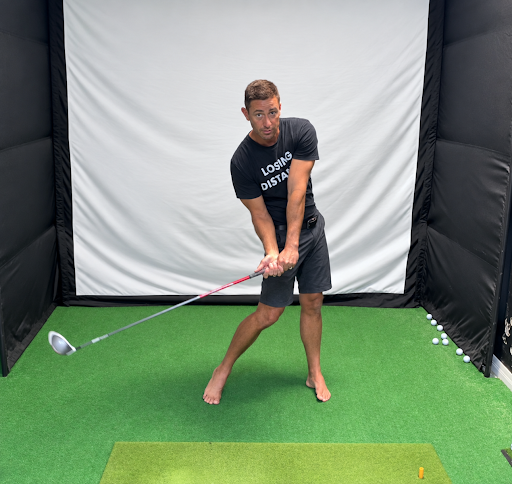
Step 2. Reverse it with the belt buckle leading the downswing.
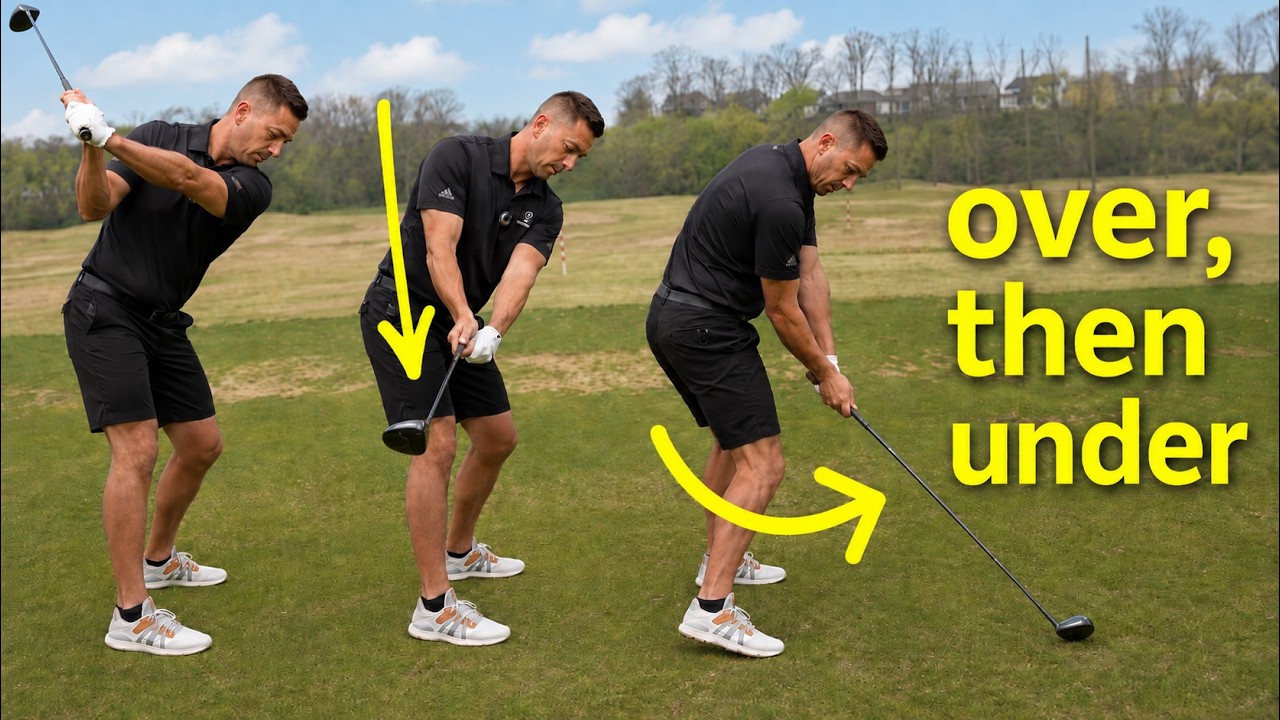
At the top of the backswing, the first thing that moves is the belt buckle. Not the hands pulling down. Not the shoulders casting. The belt buckle reversing toward the target.
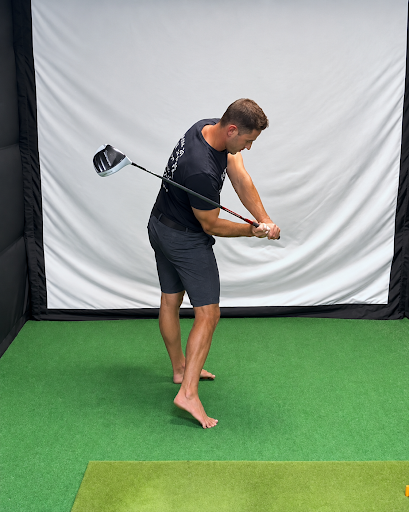
Here is what makes this so powerful for aging golfers specifically. When the belt buckle leads the downswing, the lower body clears before the arms. That clearing creates the separation between the belt buckle and the hands. And that separation is what makes the hands arrive at impact ahead of the club head instead of even with it or behind it.
Belt buckle ahead. Hands ahead of the ball. Club head behind the hands. That sequence is compression. That sequence is distance.
What It Looks Like When It Is Working
Here is the confirmation that the belt buckle led correctly.
At the top of the backswing, when the downswing initiates with the belt buckle, the lower body is completely maxed out in its rotation before the arms have moved at all. The lower body is going one direction and the arms are still in the backswing position. That lag between the lower body and the arms is exactly where power comes from.
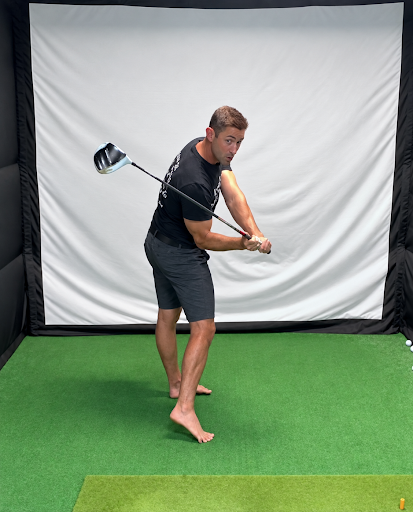
From that position, letting the arms release is all that is required. The power generated by the lower body leading transfers through the arms and into the club head. Real compression. Real distance.
The goal for most golfers over 60 is not the extreme version of that lag. Just getting the belt buckle slightly ahead of the hands at impact is enough to make a real difference. Even a small amount of belt buckle lead changes the equation from a flip to a forward shaft lean. And forward shaft lean is the difference between picking the ball and compressing it.
The Progression to Build It
Here is how to build the belt buckle lead pattern without a ball.
Start with just the backswing. Get into address position and go slowly into the backswing with the belt buckle initiating. Hold at the top. Feel where everything is. Belt buckle turned? Hands directly in front of the belt buckle? Good.
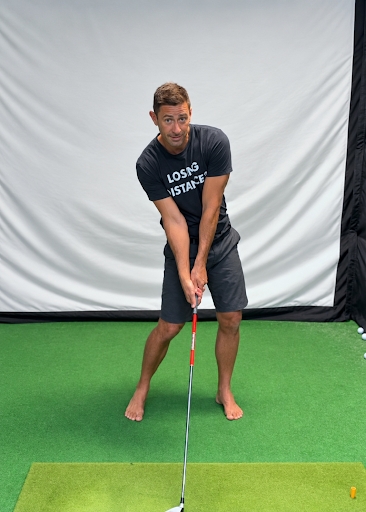
Then add the downswing initiation. From the held top of backswing position, initiate with the belt buckle and let everything follow. Feel the lower body moving first. Feel the arms staying back while the lower body clears. Then let the release happen naturally.
Repeat. Slowly. Over and over. Without a ball. Until the belt buckle leading both directions feels more natural than the hands going first.
That pattern, once trained, transfers to the real swing. The brain stops sending the hands first because the belt buckle leading has become the default. The flip disappears because the hands are no longer arriving first. The distance comes back because the power finally has somewhere to go.
Get a Free Swing Analysis
Want to know whether the flip is happening at impact and exactly how far behind the belt buckle the hands are arriving?
Set the camera or phone up at two angles. One from the front, face on. One from behind, down the line. Film in slow motion. Swing.
Send both videos to gaindistance.com and Dr. Berman will give a free swing analysis. The first one is on him.
See exactly what the camera shows, not what the brain thinks is happening. The impact position reveals the flip or the forward lean immediately and tells the whole story about where distance is being lost.
Want a Step-by-Step Blueprint?
If this resonates and the advice out there feels designed for 25-year-old tour pros, there is a simple blueprint built specifically for senior golfers.
It breaks down:
How the aging body changes Which muscles actually produce power How to gain distance without swinging harder How to improve consistency while reducing aches and pains
It is written at a fifth-grade reading level with clear visuals and practical drills that can start immediately.
A FREE digital copy is available at: 👉 gaindistance.com
No gimmicks. Just clarity on how the body should move to play better golf for years to come.
Bringing It All Together
The flip is the number one distance killer for aging golfers. It shows up at impact as the belt buckle, hands, and club head all arriving together, or worse, the club head arriving ahead of the hands.
The fix is two steps. Belt buckle leads the backswing so the brain registers the body as the primary mover. Belt buckle leads the downswing so the lower body clears before the arms, creating the separation that produces forward shaft lean at impact.
Practice it slowly without a ball. Build the pattern. Let the distance follow.
At Berman Golf, the focus is biomechanics first. Not cookie cutter swings. The goal is teaching the body how it should move, especially as it ages, so power can be generated safely and repeated under pressure.
The in-house and online coaching programs are built specifically for senior golfers who want more distance and better consistency without beating up their bodies.
For anyone tired of advice designed for tour pros and ready for a blueprint built for their body, help is available.
Because when the belt buckle leads and the hands stop flipping, the distance that was always in the body finally makes it into the golf ball.
And when the ball goes where it is supposed to go with real power behind it, the game gets soooooo much easier!
If you enjoyed what you read and want to see it in action, watch the video below where Dr. Berman demonstrates exactly what the flip looks like and how the belt buckle fix changes everything!