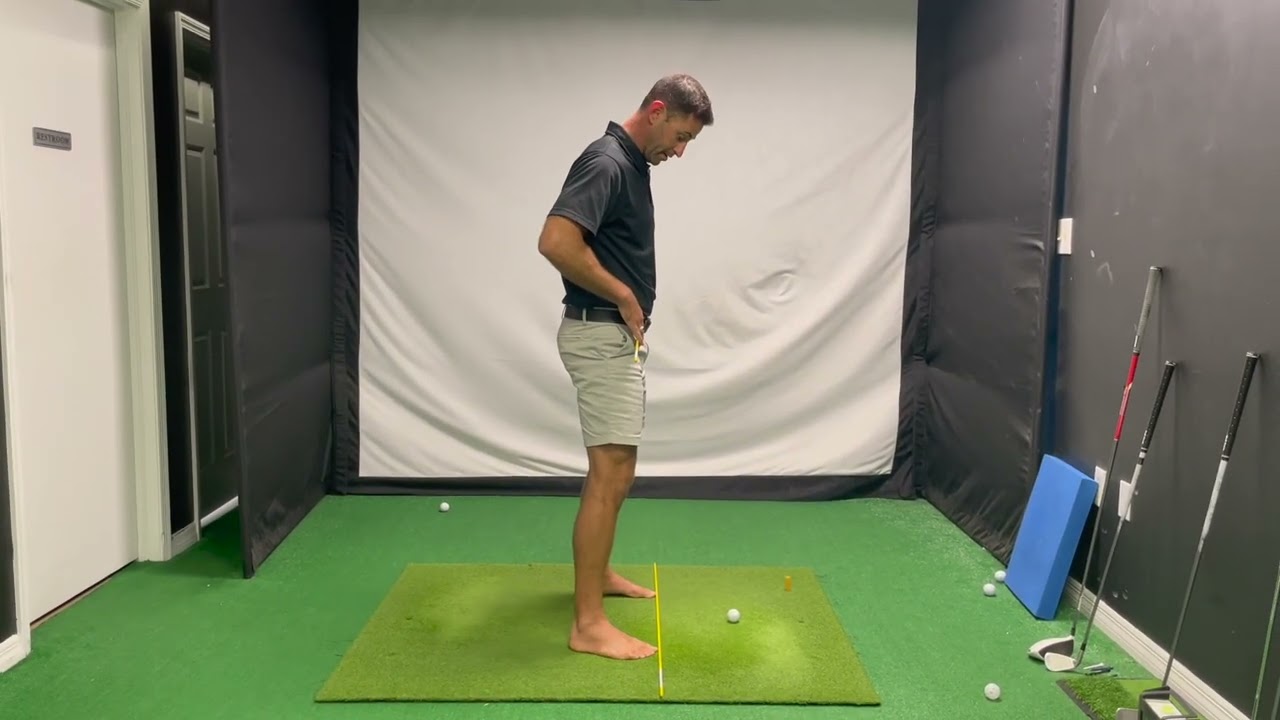
Jon Rahm said something before the 2022 Masters that is worth repeating here because it is so simple and so consistently ignored.
So many amateur golfers underestimate the importance of the basics. Get up there and just whack the ball without checking the setup, the alignment, the ball position. And then wonder why consistency never improves.
That is not a knock on amateur golfers. It is a recognition of something that even the people teaching this stuff forget to do themselves. During a round recently, a playing partner had to remind Dr. Berman of his own advice. Take an extra 30 seconds. Check the alignment. The answer was crap, I wasn’t doing it.
At Berman Golf, alignment is one of the four boxes that gets checked before every shot. This blog is entirely about why it matters more than most golfers realize, and exactly how to check it correctly in 30 seconds.
The Statistic Worth Sitting With
Here is something worth acknowledging before getting into the mechanics.
The vast majority of golfers in America cannot break a hundred. And for many who can, it involves the occasional Mulligan, foot wedge, or hand wedge along the way.
That is not embarrassing. That is reality. And knowing that reality is actually freeing, because it means the standard being compared to, the tour pro swing, the perfectly shaped shot, the consistent ball striking, is not the baseline for the average amateur. Progress from where things actually are is the only relevant measure.
And one of the fastest ways to make progress from where things actually are is to stop fighting the brain on every single shot by having misaligned feet, hips, and shoulders all pointing in different directions.
Why Misalignment Makes the Brain Fight Itself
Here is the biomechanical problem that misalignment creates, and it is more serious than most golfers appreciate.
The brain knows where the target is. The brain also knows where the feet, hips, and shoulders are pointing. When all three are pointing in the same direction as the target line, the brain has one clear instruction and executes it.
When any one of them is pointing somewhere different, the brain has conflicting information. It knows the goal is to hit the ball toward the target, but the body is set up to send it somewhere else. The brain then tries to make a compensatory movement mid swing to reconcile the conflict.
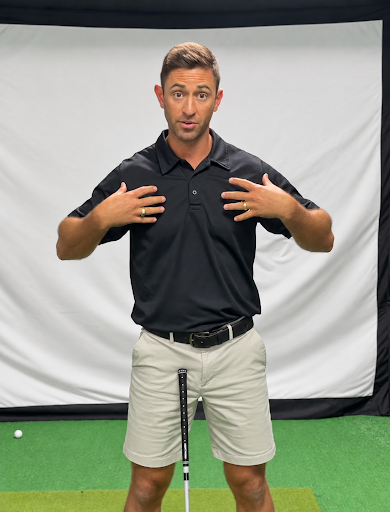
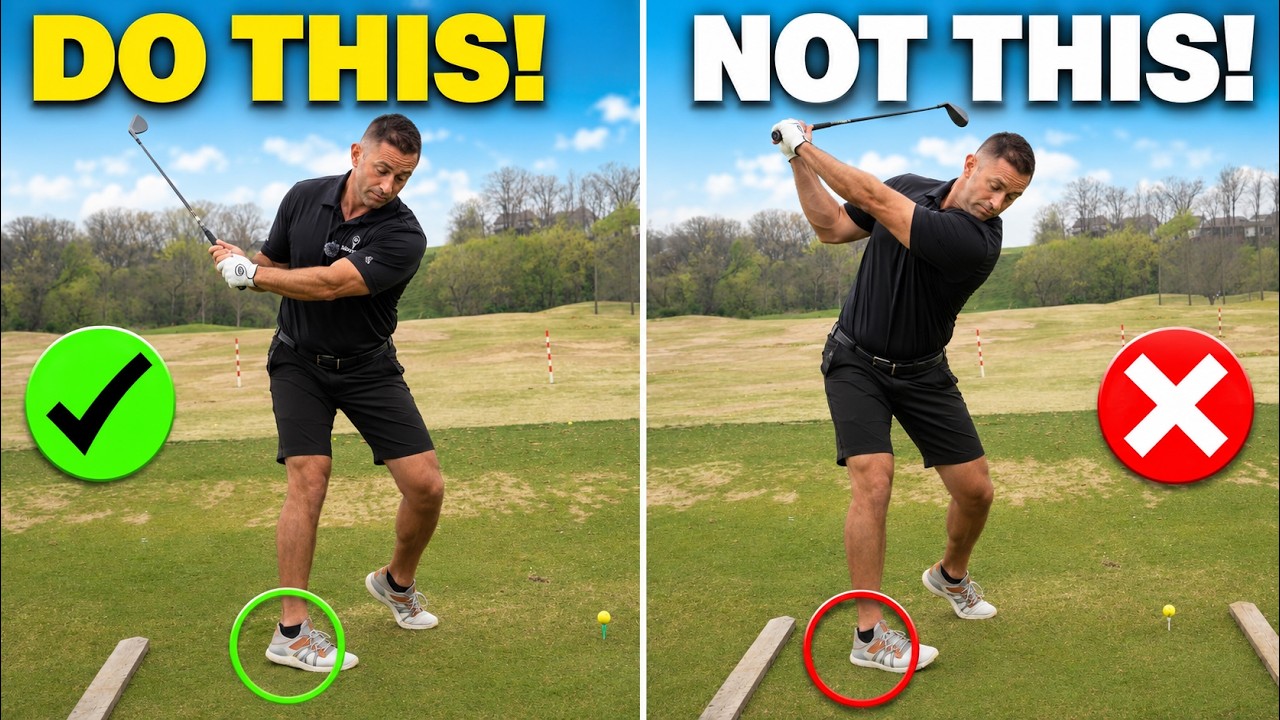
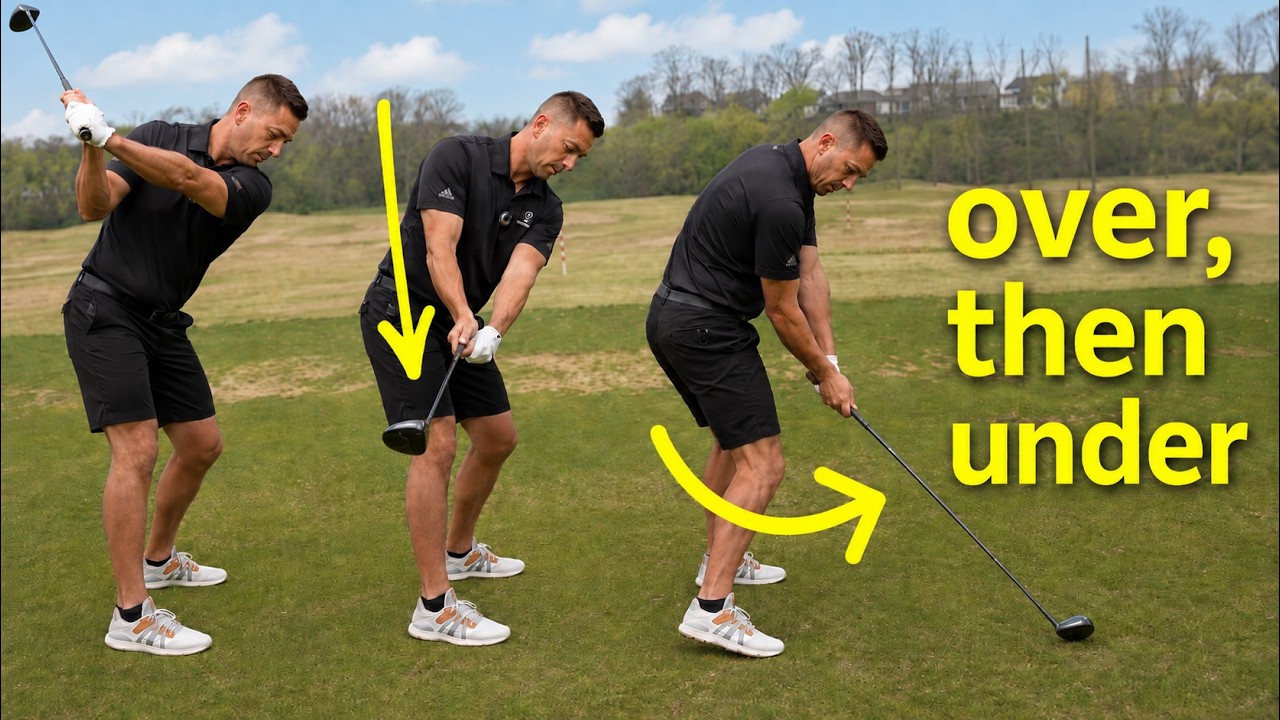
Those compensatory movements are what produce the over the top move, the block, the push, and the pull. Not because the swing is fundamentally broken but because the brain is trying to correct for the setup while the swing is in progress. That is an impossible task in a second and a half.
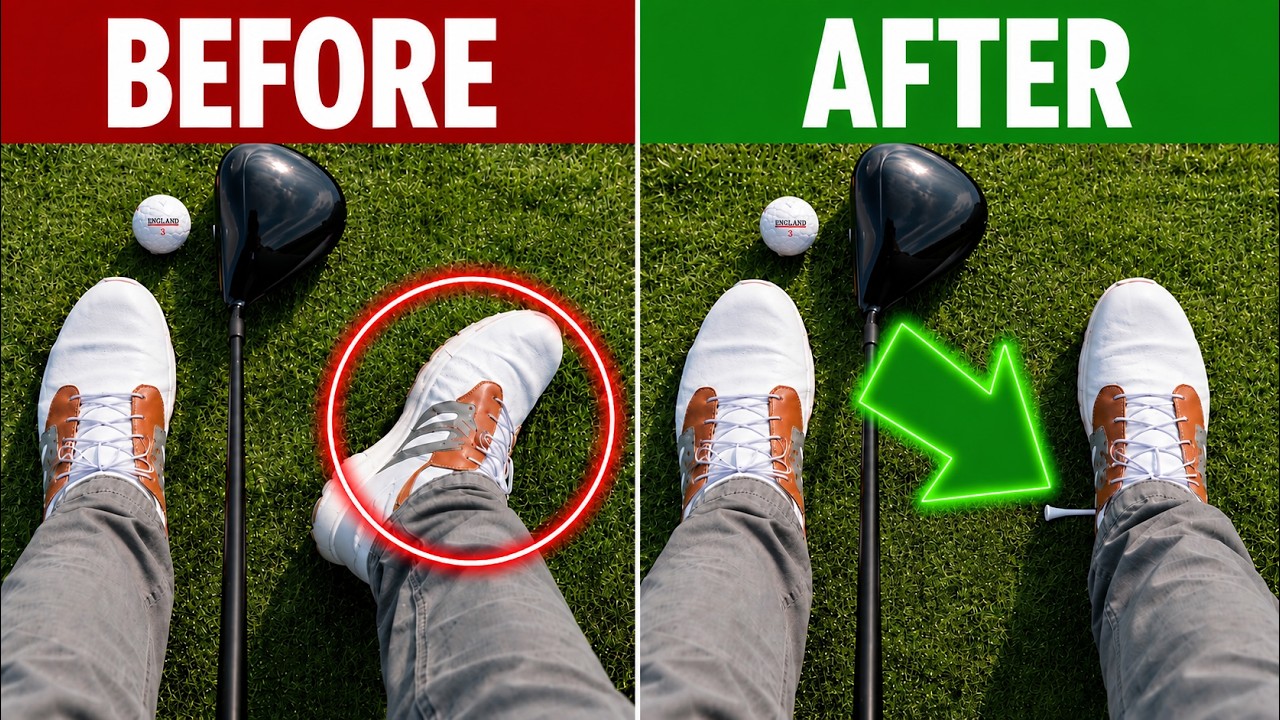
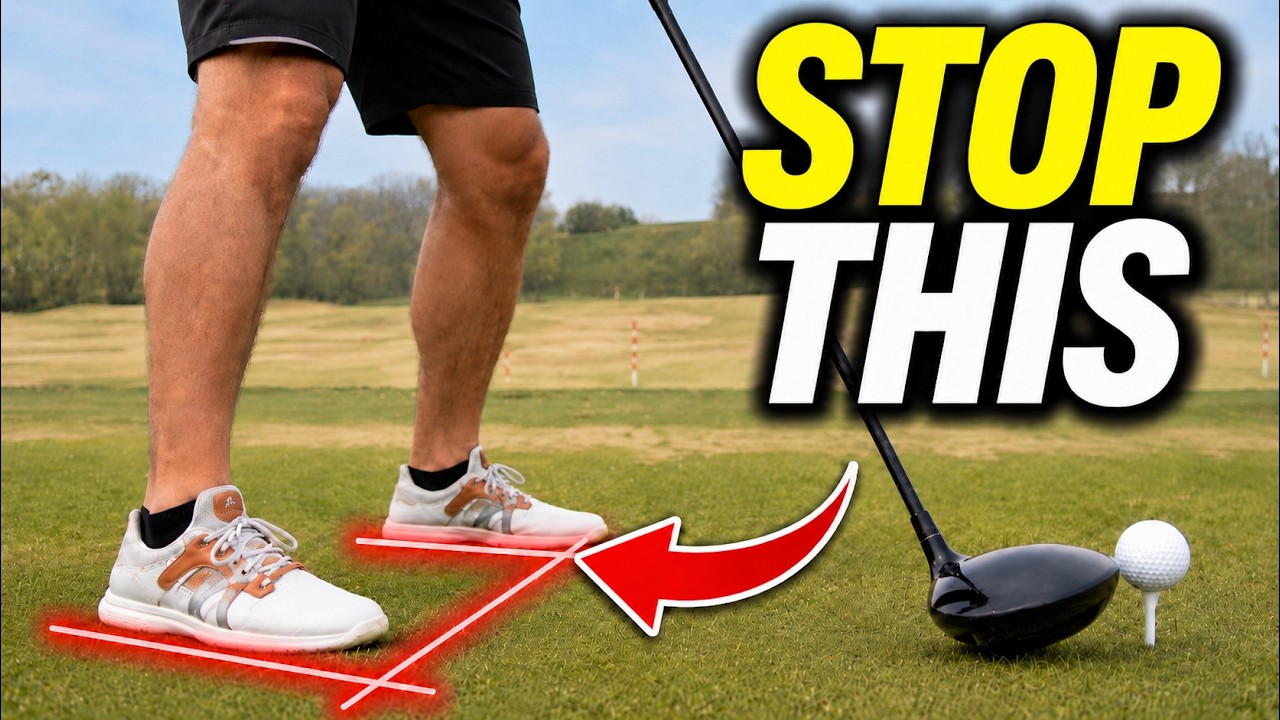
The most common misalignment pattern in amateur golf is feet slightly closed to the target line, hips roughly square, and shoulders open. Three things pointing three different directions.
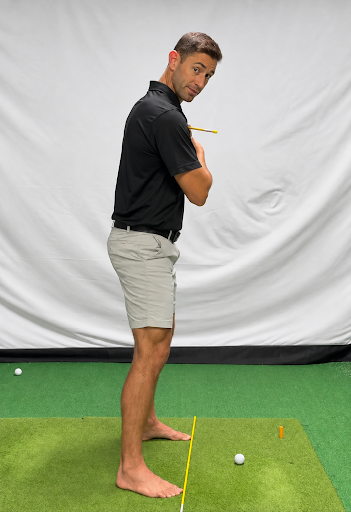
From that position, the swing that feels natural is the compensated one. The brain has built its motor program around the misalignment. And every time alignment gets corrected, the swing that was built on the misalignment feels wrong, even when it is right.
That is the trap. Misalignment feels normal. Correct alignment feels off. Until the correct alignment has been repeated enough times to become the new normal.
The 30 Second Alignment Check
Here is exactly how to check alignment in 30 seconds before every shot.
Step 1. Square the club face to the target.
Before setting the feet, square the club face to the intended target line. The club face is the reference point. Everything else gets set in relation to it.
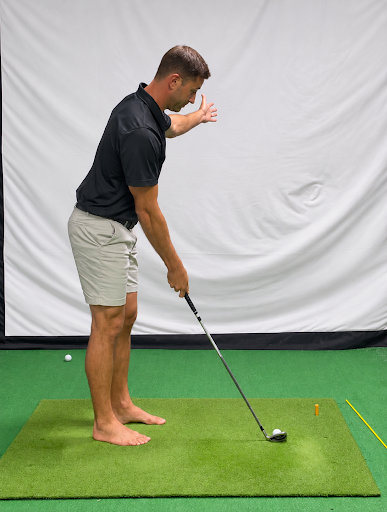
Step 2. Set the feet in relation to the club face.
Once the club face is square, set the feet parallel to that line. Not parallel to the target itself but parallel to the target line that the club face is pointing along. This is where a lot of golfers misalign, aiming the feet at the target instead of parallel to the target line.
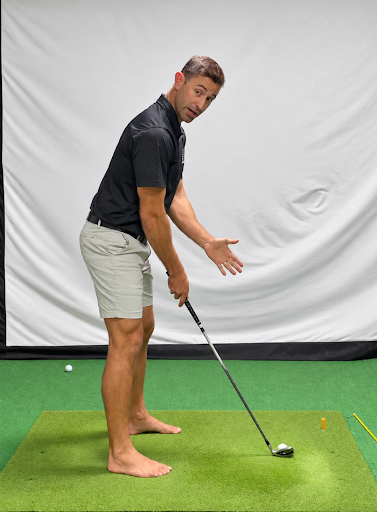
Step 3. Check the hips.
Cross the club across the hips and see where they are pointing. If the club points left of the target line, the hips are open. If it points right, they are closed. The goal is the hips pointing parallel to the target line, matching the feet.
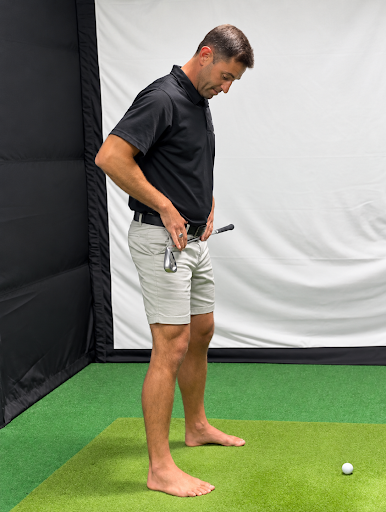
This is the one most commonly missed. The shoulders open subtly without the golfer ever realizing it. Cross the club across the shoulders or use any visual reference to confirm the shoulders are parallel to the target line and matching the feet and hips.
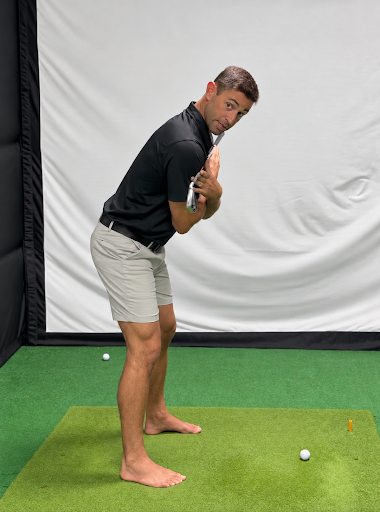
All three confirmed. Feet parallel to the target line. Hips parallel to the feet. Shoulders parallel to the hips.
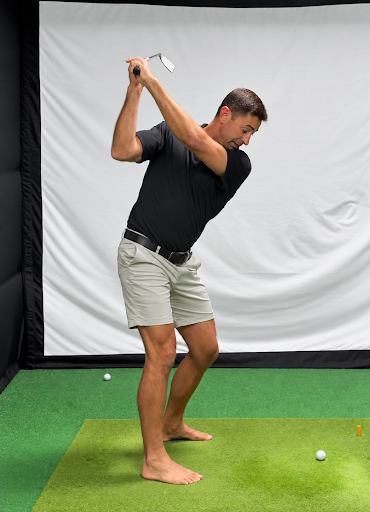
That check takes 30 seconds. Maybe less once it becomes routine. And the consistency improvement from doing it on every shot is immediate and significant.
Why Professionals Can Get Away With Misalignment
Here is why tour pros are sometimes seen with slightly open or closed setups and still hit the ball correctly.
A professional golfer has built their swing around whatever their setup produces. If the shoulders are slightly open, the swing has been calibrated over thousands of hours of practice to account for that. The compensatory pattern is so deeply grooved that it works reliably under pressure.
An amateur golfer has not built that kind of consistency into a compensatory swing. The setup changes from shot to shot, the compensation changes, and the result changes. Consistency requires that the inputs are the same every time. Alignment is one of the inputs. When it varies, the output varies.
Fix the alignment. Build the swing on a consistent foundation. Then work on the mechanics.
Get a Free Swing Analysis
Want to know whether alignment is costing consistency right now and exactly which of the three elements is most commonly off?
Set the camera or phone up at two angles. One from the front, face on. One from behind, down the line. Film in slow motion. Swing.
Send both videos to gaindistance.com and Dr. Berman will give a free swing analysis. The first one is on him.
See exactly what the camera shows, not what the brain thinks is happening. The alignment at address is one of the most immediately visible things in any swing video and one of the most commonly surprising revelations for golfers who believed they were set up correctly.
Want a Step-by-Step Blueprint?
If this resonates and the advice out there feels designed for 25-year-old tour pros, there is a simple blueprint built specifically for senior golfers.
It breaks down:
How the aging body changes Which muscles actually produce power How to gain distance without swinging harder How to improve consistency while reducing aches and pains
It is written at a fifth-grade reading level with clear visuals and practical drills that can start immediately.
A FREE digital copy is available at: 👉 gaindistance.com
No gimmicks. Just clarity on how the body should move to play better golf for years to come.
Bringing It All Together
Feet, hips, and shoulders pointing in three different directions forces the brain to compensate mid swing on every single shot. Compensations produce inconsistency. Inconsistency produces frustration. And the fix takes 30 seconds.
Square the club face to the target. Set the feet parallel to that line. Check the hips with the club across them. Check the shoulders the same way. All three pointing in the same direction. Every shot. Every time.
Jon Rahm called it before the Masters. The basics are underestimated. Alignment is one of the most basic and most impactful fundamentals available, and most amateur golfers skip it every single round.
At Berman Golf, the focus is biomechanics first. Not cookie cutter swings. The goal is teaching the body how it should move, especially as it ages, so power can be generated safely and repeated under pressure.
The in-house and online coaching programs are built specifically for senior golfers who want more distance and better consistency without beating up their bodies.
For anyone tired of advice designed for tour pros and ready for a blueprint built for their body, help is available.
Because when the feet, hips, and shoulders are all pointing the same direction, the brain stops fighting itself and the swing finally has a consistent foundation to work from.
And when the brain stops fighting itself, the game gets soooooo much easier!
If you enjoyed what you read and want to see it in action, watch the video below where Dr. Berman walks through the full 30 second alignment check step by step!