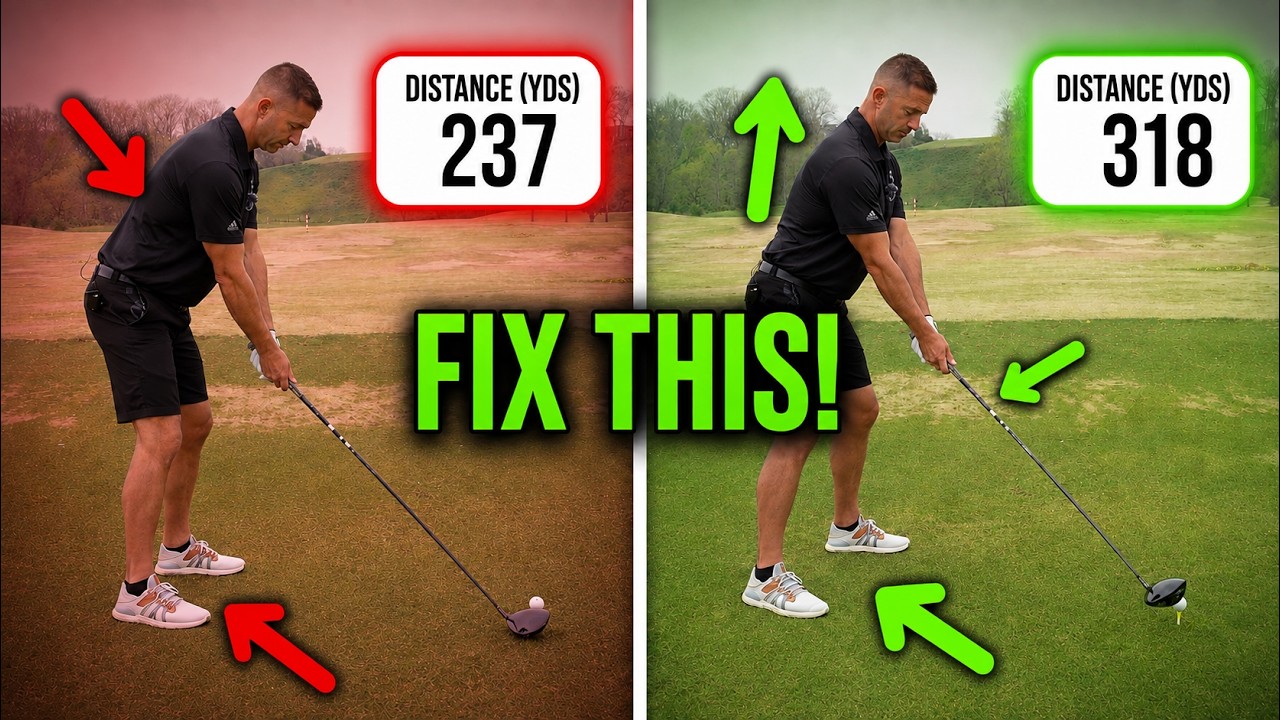
Seven minutes. That is the entire time investment for a workout that directly improves golf balance, which directly improves distance, consistency, and the ability to play more frequently.
Most golfers spend thirty minutes at the driving range hitting balls that do not translate to the course. Seven minutes of this drill, done daily, produces more lasting improvement than most range sessions because it targets the specific muscles responsible for the balance the golf swing depends on.
At Berman Golf, balance is not a vague concept. It is a specific physical capacity built by specific muscles. And the muscles most responsible for golf balance are the hip stabilizers, which almost every senior golfer has significantly weakened without realizing it.
Why Hip Stabilizers Determine Golf Balance
Here is the connection most golfers have never heard explained.
Balance in the golf swing is not primarily about core strength or foot grip. It is about whether the hip stabilizer muscles on the standing leg can keep the pelvis level when the other leg lifts or shifts.
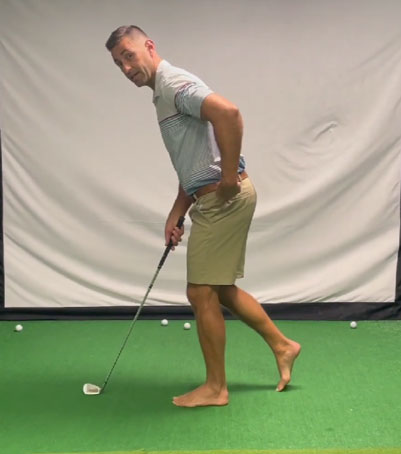
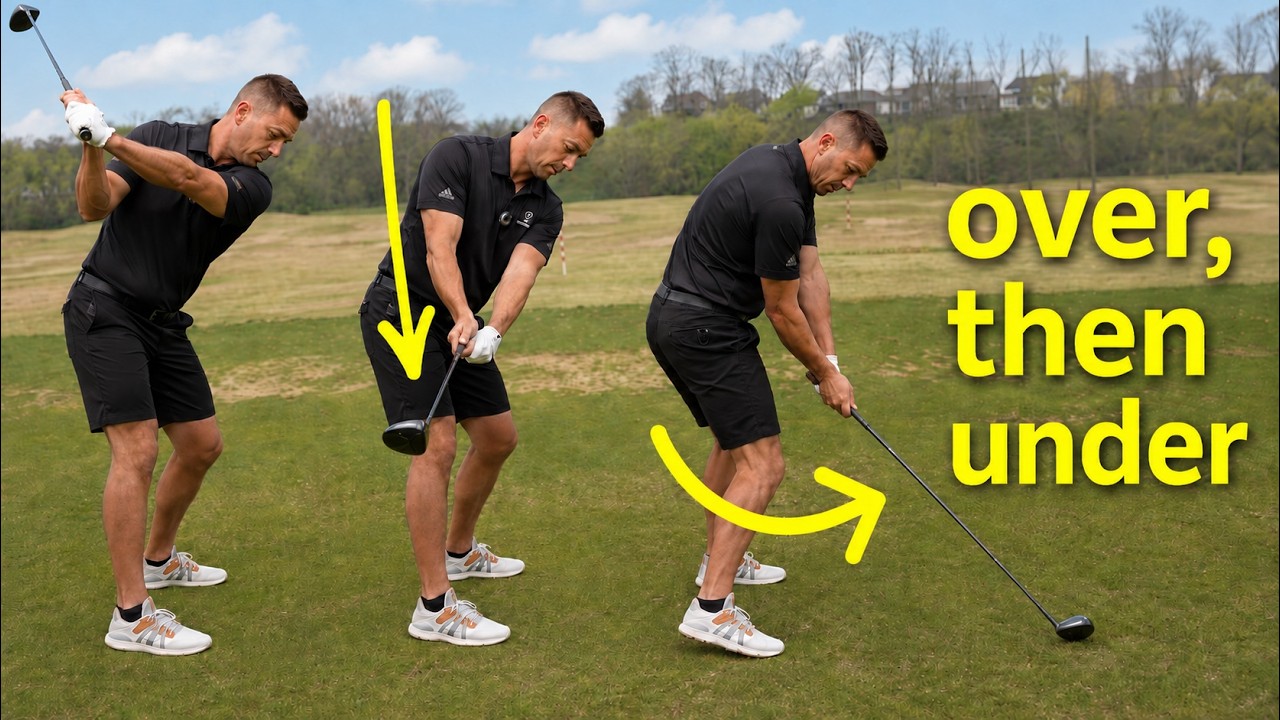
When these muscles are weak, the pelvis drops or sways to compensate whenever weight shifts onto one leg. In the golf swing, weight shifts onto the trail leg during the backswing and onto the lead leg during the downswing. If the hip stabilizers on either side cannot hold the pelvis level during those shifts, the entire swing is built on an unstable foundation.
That instability is what forces the brain to shut down the power muscles at transition. Not to produce a bad swing. To protect the body from falling. The brain prioritizes safety over power, every single time.
Strong hip stabilizers allow the brain to keep the power muscles firing through the entire swing because the foundation is stable enough to handle it.
The Drill, Hip Up Not Hip Out
Here is the exercise, and the single most important technique detail that determines whether it works or not.
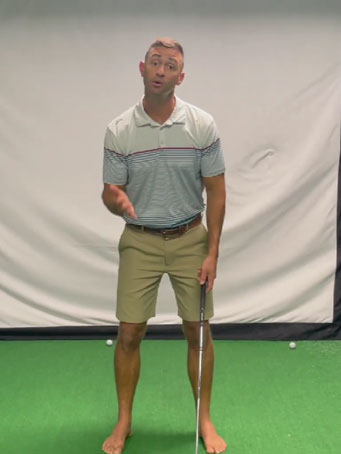
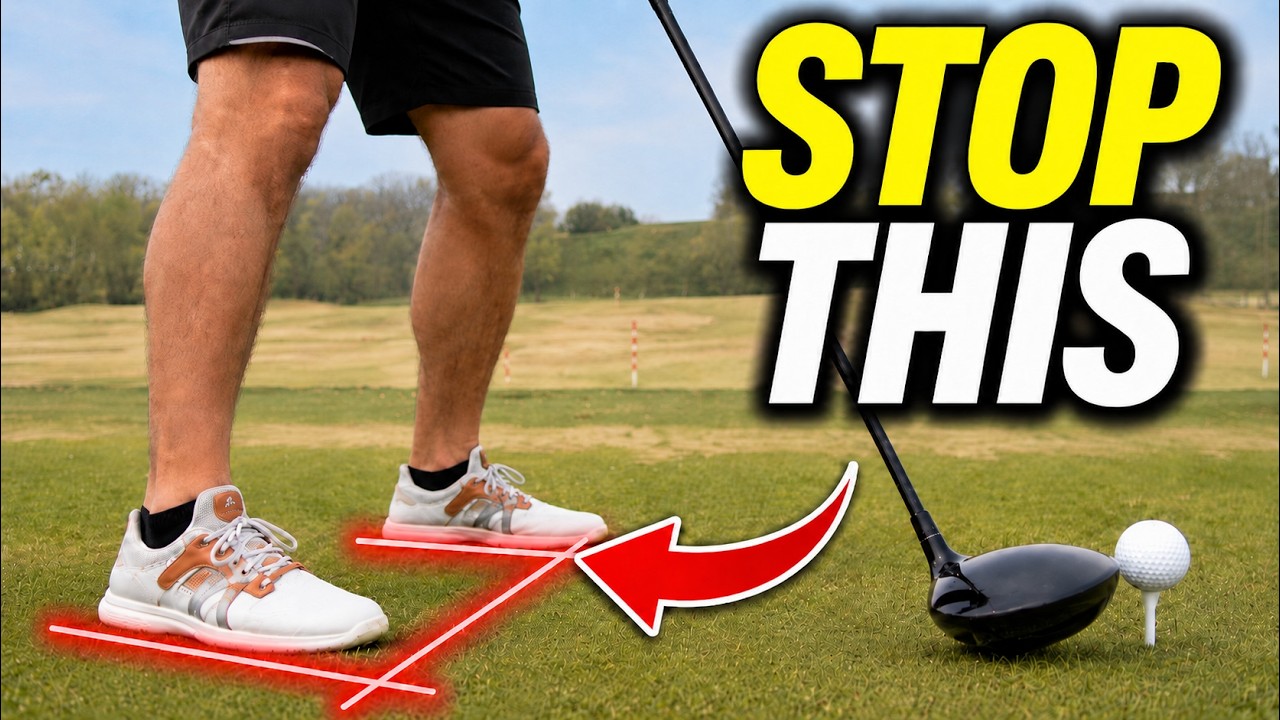
Get into a narrow golf stance with the feet very close together. Now pick up the trail foot.
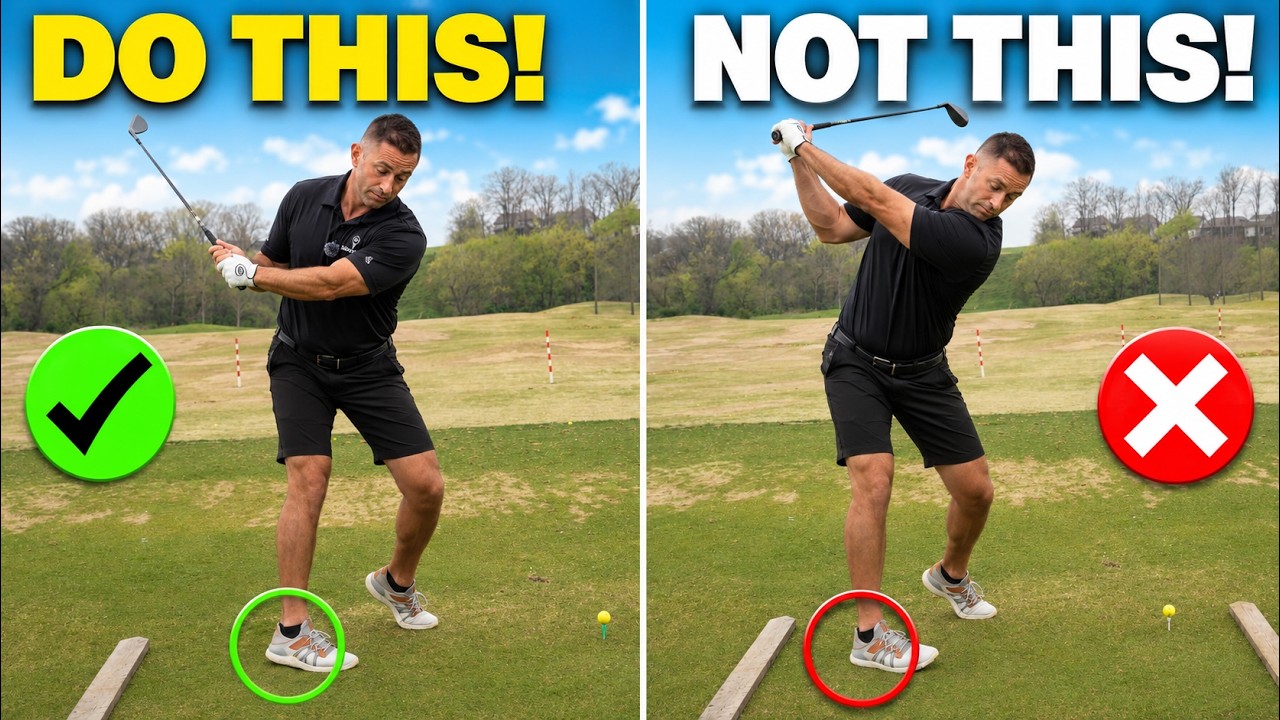
Here is the critical distinction. Do not shift the hips to the side to pick the foot up.
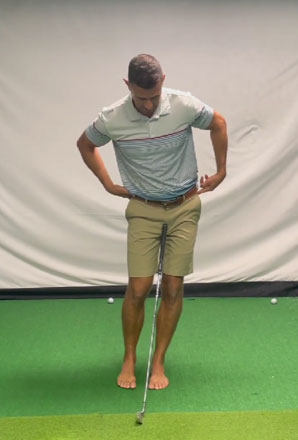
When the hips shift sideways to allow the foot to lift, the hip stabilizer muscle is not being used. The body is just leaning. The muscle that needs to be trained never gets recruited.
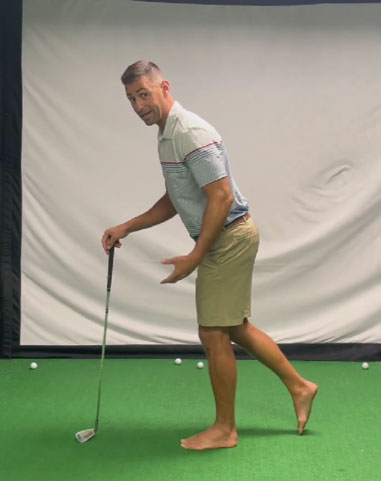
Instead, think about picking the hip straight up to lift the foot. The hip rises vertically. The foot comes off the ground as a result of the hip lifting, not as a result of the hips shifting sideways.
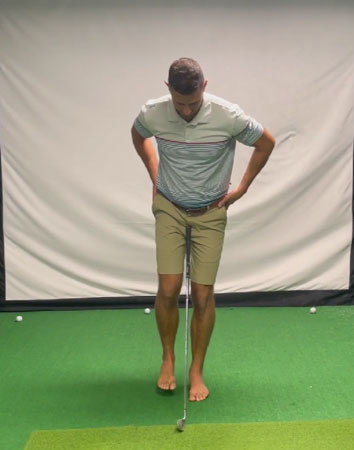
That distinction is everything. Hip up, not hip out. The moment the hip lifts correctly, the hip stabilizer muscle on the standing leg is immediately recruited and working hard.
The Hold and the Balance Aid
Here is how to perform each rep correctly.
Get into the narrow stance. Pick the trail hip straight up, bringing the trail foot off the ground. If balance is challenging, reach the trail big toe back lightly behind the body as a balance point. The big toe can barely touch the ground for stability. The goal over time is to need it less and less.
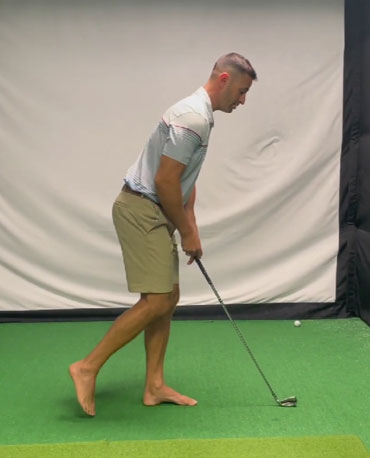
Try not to lean on the golf club either. The club can be present for minimal support but should not be bearing significant weight. The standing leg and the hip stabilizer muscle should be doing the work.
Hold for sixty seconds. The hip stabilizer on the standing leg should be burning well before sixty seconds is up. If it is not burning, the hip is not lifting correctly and the weight is being shifted instead.
The Full Prescription
Here is the complete workout that produces results within a week of consistent daily practice. Three rounds on each side. Trail side sixty seconds. Lead side sixty seconds. Trail side sixty seconds. Lead side sixty seconds. Trail side sixty seconds. Lead side sixty seconds.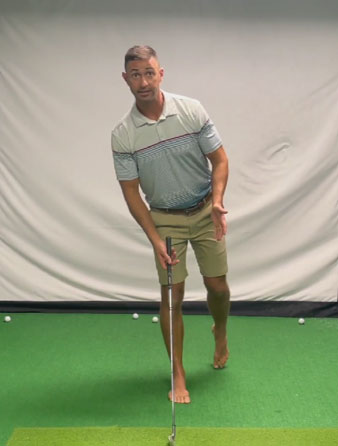
Six total holds. With transition time between holds, the entire workout takes approximately seven minutes.
The prescription is a minimum of once daily. Three times daily is ideal because these muscles respond well to frequent moderate stimulation and the workout is not so intense that it requires recovery time between sessions. Seven minutes in the morning. Seven minutes midday. Seven minutes in the evening. Twenty one minutes total across the day.
Seven days a week if possible. At minimum three times per week.
Here is the logic behind that frequency. Balance is a neuromuscular skill. It improves through consistent daily repetition far more than through infrequent high intensity sessions. Daily practice keeps the neural pathways to the hip stabilizers active and progressively strengthens the muscles at the same time.
Do It Barefoot
Here is the detail that makes this drill significantly more effective.
Do it barefoot. Every time.
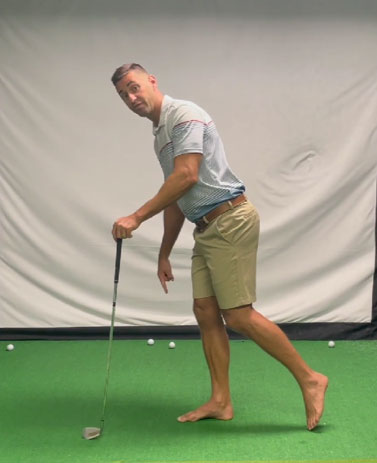
The intrinsic foot muscles play a secondary but important role in this drill. When the foot is barefoot on the ground, those muscles have to contribute to the balance alongside the hip stabilizers. The brain gets information from the foot about the ground surface and uses that information to recruit the stabilizing muscles more efficiently.
Shoes, especially tightly laced ones, muffle that information. The brain receives less feedback. The hip stabilizer recruitment is less precise. The drill produces less benefit in the same amount of time.
Barefoot for seven minutes produces better results than shoes for twenty one minutes. That is the return on the barefoot investment.
What One Week of Daily Practice Produces
Here is the honest answer to the question of how long before results are noticeable.
One week of daily practice, seven days in a row, will produce measurable improvement in balance. Not complete transformation. Measurable improvement. The hip stabilizers will be noticeably stronger. The single leg holds will feel more stable. The burning will arrive later in the sixty seconds rather than immediately.