Most senior golfers want the same two things from their irons. Better ball striking and real compression. The kind of contact that produces a solid click, a penetrating ball flight, and a divot after the ball instead of before it.
The problem is that most instruction around lag and compression skips straight to the technical fix without addressing the two physical problems that make the technical fix impossible to execute.
At Berman Golf, these two problems show up in almost every senior golfer working on iron compression. And until both are addressed, no amount of lag drill work produces the results being chased.
Problem 1, The Hips Cannot Get Into Impact Position
Here is the first and most fundamental problem.
If the hips are too stiff to physically get into the correct impact position statically, they will never get there dynamically during a real swing that lasts less than two seconds.
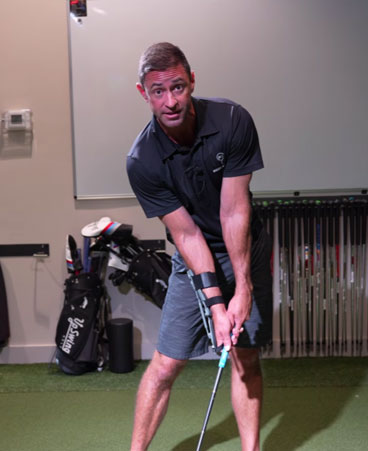
This is the part most golfers skip entirely. They work on lag drills. They work on covering the ball at impact. They work on forward shaft lean. And none of it transfers because the hips literally cannot move far enough toward the target to create the physical space for those positions to exist.
The fix has nothing to do with the golf swing. It is hip mobility work done separately, before ever picking up a club.
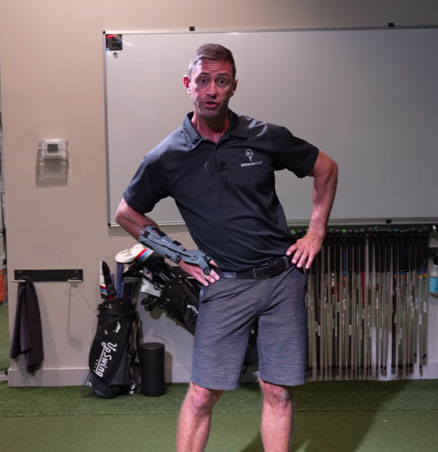
Push the hips toward the target. Keep the shoulders as level as possible while doing it. Work on getting the whole hip complex to free up. Repeat this until the impact position, belt buckle ahead of the hands, hands ahead of the ball, can actually be reached and held statically without strain.
Only after the hips can get there statically is it worth trying to get there dynamically.
Problem 2, The Brain Keeps Flipping
Here is the second problem, and it is the one that persists even after the hip mobility improves.
The brain has been conditioned to flip the wrist at impact. Not because golfers want to flip. Because the flip has been the default response for years, and the brain cannot stop doing it through intention alone.
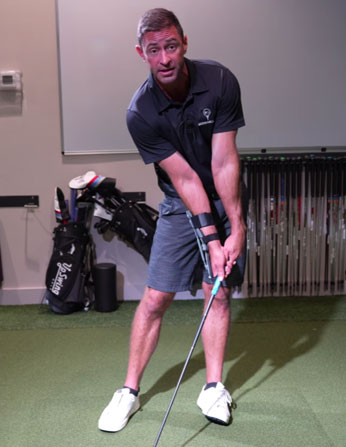
Telling the brain not to flip while also trying to manage the swing, the ball, the target, and the follow through all in less than two seconds does not work. The flip happens before the thought to stop it can arrive.
The only effective solution is making the flip physically impossible.
The Wrist Stabilizer, Making the Flip Impossible
Here is the tool that changes the equation entirely.
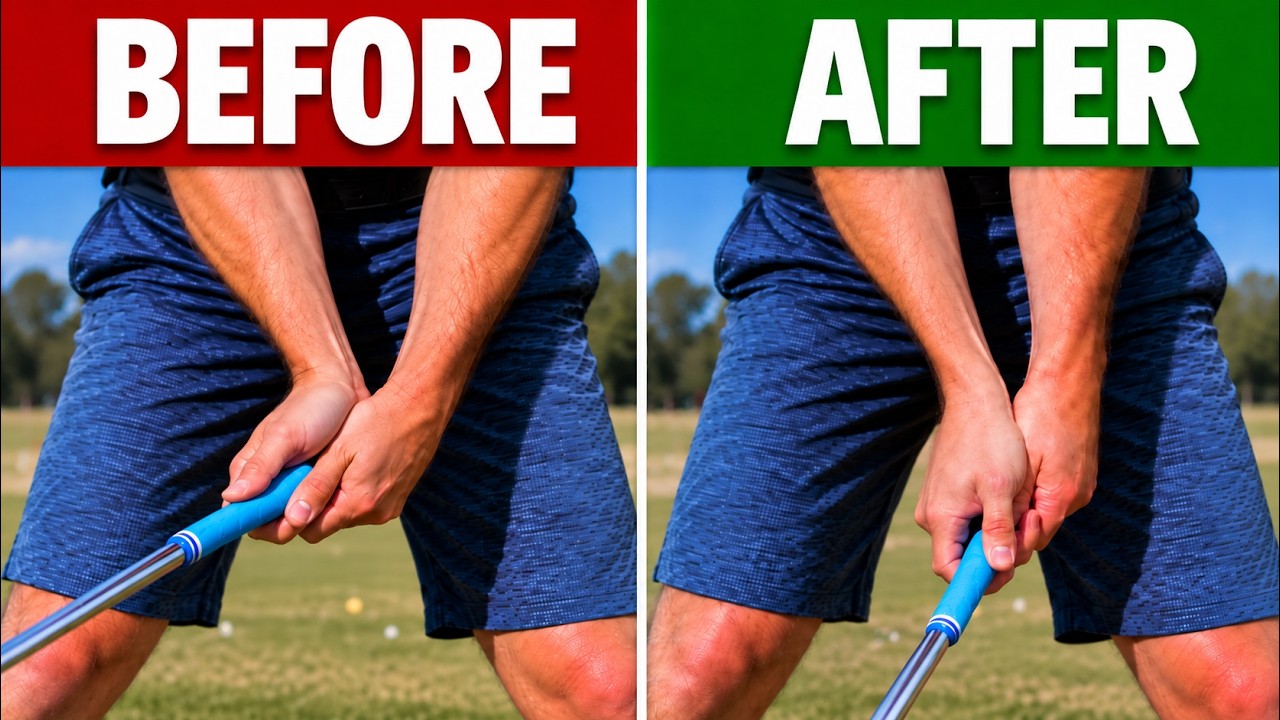
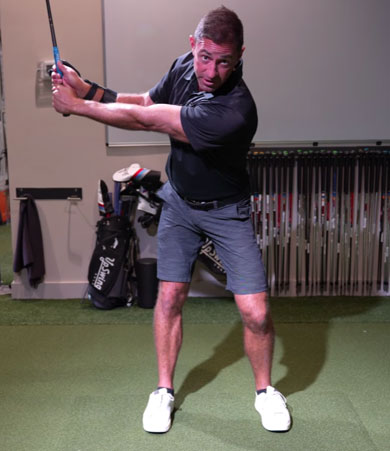
A wrist stabilizer device that attaches to the trail hand and locks the wrist into the correct cover position at the top of the backswing. In the address position the wrist is neutral. At the top of the backswing, it clicks into a locked extended position. From that locked position, flipping the wrist at impact is physically impossible. The device prevents it entirely.
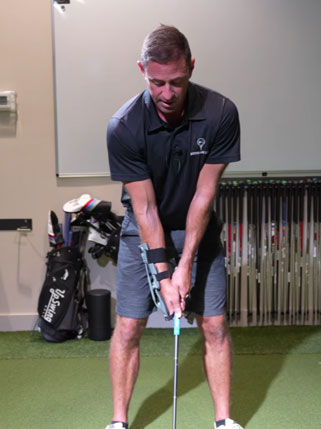
That click at the top of the backswing is the confirmation that the wrist is in the correct cover position. From there, the wrist has to stay in that position through impact because the device will not allow it to release early.
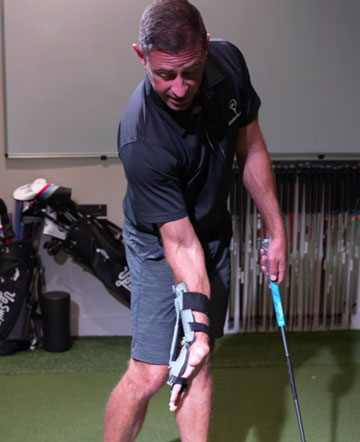
This is not just a feel drill. It is a physical constraint that removes the option of flipping and forces the brain to experience what covered, lagged contact actually feels like. Once the brain has that sensory reference, reproducing it without the device becomes far more achievable.
The device is available at puresswingproducts.com/bermangolf with discount code distance for 15 percent off.
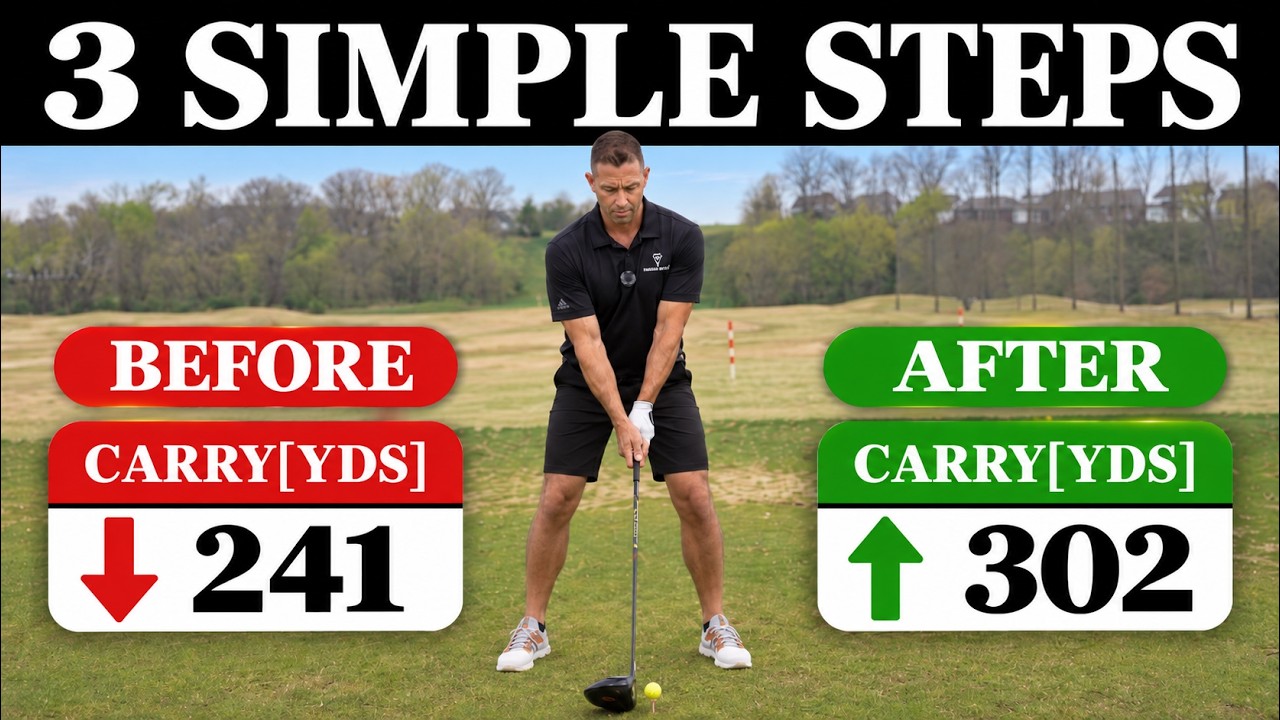
The Three Step Implementation
Here is how to put both fixes together in the correct sequence.
Step 1. Free the hips first.
Before picking up any club or training aid, work on hip mobility. Push the hips toward the target, shoulders level, and get the impact position accessible statically. This is not optional. This is the foundation.
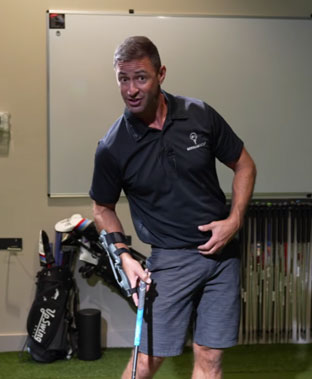
Step 2. Practice the impact position at address.
With the wrist stabilizer on, get into address position and push the hips and hands toward the target simultaneously. Feel the device click into the cover position. Hold it. This is the impact position the brain needs to learn from the inside.
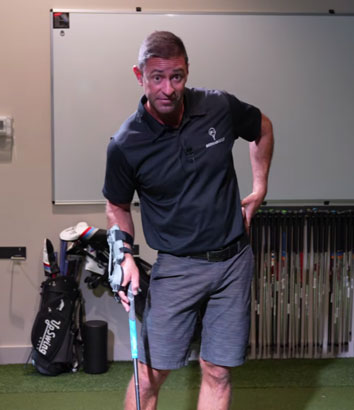
Step 3. Full slow motion swing.
Go to the top of the backswing. Hear the click. The wrist is now in the correct cover position. Slowly bring the club down to impact. Hips ahead of the hands. Hands ahead of the ball. Club head behind the hands. The device prevents the flip from happening. Finish the swing with the club face pointing toward the sky.
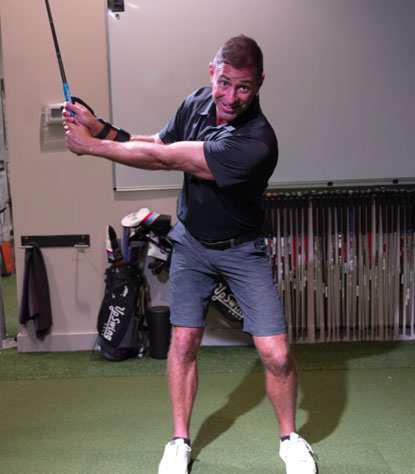
Why Slow Practice Is the Non Negotiable
Here is the principle that makes this entire three step sequence actually work.
The golf swing is exactly like learning to write. Nobody learned cursive by watching someone write beautifully and then immediately trying to match it at full speed. First came tracing dotted lines. Then freehand letters. Then words. Then sentences. The motor pattern got built gradually before it got executed at full speed.
Golfers watch a great iron striker on television and try to replicate it at full speed on the range. That is trying to write a paragraph in cursive without ever having traced a dotted line. The brain cannot learn the movement at the same speed it is trying to execute it.
Slow practice, static holds, and gradual speed increases give the brain the time it needs to build the motor pathway. Then speed becomes possible because the pattern exists.
Top of the backswing. Click. Maintain. Come through. Reset. Neutral wrist. Top of the backswing. Click. Maintain. Come through. Over and over, slowly, until the sensation of the covered wrist position through impact becomes something the brain can reproduce.
Get a Free Swing Analysis
Want to know whether hip mobility or wrist flipping is the biggest factor limiting iron compression right now?
Set the camera or phone up at two angles. One from the front, face on. One from behind, down the line. Film in slow motion. Swing.
Send both videos to gaindistance.com and Dr. Berman will give a free swing analysis. The first one is on him.
See exactly what the camera shows, not what the brain thinks is happening. The wrist position at impact and the hip position relative to the hands are both clearly visible in slow motion and tell the whole story about why compression is or is not happening.
Want a Step-by-Step Blueprint?
If this resonates and the advice out there feels designed for 25-year-old tour pros, there is a simple blueprint built specifically for senior golfers.
It breaks down:
How the aging body changes
Which muscles actually produce power
How to gain distance without swinging harder
How to improve consistency while reducing aches and pains
It is written at a fifth-grade reading level with clear visuals and practical drills that can start immediately.
A FREE digital copy is available at: 👉 gaindistance.com
No gimmicks. Just clarity on how the body should move to play better golf for years to come.
Bringing It All Together
Two problems. Stiff hips that cannot reach the impact position and a brain that keeps flipping the wrist. One three step solution.
Free the hips through dedicated hip mobility work before picking up a club. Practice the impact position statically until the hips can get there comfortably. Use the wrist stabilizer to make flipping physically impossible and let the brain feel what covered, lagged contact actually is. Do all of it slowly, building the motor pattern the same way cursive writing gets built, one traced letter at a time before the full sentence at speed.
At Berman Golf, the focus is biomechanics first. Not cookie cutter swings. The goal is teaching the body how it should move, especially as it ages, so power can be generated safely and repeated under pressure.
The in-house and online coaching programs are built specifically for senior golfers who want more distance and better consistency without beating up their bodies.
For anyone tired of advice designed for tour pros and ready for a blueprint built for their body, help is available.
Because when the hips can get there and the wrist stays covered, real compression becomes possible and the irons finally do what they are supposed to do.
And when the irons compress the ball the way they should, the game gets soooooo much easier!
If you enjoyed what you read and want to see it in action, watch the video below where Dr. Berman demonstrates both fixes and walks through all three steps with the wrist stabilizer!