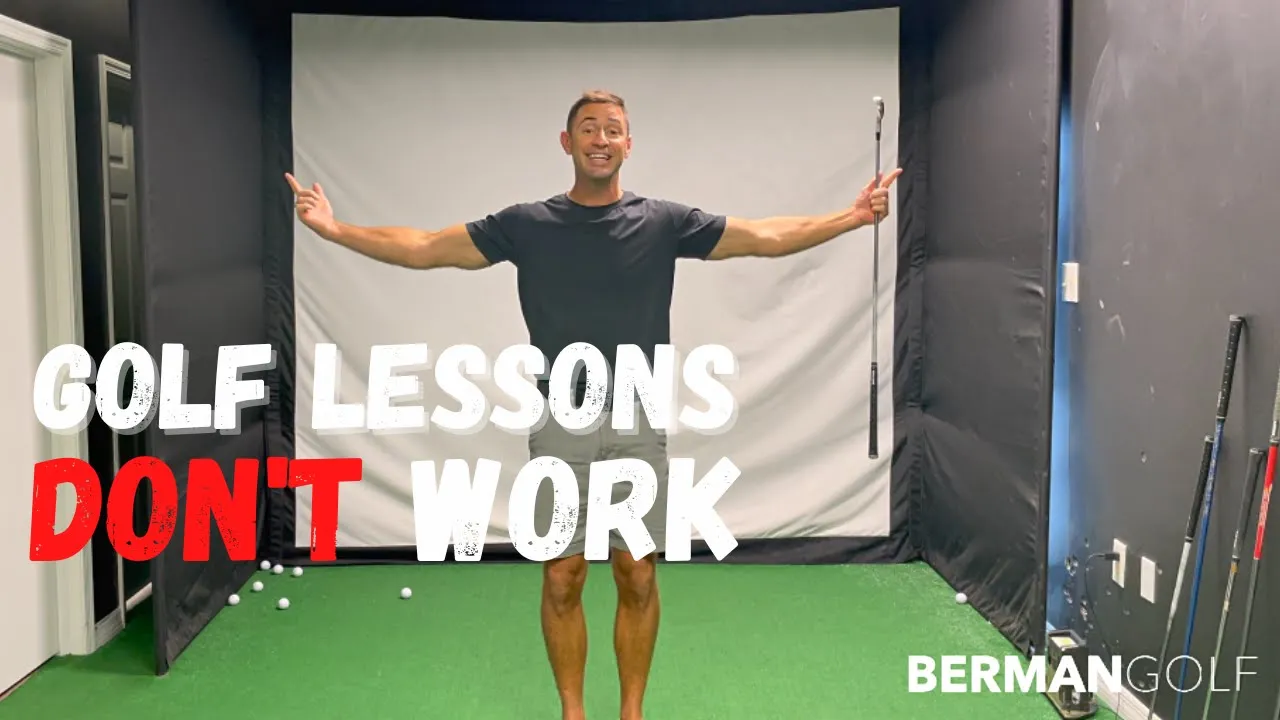
Here is something that is going to be controversial. And it needs to be said anyway.
Increasing club head speed after 60 does not automatically make the ball go farther.
That statement runs counter to almost everything being sold in golf instruction right now. Speed trainers. Swing speed programs. Devices designed to measure and improve miles per hour. All of them operating on the assumption that if club head speed goes up, distance follows automatically.
For golfers under 60, that assumption is largely correct. For golfers over 60, it is not. And understanding why changes everything about how distance should be approached in this phase of the game.
At Berman Golf, this is one of the most important distinctions made with every senior golfer who walks through the door frustrated that their effort is not translating into results.
The Ballistics Analogy That Changes the Conversation
Here is the physics behind why speed alone is not enough.
Think about ballistics. Two different cartridges. One is small and fast. It travels a long distance. But it does not have knockdown power. It can reach the target but cannot do meaningful damage when it gets there.
The other cartridge is larger and slower. It does not travel as far. But when it hits, it hits with real force.
The ideal cartridge combines both. Speed and power working together. Not one without the other.
The golf ball is the target. Club head speed is how fast the cartridge travels. Power is how much force is behind it when it arrives.
A golfer over 60 can sometimes increase club head speed. But if the muscles generating that speed have atrophied, if the core is not engaged, if the glutes are not firing, if the ground connection is unreliable, the speed has no power behind it. The ball travels but does not carry the distance it should for that speed. The efficiency ratio is low. The transfer of energy from the body to the ball is poor.
Adding more speed to an inefficient system produces marginal gains at best. Adding power to the system, meaning recruiting the muscles that were always there but stopped being used, produces the combination that actually moves the ball.
Why Golf Lessons Focus on the Wrong Thing for Golfers Over 60
Here is the reason golf lessons produce frustration instead of results for senior golfers chasing distance.
Golf lessons are built around technique. Club face angle. Swing path. Hand position. Stance width. Hip alignment. All of it is technique. And technique is the right tool for golfers whose bodies are elastic enough to interpret and execute technical adjustments.
Under 60, the body has enough residual athleticism, fast twitch muscle fiber, and elasticity that technical cues translate into physical movements. The pro says drop it in the slot and the body can find a version of what that means.
The Story That Makes This Concrete
Here is a real example that illustrates exactly how this plays out. A 62 year old golfer came in recently who had been in the golf world for years. Lessons, gadgets, swing aids, everything the golf instruction industry offers. He was connected to people at the professional level. He had tried it all.
He was put into the correct position. Hands placed on him to provide physical resistance. The instruction was simple. Do not let me move you.
The question was then asked. Where do you feel that?
His response. Oh my God. I feel it right here. I feel my core.
And then he said something that revealed everything about why years of golf lessons had not produced the distance results he was looking for.
He said he had never felt that before. Not once. In years of golf instruction, with professional connections and every tool available, nobody had ever taught him what core engagement actually felt like from the inside. He knew the concept. He had been told to use it. He had never actually felt it.
That is the gap. Not knowledge. Feel. Body awareness. The physical sensation of the correct muscles working so the brain has a reference point to reproduce.
Biomechanics First, Then Technique
Here is the sequence that actually produces distance gains for golfers over 60.
Biomechanics first. Build the physical foundation. Get the core engaging at address. Get the glutes loading during the backswing. Get the trail foot pressing through the ground with a bent knee. Get the belt buckle initiating both the backswing and the downswing. Feel all of those things working together before ever thinking about technique.
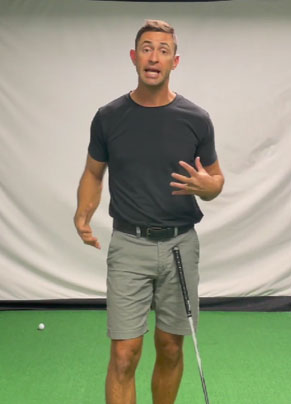
Once those muscles are recruited and the body awareness exists to reproduce that recruitment consistently, then technique becomes genuinely useful. The technical cue about club path or hand position can finally be executed because the body has the power and the muscle engagement needed to respond to it.
Technique applied to a body with active, engaged muscles produces results. Technique applied to a body with dormant muscles produces frustration.
Biomechanics first. Then golf lessons.
In that order. Every time.
Why Telling Someone to Use Their Core Is Not the Same as Teaching Them How
Here is the most important practical point in this entire argument.
The golf instruction world is full of people saying use your core. Use your glutes. Drive with your legs. None of those cues are wrong. All of them are incomplete for golfers over 60 who have lost the body awareness needed to actually execute them.
Telling someone to use their core is not the same as teaching them what core engagement feels like from the inside.
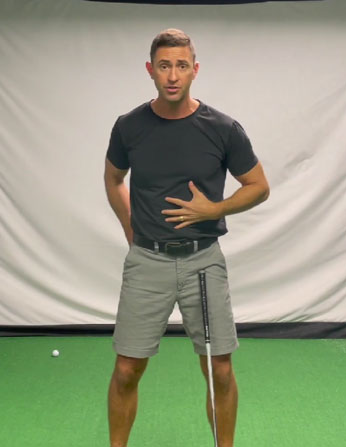
Until a golfer can feel their core engaging, feel their glutes firing, feel the difference between weight shifting and actually loading, they cannot reproduce those things in a swing. They can try. They can intend to. The muscles will not respond reliably because the brain does not have the body awareness to recruit them on demand.
Building that body awareness is not accomplished through more technique instruction. It is accomplished through physical training in the correct positions, often with hands on guidance or very specific drills that force the muscles to engage so the brain can learn what engagement actually feels like.
That is the work. Not more lessons. Not more speed drills. Not more gadgets. Biomechanics, felt from the inside, built through repetition until it is automatic.
Get a Free Swing Analysis
Want to know exactly which muscles are not being recruited and what the highest priority biomechanics fix would be for more distance?
Set the camera or phone up at two angles. One from the front, face on. One from behind, down the line. Film in slow motion. Swing.
Send both videos to gaindistance.com and Dr. Berman will give a free swing analysis. The first one is on him.
Not a list of technique fixes. One specific, prioritized biomechanics recommendation that if addressed will start building real distance from a real physical foundation.
Want a Step-by-Step Blueprint?
If this resonates and the advice out there feels designed for 25-year-old tour pros, there is a simple blueprint built specifically for senior golfers.
It breaks down:
How the aging body changes
Which muscles actually produce power
How to gain distance without swinging harder
How to improve consistency while reducing aches and pains
It is written at a fifth-grade reading level with clear visuals and practical drills that can start immediately.
A FREE digital copy is available at: 👉 gaindistance.com
No gimmicks. Just clarity on how the body should move to play better golf for years to come.
Bringing It All Together
Speed without power is a small fast cartridge. It travels but does not hit with real force. Power without speed is a large slow cartridge. It hits but does not reach the target. Distance after 60 requires both, and the power has to come from muscles being actively recruited, not just theoretically engaged.
Golf lessons teach technique. Technique requires a body that can execute it. A body that has lost the body awareness to recruit its core and glutes cannot execute technique no matter how good the lesson is. Biomechanics has to come first. Muscle engagement and body awareness have to be built before technique can be applied to them.
Once the biomechanics are there, once the core engages and the glutes fire and the body awareness exists to reproduce it, then technique becomes useful. Then the golf lesson produces results instead of frustration.
Biomechanics first. Then golf lesson. In that order. Every time.
At Berman Golf, the focus is biomechanics first. Not cookie cutter swings. The goal is teaching the body how it should move, especially as it ages, so power can be generated safely and repeated under pressure.
The in-house and online coaching programs are built specifically for senior golfers who want more distance and better consistency without beating up their bodies.
For anyone tired of lessons that produce knowledge but not results, help is available.
Because when the power is built first and the technique is applied second, the combination finally produces the distance that was always possible.
And when speed has real power behind it, the game gets soooooo much easier!
If you enjoyed what you read and want to see it in action, watch the video below where Dr. Berman makes the full case for biomechanics before technique!