Why the Hands Keep Taking Over
Here is the pattern playing out in the vast majority of amateur golf swings right now. The swing starts with the hands. The hands move first, the belt buckle follows, and the brain immediately registers that information. Hands moved first. Hands are the primary mover. Hands are in charge.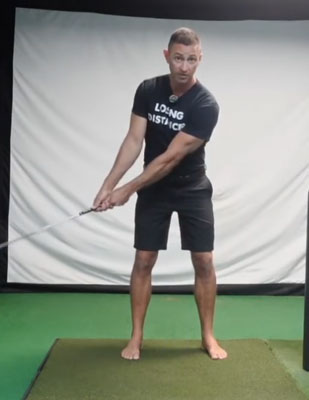
From that point, it does not matter how much effort goes into trying to use the body during the downswing. The brain already made its decision in the first fraction of a second of the backswing. It is not going to hand control over to the body mid swing. So the hands flip at the ball on the way through, the arms swing harder to try to generate power the body was never recruited to provide, and the result is inconsistency that never seems to improve no matter how much practice goes in.
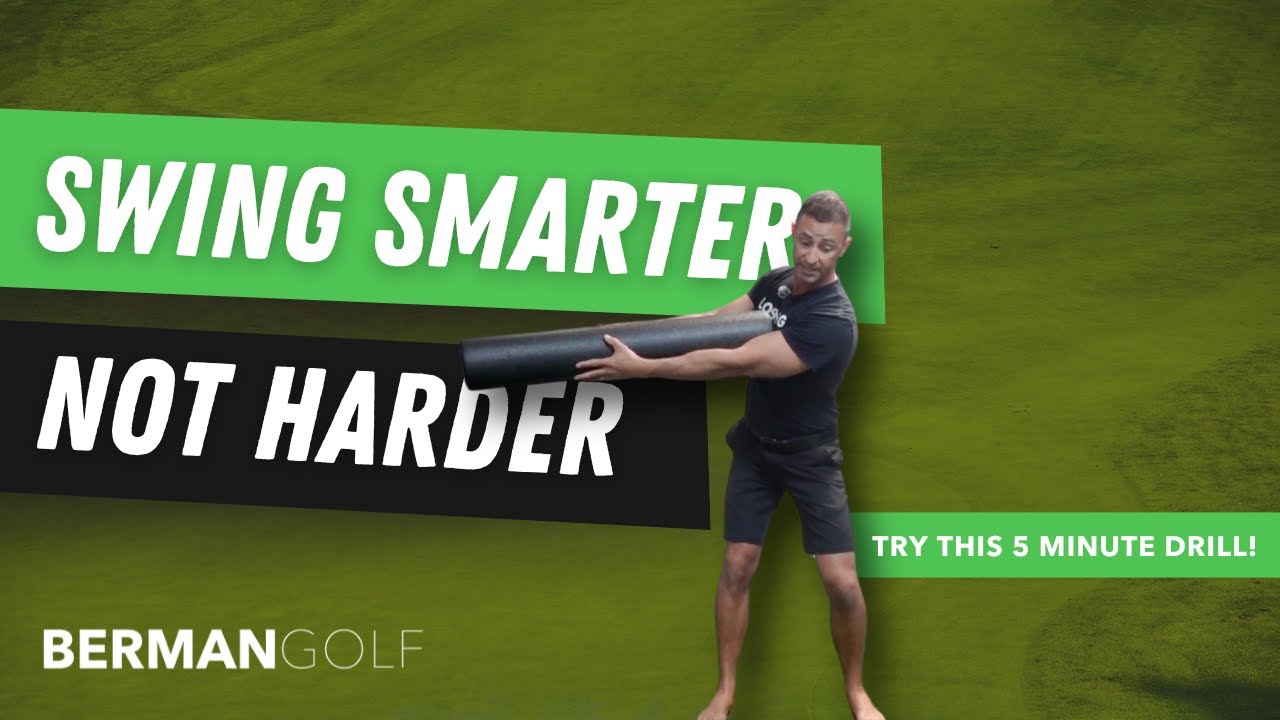
Working harder is not the fix. Working smarter is. And smarter starts with what initiates the very first move.
The Drill, Foam Roller Against the Chest
Here is the setup.
Take a 36 inch foam roller and hold it straight out against the chest. Both arms extended. Hands reaching out as far as possible. The roller is horizontal, pointing straight ahead, held against the chest instead of angled down toward the ground.
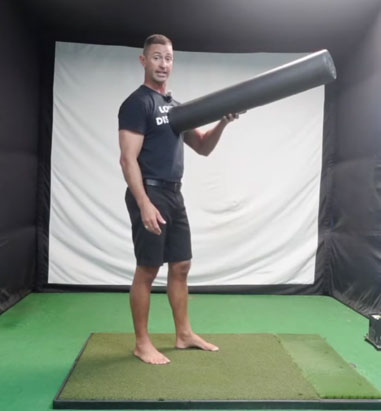
Chest up. Soft knees. Hips back. Belly button pulled in. That is the golf stance, just with the roller at chest height instead of a club angled toward the ball.
Do not angle the roller down toward the ground. Keep it straight out. The point is to feel the body moving the roller, not to simulate the exact angle of a golf swing.
The Backswing, Body Does All the Work
From that address position with the roller against the chest, go into the backswing.
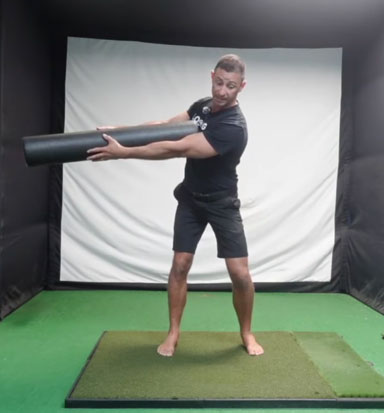
Here is what should be happening and what should not.
The belly button stays pulled in tight throughout the entire backswing. The trail knee stays soft. The trail foot presses through the ground, loading the trail glute. The body rotates.
The hands and arms do nothing. Absolutely nothing on their own. They are along for the ride, holding the roller against the chest while the body does all the rotating.
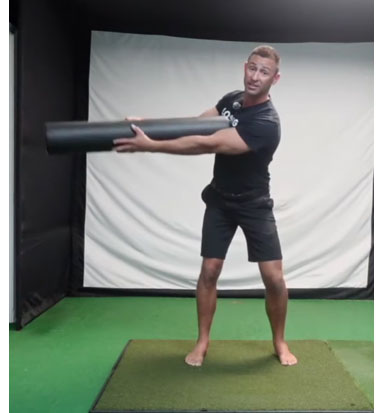
At the top of the backswing with the roller, the hands and arms got there entirely because the body brought them there. Not because they reached or pulled or independently moved in any direction. The body moved. The hands came along.
That is the entire teaching point of this drill. The hands and arms did nothing to get to the top of the backswing. The body did everything.
Transfer It to the Club
Once that body driven backswing feels clear with the foam roller, put the club back in the hands
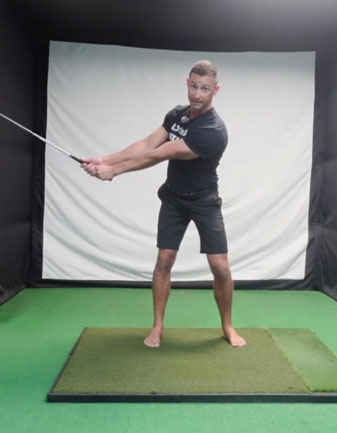
Same movement. Same sequence. Body moves first. Hands follow. Keep the trail elbow tucked in at the top. The top of the backswing with a club should feel identical to the top of the backswing with the foam roller, because the body got there the same way in both cases.
The only difference now is that there is a club in the hands. The movement pattern is exactly the same.
Why This Changes the Downswing Too
Here is the payoff that makes this drill worth doing on a weekly basis.
When the body initiated the backswing, the brain registered that information immediately. Body moved first. Body is the primary mover. Body is in charge.
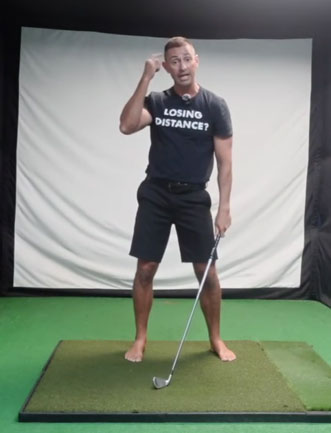
So when the top of the backswing is reached, the brain already knows what initiated the movement and what needs to reverse it. The body brought the club back. The body now brings it through. Belt buckle leads the downswing. Power, torque, and efficiency follow naturally.
That sequence eliminates the flip. Because when the body is the primary mover from the very start, the hands do not need to jump in and try to save the swing at impact. The body is already handling it.
99% of amateur golfers are flipping at the ball, swinging harder, wondering why the ball is not going anywhere, and getting more and more inconsistent as a result. Every single one of those problems traces back to the same root cause. The hands started the backswing. The brain locked in that information. The hands took over and never gave the body a chance.
The foam roller drill fixes the root cause, not the symptoms.
Do It Weekly, Not Just Once
Here is something that separates this drill from most.
It does not just get done once when learning a new swing thought and then forgotten. It gets done every week, even after the body driven swing starts to feel natural on the course.
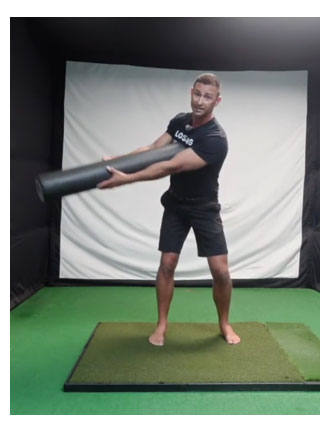
The reason is simple. The brain is always looking for the most efficient path. Under pressure, when a ball is sitting on a tee and the course is on the line, the brain will try to revert to whatever pattern it knows best. Repeated weekly reps with the foam roller keep reminding the brain that the body is the mover, not the hands, so that message stays fresh when it matters most.
A few minutes with the foam roller before a practice session or on a rest day is all it takes to keep that motor pattern reinforced. Eighty year olds are seeing real results with this level of consistency. The drill is that accessible.
The Checklist for Every Rep
Here is what every single rep of this drill should include.
Foam roller straight against the chest, arms extended, not angled down. Chest up. Belly button pulled in. Soft knees. Hips back. Head does not sway during the backswing. Core stays tight throughout. Trail foot presses through the ground. Trail glute fires. Body rotates. Hands and arms do nothing independently.
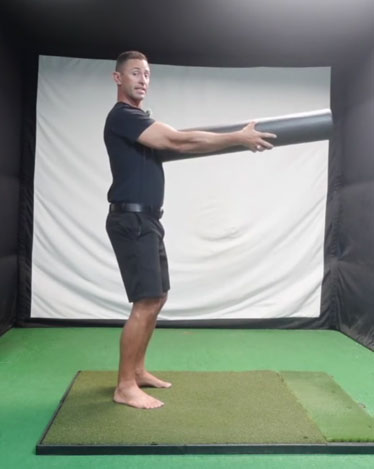
If any of those things drops out during a rep, stop and reset. One correct rep with full body engagement is worth more than ten sloppy ones where the arms sneaked back in.
Get a Free Swing Analysis
Want to know whether the hands are actually starting the swing right now, or whether the body is already leading correctly?
Set the camera or phone up at two angles. One from the front, face on. One from behind, down the line. Film in slow motion. Swing.
Send both videos to gaindistance.com and Dr. Berman will give a free swing analysis. The first one is on him.
See exactly what the camera shows, not what the brain thinks is happening. Then there is clarity on whether the hands or the body is running the show from the very first move.
Want a Step-by-Step Blueprint?
If this resonates and the advice out there feels designed for 25-year-old tour pros, there is a simple blueprint built specifically for senior golfers.
It breaks down:
How the aging body changes Which muscles actually produce power How to gain distance without swinging harder How to improve consistency while reducing aches and pains
It is written at a fifth-grade reading level with clear visuals and practical drills that can start immediately.
A FREE digital copy is available at: 👉 gaindistance.com
No gimmicks. Just clarity on how the body should move to play better golf for years to come.
Bringing It All Together
One foam roller. Thirty six inches. Straight against the chest, arms extended, not angled down. Chest up, soft knees, hips back, core engaged. Go into the backswing with the body doing everything and the hands doing nothing. Transfer that exact feeling to the club. Do it weekly.
When the body starts the backswing, the brain knows the body is in charge. When the brain knows the body is in charge, the downswing initiates from the body too. The flip disappears. The inconsistency drops. The ball starts going where it is supposed to go without swinging any harder than before.
At Berman Golf, the focus is biomechanics first. Not cookie cutter swings. The goal is teaching the body how it should move, especially as it ages, so power can be generated safely and repeated under pressure.
The in-house and online coaching programs are built specifically for senior golfers who want more distance and better consistency without beating up their bodies.
For anyone tired of advice designed for tour pros and ready for a blueprint built for their body, help is available.
Because when the body is the mover and the hands just come along for the ride, the swing gets smarter without ever having to swing harder.
And when the swing gets smarter, the game gets soooooo much easier!
If you enjoyed what you read and want to see it in action, watch the video below where Dr. Berman demonstrates the full foam roller drill from start to finish!