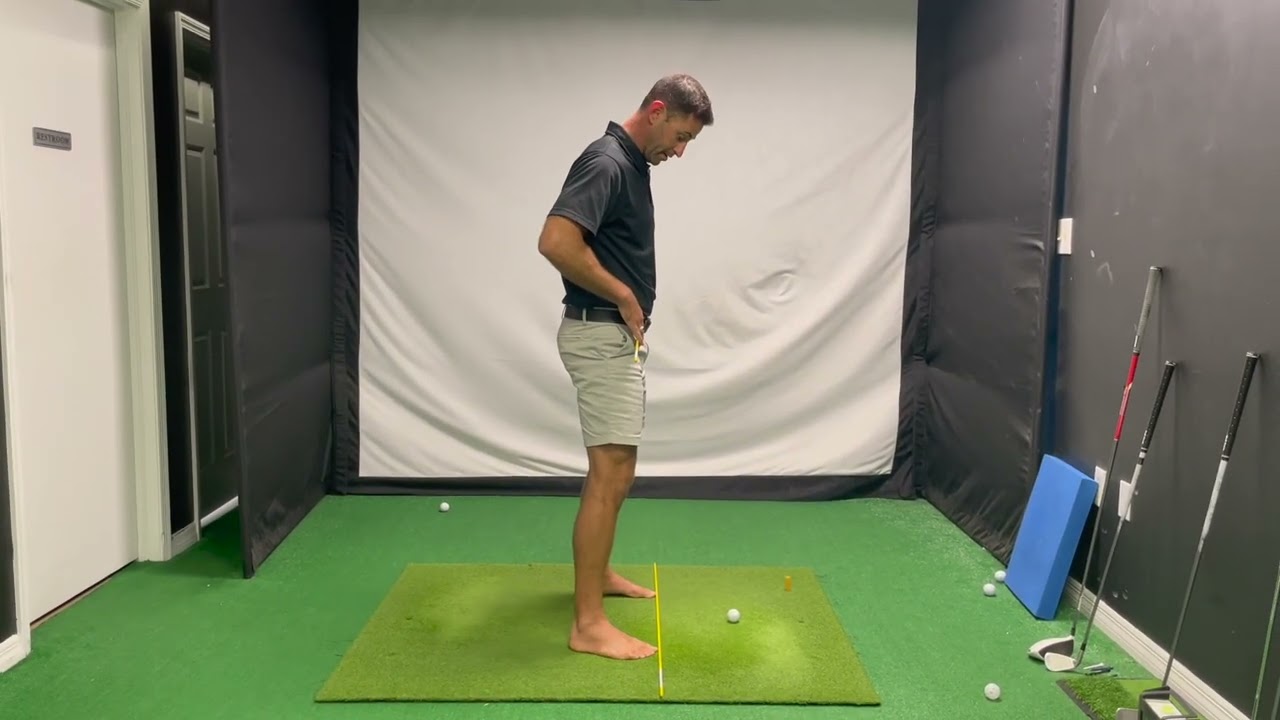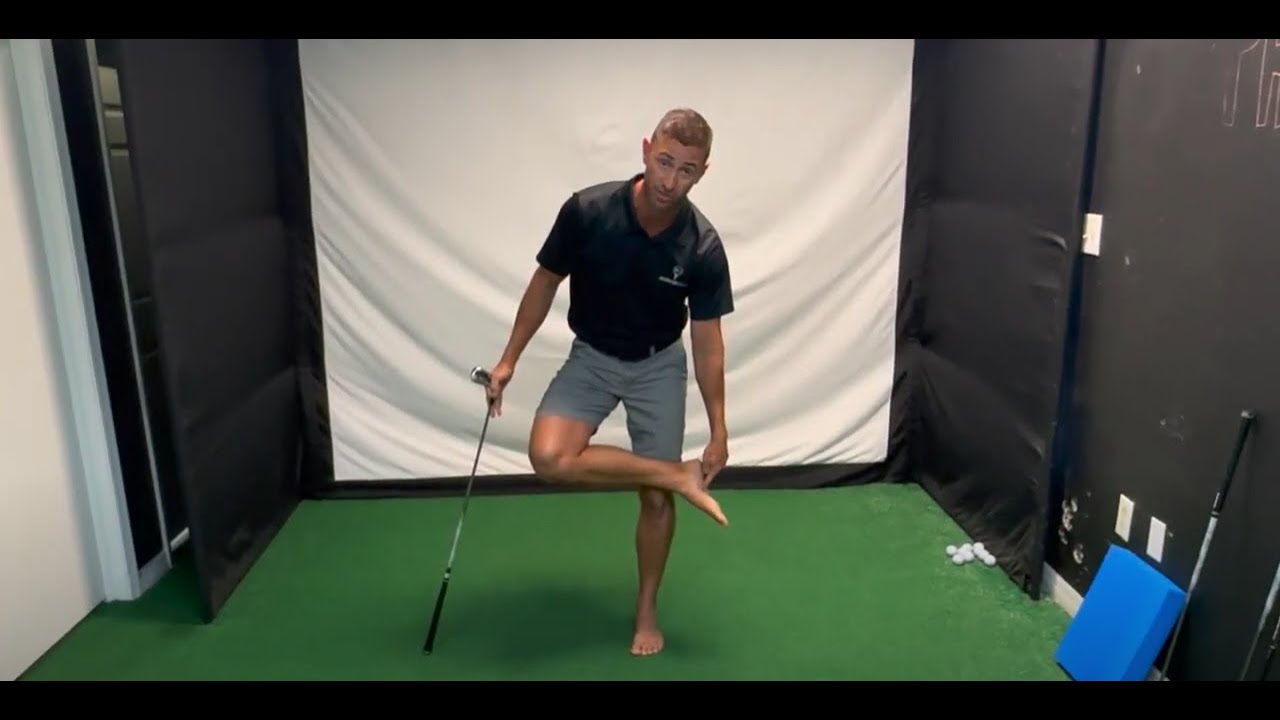
Three of the most frustrating problems in golf. Chunking it. Topping it. Never getting the weight onto the lead side.
They feel like three completely different problems. They get diagnosed as three completely different swing faults. But at Berman Golf, after watching thousands of swings on the simulator, the same root cause shows up behind all three almost every single time.
Not finishing the backswing.
That is it. One simple, not easy thing. And fixing it makes all three problems less frequent and less damaging at the same time.
Why Practice Swings Look Beautiful and Real Swings Fall Apart
Here is a scene every golfer knows intimately.
A practice swing. Beautiful tempo. Smooth rotation. Everything feels connected and easy. Then the ball goes down, and the swing that just happened a second ago completely falls apart. Chunk. Top. Weight stuck on the trail side. Finish looking like something went wrong somewhere.

The difference between the practice swing and the real swing is almost always tempo. Specifically, the backswing tempo. When there is no ball, the brain is relaxed and allows the backswing to finish completely before reversing. When the ball is there, the brain rushes to hit it and starts the downswing before the backswing is done.
That unfinished backswing is where all three problems are born.
Why an Unfinished Backswing Causes All Three Problems
Here is the biomechanical chain that connects all three faults back to the same source.
The backswing has to finish going to the trail side before the body can shift back to the lead side. That is not optional. The weight has to complete the move in one direction before it can reverse and move in the other.
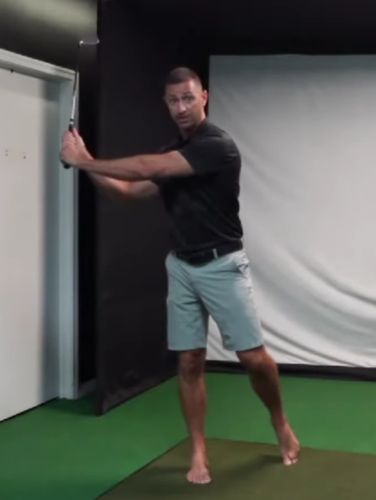
When the backswing is too fast and the downswing starts before the backswing finishes, the weight never fully loads onto the trail side. The body tries to shift left before it ever finished going right. And from that incomplete position, only three things can happen.
Chunk it. The low point of the swing arrives too early because the weight never got behind the ball. The club hits the ground before the ball.
Top it. The body compensates for the weight being wrong by standing up to try to find the ball. The club catches the top of the ball instead of compressing it.
Finish stuck on the trail side. The weight never transfers to the lead side properly and the golfer ends up leaning back at the finish, club wrapped around and going nowhere.
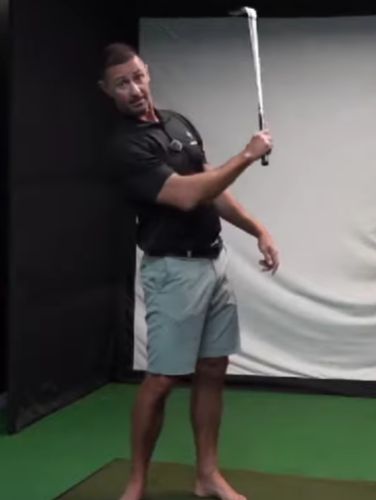
Three faults. One cause. Finish the backswing and all three become far less likely.
What a Finished Backswing Actually Feels Like
Here is the key to fixing this, and it starts with body awareness rather than a swing thought.
Practice getting to the top of the backswing and stop. Hold the position. Feel what is there.
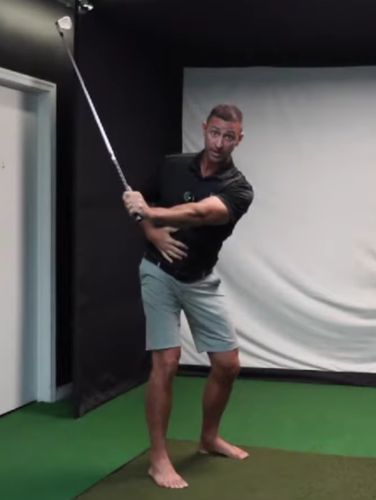
The core should be engaged and tight. The trail glutes should be loaded. The inside of the trail foot should still be pressing through the ground with the trail knee still bent, not straightened. Everything on the trail side should feel like it is working hard, like it is under real muscular tension.
That tension is the load. That is what a finished backswing feels like from the inside. Not a position on a clock. Not a specific shaft angle. The feeling of everything on the trail side being loaded and ready.
Compare that to what happens when the swing gets whipped around quickly. The muscles stop working. The glutes do not feel loaded. The foot pressure disappears. Everything just feels like momentum instead of muscular tension.
The Eyes Closed Test
Here is a drill that makes the feel of a correct finished backswing something the brain can actually find and repeat.
Get to the top of the backswing and hold it. Feel the core tight, the glutes loaded, the foot pressing through the ground. Then close the eyes.

With the eyes closed, try to replicate that exact feeling. Let the body find the position from the inside rather than checking it against a visual reference.
Open the eyes and check in a mirror. Does it look as good as it felt? For most golfers, closing the eyes and using feel produces a surprisingly accurate position, because the brain is forced to rely on muscle sensation instead of external feedback.
Do this over and over. Eyes closed, feel the load, open and check. Build the internal reference for what a finished backswing feels like so that the body can find it even when the brain is rushing because the ball is sitting there.
The 95 to 5 Rule
Here is the practice philosophy that makes this fix actually stick.
Ninety five percent of practice time should be spent on biomechanics without hitting a golf ball. Only five percent of practice should involve actually hitting balls.

The reason this ratio matters so much is simple. The moment a ball enters the equation, the brain switches from focusing on the process to chasing the result. Every swing thought that was working cleanly without a ball gets overridden by the desire to hit it well. The backswing speeds up. The finish gets skipped. All the same old patterns come rushing back.
Building the feel of a finished backswing through hundreds of practice swings without a ball is what creates a motor pattern strong enough to survive the presence of a ball. When the pattern is deeply enough ingrained, the ball stops triggering the rush.
The One Two Three Count
Here is the tempo cue that makes finishing the backswing automatic during real swings.
Think of it like a waltz. One, two, three. The backswing takes the full three count before the downswing begins. Not one, two and then reverse. One, two, three and then reverse.
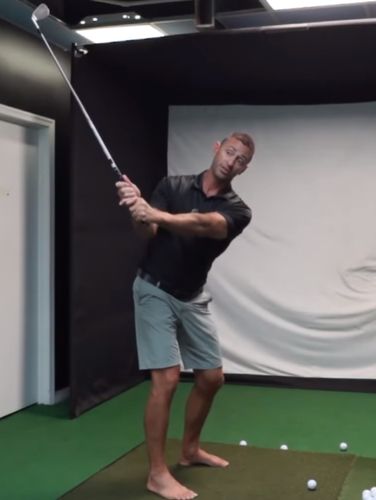
Give the backswing time to reach three before initiating the downswing. That count is what forces the body to finish going to the trail side before trying to come back the other way. And when the body finishes going to the trail side, the weight is loaded, the muscles are engaged, and shifting to the lead side on the downswing becomes natural instead of a struggle.
Start at Half Swing
Here is one more piece that helps when first bringing this into real shots.
When introducing a ball, think about hitting it at fifty percent of the club’s distance. Not full swing. Not trying to get every yard out of the eight iron. Just fifty percent.

Thinking about fifty percent automatically slows the backswing down. The brain is not trying to generate full power, so it does not rush the backswing to build speed. The finish happens more naturally. And the shots that come out of that controlled, finished backswing often travel further than the full effort swings that were rushed and incomplete.
Get a Free Swing Analysis
Want to know whether an unfinished backswing is behind the chunking, topping, or trail side stuck finish right now?
Set the camera or phone up at two angles. One from the front, face on. One from behind, down the line. Film in slow motion. Swing.
Send both videos to gaindistance.com and Dr. Berman will give a free swing analysis. The first one is on him.
See exactly what the camera shows, not what the brain thinks is happening. Then there is clarity on whether the backswing is actually finishing or whether it is reversing too early every single time.
Want a Step-by-Step Blueprint?
If this resonates and the advice out there feels designed for 25-year-old tour pros, there is a simple blueprint built specifically for senior golfers.
It breaks down:
How the aging body changes Which muscles actually produce power How to gain distance without swinging harder How to improve consistency while reducing aches and pains
It is written at a fifth-grade reading level with clear visuals and practical drills that can start immediately.
A FREE digital copy is available at: 👉 gaindistance.com
No gimmicks. Just clarity on how the body should move to play better golf for years to come.
Bringing It All Together
Three problems. One cause. Not finishing the backswing.
The body has to finish going to the trail side before it can shift back to the lead side. When the backswing rushes and reverses before it is done, the weight is wrong, the load is incomplete, and the only options are chunking, topping, or finishing stuck on the trail side.
Fix it by holding the top of the backswing, feeling the core tight and the glutes loaded and the trail foot pressing through the ground. Close the eyes and replicate that feeling. Use the one two three count to give the backswing enough time to finish. Practice without a ball ninety five percent of the time. When hitting balls, think fifty percent distance to keep the brain from rushing.
At Berman Golf, the focus is biomechanics first. Not cookie cutter swings. The goal is teaching the body how it should move, especially as it ages, so power can be generated safely and repeated under pressure.
The in-house and online coaching programs are built specifically for senior golfers who want more distance and better consistency without beating up their bodies.
For anyone tired of advice designed for tour pros and ready for a blueprint built for their body, help is available.
Because when the backswing finishes completely, the weight shifts properly, the chunks and tops disappear, and the ball finally goes where it is supposed to go.
And when the ball goes where it is supposed to go, the game gets soooooo much easier!
If you enjoyed what you read and want to see it in action, watch the video below where Dr. Berman walks through the full backswing finish drill and the one two three tempo count!