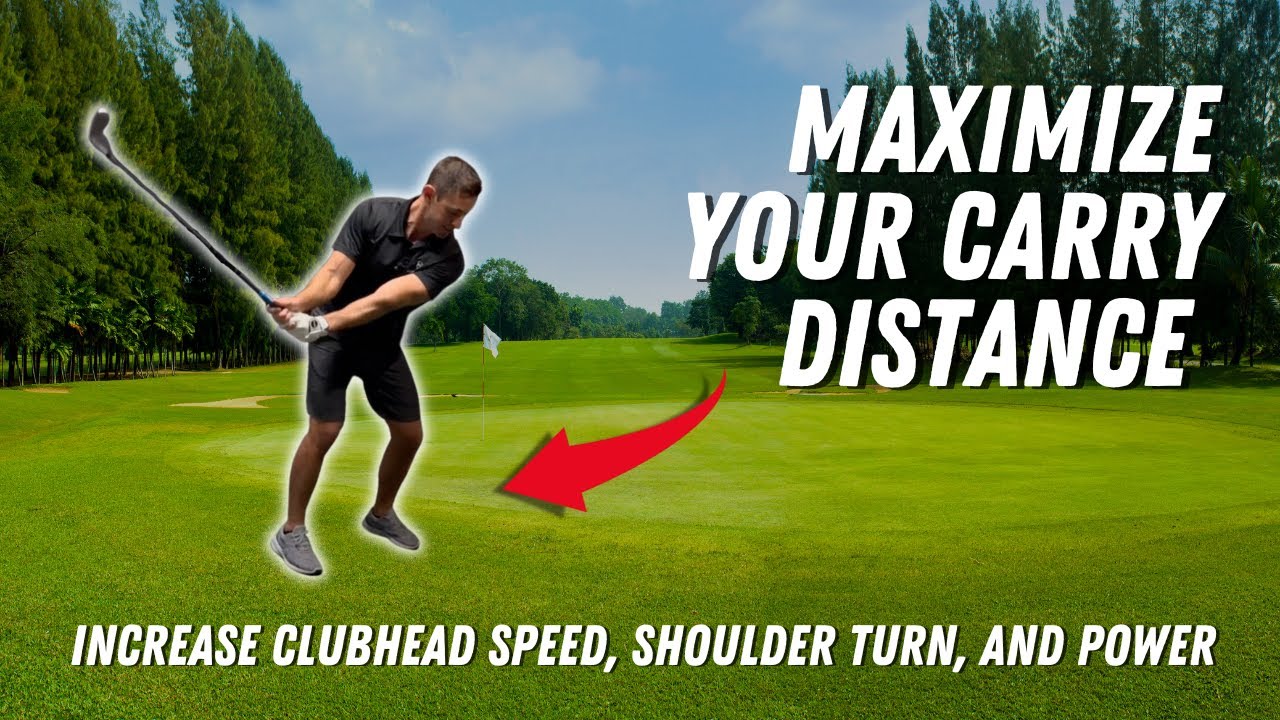
Two tools. One iron. One foam roller.
That is the entire setup for a combination drill that builds more shoulder turn, maintains a bigger arc, and generates more power into the golf ball than most golfers have ever felt from their own swing.
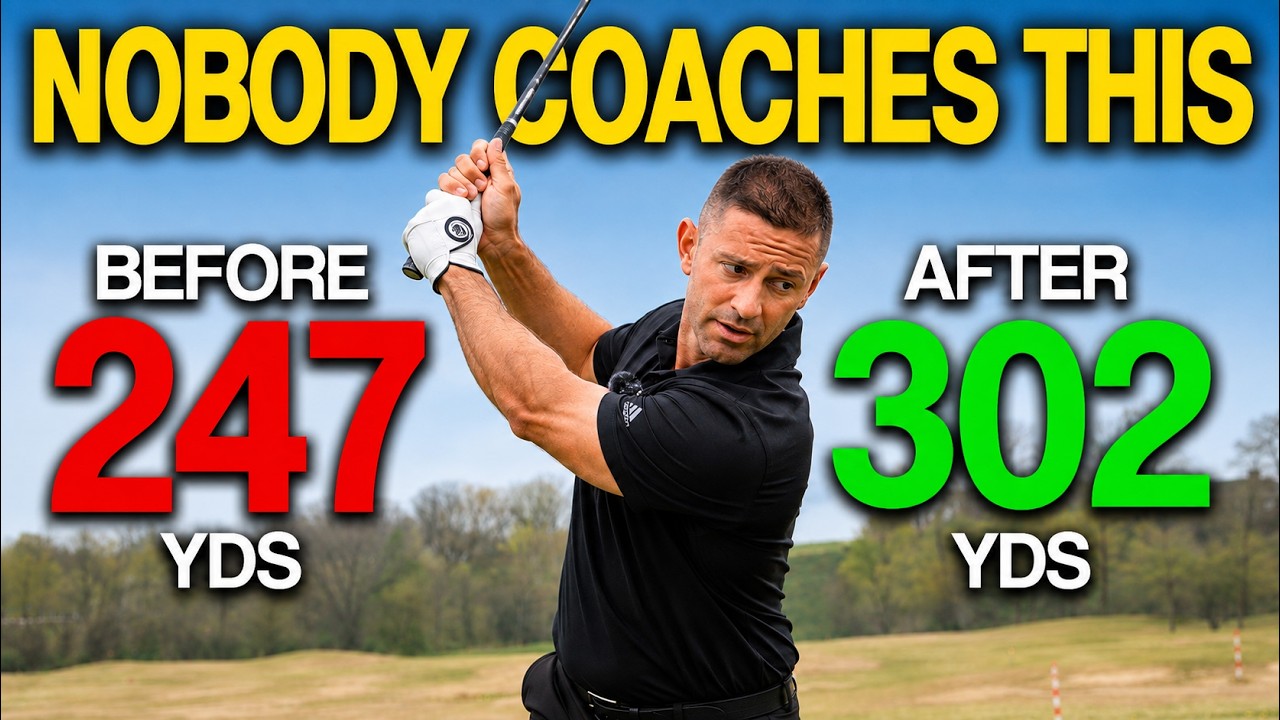
At Berman Golf, these two drills are often done separately. But when they are combined and finished with one specific icing on the cake, the results compound. Shoulder turn improves. Club head speed goes up. Power transfers into the ball instead of leaking out before impact.
Tool 1, Foam Roller for Maximum Shoulder Turn
The foam roller has been used in this program many times, and there is a reason it keeps coming back.
It is the easiest way to feel what real shoulder turn actually is, because holding the roller against the chest removes the club entirely and forces the body to do the rotating without any arm or hand involvement.
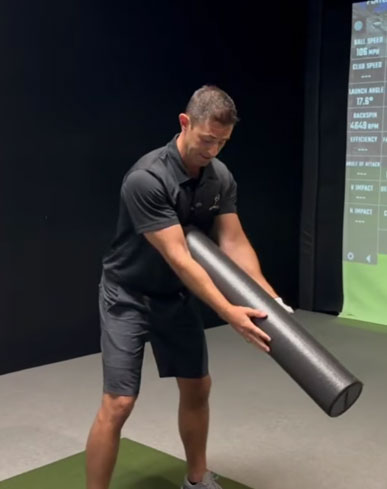
Address position. Roller straight against the chest, not angled down toward the ball. Core engaged. Belt buckle turning. Head staying still on a fixed spot. Trail foot pressing through the ground with the trail knee staying bent throughout the entire rotation.
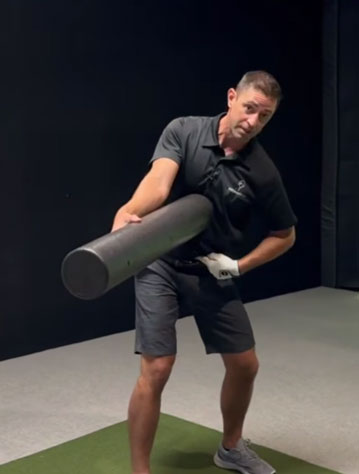
Keep pushing through the ground harder and harder as the rotation builds. Try to get a little farther. Then a little farther. The core should be working extremely hard by the end of each rep, because the muscles doing the rotating are the same ones that generate power in the actual golf swing.
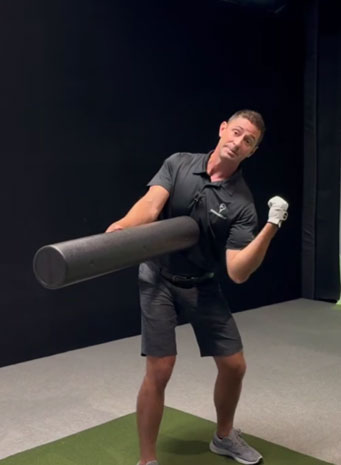
Getting the back to the target with the head staying still and the trail side fully loaded is exactly what this drill is building. That is real shoulder turn. Not an arm swing that mimics rotation. Actual body rotation driven by the core and the trail leg.
Tool 2, Split Grip Drill for Arc Width and Extension
Once the shoulder turn is firing with the foam roller, put the iron in the hands and move to the split grip drill.
At address, slide the trail hand halfway off the bottom of the grip. Big split between the two hands.
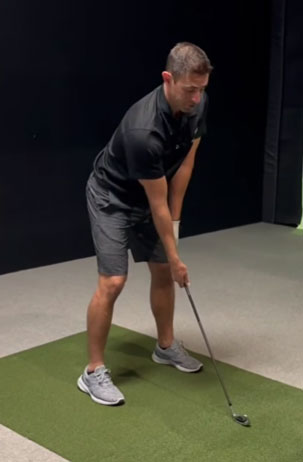
Go into the backswing. Push the lead knuckles directly away from the target, not around the body and not up toward the sky. Away from the target. Belt buckle turning. Trail knee staying bent. Inside of the trail foot pressing through the ground. Core engaged.
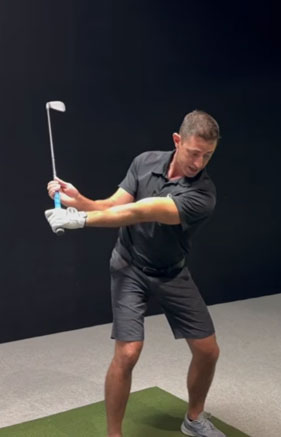
Let the trail elbow drop and relax naturally as the backswing builds. Do not try to keep it up or force it into any position. When the lead knuckles push away correctly and the body is rotating, the trail elbow finds its natural position on its own.
Here is why this drill produces more carry distance specifically.
When the lead elbow stays straight and the hands push away from the chest instead of wrapping around the body, the arc stays as wide as it can possibly be. And arc width determines club head speed. The bigger the radius from the hands to the club head, the faster the club head moves at the bottom of the swing with the exact same amount of energy. No additional effort required. Just a bigger arc producing more speed by the laws of physics.
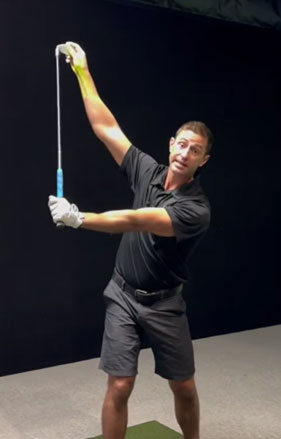
Once at the top of the split grip backswing, slide the trail hand back up into a normal grip position. Core engaged hard. Trail foot pressing hard through the inside of the foot. Then undo it. Let the downswing happen from the body.
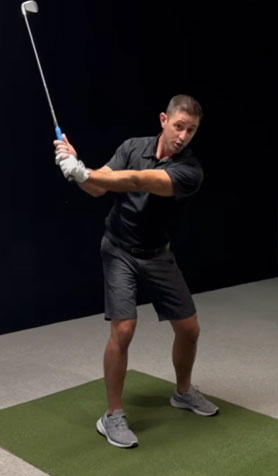
That combination of a loaded trail side, wide arc, and body driven release is how power gets generated and then transferred into the golf ball.
The Icing on the Cake, Painfully Slow Backswing
Here is the piece that ties both drills together and makes the whole thing work at full speed.
Slow the backswing down. Not a little. Exaggeratedly slow.
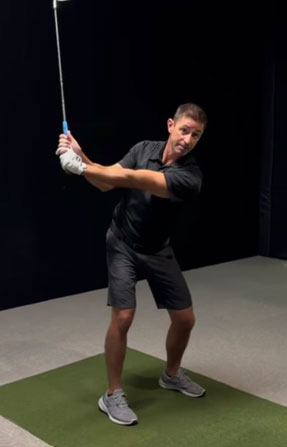
Here is the honest truth behind this cue. Even after working on the backswing extensively, it is very easy to think the club is stopping at a certain position when it is actually going significantly past it. The backswing overshoots its target almost every time, and the main reason is that it is not going slow enough for the brain to feel where the club actually is.
The fix is counting. One Mississippi. Two Mississippi. Three Mississippi. Four Mississippi. Hold.
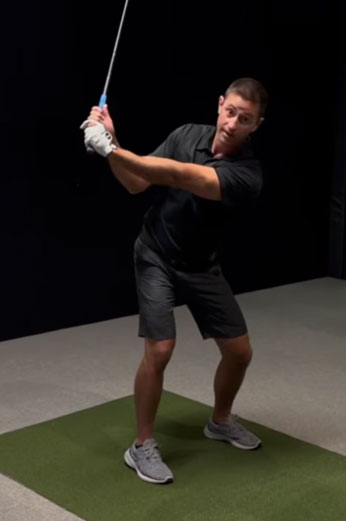
At four Mississippi with a held position at the top, the core should be absolutely working, the trail side should be fully loaded, and the club should be in a controlled, purposeful position instead of having overshot everything and created a swing that cannot be repeated.
Then undo it. Let the downswing happen naturally from a controlled, loaded position instead of trying to recover from one that went too far.
A controlled backswing is not a shorter backswing. It is a backswing that actually stops where it was supposed to stop, loaded with intention instead of momentum.
Why This Combination Works
Here is what each piece of the combination is contributing.
The foam roller drill trains the muscles that rotate the body to actually fire during the backswing, building real shoulder turn driven by the core and the trail leg rather than arm movement that mimics rotation.
The split grip drill trains the arc to stay wide by forcing the lead knuckles to push away from the target and the lead elbow to stay straight, which keeps the hands in front of the chest instead of wrapping around and shrinking the radius.
The slow backswing gives the brain and the body enough time to feel every part of what is happening, so the controlled position at the top is actually reached instead of blown past by momentum.
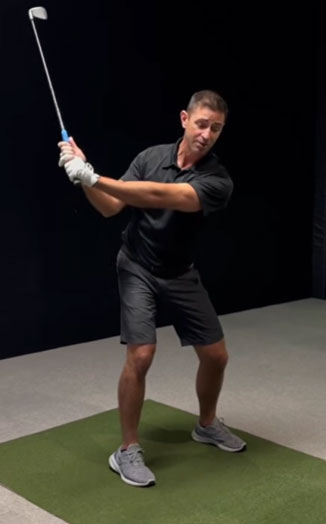
All three together produce a backswing with maximum shoulder turn, maximum arc width, and maximum control. That combination creates the conditions for real power transfer into the golf ball, which is exactly what carry distance depends on.
Get a Free Swing Analysis
Want to know whether shoulder turn is being maximized and whether the arc is staying wide enough to generate real carry distance right now?
Set the camera or phone up at two angles. One from the front, face on. One from behind, down the line. Film in slow motion. Swing.
Send both videos to gaindistance.com and Dr. Berman will give a free swing analysis. The first one is on him.
See exactly what the camera shows, not what the brain thinks is happening. Then there is clarity on whether the shoulder turn is real rotation or arm movement, and whether the arc is as wide as it could be.
Want a Step-by-Step Blueprint?
If this resonates and the advice out there feels designed for 25-year-old tour pros, there is a simple blueprint built specifically for senior golfers.
It breaks down:
How the aging body changes Which muscles actually produce power How to gain distance without swinging harder How to improve consistency while reducing aches and pains
It is written at a fifth-grade reading level with clear visuals and practical drills that can start immediately.
A FREE digital copy is available at: 👉 gaindistance.com
No gimmicks. Just clarity on how the body should move to play better golf for years to come.
Bringing It All Together
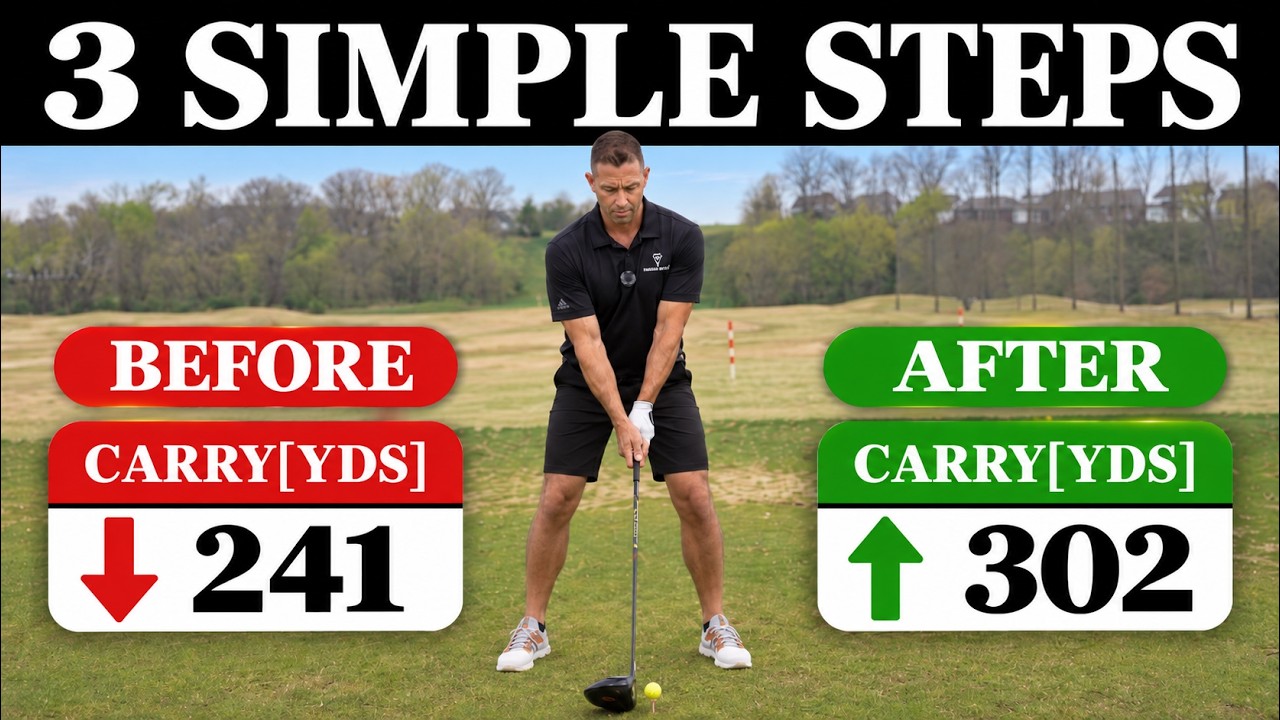
Two tools. Three steps. Foam roller for real shoulder turn driven by the core and the trail leg. Split grip drill for arc width and extension with the lead elbow staying straight and the knuckles pushing away from the target. Painfully slow backswing counted out to four Mississippi and held, so the club actually stops where it is supposed to instead of overshooting into a position that cannot be repeated.
All three together produce maximum shoulder turn, maximum arc width, and a controlled top of backswing position that is loaded and ready to unload into the ball with real power.
At Berman Golf, the focus is biomechanics first. Not cookie cutter swings. The goal is teaching the body how it should move, especially as it ages, so power can be generated safely and repeated under pressure.
The in-house and online coaching programs are built specifically for senior golfers who want more distance and better consistency without beating up their bodies.
For anyone tired of advice designed for tour pros and ready for a blueprint built for their body, help is available.
Because when the shoulder turn is real, the arc is wide, and the backswing is controlled, every bit of power generated actually makes it into the golf ball.
And when that power transfers all the way through, the game gets soooooo much easier!
If you enjoyed what you read and want to see it in action, watch the video below where Dr. Berman demonstrates the full combination drill from foam roller to split grip to four Mississippi hold!