The Simplest Way to Understand the Golf Swing
Here is the whole thing in one sentence. The backswing is a rotate and a lift. The downswing is an unlift and a rotate back.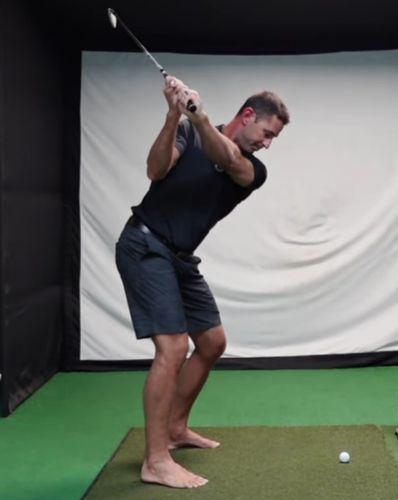
Rotate first. Then lift. Not simultaneously as one combined movement. Two separate movements done in sequence. Rotate, then lift on top of the rotation.
And to undo it on the way down, the lift comes off first, then the rotation completes back through to the target. Unlift, then rotate back.
That sequence is the golf swing at its most fundamental level.
Why Two Movements Cannot Be Made Into One
Here is the key insight behind this progression, and it comes from the PGA pro directly.
You cannot make one movement out of two.
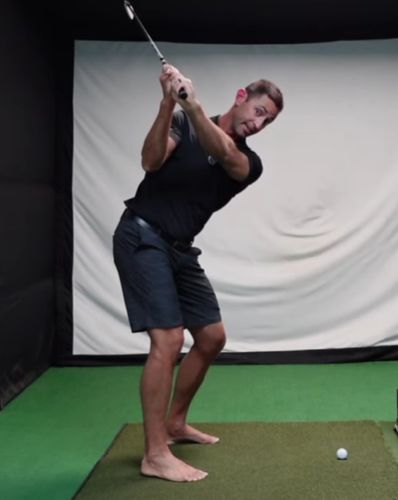
When golfers try to combine the rotate and the lift into one single fluid movement without first learning them as two separate things, the sequencing breaks down. The brain does not know which one to prioritize. And when the sequence is wrong on the way back, the downswing has no correct sequence to follow either.
The over the top move comes directly from this. When the rotate and lift get blurred together going back, the body tries to get to the ball too fast on the way down. The only path available from that rushed, out of sequence position is up and over the top. Every time.
The Two Step Backswing
Here is how to practice the backswing as two distinct movements.
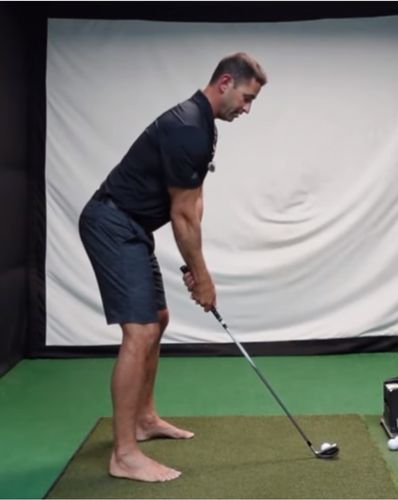
Step one is rotate. The belt buckle turns. The body rotates. The hands and arms stay in front of the chest and follow the rotation. No lifting yet.
Step two is lift. Once the rotation has reached its natural limit, the arms lift on top of that rotation to complete the backswing.
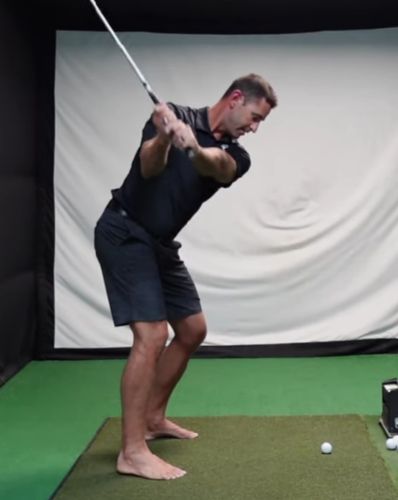
Rotate. Then lift. Feel them as two separate things happening in sequence before trying to blend them into one continuous motion.
The Two Step Downswing
Here is how to practice the downswing as two distinct movements in reverse order.
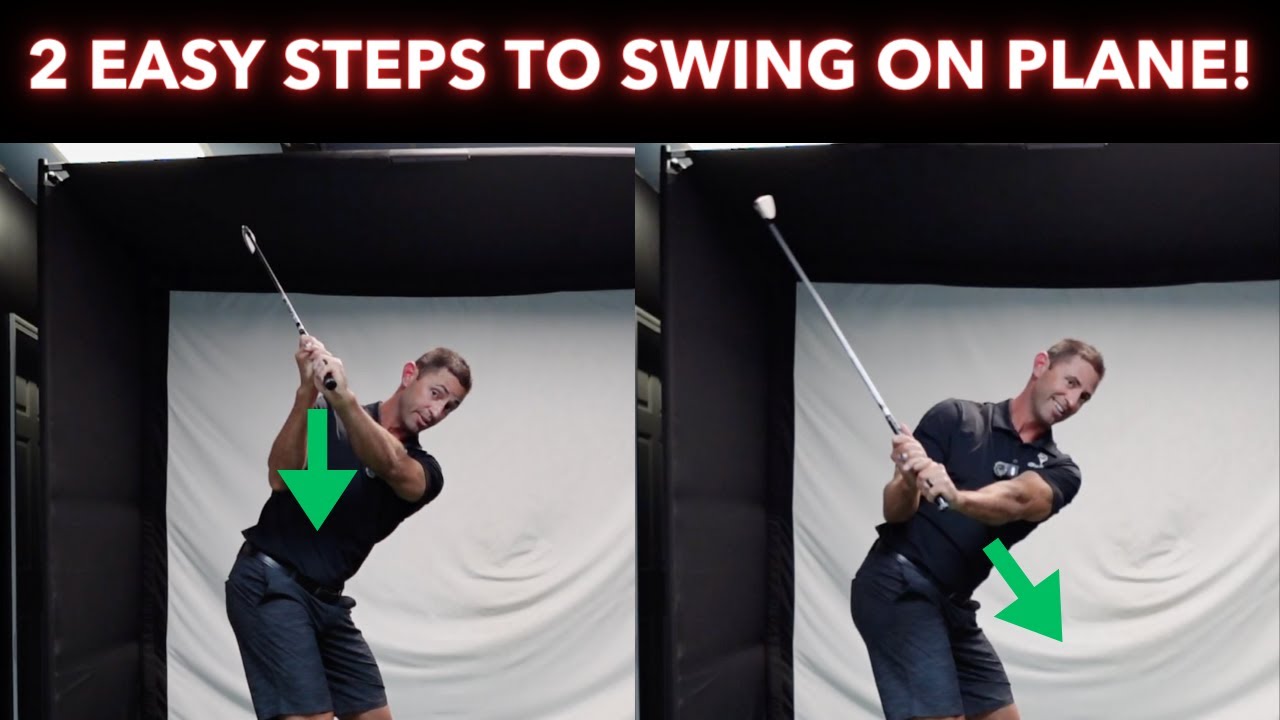
Step one is unlift. From the top of the backswing, the arms come down first. Not the shoulders. Not the hands casting. The lift gets undone. Arms drop back to where the rotation ended.
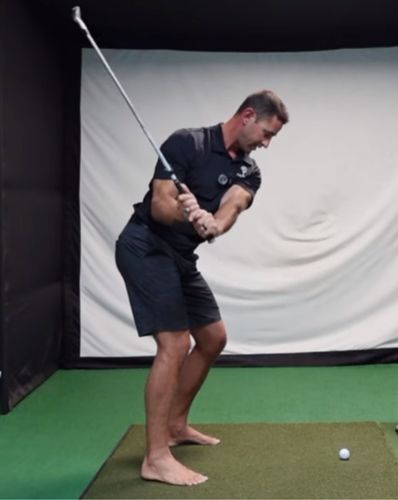
Step two is rotate back. Once the unlift is complete, the belt buckle rotates back through toward the target. Body turning through impact and finishing with the belt buckle facing the target.
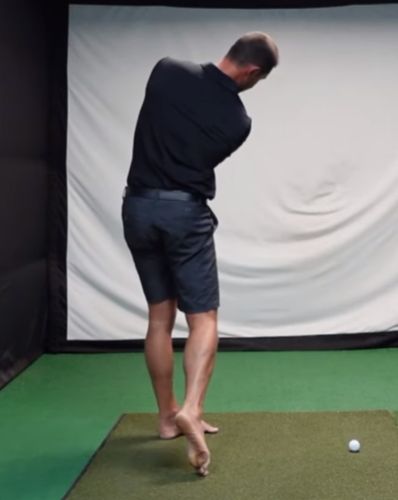
Unlift. Then rotate back. Same principle as the backswing. Two movements in sequence, not one blurred together attempt to just swing through the ball.
The Full Sequence Slowly
Here is the complete four part sequence that needs to be practiced slowly and repeatedly before any real speed gets added.
Rotate. Lift. Unlift. Rotate back.
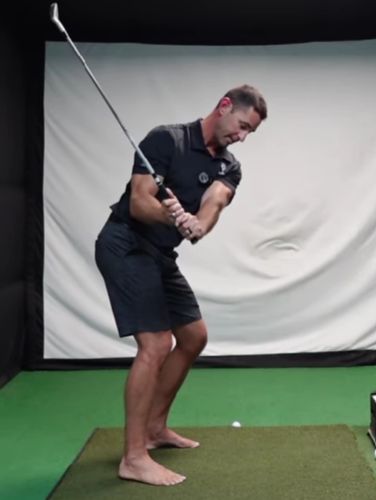
Do it slowly enough that each of the four parts can actually be felt separately. If it feels segmented and mechanical at first, that is correct. It should feel segmented at the start, because the brain is learning to sequence two separate movements in each direction before it can blend them into one smooth motion.
Over repetitions, the sequence starts to feel more natural. The four parts begin to connect. And that connected version of the sequence is what a properly sequenced golf swing actually feels like, not a single blurred motion but four things happening in the right order fast enough that they feel smooth.
Why This Stops the Over the Top Move
Here is the biomechanical reason this progression eliminates the over the top swing for most golfers.
The over the top happens when the body tries to get to the ball too quickly from the top of the backswing. When the sequence is unclear, the shoulders and arms take over and cast outward because that is the fastest path to the ball. The result is a steep outside in path, the pull, the slice, the fat shot.
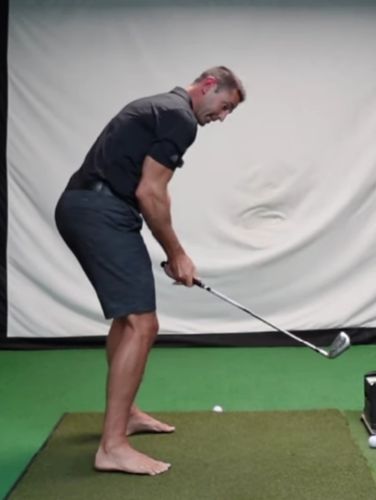
When the unlift happens first and the rotation follows, the club is forced to approach from the inside. The sequence physically prevents the over the top move because the unlift brings the arms down before the body has rotated through, which means the club has to come from inside out to reach the ball.
The sequence is the fix. Not a new swing thought at impact. Not a band aid applied to the downswing. The sequence trained from the very beginning.
Get a Free Swing Analysis
Want to know whether the rotate and lift sequence is happening in the right order right now or whether the two movements are getting blurred into one that is causing the over the top move?
Set the camera or phone up at two angles. One from the front, face on. One from behind, down the line. Film in slow motion. Swing.
Send both videos to gaindistance.com and Dr. Berman will give a free swing analysis. The first one is on him.
See exactly what the camera shows, not what the brain thinks is happening. Then there is clarity on whether the sequence is correct or whether rotate and lift are getting reversed or combined too early.
Want a Step-by-Step Blueprint?
If this resonates and the advice out there feels designed for 25-year-old tour pros, there is a simple blueprint built specifically for senior golfers.
It breaks down:
How the aging body changes Which muscles actually produce power How to gain distance without swinging harder How to improve consistency while reducing aches and pains
It is written at a fifth-grade reading level with clear visuals and practical drills that can start immediately.
A FREE digital copy is available at: 👉 gaindistance.com
No gimmicks. Just clarity on how the body should move to play better golf for years to come.
Bringing It All Together
Four words. Rotate. Lift. Unlift. Rotate back.
That is the golf swing. Not one blurred movement. Two movements on the way back done in sequence and two movements on the way through done in reverse sequence. Practice them slowly and separately until the brain learns the correct order. Then let the speed come naturally as the sequence becomes automatic.
You cannot make one movement out of two. But once the two movements are trained correctly in both directions, they blend together into something that feels effortless and repeatable.
At Berman Golf, the focus is biomechanics first. Not cookie cutter swings. The goal is teaching the body how it should move, especially as it ages, so power can be generated safely and repeated under pressure.
The in-house and online coaching programs are built specifically for senior golfers who want more distance and better consistency without beating up their bodies.
For anyone tired of advice designed for tour pros and ready for a blueprint built for their body, help is available.
Because when the sequence is right, the over the top move disappears and a properly struck 180 yard eight iron starts to feel completely normal.
And when the sequence becomes automatic, the game gets soooooo much easier!
If you enjoyed what you read and want to see it in action, watch the video below where Dr. Berman and his PGA pro walk through the full two step progression!