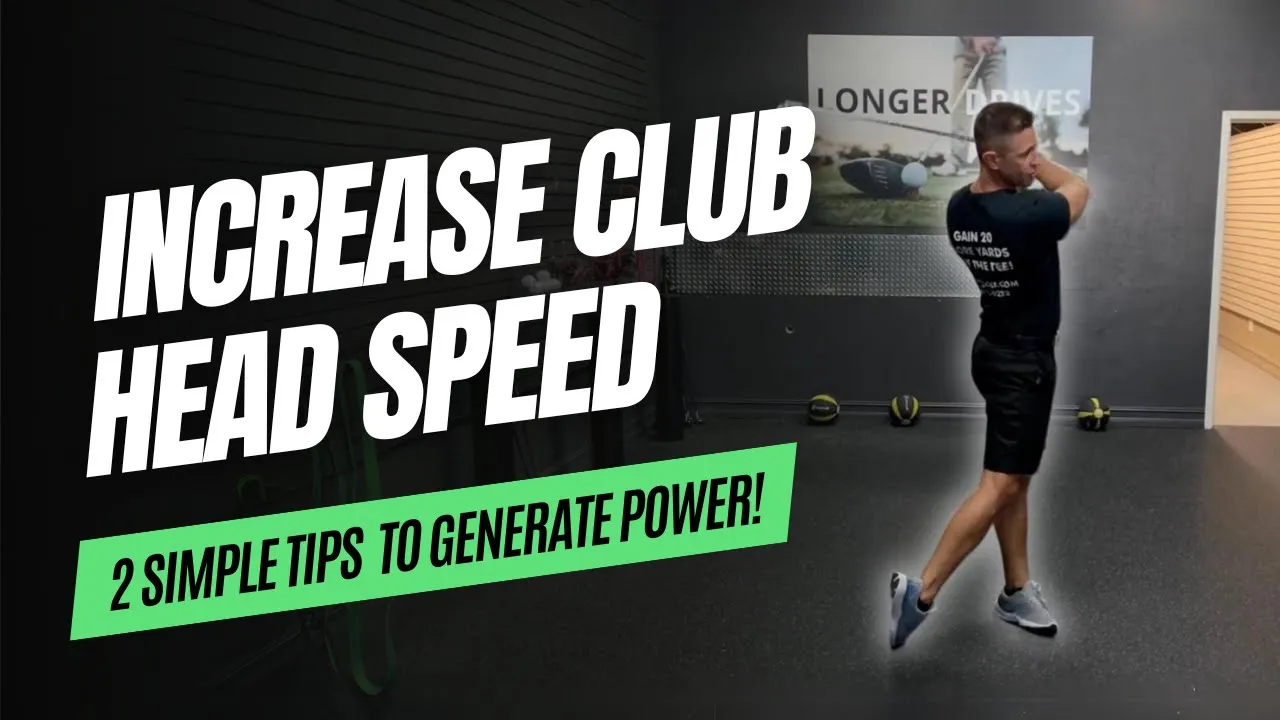
Two tips. Both of them built around the same law of physics.
The bigger the arc, the faster the club head moves at the bottom of the swing. That is not a theory or a YouTube hypothesis. It is basic physics, and it applies to every golfer regardless of age, flexibility, or skill level. Bigger arc equals more club head speed. More club head speed equals more distance. There is no way around it.
At Berman Golf, these two drills address the single most common way amateur golfers shrink their arc without realizing it, and train the muscles and the brain to stop doing it automatically.
Why Most Golfers Are Already Killing Their Club Head Speed
Here is what 95% of amateur golfers do during the backswing.
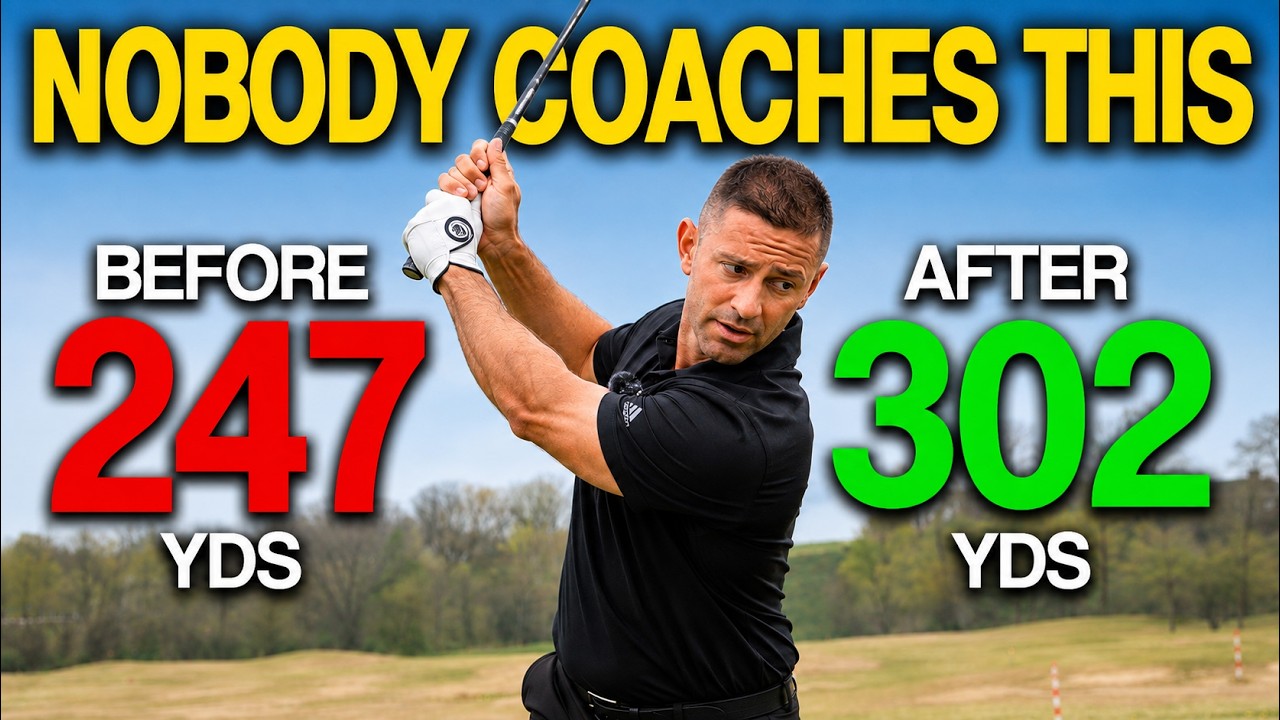
The hands come inside. The moment the hands move inside, they naturally cross across the body, meaning the hands are no longer directly in front of the chest. And the moment the hands cross across the body, the arc shrinks instantly.
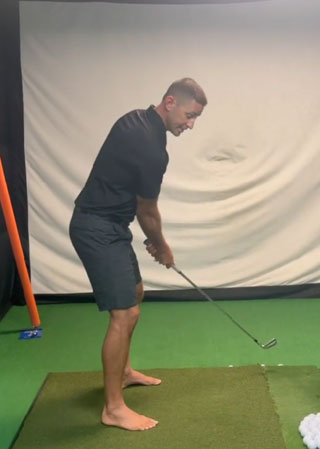
That is it. The arc is already smaller before the downswing has even started. And by the laws of physics, a smaller arc means a slower club head. Slower club head means less distance. The golfer swings harder to try to compensate, which usually makes it worse, and the root cause never gets addressed.
The fix is not swinging harder. The fix is keeping the arc big. And keeping the arc big means keeping the hands directly in front of the chest for as long as possible during the backswing.
Tip 1, Keep the Hands in Front of the Chest
Here is the first drill and the first cue.
As the backswing begins, focus on keeping the hands directly in front of the chest for as long as physically possible. Not inside. Not crossing over. Directly in front.
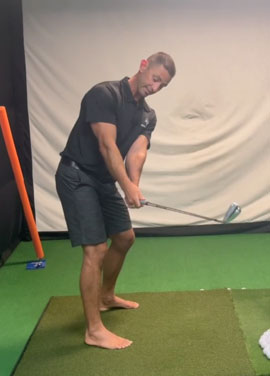
Once the body cannot physically rotate any further with the hands in front, here is the cue that completes the backswing without collapsing the arc.
Push the left knuckles away from the body. Away from the target. Not up. Not around. Directly away.
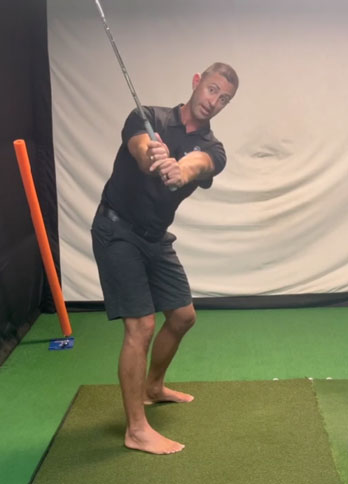
That pushing away motion is what allows more shoulder turn to happen without the hands crossing the body and shrinking the arc. The shoulder turn gets bigger. The hands stay in front of the chest. The arc stays wide.
The One Thing That Destroys the Arc Immediately
Here is what to watch for and avoid on every single rep.
The moment the lead elbow bends, the arc shrinks. Not gradually. Immediately and completely.
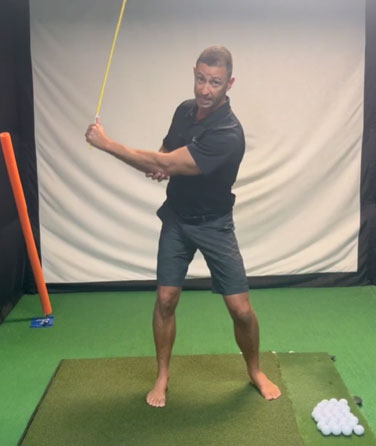
A bent elbow means the hands have moved closer to the chest. Closer to the chest means a smaller radius. Smaller radius means slower club head. And then on the way down, a bent elbow forces a cast and a flip at impact to try to get back to the ball, which is a double negative. Club head speed goes down and consistency goes with it.
The pros on television who swing out of their shoes and still make it look effortless have fewer moving parts than amateur golfers, not more. Their wrists and elbows move less, not more. That simplicity is what allows them to reproduce the same arc over and over at high speed without manipulation.
Keep the elbow straight. Keep the wrists from flipping. Keep the hands in front of the chest. Less moving parts means a more consistent, faster arc every single time.
Drill One, Knuckles Away From the Target
Here is how to train the first tip into the body.
Stand facing the target. Take the lead hand and push the knuckles directly away from the target. Not over to the side. Not up in the air. Directly away, as if pushing toward something behind the body on the opposite side of the target.
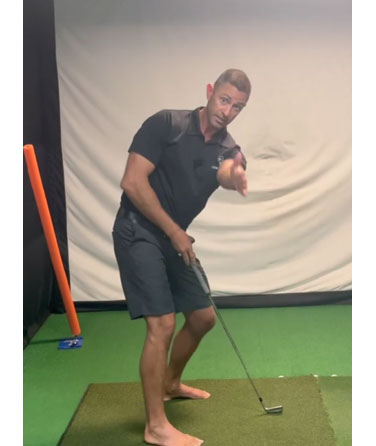
Do that ten times with just the hand and arm, no club. Feel the shoulder muscles and chest working to hold that extended position. If holding the arm straight in that position is difficult, use an alignment stick instead of a club. It is lighter and allows the muscles to build strength in the correct position before adding the weight of a club.
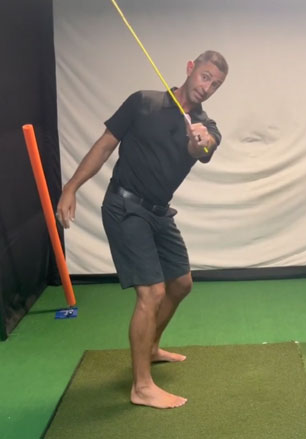
Once ten reps feel solid with just the arm or the alignment stick, do the same thing with an actual club. Target direction. Knuckles pushing directly away from the target. Lead elbow straight throughout.
Ten reps without the club. Then ten reps with the club. Build the muscles and the pattern together.
Tip 2, The Split Grip Drill
Here is the second drill, and it trains the same thing from a slightly different angle.
At address, slide the trail hand halfway off the bottom of the grip. Big split between the two hands.
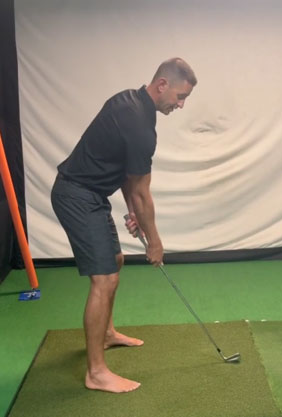
From that split grip position, go into the backswing. Think about pushing the lead knuckles away while gently keeping the trail elbow tucked in. The split grip forces the hands to extend outward instead of folding inward because the trail hand no longer has a tight grip to pull against.
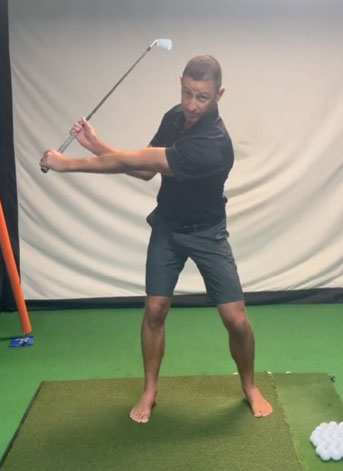
Once at the top of the backswing in the split grip position, bring the trail hand back up into a normal baseball grip. Feel where the hands are. They should be extended, in front of the chest, with the lead elbow straight.
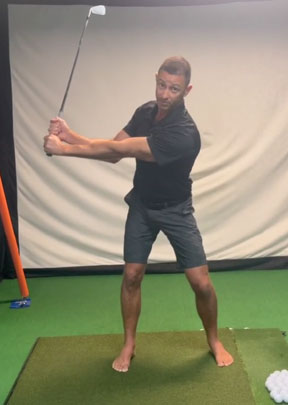
Do that ten to twenty times. Then try to replicate the exact same feeling with a normal grip.
Both drills are training the same thing. Keep the hands in front of the chest. Keep the arc wide. Keep the elbow straight. The split grip just gives the hands a physical reason to extend outward instead of folding in, which makes the correct position easier to find and feel.
What Happens When Both Tips Work Together
Here is the payoff when both drills are practiced consistently and carried into the actual swing.
The arc stays big. A big arc means a faster club head. A faster club head means more distance. And the best byproduct of all, the straighter the lead elbow stays, the more consistent the ball striking becomes. Because when the elbow stays straight, there is no casting, no flipping, no last second manipulation trying to get the club back to the ball.
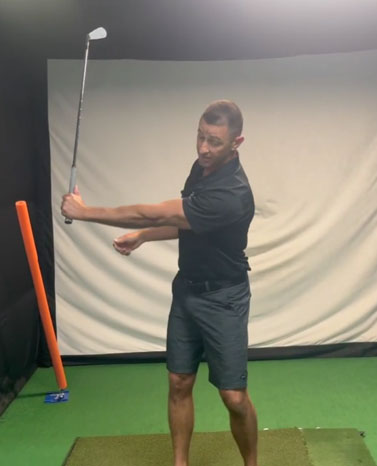
Less manipulation means fewer moving parts. Fewer moving parts means more consistency. More consistency means the ball goes where it is supposed to go more often, with more distance, without swinging any harder than before.
That is what smarter looks like versus harder.
Get a Free Swing Analysis
Want to know whether the hands are going inside and shrinking the arc right now, before trying to fix it?
Set the camera or phone up at two angles. One from the front, face on. One from behind, down the line. Film in slow motion. Swing.
Send both videos to gaindistance.com and Dr. Berman will give a free swing analysis. The first one is on him.
See exactly what the camera shows, not what the brain thinks is happening. Then there is clarity on whether the arc is staying wide or collapsing early in the backswing.
Want a Step-by-Step Blueprint?
If this resonates and the advice out there feels designed for 25-year-old tour pros, there is a simple blueprint built specifically for senior golfers.
It breaks down:
How the aging body changes Which muscles actually produce power How to gain distance without swinging harder How to improve consistency while reducing aches and pains
It is written at a fifth-grade reading level with clear visuals and practical drills that can start immediately.
A FREE digital copy is available at: 👉 gaindistance.com
No gimmicks. Just clarity on how the body should move to play better golf for years to come.
Bringing It All Together
Two drills. One law of physics. Bigger arc equals faster club head.
Drill one, push the lead knuckles directly away from the target during the backswing to keep the hands in front of the chest and the lead elbow straight. Ten reps without a club, then ten reps with one. Drill two, split grip with the trail hand halfway off the grip, pushing the lead knuckles away while tucking the trail elbow in, then sliding back to a baseball grip at the top. Ten to twenty reps, then carry it into a normal grip swing.
Both drills train the same thing. Hands in front of the chest. Arc stays wide. Elbow stays straight. Club head goes faster. Ball goes farther. Contact gets more consistent.
At Berman Golf, the focus is biomechanics first. Not cookie cutter swings. The goal is teaching the body how it should move, especially as it ages, so power can be generated safely and repeated under pressure.
The in-house and online coaching programs are built specifically for senior golfers who want more distance and better consistency without beating up their bodies.
For anyone tired of advice designed for tour pros and ready for a blueprint built for their body, help is available.
Because when the arc stays big and the elbow stays straight, club head speed goes up without ever having to swing harder.
And when club head speed goes up without more effort, the game gets soooooo much easier!
If you enjoyed what you read and want to see it in action, watch the video below where Dr. Berman demonstrates both drills in full!