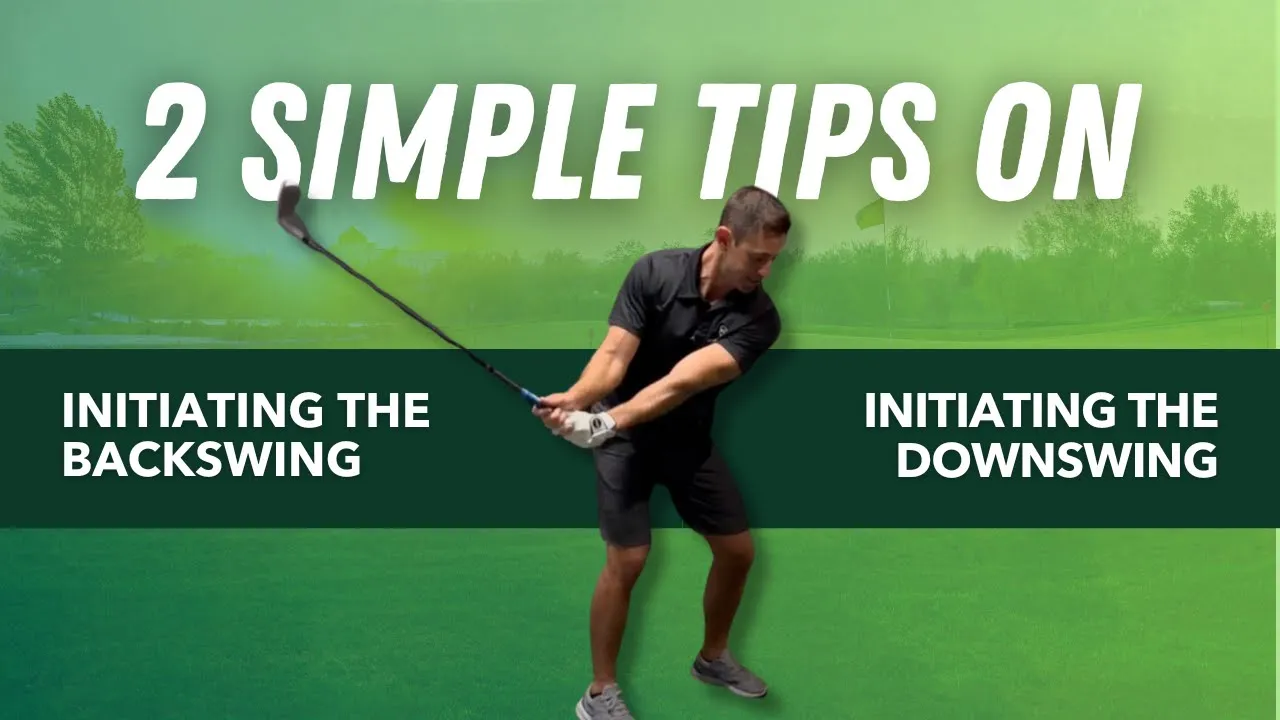
Two alignment sticks. That is the entire equipment list for this drill.
One goes in the belt loop, cheated way out to the right side for a right handed golfer. The other gets gripped like a normal club. Together they give immediate, audible feedback on two of the most important moves in the entire golf swing, how the backswing starts and how the downswing starts.
At Berman Golf, this drill is one of the clearest ways to expose exactly what the body is doing wrong and confirm exactly when it is doing it right. Not by feel alone. By sound. The sticks either click at impact position or they do not, and that click tells the whole story.
Why Initiation Matters More Than Anything Else
Here is the principle behind both tips in this drill.
Whatever body part initiates the movement, the brain registers as the primary mover. Start the backswing with the hands and the brain immediately decides the hands and arms are running the show. From that point forward, no matter how much effort goes into trying to use the body on the way down, the brain is not going to cooperate. It already knows the hands are in charge.
This is why working harder rarely fixes inconsistency. The root cause is not in the downswing. It is in the very first move of the backswing, before the club has traveled more than a few inches.
Fix the initiation and everything downstream of it has a chance to work correctly.
Tip 1, Initiate the Backswing With the Belt Buckle
Here is the setup for the first tip.
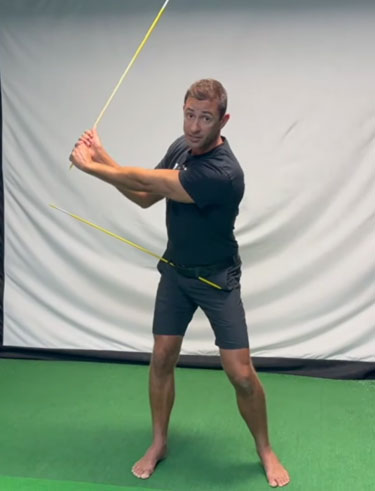
Thread the first alignment stick through the belt loop and cheat it way out to the right side so it is clearly visible and pointing away from the body. Grip the second alignment stick like a normal club in address position.
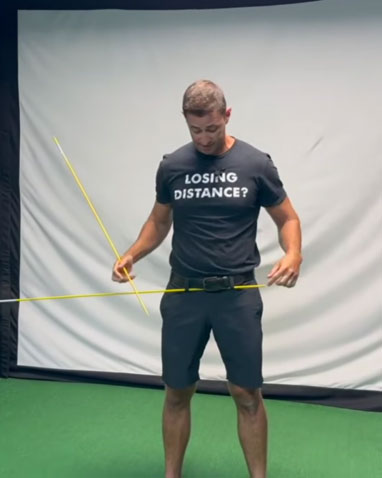
Now initiate the backswing. Not with the hands. With the belt buckle.
Watch the stick in the belt loop. The moment the belt buckle begins to turn, that stick moves. That movement is visible proof that the hips initiated the backswing instead of the hands.
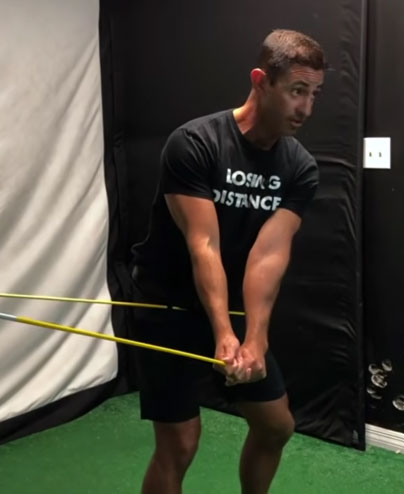
Keep turning the belt buckle until it physically cannot turn any further. That limit is exactly how high the hands go. Not hands reaching for parallel. Not arms lifting independently. The hands go only as high as the belt buckle allows them to go.
From there, the shoulders finish the turn on top of the completed hip rotation. Belt buckle leads. Hands follow the belt buckle. Shoulders finish. In that order every single time.
Tip 2, Initiate the Downswing With the Belt Buckle Too
Here is where the drill gets the immediate feedback that makes it so valuable.
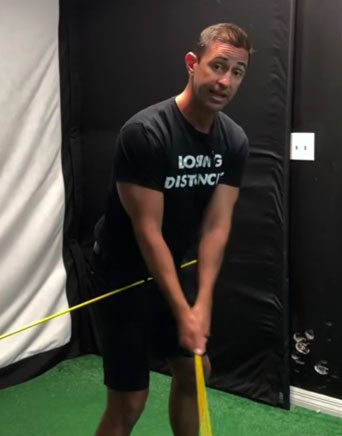
At the top of the backswing, cross the gripped alignment stick across the chest. Now initiate the downswing and see what happens at impact position.
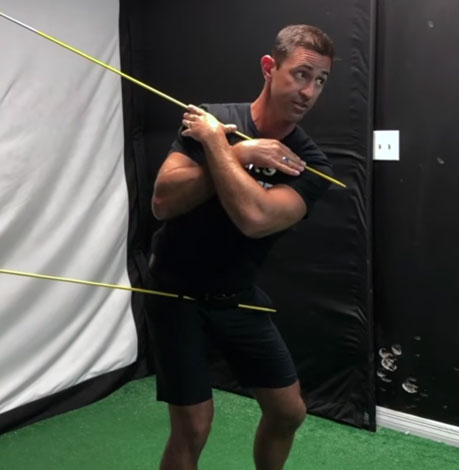
If the two sticks are not touching at impact position, the swing went over the top. The club came from outside to in, which means no lag, no compression, no divot, and no chance at the ball flight that sticks greens.
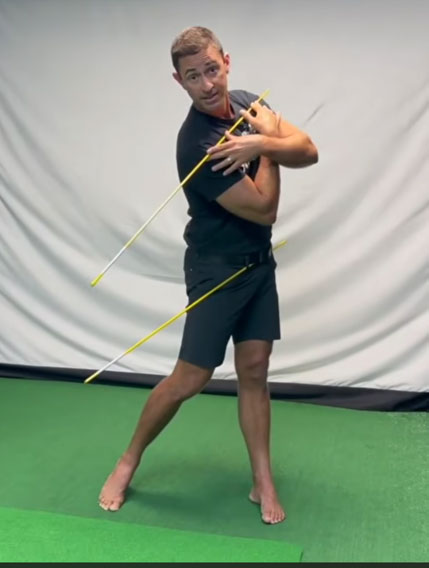
Here is the fix. From the top of the backswing, initiate the downswing with the belt buckle first, exactly the same way the backswing was initiated. The belt buckle reverses direction toward the target before anything else moves.
When the belt buckle leads the downswing, the sticks touch at impact position
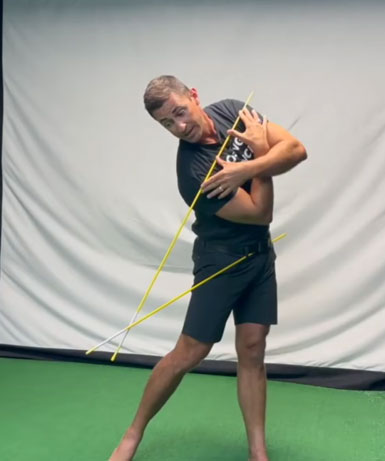
That contact is the click. And that click is the confirmation that the downswing came from the inside, not over the top. Inside out path means lag is possible. Lag means hitting down on the ball is possible. Hitting down means compression is possible. Compression means the divot, the ball flight, the shape, and the green in regulation that every golfer is chasing.
The Full Sequence With Both Tips
Here is the complete drill from start to finish.
Address position. Belt loop stick cheated out to the right. Gripped stick like a club.
Initiate the backswing with the belt buckle. Watch the loop stick move first. Turn the belt buckle as far as it will go. Hands follow only as high as the belt buckle allows. Shoulders finish on top.
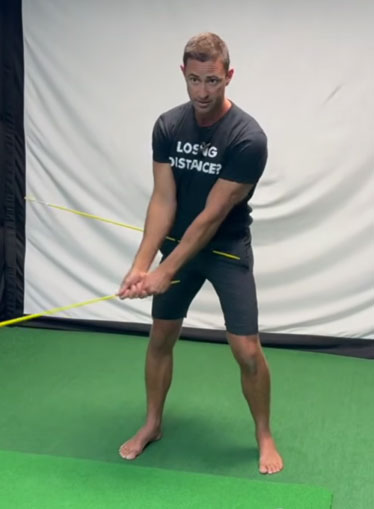
Cross the gripped stick across the chest. Initiate the downswing with the belt buckle again. Belt buckle reverses toward the target first. At impact position, run into yourself. The sticks touch. Click.
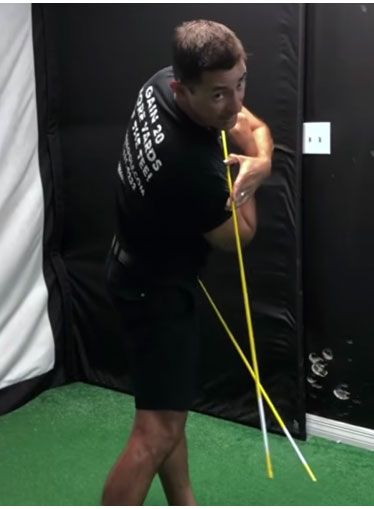
That click is not just satisfying. It is proof. Proof that the belt buckle led both the backswing and the downswing. Proof that the path came from the inside. Proof that the body was the primary mover from start to finish.
Ten Consecutive Clicks Before the Club
Here is the standard to reach before ever picking up a real golf club to try this.
Ten consecutive clicks. Not nine out of ten. Not most of them. Ten in a row, sticks touching at impact position every single time, before transitioning to an actual club.
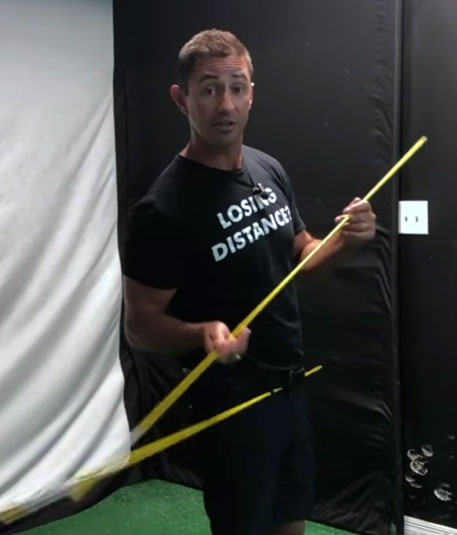
This matters because the body needs repetition to build the motor pattern, not just exposure to the correct feeling. Two or three clicks and then heading to the range means the pattern is not built yet. The brain will revert the moment a real ball is on the ground, because the stakes feel different and the old pattern is still stronger than the new one.
Ten consecutive clicks means the pattern has started to take hold. That is when a real club is worth introducing, starting with slow motion swings before building back to full speed.
Get a Free Swing Analysis
Want to know whether the backswing is starting with the hands or the belt buckle, and whether the downswing is coming over the top right now?
Set the camera on the ground. Press record. Pick up a golf club. Swing. Press stop.
Send the video to gaindistance.com and Dr. Berman will give a free swing analysis. The first one is on him.
See exactly what the camera shows, not what the brain thinks is happening. Then there is clarity on exactly which initiation is causing problems and what to work on first.
Want a Step-by-Step Blueprint?
If this resonates and the advice out there feels designed for 25-year-old tour pros, there is a simple blueprint built specifically for senior golfers.
It breaks down:
How the aging body changes Which muscles actually produce power How to gain distance without swinging harder How to improve consistency while reducing aches and pains
It is written at a fifth-grade reading level with clear visuals and practical drills that can start immediately.
A FREE digital copy is available at: 👉 gaindistance.com
No gimmicks. Just clarity on how the body should move to play better golf for years to come.
Bringing It All Together
Two alignment sticks. Two tips. One click that confirms everything is working.
Belt buckle initiates the backswing, not the hands. The loop stick moves first. Belt buckle turns until it cannot go further. Hands follow to that height. Shoulders finish on top. Then the belt buckle initiates the downswing, not the shoulders and not the hands. At impact position, the sticks touch and click.
Ten consecutive clicks before picking up a real club. Then slow motion swings. Then full speed.
At Berman Golf, the focus is biomechanics first. Not cookie cutter swings. The goal is teaching the body how it should move, especially as it ages, so power can be generated safely and repeated under pressure.
The in-house and online coaching programs are built specifically for senior golfers who want more distance and better consistency without beating up their bodies.
For anyone tired of advice designed for tour pros and ready for a blueprint built for their body, help is available.
Because when the belt buckle leads both ways and the sticks click at impact, the inside out path takes care of itself and the ball finally goes where it is supposed to go.
And when the ball goes where it is supposed to go, the game gets soooooo much easier!
If you enjoyed what you read and want to see it in action, watch the video below where Dr. Berman demonstrates both tips and the full alignment stick drill!