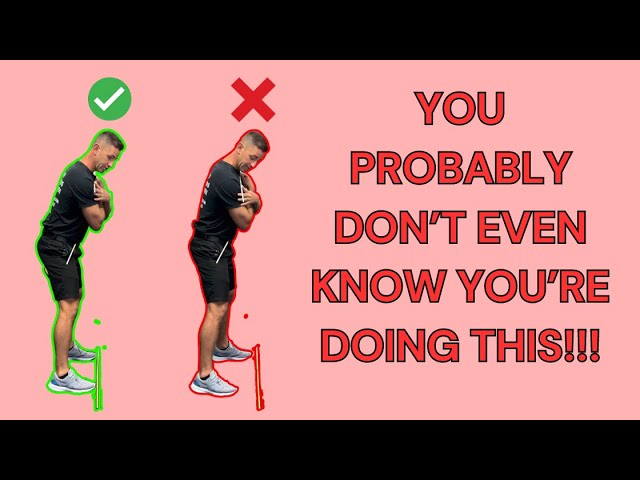
Here is a golf tip that gets passed around constantly, especially for golfers with tight hips, bad knees, or limited shoulder turn.
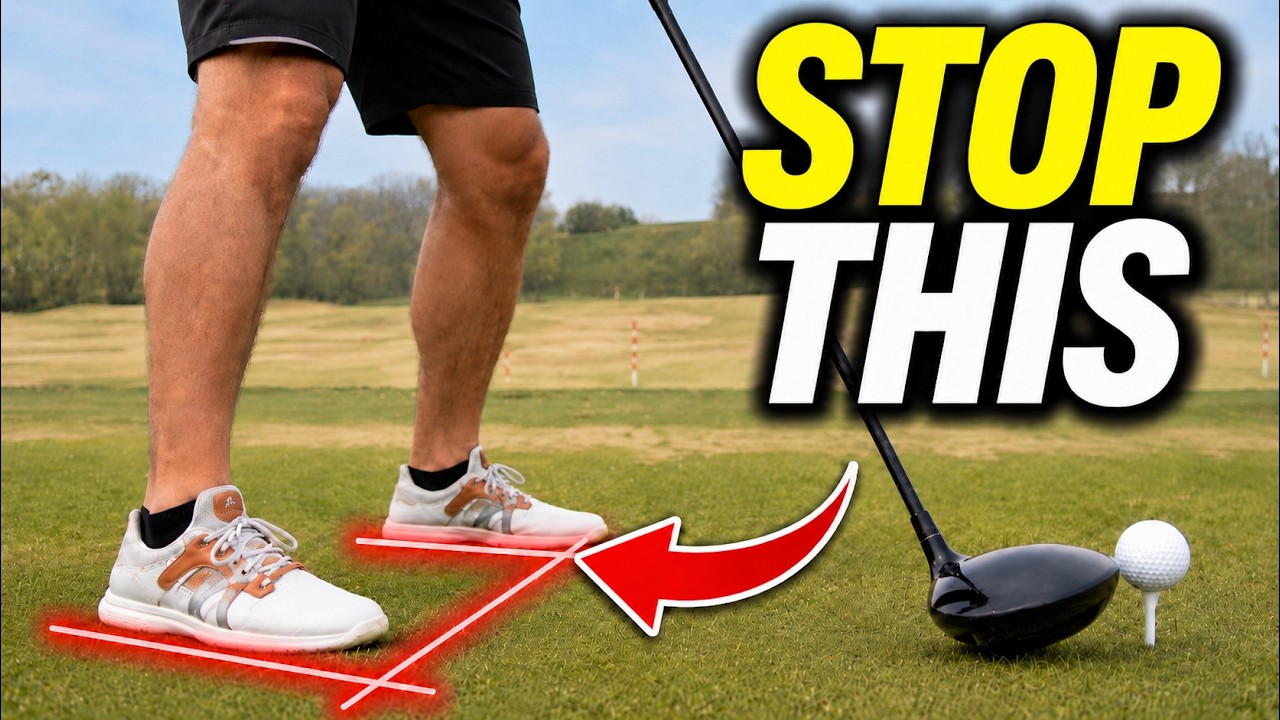
Step the trail foot back so you can get a bigger backswing. Flare the lead foot open so you can get through the ball more easily.
Both of those adjustments feel like solutions. Both of them are compensations. And both of them create a chain of misalignment that makes the over the top move and the banana slice the only possible outcomes.
At Berman Golf, this is one of the most important things to understand about stance adjustments, because the instinct to alter the stance to accommodate a physical restriction is almost universal, and the damage it does to the swing is almost always invisible to the golfer making the change.
What Actually Happens When the Trail Foot Steps Back
Here is the chain of events that plays out every time the trail foot gets pulled back to create more backswing room.
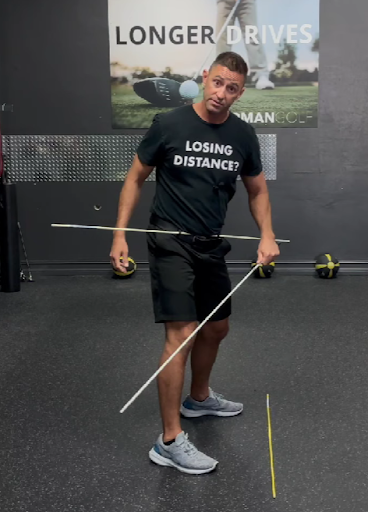
The feet are now closed to the target line. But the hips naturally want to be square. So the hips stay roughly neutral to the target. And the shoulders, because the trail foot is back and the body is trying to rotate around a shifted axis, end up open to the target.
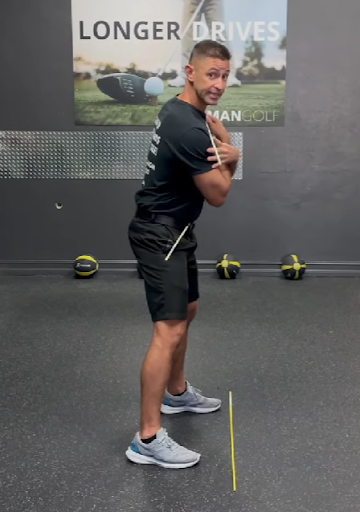
Three body parts. Three different directions. The brain receives those three conflicting signals simultaneously and has no coherent instruction to work from. Feet say go right. Hips say go straight. Shoulders say go left. The brain cannot maintain spine angle when everything is pointing a different direction.
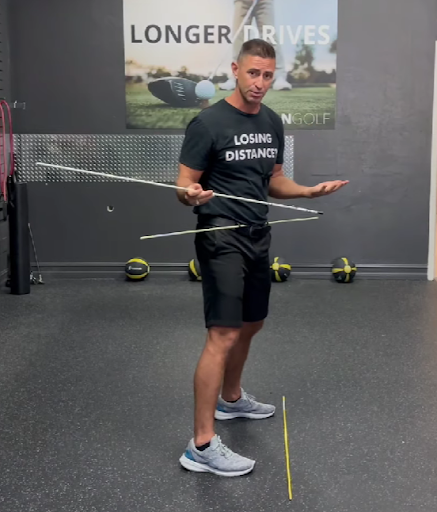
So the brain does the only thing available. The club goes way inside on the takeaway because the closed feet and open shoulders create a path that loops the club inside. And then coming down, because the shoulders are open and the body is misaligned, the only way to get the club back to the ball is over the top.
The result is either a massive banana slice or a duck hook. Neither of which was what the stance adjustment was supposed to produce.
Why the Restriction Is Not the Real Problem
Here is the part of this conversation that most instruction skips entirely.
The reason a bigger backswing feels impossible, or the reason getting through the ball feels restricted, is almost never the hip or the knee itself. It is the muscles around the hip and knee not working.
When the glutes are not firing, the hip cannot rotate as freely. When the core is not engaged, the pelvis cannot stabilize properly for rotation. When the foot muscles are not working, the ground connection that allows the glute to fire is not there.
The symptom is a restricted backswing or difficulty getting through the ball. The cause is muscles not working. The stance adjustment addresses the symptom without touching the cause. And a compensated stance built on top of inactive muscles just adds a new layer of dysfunction on top of the original problem.
Activate the muscles and most of the restriction goes away on its own.
The Test, Square Everything Up
Here is the starting point for anyone currently using a compensated stance.
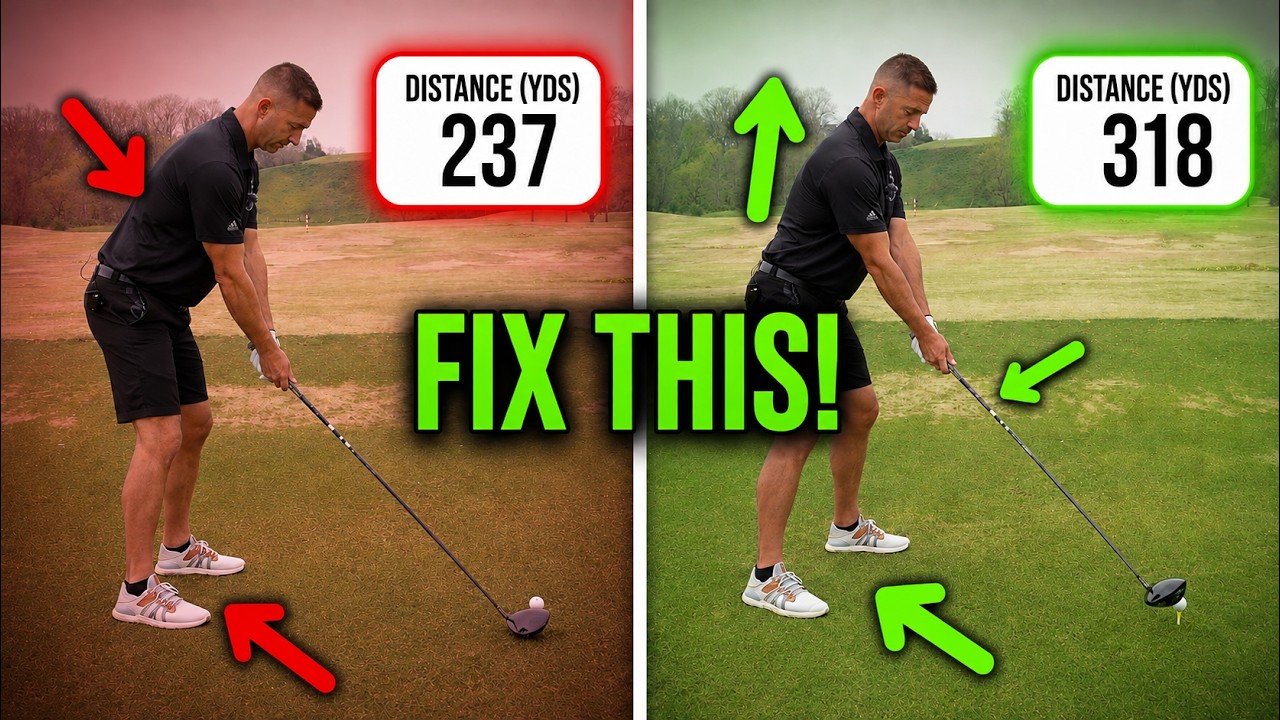
Square the feet. Square the hips. Square the shoulders. All three pointing the same direction.
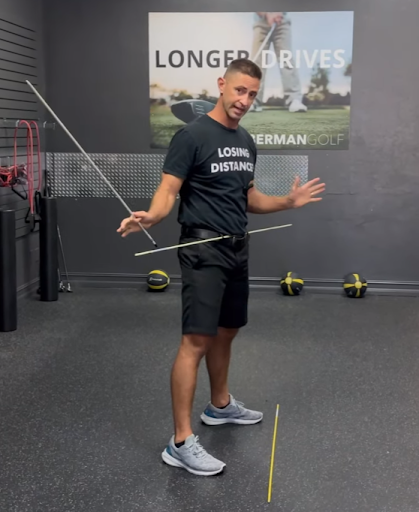
Stand there. Hold it. Put a ball down on the ground and stare at it. The brain needs to register that this position is acceptable before the swing can be attempted from it.
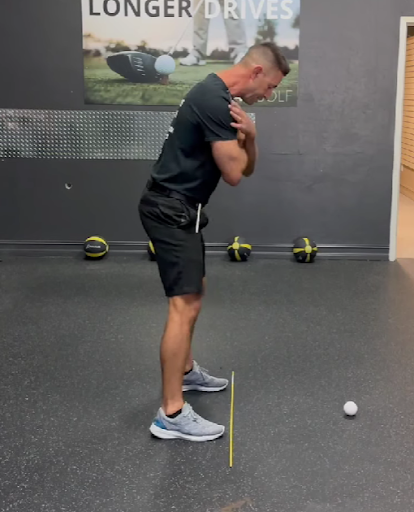
For most golfers who have been using a compensated stance, this squared position feels completely wrong. Too restricted. Not enough room. The instinct is to immediately step the foot back or flare it open to create the familiar feeling of more room.
That familiar feeling is the compensation. The squared position is not too restricted. It just feels that way because the muscles have not been recruited to create the rotation from within the correct alignment.
What Changes When the Muscles Are Doing Their Job
Here is what becomes possible when the core, glutes, and foot muscles are actually activated in a squared stance.
The backswing can happen from a properly aligned foundation. The club goes straight back instead of looping inside. The rotation comes from the body turning within the correct axis instead of the body swaying and compensating around a misaligned one.
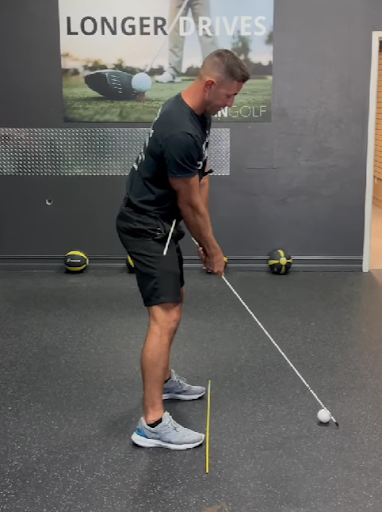
And the downswing can initiate with the hips instead of being forced over the top by open shoulders and a misaligned body. The alignment stick in the belt loop moves first. The hips clear. The club comes down on the correct path. The finish reaches the target instead of veering off to the left of it.
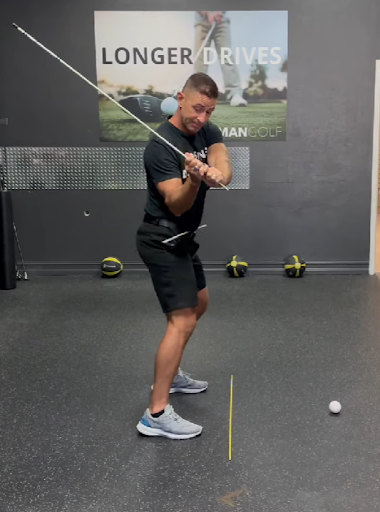
That sequence is only possible when the feet, hips, and shoulders are all pointing the same direction. Misalign any one of them and the brain is back to reconciling conflicting directions, which forces the compensations right back in.
The Exception Worth Acknowledging
Here is the honest caveat.
There are golfers with genuinely severe joint restrictions where some degree of stance modification is medically necessary. A hip that has been identified by a physician as requiring replacement. A knee with documented structural damage beyond what muscle activation can address.
For those golfers, some accommodation is appropriate and the approach needs to account for real anatomical limitations.
But for the vast majority of golfers who were told by a coach to step the foot back or flare it open, the restriction is muscular, not structural. The muscles stopped working. The joint became restricted as a result. And the stance adjustment taught the body to work around the restriction instead of through it.
The alternative is to activate the muscles, square the stance, and let the body discover that the restriction was never as absolute as it felt.
Get a Free Swing Analysis
Want to know whether the current stance is squared correctly or whether a compensated position is creating misalignment that forces the over the top move?
Set the camera or phone up at two angles. One from the front, face on. One from behind, down the line. Film in slow motion. Swing.
Send both videos to gaindistance.com and Dr. Berman will give a free swing analysis. The first one is on him.
See exactly what the camera shows, not what the brain thinks is happening. The foot, hip, and shoulder alignment at address is one of the first things visible in slow motion and one of the most revealing pieces of information available about what the swing is going to do before the club ever moves.
Want a Step-by-Step Blueprint?
If this resonates and the advice out there feels designed for 25-year-old tour pros, there is a simple blueprint built specifically for senior golfers.
It breaks down:
How the aging body changes Which muscles actually produce power How to gain distance without swinging harder How to improve consistency while reducing aches and pains
It is written at a fifth-grade reading level with clear visuals and practical drills that can start immediately.
A FREE digital copy is available at: 👉 gaindistance.com
No gimmicks. Just clarity on how the body should move to play better golf for years to come.
Bringing It All Together
Stepping the trail foot back or flaring the lead foot open creates three body parts pointing three different directions. Feet closed. Hips neutral. Shoulders open. The brain cannot reconcile those signals. The only available downswing is over the top. The only available ball flight is a banana slice or a duck hook.
The stance adjustment is a compensation for muscles not working. Fix the muscles and the restriction that made the adjustment feel necessary becomes far less absolute.
Square the feet. Square the hips. Square the shoulders. Stand there and train the brain that this position is correct. Activate the core, glutes, and foot muscles. Take it straight back. Initiate the downswing with the hips. Finish the belt buckle at the target.
At Berman Golf, the focus is biomechanics first. Not cookie cutter swings. The goal is teaching the body how it should move, especially as it ages, so power can be generated safely and repeated under pressure.
The in-house and online coaching programs are built specifically for senior golfers who want more distance and better consistency without beating up their bodies.
For anyone tired of advice designed for tour pros and ready for a blueprint built for their body, help is available.
Because when the feet, hips, and shoulders all point the same direction, the brain finally has a clear instruction and the over the top move loses its reason to exist.
And when the alignment is right and the muscles are working, the game gets soooooo much easier!
If you enjoyed what you read and want to see it in action, watch the video below where Dr. Berman explains exactly why compensated stances backfire and how to square everything up correctly!