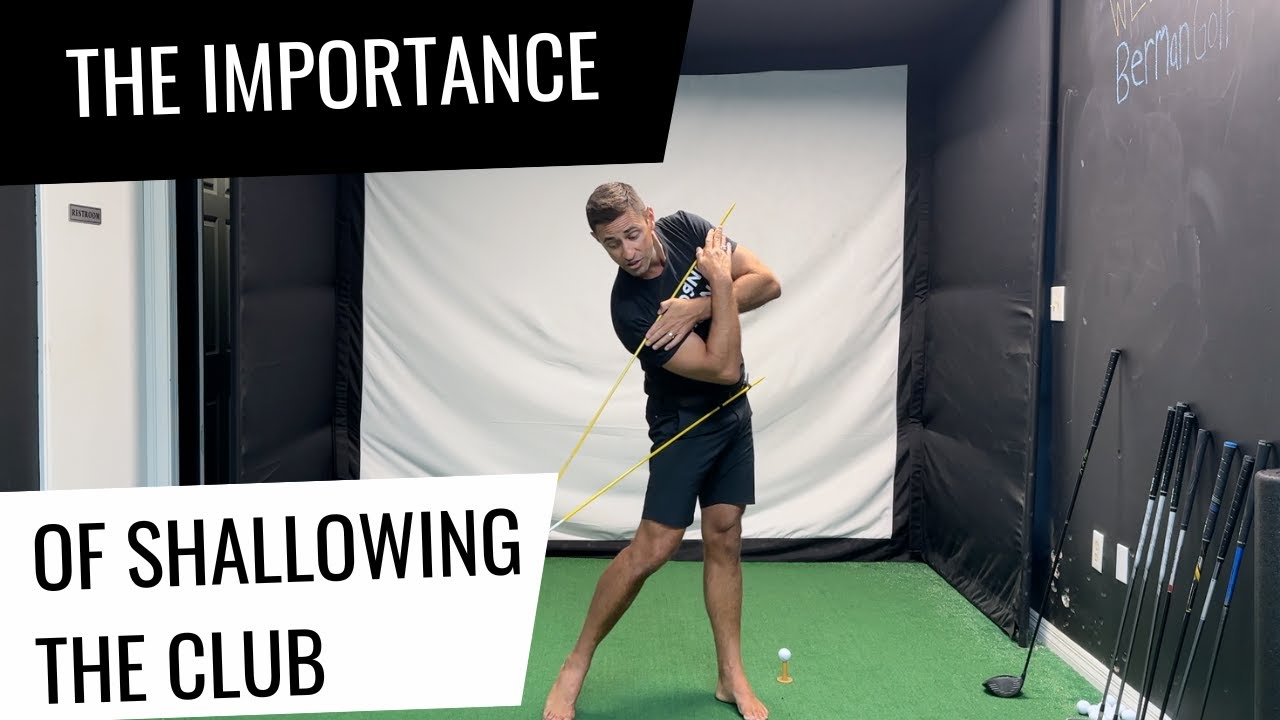
Shallowing the club has become one of the biggest buzzwords in golf instruction right now. It is all over social media. Everyone is talking about it. And for most amateur golfers, it remains something they have heard about but cannot consistently achieve.
Here is why it matters specifically for aging golfers, and here is the simplest way to know whether it is happening or not.
At Berman Golf, this is not a complicated concept. Shallowing the club is the same thing as sequencing correctly. Different words. Same movement. And the alignment stick drill that has been used throughout this program to train proper sequencing also trains shallowing the club automatically, because they are the same thing.
Why Shallowing Matters More With the Driver
Here is the distinction that makes shallowing specifically critical for the driver versus the irons.
With an iron, the goal is to hit down on the ball. Descending blow. Ball first, ground second. A slightly steep approach is acceptable and sometimes even desirable.
With the driver, the goal is the exact opposite. The ball needs to be launched upward off the tee. The club should be approaching the ball on an upward arc at impact, hitting up on the ball to maximize launch angle and carry distance.
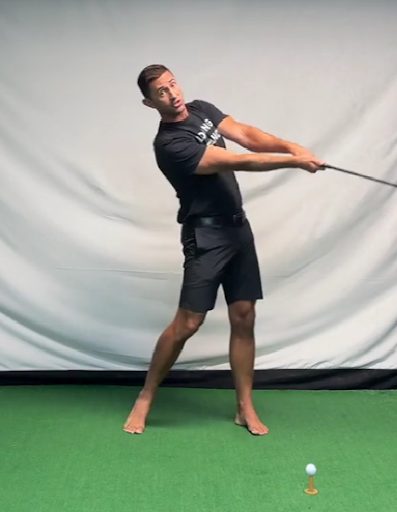
When the club comes in steep with a driver, hitting up on the ball becomes nearly impossible. The steep path forces a downward or level strike, which kills launch angle, increases spin, and produces exactly the low, spinning, short drive that does not get anyone to more greens in regulation.
The shallower the approach with the driver, the easier it becomes to deliver the club on an upward arc at impact. More launch. More carry. More distance.
The Alignment Stick Self Diagnosis
Here is the simplest and most honest way to know whether the club is being shallowed or whether it is coming in too steep.
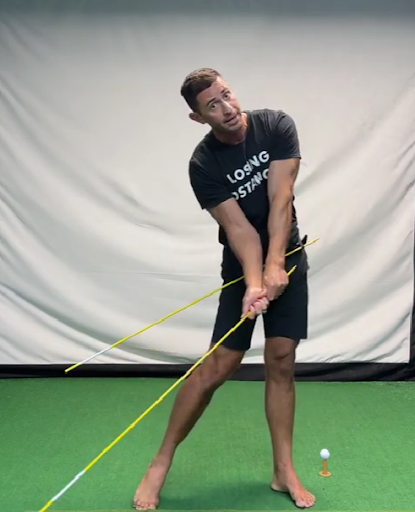
Use two alignment sticks held in the same way as the sequencing drill. One through the belt loop pointed to the right. One held across the chest at the top of the backswing.
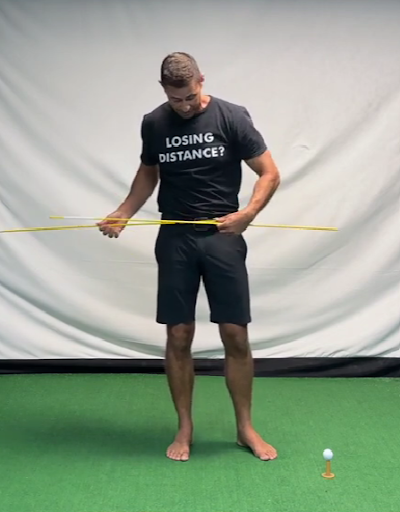
Now initiate the downswing however it feels natural. Get to impact position. Check where the sticks are.
Three possible outcomes. Each one tells the full story.
Outcome 1. The sticks touch. The upper stick is slightly behind the lower stick. This means the lower body initiated the downswing, the hips cleared before the shoulders, and the club shallowed automatically as a result.
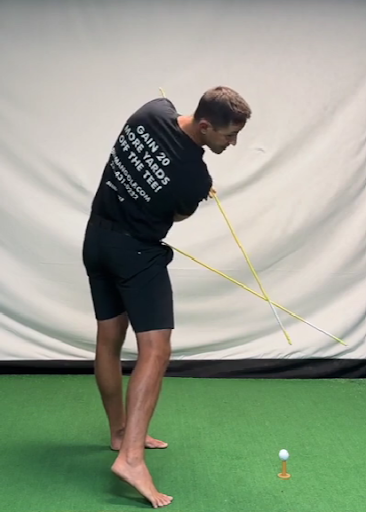
Outcome 2. The sticks do not touch. They are close but the upper stick is ahead of or even with the lower stick. The sequence is slightly off. The hips and shoulders are arriving together instead of the hips leading.
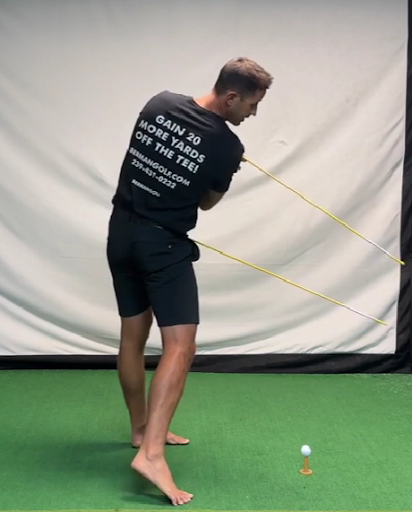
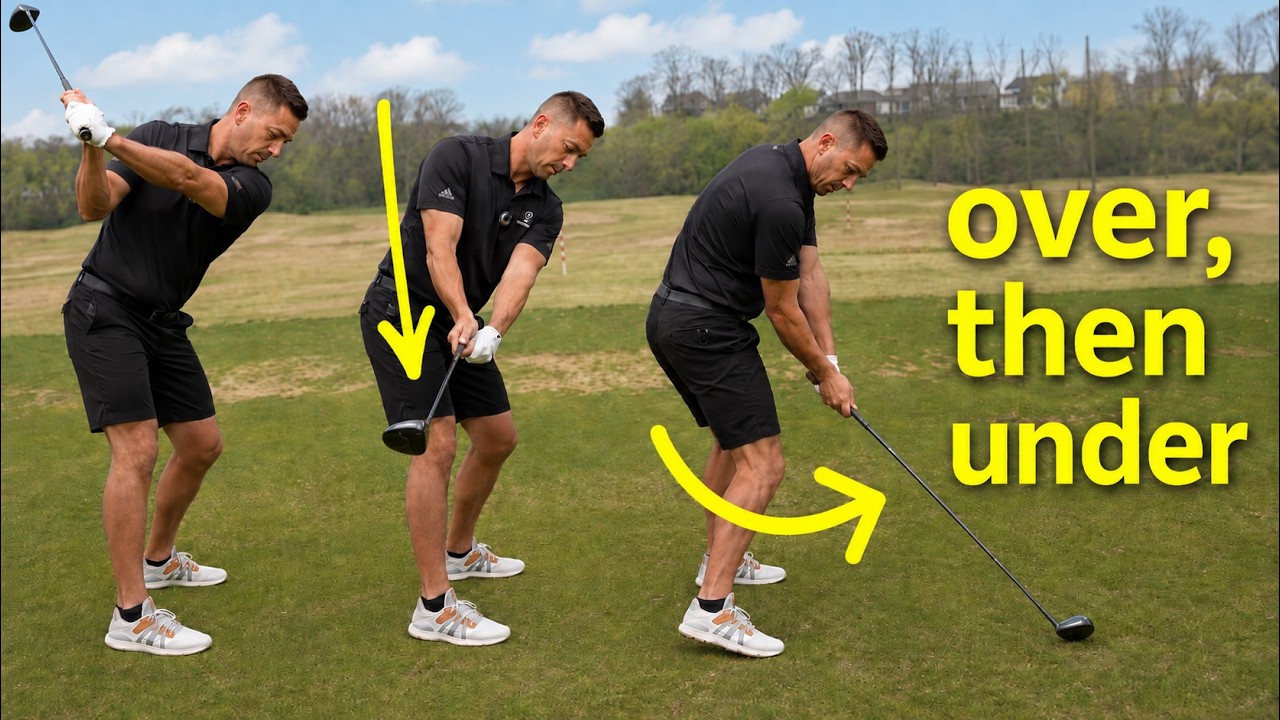
Outcome 3. The upper stick is clearly in front of the lower stick. The shoulders initiated the downswing first. The club came over the top. The path was steep and outside in. This is the most common pattern for golfers who struggle with the driver.
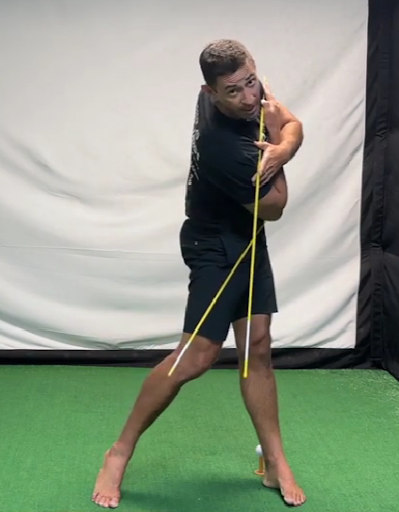
The sticks do not lie. Whatever the result is, that is exactly what has been happening in the real golf swing on every driver swing.
The Sequence That Shallows the Club
Here is the sequence that produces the correct result when the sticks are checked.
Hips move first. Core moves second. Shoulders drop in third. Wrists move last.
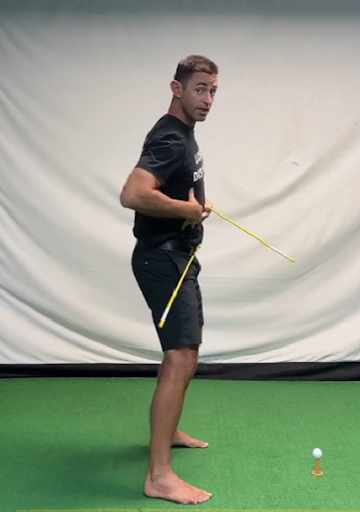
Bottom up. Not top down. When the downswing initiates from the lower body and works upward, the club shallows automatically because the hips clearing creates room for the club to drop onto a shallower plane. No conscious hand manipulation required. No trying to flatten the club. Just sequence correctly and the shallowing happens as a byproduct.
When the downswing initiates from the top, the shoulders move first, the arms follow immediately, and the club has no choice but to come steep. The steep path is not a club problem. It is a sequencing problem.
This is the same principle behind the inside out swing path drills already covered in this program. Initiate with the hips. The inside out path and the shallow club are the same result from the same correct sequence.
What Aging Golfers Feel When They Get the Sequence Right
Here is something that comes up consistently when senior golfers first experience correct sequencing with this drill.
Something fires that has not fired in years. Sometimes decades. The glutes activate because the hips are actually initiating first and loading correctly before the shoulders take over.
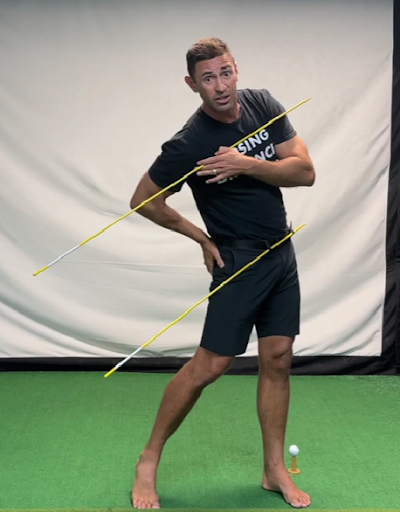
A 72 year old golfer recently got into the correct impact position during a session and immediately said the glute was on fire, almost spasming, from activation it had not been asked to produce in a very long time.
That sensation is not a problem. It is confirmation. The glutes firing means they were recruited. And glutes that cannot be recruited during the golf swing without spasming are glutes that have been too weak to contribute to the swing for years. The solution is not to stop doing the drill. The solution is to keep doing it so the glutes get strong enough to contribute properly.
For aging golfers specifically, the shallow club drill does double duty. It trains the correct sequencing pattern and it reveals which muscles need to be strengthened to sustain that pattern through a full round.
The Three Benefits That Follow
Here is what changes when shallowing is trained correctly through this drill.
Distance goes up. The upward angle of attack on the driver increases launch and carry. The same swing speed produces significantly more distance because the club is delivering the ball correctly.
Power increases. Lower body initiation puts the biggest muscles in the body, the glutes, the core, the legs, in charge of the downswing instead of the smaller arm and shoulder muscles.
Consistency improves. Body driven swings with correct sequencing repeat more reliably than arm swings because the body is a more consistent and controllable motor than the hands and arms working alone.
All three of those improvements come from the same place. The sequence. Hips first. Core second. Shoulders third. Wrists last.
Get a Free Swing Analysis
Want to know whether the driver is coming in steep right now and exactly where in the sequence the breakdown is happening?
Set the camera or phone up at two angles. One from the front, face on. One from behind, down the line. Film in slow motion. Swing the driver specifically.
Send both videos to gaindistance.com and Dr. Berman will give a free swing analysis. The first one is on him.
See exactly what the camera shows. The driver swing almost always reveals the sequencing pattern more clearly than any other club because the consequences of steep contact with the driver are so immediately visible in the ball flight.
Want a Step-by-Step Blueprint?
If this resonates and the advice out there feels designed for 25-year-old tour pros, there is a simple blueprint built specifically for senior golfers.
It breaks down:
How the aging body changes Which muscles actually produce power How to gain distance without swinging harder How to improve consistency while reducing aches and pains
It is written at a fifth-grade reading level with clear visuals and practical drills that can start immediately.
A FREE digital copy is available at: 👉 gaindistance.com
No gimmicks. Just clarity on how the body should move to play better golf for years to come.
Bringing It All Together
Shallowing the club with the driver is not a separate skill from sequencing correctly. It is the same thing with different words. Hips move first, core second, shoulders third, wrists last. That sequence creates room for the club to shallow automatically. No hand manipulation required.
The alignment stick self diagnosis tells the truth immediately. Sticks touch with the upper behind the lower, shallow and correct. Sticks not touching or upper stick ahead, steep and over the top. Fix the sequence and the shallowing follows.
For aging golfers specifically, this drill also reveals which muscles need strengthening. Glutes spasming on the first correct rep means they have not been recruited in years. Keep training the position. The muscles will get stronger and the sequence will become sustainable through a full round.
At Berman Golf, the focus is biomechanics first. Not cookie cutter swings. The goal is teaching the body how it should move, especially as it ages, so power can be generated safely and repeated under pressure.
The in-house and online coaching programs are built specifically for senior golfers who want more distance and better consistency without beating up their bodies.
For anyone tired of advice designed for tour pros and ready for a blueprint built for their body, help is available.
Because when the sequence is right and the club shallows naturally, the driver launches the ball the way it was always designed to and distance stops being a mystery.
And when the driver works properly, the game gets soooooo much easier!
If you enjoyed what you read and want to see it in action, watch the video below where Dr. Berman demonstrates the alignment stick self diagnosis and the correct sequencing for shallowing the club!