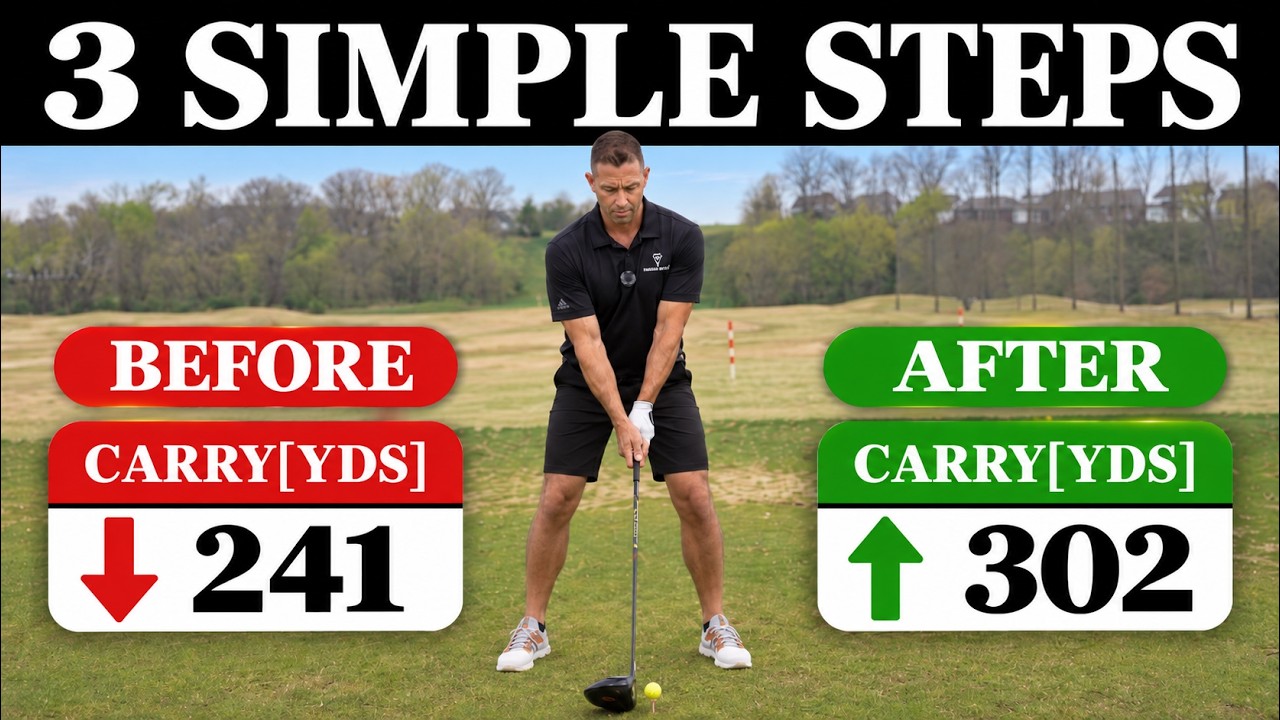
Three tips. Simple ones. Not easy—but simple.
And before you read the first one and say “that’s not me”—just know that at least 90% of the golfers I work with say the exact same thing. Every single one of them. Until I slow-motion record their swing and show it to them on screen.
So stay with me. Because one of these three is almost certainly costing you yards every single round.
At Berman Golf, this is the one-two-three punch we come back to constantly with senior golfers who are losing distance and can’t figure out why. Not complicated swing changes. Not new equipment. Three fundamental things that, when corrected, give the body back the ability to transfer real power into the golf ball.
Tip #1: Stop Trying to Get Parallel
Here’s the one everyone pushes back on first.
You’re wrapping the club around your neck. You’re swinging past parallel. And you think more backswing means more distance.
It doesn’t. For senior golfers, it does the exact opposite.
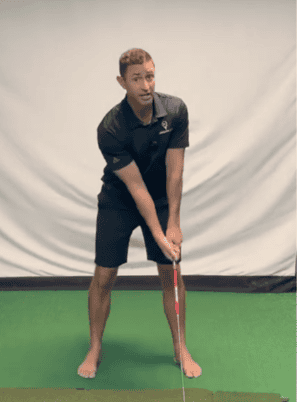
Here’s the biomechanics of why.
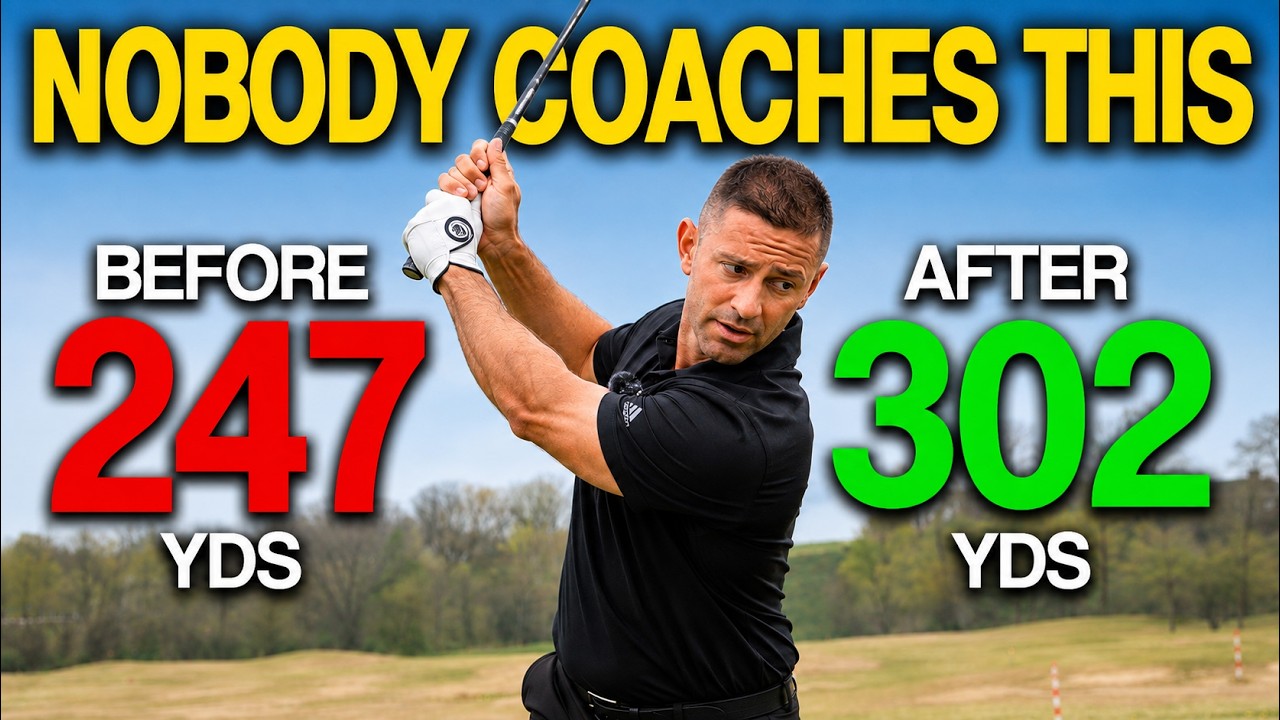
As flexibility and mobility decrease with age—which happens to everyone—the instinct is to force a bigger backswing to compensate for lost distance. But that forced extra range of motion comes at a cost. To get the club that far back, the body has to disconnect. The lead elbow chicken wings. The muscles that were loaded and engaged disengage. And now at the top of the backswing, you’ve got a long swing and no power loaded into it.
The more muscles you keep engaged through the transition from backswing to downswing, the more power you generate. The more power you generate, the more you can transfer into the ball. And the only option on planet Earth at that point is for the ball to go farther.
A shorter, connected backswing with every muscle still loaded beats a long, loose backswing every single time.
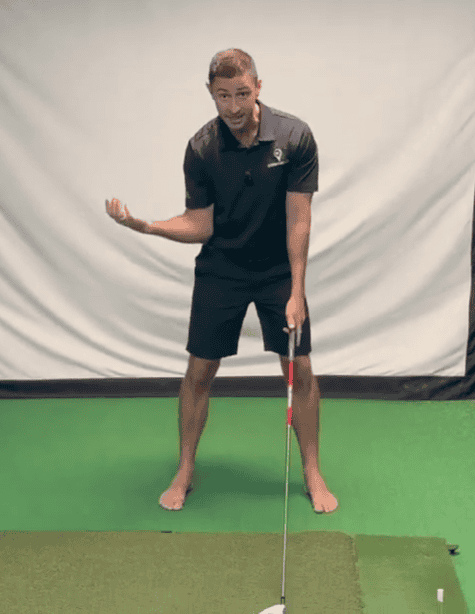
Here’s what to feel. Keep that lead elbow tucked and connected. As soon as it chicken wings or floats away from the body, you’ve lost the connection—and you’ve lost the ability to transfer anything meaningful into the shot.
Record yourself from down the line in slow motion. Ninety percent of you are going to see the club going significantly further than you thought. The backswing that feels short is almost always the right one.
Tip #2: Engage Your Core—And Keep It Engaged
This one should be obvious. It isn’t.
You might be doing core exercises. You might have done planks this morning. But if you’re not engaging your core at address and holding it through the entire backswing, none of that gym work is showing up in your golf swing.
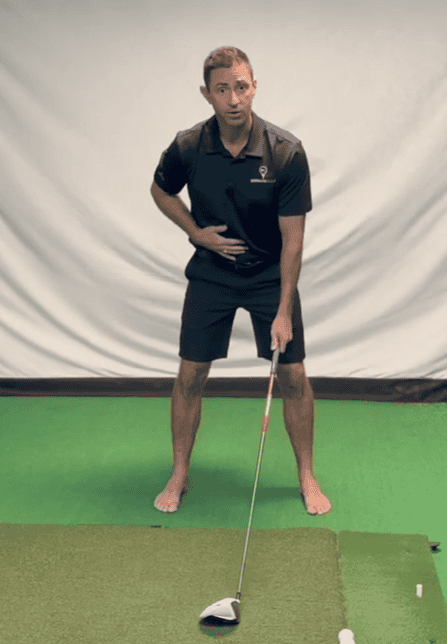
Here’s how to turn it on.
At address, pull the belly button in toward the spine. Just pull it in. Keep breathing—the core should be engaged without holding your breath. Now go into the backswing.
Here’s where most senior golfers lose it.
Somewhere near the top of the backswing, the desire to get just a little more turn takes over. The core releases. The lower back hyperextends into that reverse C position. And all the stability that was built at address evaporates right when it’s needed most.
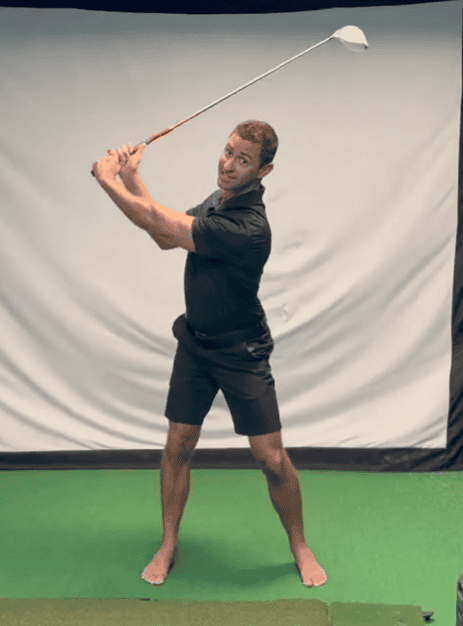
What you should feel at the top of the backswing is tension in your midsection stopping you from going any further.
Not tight in the arms. Not tight in the hips. Tight right in the core—like a coil wound as tight as it can go without releasing. That tension is the core telling you the backswing is done. Let that be your break point. Let the core stop the backswing instead of letting the backswing override the core.
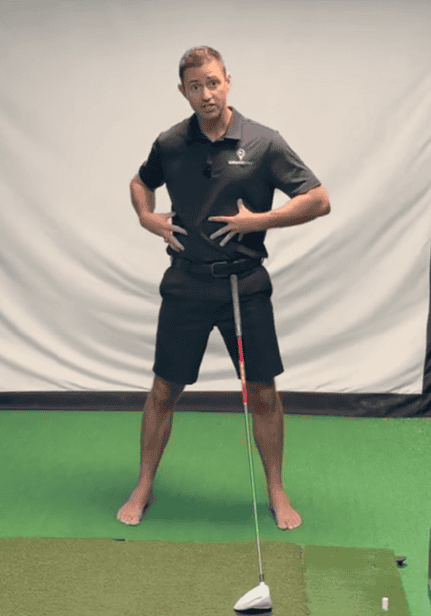
When the core stops the backswing, the transition is clean. The power that was loaded stays loaded. And the downswing has something real to unwind into.
Tip #3: Stay on the Inside of the Trail Foot
This is the reason so many of these drills and videos are done barefoot.
And it’s the tip that directly connects to whether your glutes fire or don’t.
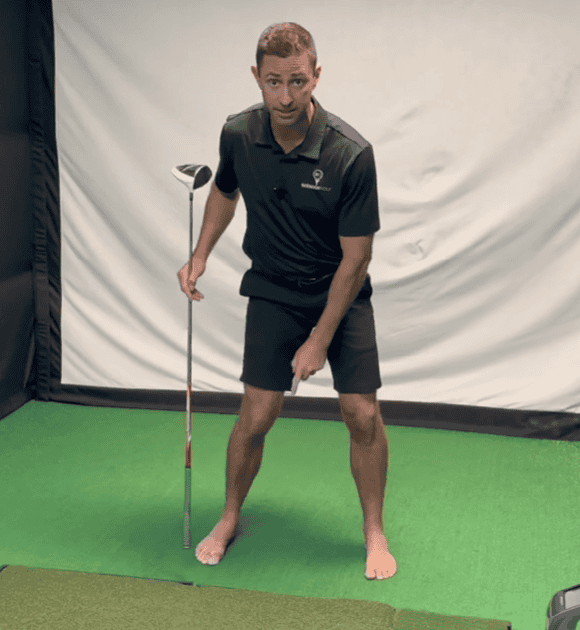
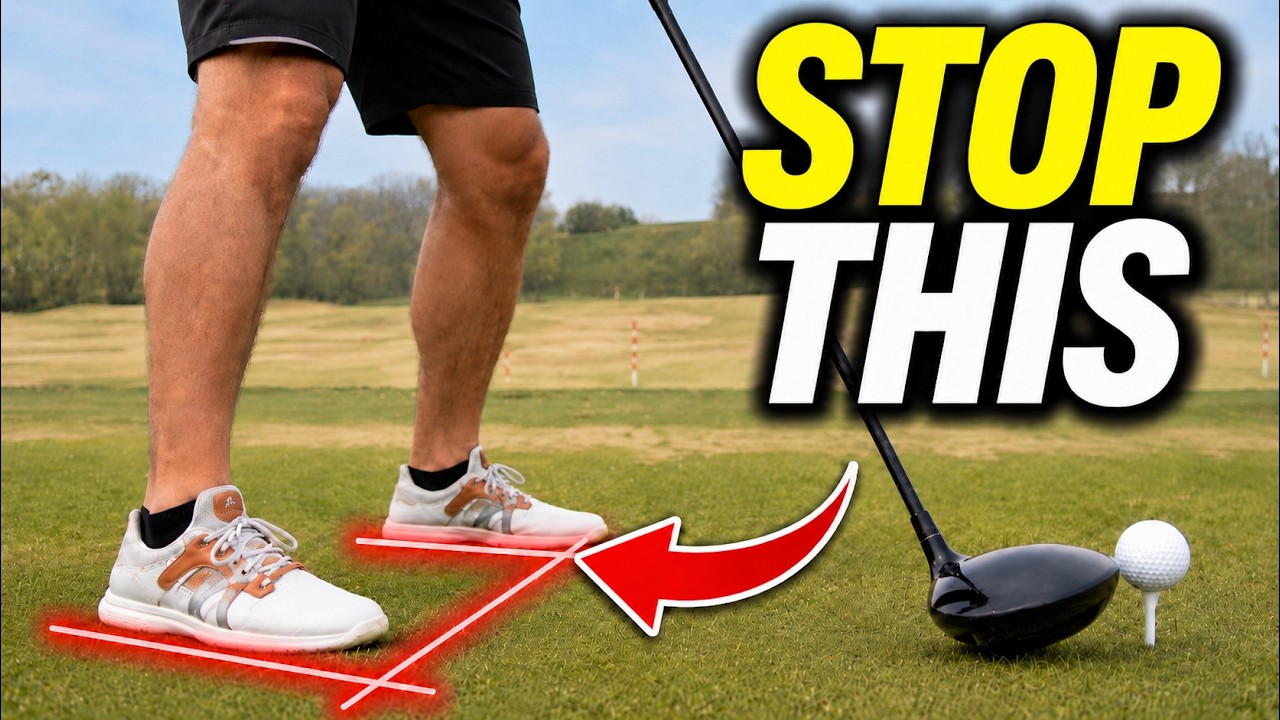
At the top of the backswing, the trail foot rolls to the outside. It happens subtly. It doesn’t feel dramatic. But the moment that weight rolls out—the moment that foot goes to its outside edge—it is physically impossible to engage the glutes.
Not difficult. Not less effective. Impossible.
And the glutes are where the power and distance come from. Lose the glutes and you’re hitting the ball with whatever’s left. Arms. Shoulders. Back. None of those can produce what the glutes can—and all of them hurt when they’re asked to try.
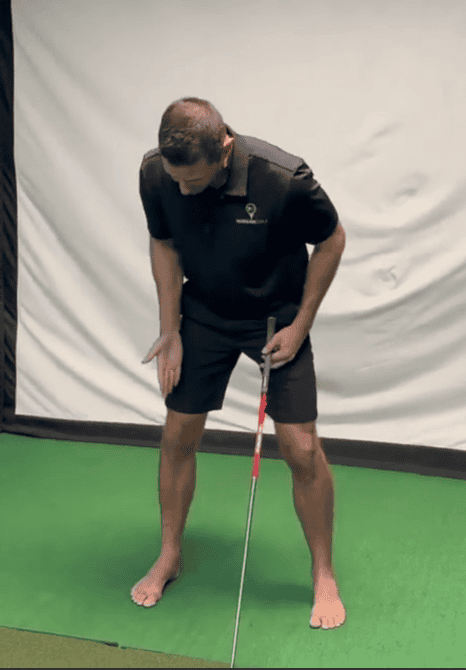
Here’s what correct feels like.
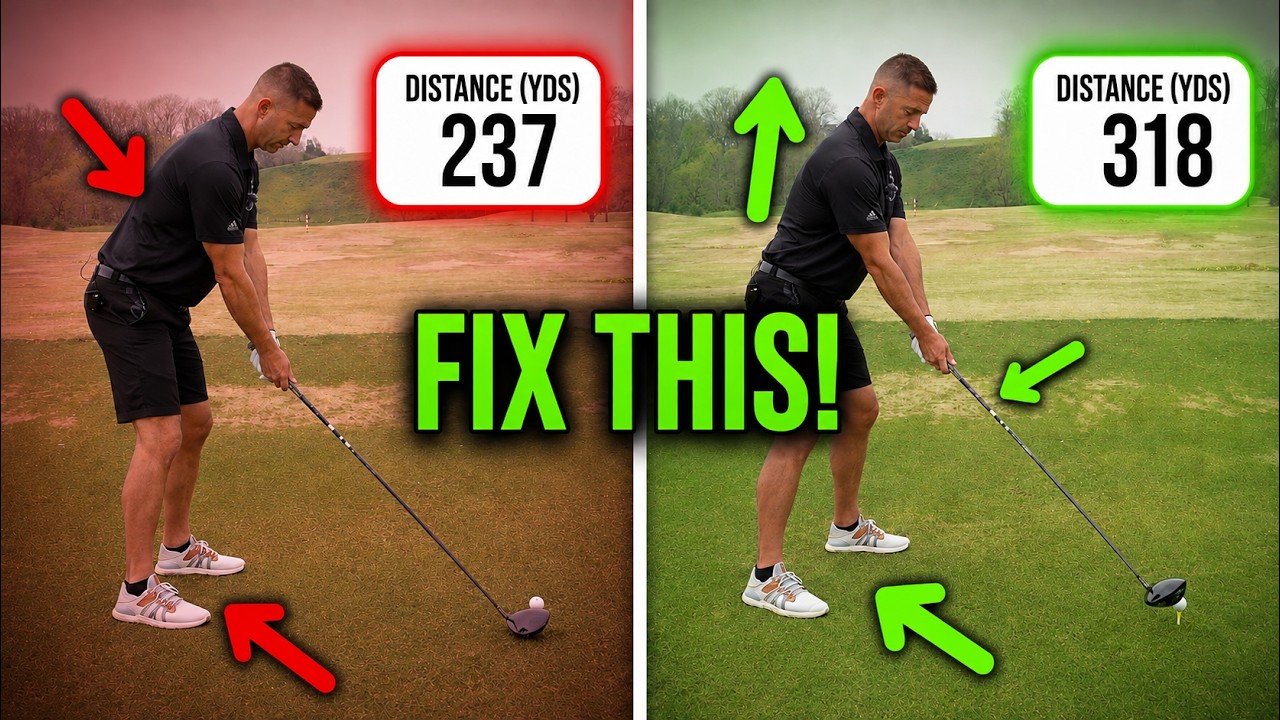
Keep the pressure on the inside of the trail foot throughout the entire backswing. Don’t let the knee buckle inward—that’s the other extreme and it’s just as bad. The goal is inside foot pressure with a stable, flexed knee.
That only happens when the muscles in the arch of the trail foot are awake and working. That’s why barefoot practice matters—the foot muscles wake up when there’s no shoe absorbing the sensation.
When the pressure stays on the inside of the foot, the trail knee stays flexed. When the trail knee stays flexed, the glutes fire. When the glutes fire, the core is already engaged from tip number two. And when the core and glutes are both working at the top of the backswing, the power chain is complete.
The One-Two-Three Punch
Here’s what it looks like when all three come together.
Backswing stays connected—lead elbow tucked, no chicken wing, no wrapping past parallel. Core engaged at address and held tight through the transition—that midsection tension stopping the backswing at the right point. Inside foot pressure keeping the trail knee flexed and the glutes firing like crazy.
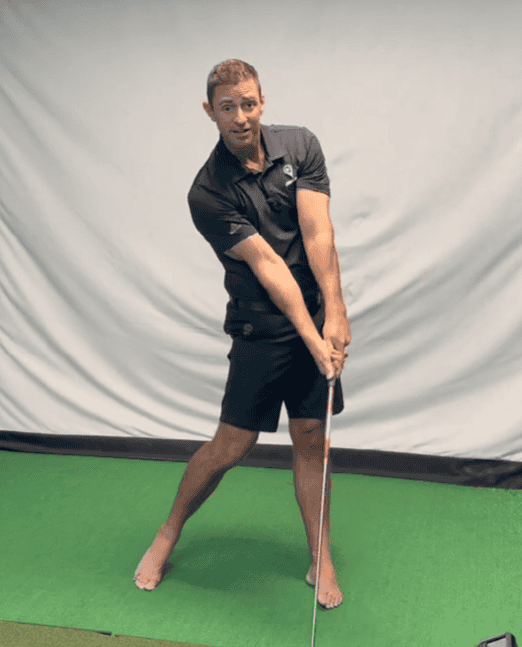
Now deliver that into the golf ball.
The only option on planet Earth at that point is for the ball to go farther.
That’s not a coaching guarantee. That’s physics. Connected muscles, loaded glutes, engaged core—the energy has to go somewhere. And with a proper release through impact, it goes into the ball and down the fairway.
Why Senior Golfers Specifically Need These Three
Here’s why this matters more as the body ages.
A younger body can get away with over-swinging because it has the speed and flexibility to recover. The muscles disengage at the top and the athlete can re-engage them fast enough to still generate power.
Senior bodies can’t do that. The recovery speed isn’t there. When the muscles disengage at the top of an over-swing, they stay disengaged. The downswing happens without them. And the distance keeps dropping.
The solution isn’t to swing harder or get a bigger backswing. The solution is to keep more muscles engaged through a shorter, connected backswing—and let the body deliver everything it actually has into the shot.
Less is genuinely more. And these three tips are the fastest path to proving it.
Want a Step-by-Step Blueprint?
If this resonates with you and you’re tired of advice designed for 25-year-old tour pros, I put together a simple blueprint specifically for senior golfers.
It breaks down:
- How the aging body changes
- Which muscles actually produce power
- How to gain distance without swinging harder
- How to improve consistency while reducing aches and pains
It’s written at a fifth-grade reading level with clear visuals and practical drills you can start immediately.
You can download a FREE digital copy at: 👉 gaindistance.com
No gimmicks. Just clarity on how your body should move so you can play better golf for years to come.
Bringing It All Together
If your distances have been dropping and nothing has fixed it, start here.
Stop wrapping the club past parallel and losing connection. Engage the core at address and let the midsection tension stop the backswing instead of overriding it. Keep pressure on the inside of the trail foot so the glutes stay loaded through the entire backswing.
Three tips. One at a time or all three together. Either way, the power chain that’s been leaking starts to close up—and the ball starts going farther with less effort than you’ve been putting in.
At Berman Golf, we focus on biomechanics first. We don’t teach cookie-cutter swings. We teach you how your body should move—especially as it ages—so you can generate power safely and repeat it under pressure.
Our in-house and online coaching programs are built specifically for senior golfers who want more distance and better consistency without beating up their bodies.
If you’re tired of advice designed for tour pros and ready for a blueprint built for your body, we’re here to help.
Because when connection, core, and foot pressure all click together, the power has nowhere to go but into the ball.
And when the power goes into the ball, the game gets soooooo much easier!