There is a lot of noise out there about the golf swing.
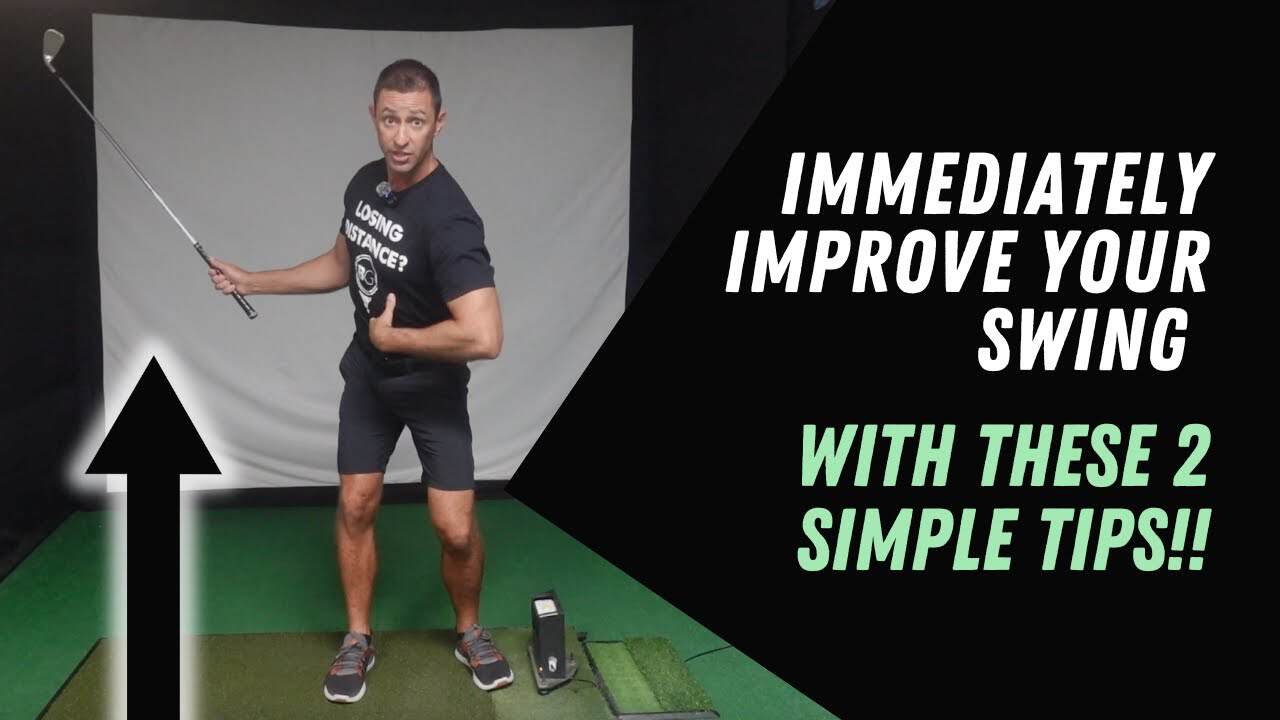
Inside out path. Club path. Attack angle. Hundreds of swing thoughts competing for attention at the exact moment a person is trying to hit a ball. It is too much. So here it is at a fifth grade reading level. Two things. Not a hundred things. Two.
At Berman Golf, after working with hundreds, now thousands, of golfers nationally and internationally, these two fixes come up again and again as the fastest return on investment for better ball striking and more distance. Not theory. Not a hunch. A pattern that holds across nearly every senior golfer walked through this process.
Tip 1, Slow Down the Backswing
Here is something worth repeating because it surprises almost everyone who hears it.
Not one single person, across hundreds and now thousands of golfers worked with over the years, has ever needed to speed up their backswing. Not one. Zero.
What almost everyone needs is the opposite. Slow it down.
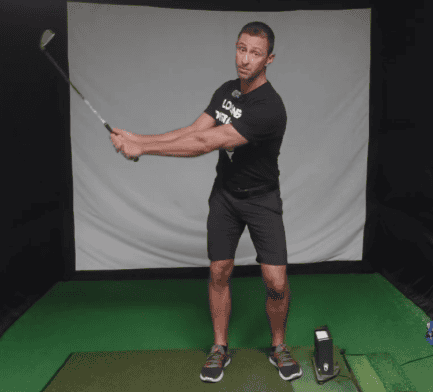
Here is the saying that started this whole approach. The slower you go into the backswing, the farther the ball can go. That sounds backwards. It is not.
Here is the reasoning behind it. The slower the backswing, the more muscles get recruited to create that motion. The more muscles involved, the more reproducible the movement becomes. The more reproducible it is, the more consistency shows up on the course. And the more muscles used going into the backswing, the more power available to release coming down.
Slow down the backswing. Exaggerate it. Make it so painfully slow it feels uncomfortable.
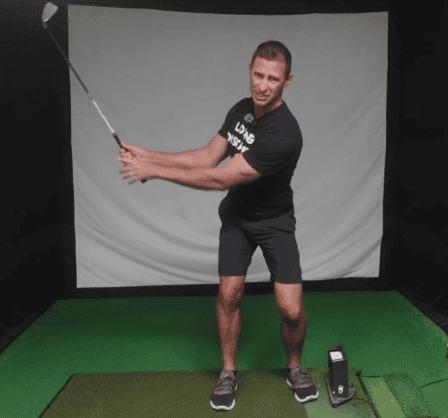
That single change starts improving consistency and distance immediately, simply because of how the body recruits muscle when speed is removed from the equation. The golf swing is hard enough without adding unnecessary speed to a part of the swing that does not need it.
Tip 2, Initiate the Backswing With the Belt Buckle
Here is the second tip, and it is just as simple to understand even if it takes repetition to make automatic.
Most golfers initiate the backswing with their hands. If a golfer is in their twenties or thirties, that approach can work, because youth allows the core tension and whippy unloading that hand initiation requires. But for anyone older than that, hand initiation works against the body instead of with it.
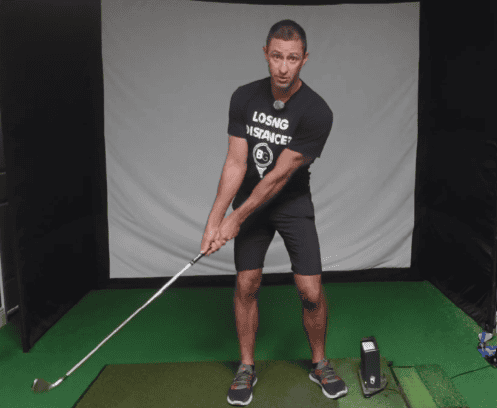
Here is what it should look like instead. The hands and the belt buckle move at the same time. Not hands moving first with the belt buckle catching up a half second later, which is what most golfers do without realizing it. Together. From the very first inch of the takeaway.
Why This Matters, The Brain Decides Who Is in Charge
Here is the biomechanical reason this second tip carries so much weight.
Whatever moves first, hands or body, the brain immediately decides that is the primary mover for the entire swing.
If the hands move first, the brain locks that in. Hands are now in charge. And it does not matter how much effort goes into trying to initiate the downswing with the body afterward. The brain already made its decision at the start of the backswing, and the golf swing happens in roughly a second and a half. There is no time to renegotiate with the brain mid swing.
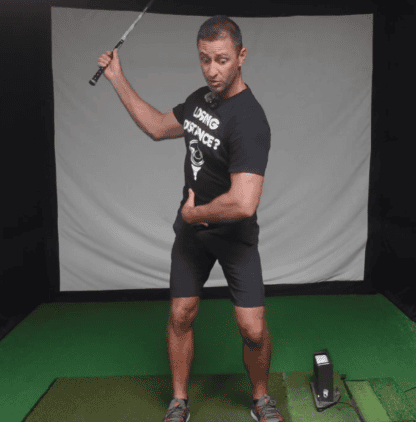
That is exactly why so many golfers flip at the ball instead of leading with the body coming down. The brain was told the hands were in charge, so the hands take over again on the way through, flipping the club at impact instead of the body leading it.
Here is a simple way to know if this is happening. Flippers cannot leave a divot. It is not physically possible to take a divot while flipping at the golf ball. If divots have always been a mystery, this is almost always the reason why.
Initiate the backswing with the belt buckle. Exaggerate it if needed. Train the brain to register the body as the primary mover from the very first moment of the swing, so the belt buckle naturally leads the way back down at the top instead of getting flipped at.
Putting Both Tips Together
Here is what changes when both tips are applied at the same time.
Slow the backswing down, which recruits more muscle and builds consistency and power. Initiate that slowed down backswing with the belt buckle moving together with the hands, which tells the brain the body is the primary mover.
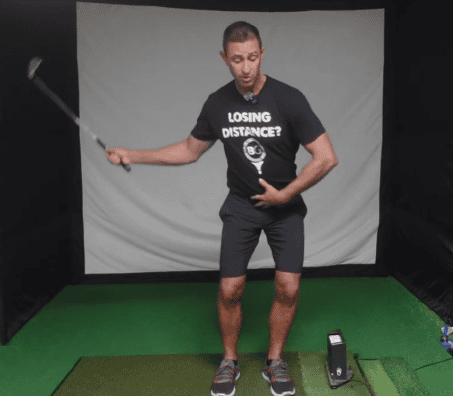
Slow and body led. Those two words solve more inconsistency and lost distance than almost any other adjustment available. Not because the swing becomes mechanically perfect, but because the brain finally has clear, unambiguous signals to work from instead of a rushed, hands first motion it cannot reliably repeat.
Get a Free Swing Analysis
Want to know exactly what the backswing looks like right now, speed and initiation included, before trying to fix it?
Set the camera or phone up at two angles. One from the front, face on. One from behind, down the line. Film in slow motion. Swing.
Send both videos to gaindistance.com and Dr. Berman will give a free swing analysis. The first one is on him.
See exactly what the camera shows, not what the brain thinks is happening. Then there is clarity on whether the backswing needs to slow down, needs better initiation, or both.
Want a Step-by-Step Blueprint?
If this resonates and the advice out there feels designed for 25-year-old tour pros, there is a simple blueprint built specifically for senior golfers.
It breaks down:
How the aging body changes Which muscles actually produce power How to gain distance without swinging harder How to improve consistency while reducing aches and pains
It is written at a fifth-grade reading level with clear visuals and practical drills that can start immediately.
A FREE digital copy is available at: 👉 gaindistance.com
No gimmicks. Just clarity on how the body should move to play better golf for years to come.
Bringing It All Together
Two tips. Not a hundred. Slow the backswing down so more muscle gets recruited and consistency improves. Initiate that backswing with the belt buckle moving together with the hands so the brain registers the body as the primary mover.
That second tip is what allows the downswing to actually be led by the body instead of flipped at by the hands. And that is what makes a real divot possible.
At Berman Golf, the focus is biomechanics first. Not cookie cutter swings. The goal is teaching the body how it should move, especially as it ages, so power can be generated safely and repeated under pressure.
The in-house and online coaching programs are built specifically for senior golfers who want more distance and better consistency without beating up their bodies.
For anyone tired of advice designed for tour pros and ready for a blueprint built for their body, help is available.
Because when the backswing slows down and the body leads it, ball striking and distance improve almost immediately.
And when ball striking improves, the game gets soooooo much easier!