Here’s what I want you to do before you read this.
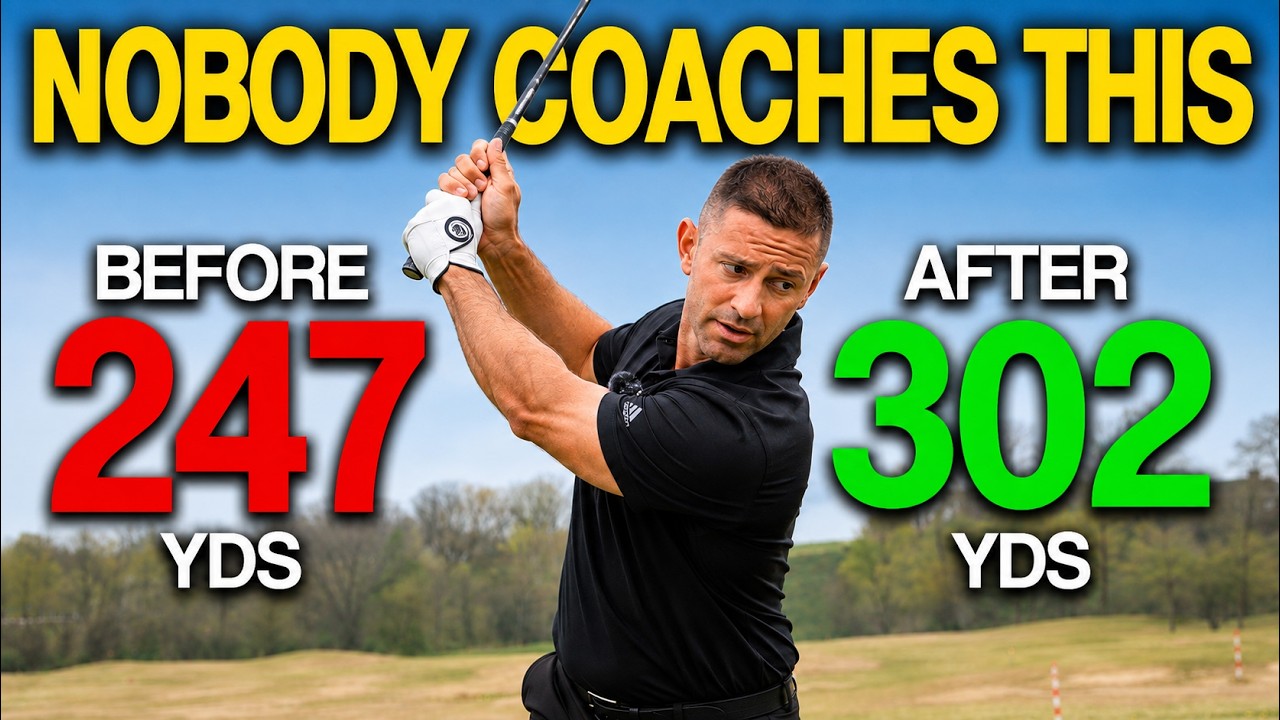
Take your phone. Set it up on slow motion. Have someone hold it at waist height pointing at you from down the line. Hit a shot with your driver. Then pause the video at the top of your backswing.
Look at your lead elbow.
Is it straight—or is it bent and wrapping the club around your head?
I already know what you’re about to say. That’s not me. I don’t do that.
And I already know what the video is going to show you. Because at least 90% of the golfers I work with—without exception, across every age and skill level—say exactly what you just said. And then they see the video.
This one mistake is killing your distance. Killing your consistency. And over time, killing your back. Here’s what’s happening, why it happens, and the exact drill that fixes it.
What the Bent Lead Elbow Is Actually Doing to Your Swing
Here’s the chain reaction that starts the moment that lead elbow collapses at the top.
The arc shrinks. The club gets wrapped around the head instead of extending away from the chest. And from that position, the only way to start the downswing is to cast.

Casting is the golf equivalent of throwing a fishing line. You’re whipping the club down from a disconnected position and hoping momentum gets the ball somewhere. Maybe the bait gets there—but there’s no power behind it. You’re not compressing anything. You’re just releasing early and praying.
When you cast, two things are guaranteed. You lose the lag that was supposed to deliver club head speed at impact. And you lose any chance of using the core and glutes to drive the downswing—because the sequence is already broken before the downswing even starts.
And here’s why the bent elbow happens in the first place.
When distance starts dropping, the instinct is to get more. More backswing. More turn. More range of motion. So the body does whatever it takes to get the club back farther—and the path of least resistance is the lead elbow collapsing and the club wrapping around the head.

It feels like a bigger backswing. It looks like a bigger backswing. But it’s not. It’s just a broken position that removes all the power from the downswing and forces the casting move that kills distance.
More range of motion with a broken elbow equals less power. Every time.
Video Yourself First
Before you do anything else—before you try the drill, before you make any adjustments—video your swing.

Set up the slow motion camera from down the line at waist height. Hit a driver shot at real speed. Then pause the video at the top of the backswing.
Look at the lead elbow. Look at how high the hands are. Look at whether the club is wrapped around the head or extended away from the chest.
If you’re in the 90 to 95 percent—and statistically you almost certainly are—you’re going to see something that surprises you. Because the brain doesn’t feel the elbow collapsing. The brain is focused on the result, not the position. The camera doesn’t lie.
See it first. Then fix it. That’s the order.
The Fix: The Split Grip Drill
Here’s the drill that trains the brain and body out of the over-swing and back into the connected, powerful position.
Set up with your driver. The only change from your normal setup is this: slide your trail hand halfway down the grip—halfway onto the shaft. That’s the split grip.

Now go slowly into the backswing. Initiate with the belt buckle—not the hands. And as the backswing develops, think about one thing only:
Push the lead knuckles away from the target.
Not around the body. Not up in the air. Away from the target—directly back along the target line.

Here’s what the split grip is doing mechanically.
The trail hand positioned on the shaft creates a fulcrum. It gives the trail arm leverage to help push the lead elbow straight—so the muscles responsible for keeping that elbow extended don’t have to fight it alone. The split grip makes it physically easier to do the right thing.
And the knuckles-away-from-target thought keeps the club moving on the correct path—extending away from the chest instead of wrapping around the body. Extension is what maintains the arc. Extension is what keeps the muscles engaged. Extension is what gives you a backswing with real power loaded into it.

You should feel the core engaged during this drill. If you don’t—pull the belly button in and push again. The core engagement is what tells you the right muscles are working. When the core is on and the knuckles are pushing away, you’ll feel the true shoulder turn that was hiding behind years of arm-wrapping.
For golfers over 50—this is especially difficult at first. You’re asking muscles to work in a pattern they haven’t used in years. Do it slowly. Exaggerate it. Let the brain build the pathway.
What Changes When You Stop Over-Swinging
Here’s what the corrected position actually produces.
Ball contact gets dramatically better. Distance improves—not because the backswing got bigger, but because the muscles stayed engaged all the way through the transition and delivered more power into the downswing.

The back stops hurting. Because the reverse C arch and the disconnected wrapping that was loading the lumbar spine every single swing gets replaced by a connected, stable backswing that keeps the spine in a safe position.
And the consistency goes up—because the connected position repeats. The wrapped position doesn’t. Every time the elbow collapses a different amount, the downswing has a different problem to solve. A consistent backswing produces a consistent downswing. That’s how repeatable ball striking is built.
The Progression: Practice Before the Range
Do this drill at home before you take it to the range.
Split grip. Slow motion backswing. Lead knuckles away from the target. Belt buckle initiating. Core engaged. Stop at the top and check the elbow—is it straight? Are the hands extended away from the chest?

Do it ten times. Twenty times. Slow. Without a ball. Without a target. Just the position.
Then take it to the range with the split grip still in place. Hit slow shots. Check the video again. Compare where the elbow is now versus where it was before.
Once the split grip position feels natural and consistent, go back to your normal grip—and see if the pattern has transferred. Most golfers find that even a week of consistent split grip work changes what the top of the backswing looks and feels like with a normal grip.
Want a Step-by-Step Blueprint?
If this resonates with you and you’re tired of advice designed for 25-year-old tour pros, I put together a simple blueprint specifically for senior golfers.
It breaks down:
- How the aging body changes
- Which muscles actually produce power
- How to gain distance without swinging harder
- How to improve consistency while reducing aches and pains
It’s written at a fifth-grade reading level with clear visuals and practical drills you can start immediately.
You can download a FREE digital copy at: 👉 gaindistance.com
No gimmicks. Just clarity on how your body should move so you can play better golf for years to come.
Bringing It All Together
Video your swing first. See what’s actually happening at the top. Because what the brain feels and what the camera shows are almost always two different things.
Then fix it with the split grip drill. Trail hand halfway down the shaft. Slow backswing. Lead knuckles pushing away from the target. Belt buckle initiating. Core engaged. Elbow straight at the top.
Do that consistently—at home, in slow motion, before you hit balls—and the wrapped over-swing that has been costing you distance, consistency, and back health starts to disappear.
At Berman Golf, we focus on biomechanics first. We don’t teach cookie-cutter swings. We teach you how your body should move—especially as it ages—so you can generate power safely and repeat it under pressure.
Our in-house and online coaching programs are built specifically for senior golfers who want more distance and better consistency without beating up their bodies.
If you’re tired of advice designed for tour pros and ready for a blueprint built for your body, we’re here to help.
Because when the lead elbow stays straight and the arc stays wide, the power stays in the swing.
And when the power stays in the swing, the game gets soooooo much easier!