Posture and shoulder turn. You almost can’t have one without the other.
If you’ve got rounded shoulders and a collapsed chest at address, this is how much true shoulder turn you’re going to get—almost none. Because the thoracic spine is locked. And a locked thoracic spine cannot rotate.
But when the posture is right—chest up, upper back mobile, everything stacked—the shoulder turn opens up dramatically. Without forcing it. Without wrapping the club around your neck. Without compensation.
The problem is that for most senior golfers, this isn’t something that changes overnight. It happened gradually—30 years of sitting at a desk, driving, doing everything hunched forward—and it’s going to take consistent, intentional work to undo.
But here’s the good news. Two simple moves, two to three times a week, and a year from now your shoulder turn and your posture can look dramatically different.
At Berman Golf, this is the mobility work we put on everyone’s regular to-do list. And it starts with an honest assessment of where you actually are right now.
First: Assess Your Thoracic Mobility Right Now
Before you do anything else, find out how mobile your thoracic spine actually is.
Here’s the test.
Stand with your butt against the wall. Feet a few inches out from the wall. Back flat against the wall. Now—without lifting your chin up or reaching your head backward—try to get the back of your head to touch the wall.
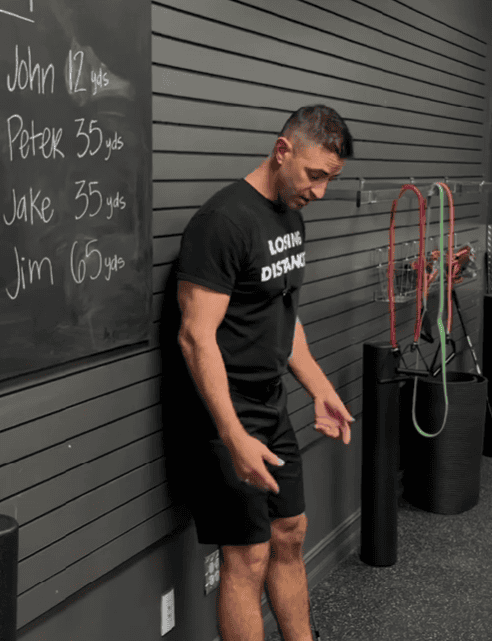
Can you do it?
If you cannot get the back of your head to the wall without raising your chin to get there, your thoracic spine does not have enough mobility. That’s not an opinion. That’s the test telling you directly that this part of your back is not flexible enough.
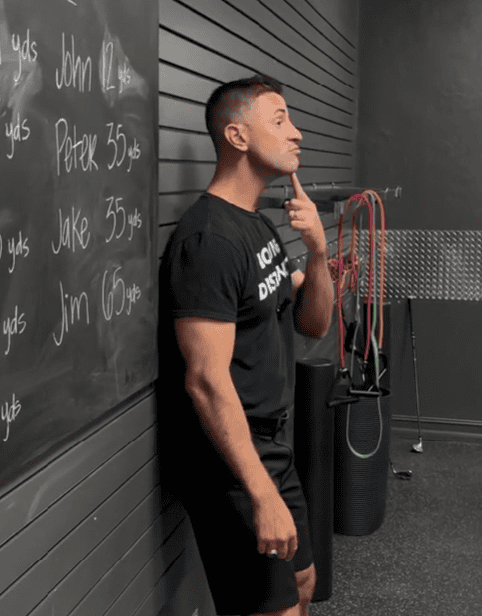
And that stiffness in the upper back—right there—is what’s blocking your shoulder turn at address before you ever swing the club.
The good news: it’s fixable. Here’s how.
Step One: Lay on the Foam Roller and Let the Front Open Up
This is where most people want to jump straight to exercises. Don’t. There’s a step that has to come first.
Before you can mobilize the back, you have to stretch the front.
Years of sitting—at a desk, in a car, on a couch—have shortened and tightened the soft tissue structures on the front of the chest. The pectorals. The anterior shoulder capsule. All of it pulled tight and forward.
If you try to mobilize the thoracic spine without first releasing the front, you’re working against yourself. The tight front is pulling the back into that rounded position constantly. You’re fighting it the whole time. Working harder, not smarter.
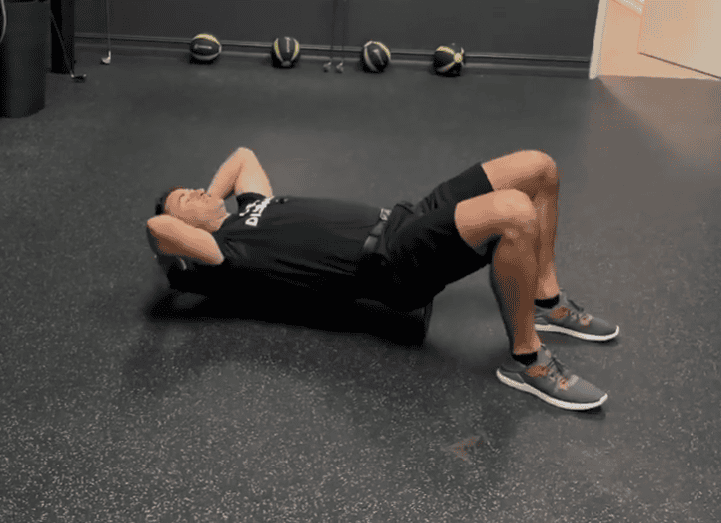
So first—lay on the foam roller.
Place it crosswise across your upper back. Head supported—if you can’t rest comfortably without your head reaching backward, roll up a towel and place it under your head. The goal is to just lay there. Comfortably. Without straining.
Watch TV. Listen to something. Do anything. Just stay there for five minutes.
Gravity does the work. The weight of your own body pressing down through the foam roller gently opens up the chest, elongates the soft tissue in the front, and begins creating space for the thoracic spine to actually move.
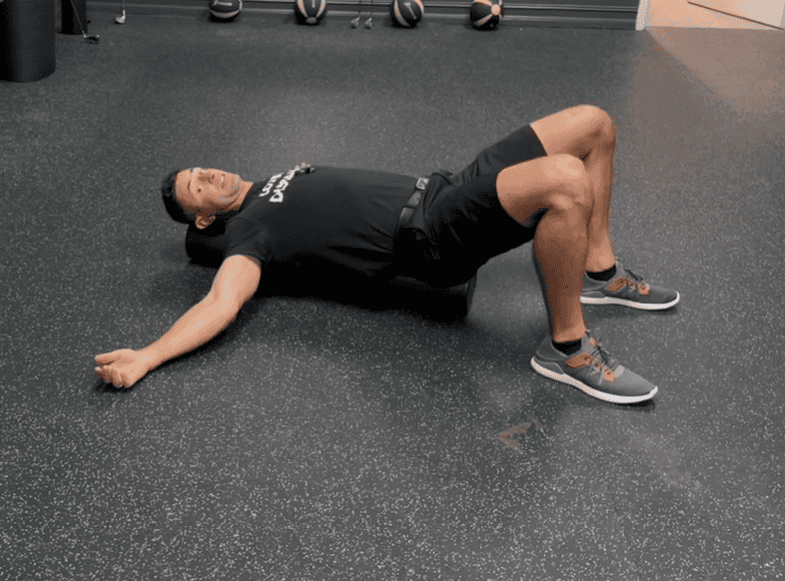
It should feel like a good stretch. Never sharp pain. Just a deep, satisfying opening of everything that has been pulled tight for years.
Five minutes. Two to three times a week.
Step Two: Activate the Muscles That Hold the Posture
Here’s the critical piece that most people miss.
Stretching opens the door. But if you don’t activate the muscles responsible for holding you in the better position, you walk back out of that door five minutes later and the body snaps right back to where it was.
You’ve got to stretch it and then activate it. In that order. Every time.
As soon as you get up off the foam roller, do this.
Stand tall. Palms facing up. Elbows at your sides. Imagine you’re holding two full glasses of your favorite beverage—filled to the very top, about to overflow. Now bring your hands out to the sides as far as you can—without spilling a drop.
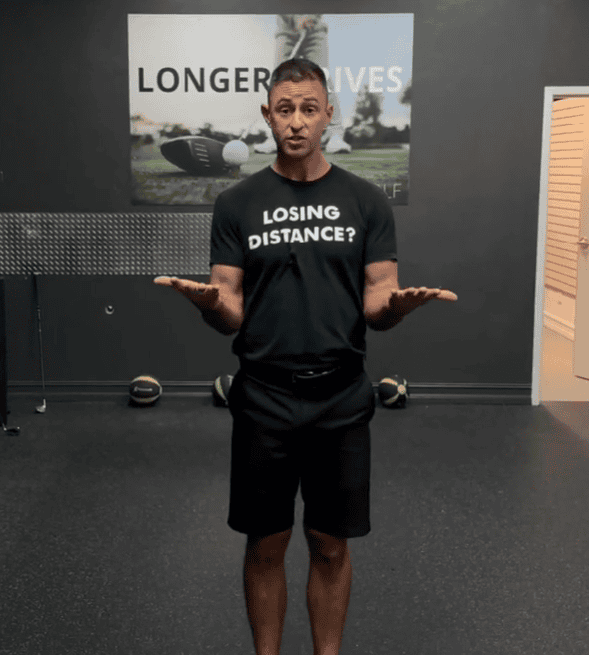
That means no wrist rotation. Palms stay up the entire time. The hands move back—not just out, but back—and you’ll start to feel something you might not have felt in a while.
The muscles between your shoulder blades lighting up.
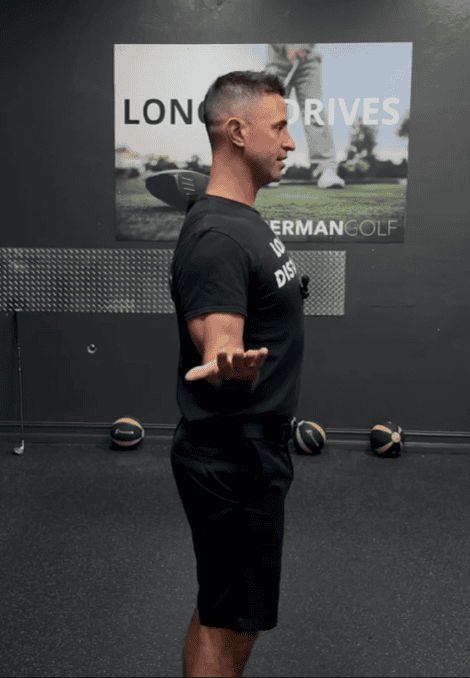
Watch what happens to the chest as the hands go back. It lifts. Naturally. Not because you’re arching or forcing it—because the muscles pulling the shoulder blades together are doing what they were designed to do. This is the posture your body is capable of. These are the muscles responsible for maintaining it.
When you feel those mid-back muscles working—hold it. Try to hold for thirty seconds. It should be on fire. If it’s not burning, you haven’t gone far enough.
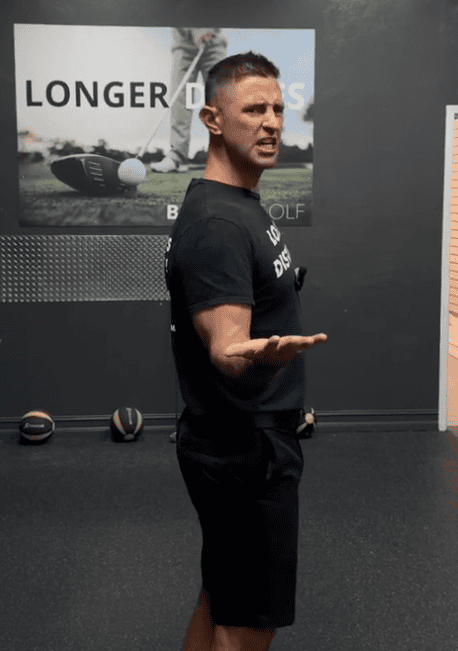
These are the muscles that keep the thoracic spine in the position that allows it to rotate. When they’re strong and awake, the shoulder turn improves automatically. When they’re asleep—which they are in most senior golfers after years of rounded sitting—the posture collapses and the shoulder turn goes with it.
Two moves. Stretch the front. Activate the back. Done.
Why This Is a Long Game—And Why That’s Fine
Here’s the thing about mobility work that nobody wants to hear: it didn’t get tight overnight.
Your posture didn’t collapse in one day. It happened over 20, 30 years of habits and gravity. And expecting it to reverse in a week is like expecting to learn a new language in an afternoon.
But here’s the reframe that changes everything.
If you’re not planning on dying in the next year—and you want to keep golfing—why wouldn’t you plan on having more shoulder turn a year from now than you do today?
Two to three times a week. Foam roller for five minutes. Palms-up activation for thirty seconds. That’s all.
Do that consistently for 52 weeks and a year from now you’ll be dramatically closer to the posture and the shoulder turn that unlocks the swing you’ve always been capable of. Maybe even all the way there.
The investment is small. The return—in distance, in consistency, in how your body feels after a round—is significant.
Why Posture Unlocks Everything Else
Here’s the bottom line from a biomechanics standpoint.
When you’re rounded at the shoulders and collapsed in the chest, the thoracic spine is locked. It cannot rotate. So you compensate. The club gets wrapped around the neck. The low back takes the rotation that the thoracic spine should be doing. The shoulders overload. The power goes somewhere it was never supposed to go.
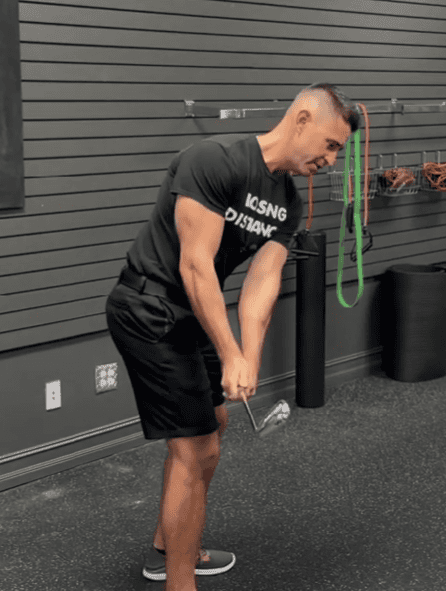
When the posture is right—chest up, thoracic spine mobile, mid-back muscles engaged—the rotation is free. True shoulder turn, not compensated turn. The kind that loads the body, fires the glutes, engages the core, and delivers the club to the ball with real power behind it.
It’s simple. It is not easy. But it is absolutely worth doing.
Want a Step-by-Step Blueprint?
If this resonates with you and you’re tired of advice designed for 25-year-old tour pros, I put together a simple blueprint specifically for senior golfers.
It breaks down:
- How the aging body changes
- Which muscles actually produce power
- How to gain distance without swinging harder
- How to improve consistency while reducing aches and pains
It’s written at a fifth-grade reading level with clear visuals and practical drills you can start immediately.
You can download a FREE digital copy at: 👉 gaindistance.com
No gimmicks. Just clarity on how your body should move so you can play better golf for years to come.
Bringing It All Together
Two moves. Two to three times a week. One year of consistency.
Lay on the foam roller for five minutes and let the front of the chest open up. Get up and do the palms-up activation drill until the mid-back muscles are burning. Hold that posture. Feel what it’s like when the thoracic spine is actually free.
Then go to the range and rotate.
The shoulder turn that was always inside your body—blocked by decades of tight pectorals and sleepy mid-back muscles—starts to come back. Not all at once. Gradually, rep by rep, week by week, until a year from now you’re standing at address with the posture and the shoulder turn of someone who’s been taking care of their body the right way.
At Berman Golf, we focus on biomechanics first. We don’t teach cookie-cutter swings. We teach you how your body should move—especially as it ages—so you can generate power safely and repeat it under pressure.
Our in-house and online coaching programs are built specifically for senior golfers who want more distance and better consistency without beating up their bodies.
If you’re tired of advice designed for tour pros and ready for a blueprint built for your body, we’re here to help.
Because when the thoracic spine opens up, the shoulder turn comes back.
And when the shoulder turn comes back, the game gets soooooo much easier!