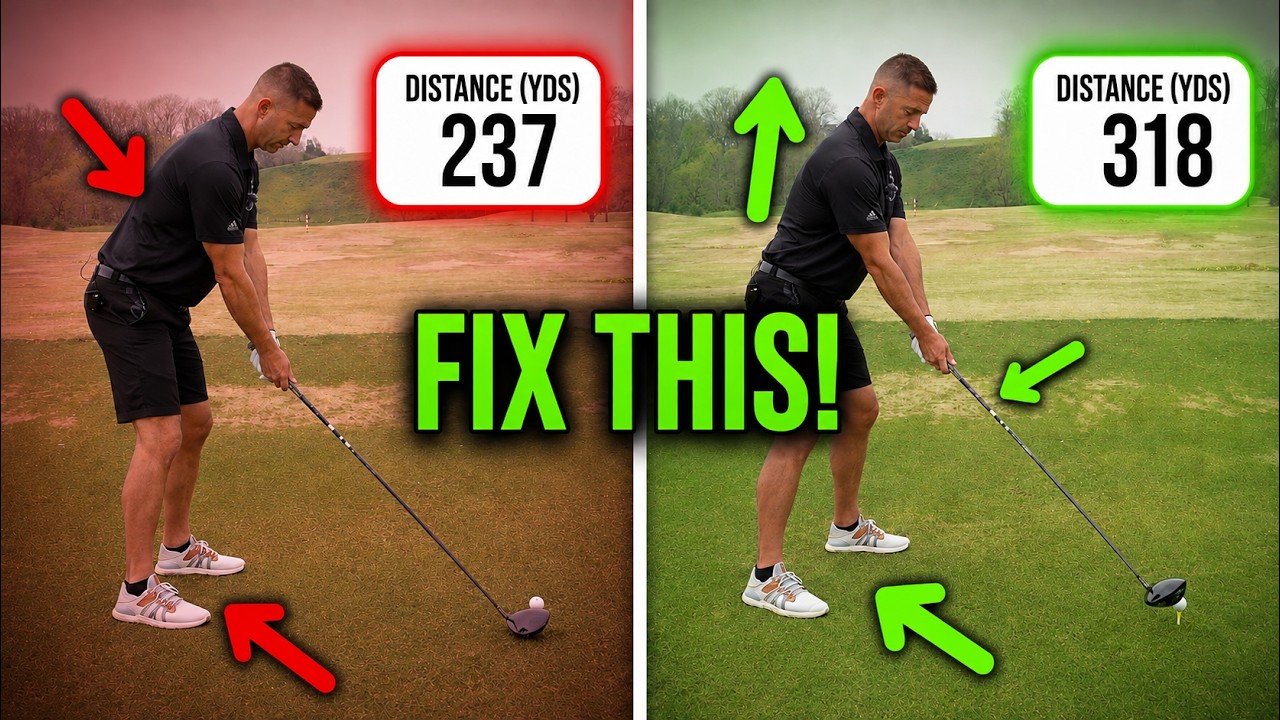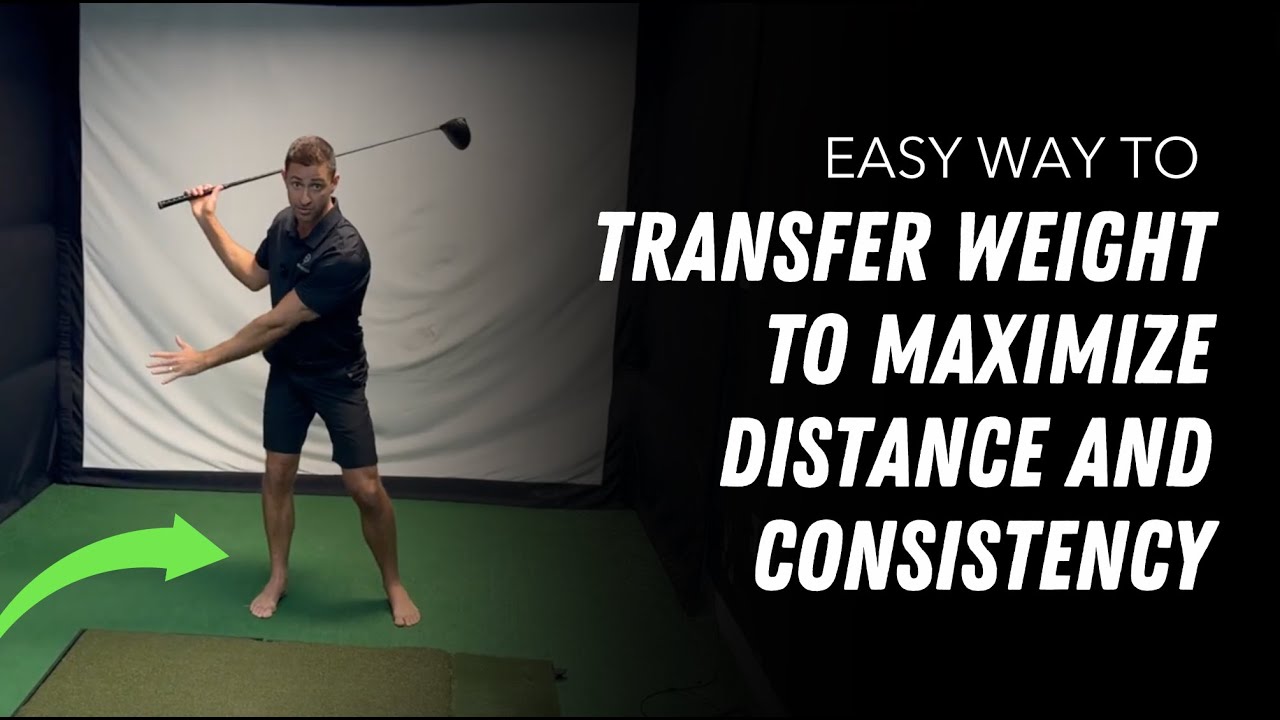
The biggest thing holding most older golfers back from gaining distance is not flexibility, not strength, and not swing speed. It is the proper weight shift.
Weight shift used to be effortless. Younger, more limber bodies moved from one side to the other and back again without thinking about it. As flexibility and mobility decrease with age, that same shift becomes one of the hardest things in the entire swing to reproduce reliably.
At Berman Golf, this is one of the clearest, most testable ways to know whether a weight shift is actually happening correctly, or whether it only feels like it is.
Step 1, The Dance Test at the Top of the Backswing
Here is the most explicit way to know whether the weight actually shifted to the trail side during the backswing.
At the top of the backswing, the lead foot should be light enough to pick up off the ground and dance it, without the head moving.
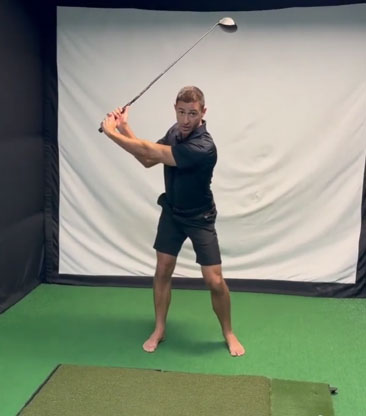
If the lead foot cannot be picked up without the head bouncing or shifting, the weight never actually moved off the lead side during the backswing. That means the body stayed on the lead side the entire time, and there is already a problem before the downswing has even started.
Here is the logic behind why this matters so much. The goal later in the swing is to get back onto the lead side for impact. But if the body never actually got off the lead side in the backswing, there is nothing to get back onto. The shift never happened in either direction.
What Makes the Dance Test Possible, A Bent Trail Knee
Here is the piece that makes this test achievable instead of just a goal to chase blindly.
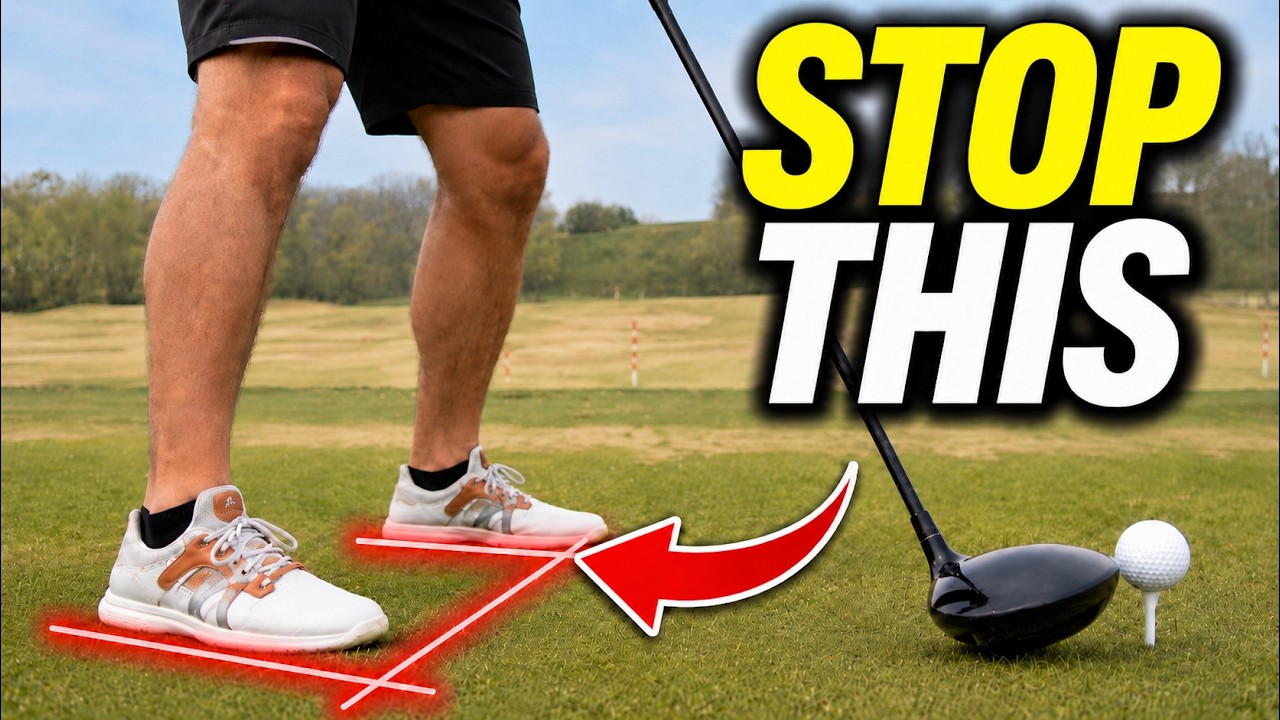
Keep the trail knee flexed, the same amount of bend that exists at address, all the way to the top of the backswing.
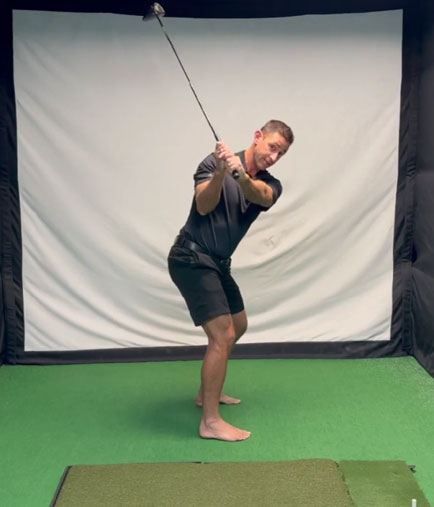
When that knee bend is maintained, the trail leg can actually load. With a straight trail knee, loading becomes impossible. The glute cannot fire, the weight cannot settle onto the trail side, and the lead foot has nothing to release from. A straight knee removes the entire mechanism this test depends on.
Keep as much flex in the trail knee at the top of the backswing as existed back at address. That single detail is what allows the trail side to load and the lead foot to dance freely.
Step 2, Reverse It, Get Back to the Lead Side
Loading the trail side properly is only half the equation. The weight has to come back.
Here is the most common problem seen across aging golfers, and really any golfer struggling with distance and a big banana slice. At impact, the body is still hanging on the trail side.
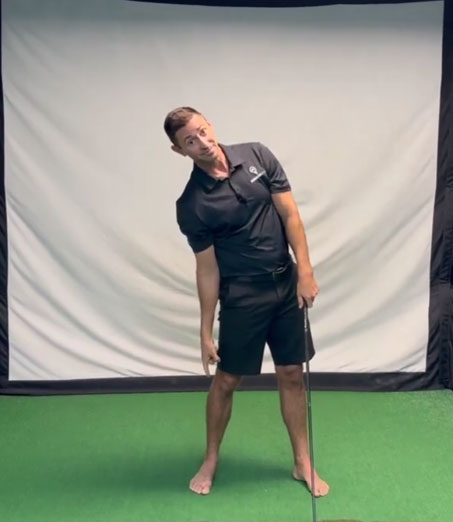
Staying on the trail side at impact sends the trajectory in one direction, and it is rarely the direction intended. To have any real chance at avoiding that huge banana slice, an over the top move with an open club face that produces zero distance and forces aiming far left just to keep the ball in play, the weight has to get back onto the lead side.
How to Get Back to the Lead Side Without Hanging on the Trail Leg
Here is the sequence that solves both problems at once.
Load into the backswing, trail knee bent, lead foot able to dance freely. Then initiate the downswing with the belt buckle to start moving toward the lead side.
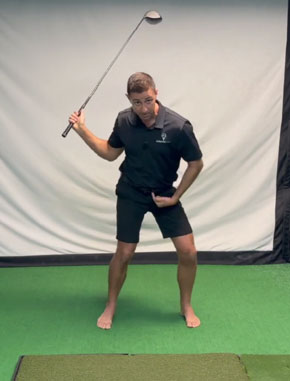
Here is the key detail at impact. The weight needs to be on the lead side, but the trail leg should still be actively pushing, not collapsed or passive.
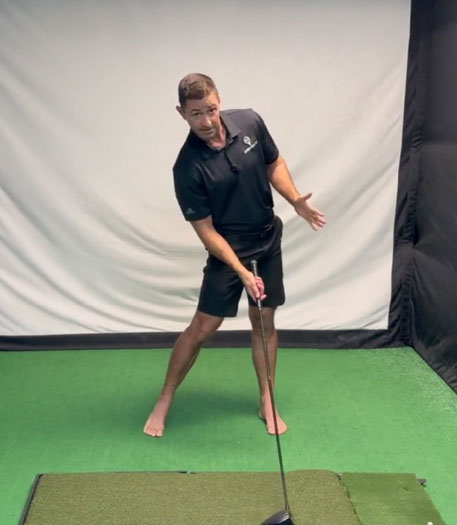
At impact, the majority of the weight is now over on the lead side. At the same time, there is still active pressure pushing through the trail leg. That combination, weight transferred to the lead side while the trail leg continues pushing, is what creates real rotation through impact instead of just hanging on the trail side and producing the banana slice. This is not a passive shift. It is an active push from the trail leg that drives the body through and onto the lead side, turning rather than just leaning. Why the Backswing Has to Be Fixed First
Here is an important distinction that gets missed constantly. Many golfers focus on fixing what looks like the problem rather than the thing that actually caused it earlier in the swing. If the backswing never loaded properly onto the trail side in the first place, getting through the ball correctly on the way down becomes nearly impossible, no matter how much effort goes into the downswing itself.
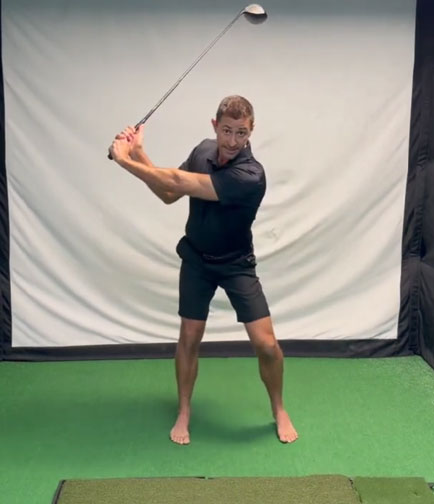
This is why the dance test matters so much as a starting point. Before thinking about the belt buckle, the rotation, or getting back onto the lead side, confirm the top of the backswing first. Get there, dance the lead foot without the head moving even slightly, and only then start working on rotating through to the lead side.
Fix the loading first. Everything downstream of that becomes far more achievable once the trail side is actually loaded the way it needs to be.
Get a Free Swing Analysis
Want to know whether the weight is actually shifting correctly right now, or whether it only feels that way?
Set the camera or phone up at two angles. One from the front, face on. One from behind, down the line. Film in slow motion. Swing.
Send both videos to gaindistance.com and Dr. Berman will give a free swing analysis. The first one is on him.
See exactly what the camera shows, not what the brain thinks is happening. Then there is clarity on whether the weight is staying stuck on one side or actually transferring the way it should.
Want a Step-by-Step Blueprint?
If this resonates and the advice out there feels designed for 25-year-old tour pros, there is a simple blueprint built specifically for senior golfers.
It breaks down:
How the aging body changes Which muscles actually produce power How to gain distance without swinging harder How to improve consistency while reducing aches and pains
It is written at a fifth-grade reading level with clear visuals and practical drills that can start immediately.
A FREE digital copy is available at: 👉 gaindistance.com
No gimmicks. Just clarity on how the body should move to play better golf for years to come.
Bringing It All Together
One test. Dance the lead foot at the top of the backswing without the head moving. If that is possible, the trail side loaded correctly, made possible by keeping the trail knee bent the same amount it had at address.
From there, initiate the downswing with the belt buckle and get the weight back onto the lead side, while the trail leg continues actively pushing through rather than collapsing or hanging back. That combination produces real rotation instead of the lean that causes the banana slice.
At Berman Golf, the focus is biomechanics first. Not cookie cutter swings. The goal is teaching the body how it should move, especially as it ages, so power can be generated safely and repeated under pressure.
The in-house and online coaching programs are built specifically for senior golfers who want more distance and better consistency without beating up their bodies.
For anyone tired of advice designed for tour pros and ready for a blueprint built for their body, help is available.
Because when the weight actually shifts both directions instead of getting stuck on one side, the banana slice disappears and the distance comes back.
And when the banana slice disappears, the game gets soooooo much easier!
If you enjoyed what you read and want to see it in action, watch the video below where Dr. Berman demonstrates the full drill!