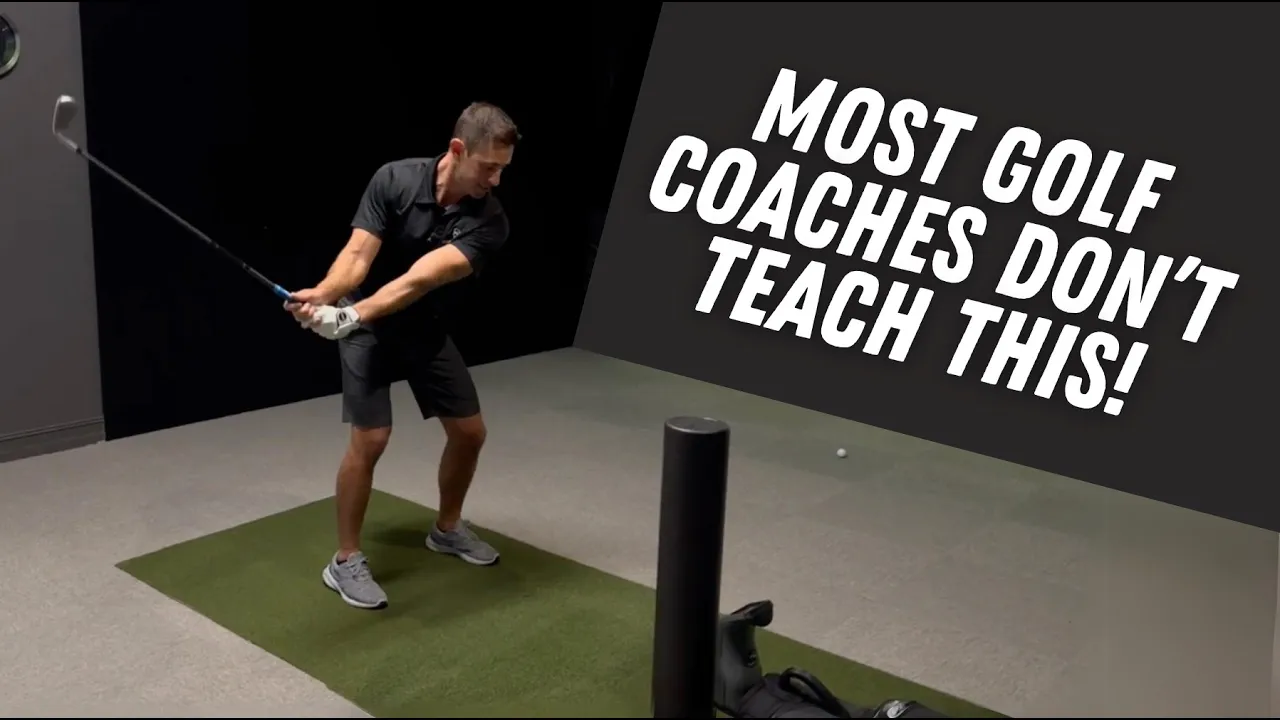
One of the biggest hurdles for amateur golfers learning to swing with the body instead of the hands is a feeling that shows up almost every single time.
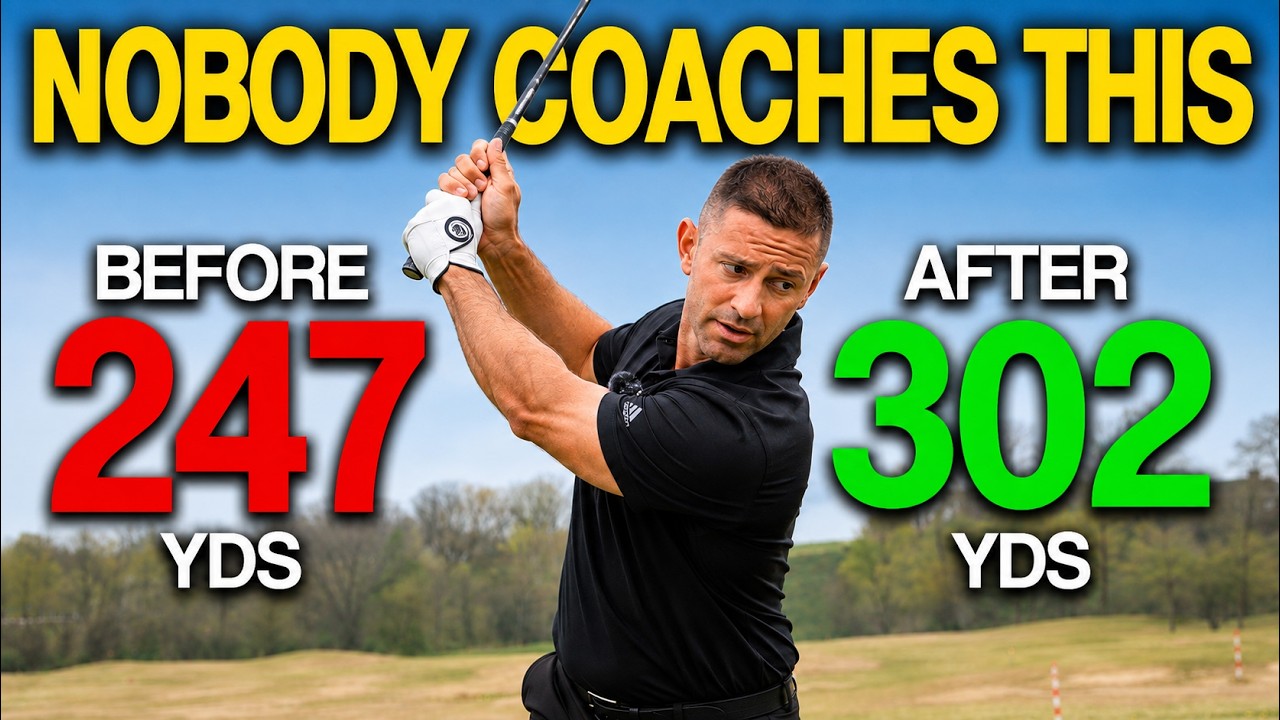
It feels short. It feels like a three quarter swing, sometimes even a half swing. It does not feel like the club is far enough back, and the brain immediately starts asking why this position feels incomplete when every instinct says the club needs to travel farther to generate distance.
At Berman Golf, this exact battle has been worked through personally and with countless golfers over the past several months. The answer is not more flexibility. The answer is understanding what the top of the backswing actually is, and most golf coaches never explain it this clearly.
Why Everyone Wants the Club Farther Back
Here is the instinct almost every golfer has.
Get the club back as far as possible. Wrap the trail arm across the chest. Stretch for every extra inch, because the logic seems obvious. The farther the clubhead travels back, the farther it should travel forward.
That logic feels right. It is also exactly where things go wrong for most senior golfers.
The Real Top of the Backswing, Hip and Thoracic Rotation Only
Here is the actual answer, and it has nothing to do with reaching farther.
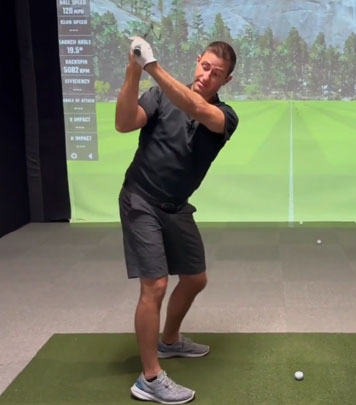
Stay engaged. Avoid any compensatory movement anywhere in the body. The moment that engaged position runs out of room, that is the top of the backswing. Right there.
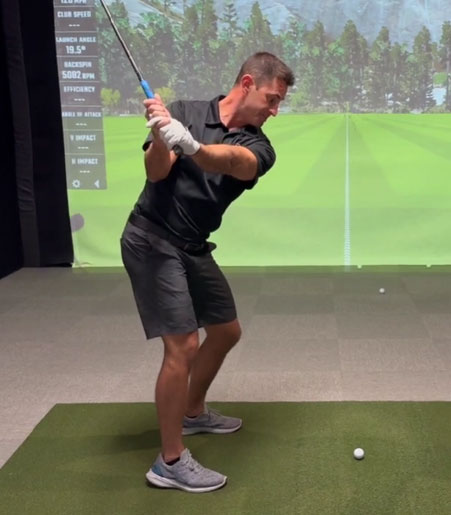
Here is why that position is the limit. There are only two places in the entire body where rotation should be coming from in the backswing. Internal rotation in the hip. And rotation through the thoracic spine, meaning the upper back and shoulder turn.
That is it. Two areas. Not the hands. Not the lower back. Not the shoulders independent of the upper spine. Just hip rotation and thoracic rotation.
Once both of those have maxed out, there is no more room left to turn. None. Anything beyond that point is not coming from rotation anymore. It is coming from something else entirely, and that something else is usually a problem.
What Going Past the Limit Actually Looks Like
Here is what happens when a golfer keeps pulling the club back after the hip and thoracic rotation have already maxed out.
The hands start raising up. The low back arches to create the illusion of more turn. The body sways off the original position. None of these are rotation. All of them are compensations the body reaches for once the real rotational range has run out.
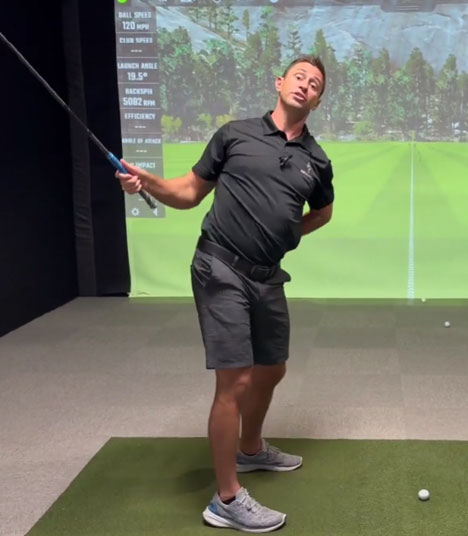
These compensations feel like progress because the club keeps moving back. But none of it is productive rotation. It is the body borrowing motion from places that were never meant to generate it, and borrowing from the wrong places usually shows up later as inconsistency, lost power, or pain in the low back, shoulders, or neck.
Training the Brain to Accept a Shorter Feeling Backswing
Here is the actual work involved, and it is mental as much as it is physical.
The brain has to be trained to accept that stopping at the hip and thoracic limit is correct, even though it feels incomplete. That feeling of incompleteness does not go away on its own. It has to be repeated, over and over, until the brain stops fighting the shorter position and starts trusting it.
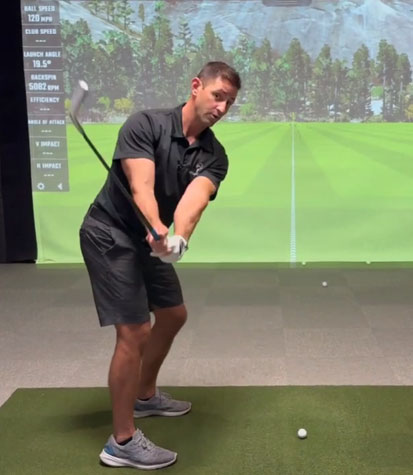
During that repetition, something else usually surfaces. The grip tightens. The hands start strangling the club, trying to compensate for the distance that feels lost by hitting it harder instead of farther back. That tension is a direct symptom of the brain still believing more backswing equals more power.
Relax the Grip and Let the Body Do the Work
Here is the piece that ties it all together.
Once the brain accepts the shorter, properly rotated backswing, the grip can finally relax. And once the grip relaxes, the efficiency of hitting the ball within the body’s actual range, rather than reaching beyond it, becomes available.
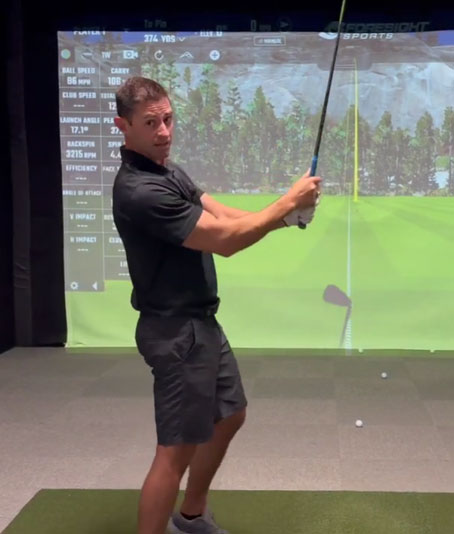
That efficiency is what allows the ball to actually fly, often farther than the longer, compensated swing ever produced, because the power was coming from clean rotation and a relaxed release instead of tension and borrowed movement from the wrong joints.
Proof in Real Numbers
Here is what this looks like in practice, not theory.
A swing that felt like a three quarter backswing, maybe even a half swing, still carried a seven iron 158 yards. And it did not feel like hard work to produce that distance.
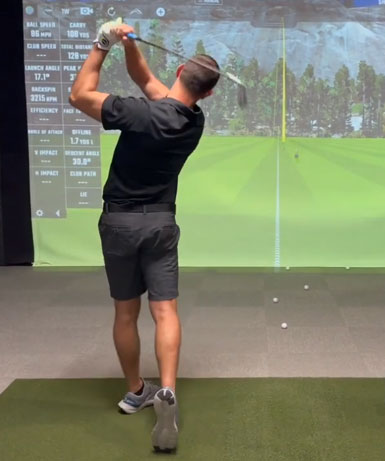
That is the entire point of training the brain to accept the shorter position. The game gets easier, not harder, once the backswing stops at the real limit instead of chasing a feeling of length that was never coming from rotation in the first place.
Why This Matters More As the Body Ages
Here is why this particular lesson matters even more for senior golfers specifically.
Flexibility naturally decreases with age. Hip internal rotation and thoracic rotation, the two legitimate sources of backswing length, often become more limited than they were decades earlier. Chasing the same backswing length that existed at twenty five years old, without that same flexibility, forces the body into the exact compensations described above, hands raising, low back arching, swaying.
Working within the actual available range, rather than fighting for a length the body can no longer access safely, is what allows distance and consistency to improve without the aches and pains that come from forcing a joint to do a job it was never built to do.
Get a Free Swing Analysis
Want to know exactly where the backswing is actually stopping right now, and whether what feels short is actually correct?
Set the camera or phone up at two angles. One from the front, face on. One from behind, down the line. Film in slow motion. Swing.
Send both videos to gaindistance.com and Dr. Berman will give a free swing analysis. The first one is on him.
See exactly what the camera shows, not what the brain thinks is happening. Then there is clarity on whether the backswing length is coming from real hip and thoracic rotation or from compensation.
Want a Step-by-Step Blueprint?
If this resonates and the advice out there feels designed for 25-year-old tour pros, there is a simple blueprint built specifically for senior golfers.
It breaks down:
How the aging body changes Which muscles actually produce power How to gain distance without swinging harder How to improve consistency while reducing aches and pains
It is written at a fifth-grade reading level with clear visuals and practical drills that can start immediately.
A FREE digital copy is available at: 👉 gaindistance.com
No gimmicks. Just clarity on how the body should move to play better golf for years to come.
Bringing It All Together
The top of the backswing is not determined by flexibility or by how far the hands can reach. It is determined by two things only, internal hip rotation and thoracic spine rotation. Once both max out, that is the limit. Anything past it is compensation, not power.
The backswing will feel shorter than expected. That feeling has to be trained, not trusted blindly. Once the brain accepts the real limit, the grip relaxes, and the ball flies with less effort and more consistency than the longer, compensated version ever produced.
At Berman Golf, the focus is biomechanics first. Not cookie cutter swings. The goal is teaching the body how it should move, especially as it ages, so power can be generated safely and repeated under pressure.
The in-house and online coaching programs are built specifically for senior golfers who want more distance and better consistency without beating up their bodies.
For anyone tired of advice designed for tour pros and ready for a blueprint built for their body, help is available.
Because when the backswing stops where the body actually allows it to stop, the ball goes farther with less effort, not more.
And when distance comes with less effort, the game gets soooooo much easier!
If you enjoyed what you read and want to see it in action, watch the video below where Dr. Berman demonstrates the full drill!