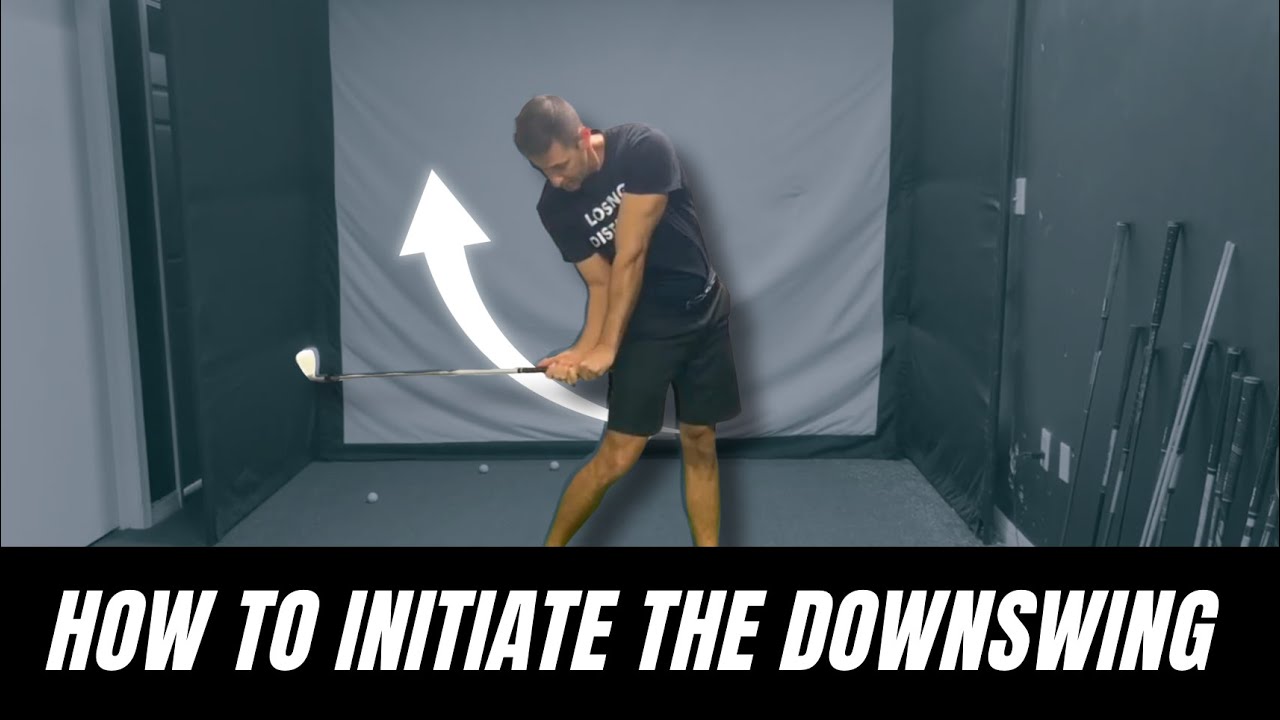
The downswing confuses more golfers than almost any other part of the swing. Which body part moves first. Which muscles are supposed to fire. What the actual thought process should be at the top of the backswing.
Most amateur golfers initiate with the arms. They think about pulling the club down, or casting it down, as the very first move. At Berman Golf, this is one of the most damaging habits to correct, because initiating with the arms makes it nearly impossible to transfer the power already built up in the core and glutes into the club head. The power is there. It just never gets delivered.
The Correct Initiation, Shift and Turn at the Same Time
Here is what should happen the moment the top of the backswing is reached.
The first thing that moves is the lower body. A shift to the lead side and a turn happen simultaneously, not one after the other.
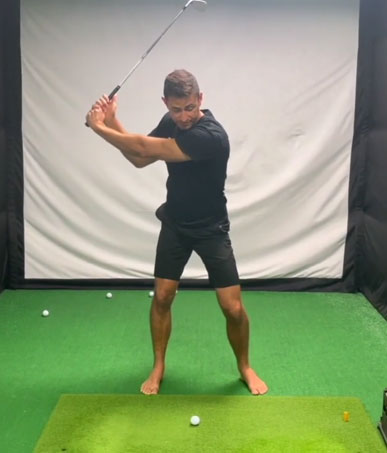
The belt loop pulls backward and around as part of that turn. At the exact same time, the lead knee begins straightening. All of it happens at once, shift and turn together, not as two separate steps performed in sequence.
Why the Arms Stay Completely Still
Here is the part that surprises most golfers the first time they see it.
Nothing moves in the arms during this entire initiation. Not a little. Not slightly. Completely still.
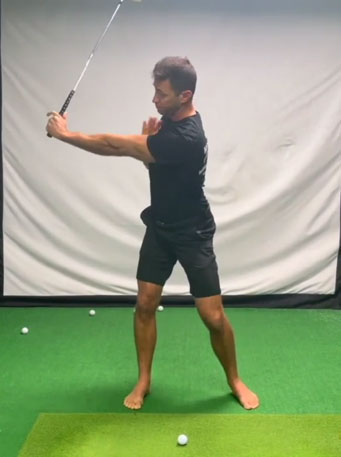
Watch how far the club head drops during this phase. Despite that drop, the arms have not moved at all. They are in the exact same position relative to the chest as they were at the top of the backswing. The drop in the club happens entirely because the lower body shifted and turned, pulling everything else along with it. Only after that lower body movement is complete do the arms finally release and come through.
Practice the Position, Get Posted Up on the Lead Side
Here is the specific position worth practicing on its own, separate from a full swing.
Get to the top of the backswing. Initiate with the lower half. Shift and turn until fully posted up on the lead side.
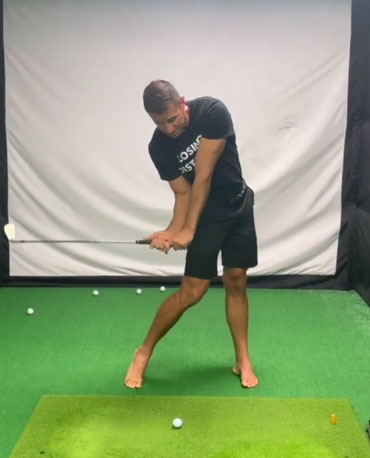
From the side view, this is what posted up looks like. Many older amateur golfers struggle to get into this position and instead stay stuck back on the trail side. Staying stuck there is exactly what leads to flipping at the ball, because there is no way to finish the swing properly while still hanging back.
Practice getting into this exact posted up position, on its own, repeatedly, before worrying about anything else in the downswing.
Adding the Lag, Bring the Club Head Down After
Once the posted up position feels natural and repeatable, the next piece is bringing the club head down from there.
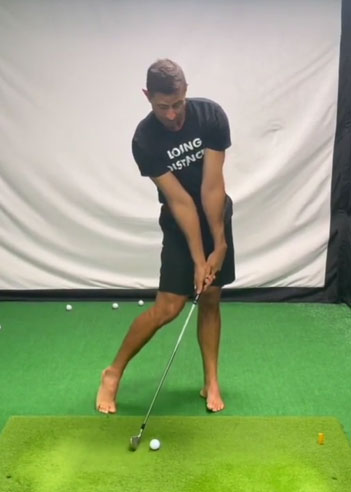
At this point, the hands are way ahead of the club head. This is exactly how lag gets practiced and built into the swing. It does not come from a hand action or a wrist trick. It comes directly from initiating the entire sequence with the lower body first and letting the arms and club catch up afterward.
Forget the Arms Even Exist
Here is the mental cue that ties the whole sequence together.
No yanking. No pulling. No casting. Pretend the arms do not even exist. Pretend there are no hands attached to this swing at all. Forget about them entirely.
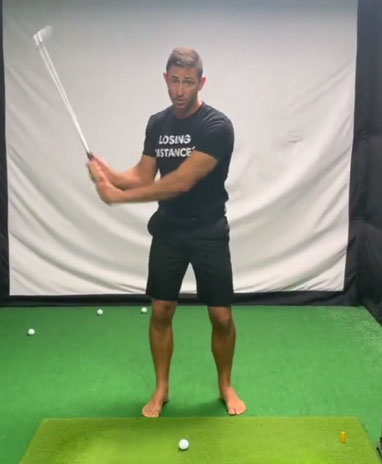
When the lower body initiates and the arms are left out of the thought process completely, the club path does what it is supposed to do on its own. There is no need to manually steer it.
Why This Makes the Inside Out Path Almost Automatic
Here is the biomechanical payoff of all of this.
When the downswing initiates from the lower half, the club path is forced to come from the inside. Going over the top becomes genuinely difficult to do, almost as if the body will not allow it.
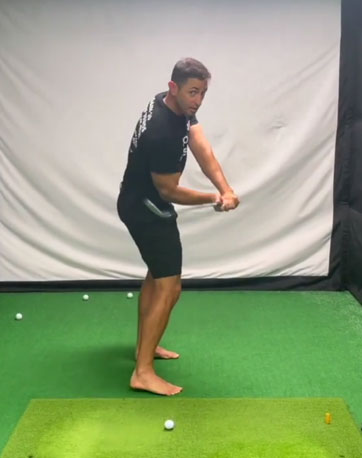
The opposite is true when the upper half initiates the downswing instead. Going over the top becomes extremely easy, almost unavoidable, because the shoulders and arms are leading the motion outward away from the body before the club ever has a chance to approach from the inside.
Initiating with the lower half makes the over the top move difficult and the inside out path natural. Initiating with the upper half makes the over the top move easy and the inside out path nearly impossible. That single difference, where the initiation comes from, determines almost everything about the resulting club path.
Get a Free Swing Analysis
Want to know exactly what is initiating the downswing right now, the lower body or the arms?
Set the camera or phone up at two angles. One from the front, face on. One from behind, down the line. Film in slow motion. Swing.
Send both videos to gaindistance.com and Dr. Berman will give a free swing analysis. The first one is on him.
See exactly what the camera shows, not what the brain thinks is happening. Then there is clarity on whether the lower body is leading the downswing or the arms are taking over too early.
Want a Step-by-Step Blueprint?
If this resonates and the advice out there feels designed for 25-year-old tour pros, there is a simple blueprint built specifically for senior golfers.
It breaks down:
How the aging body changes Which muscles actually produce power How to gain distance without swinging harder How to improve consistency while reducing aches and pains
It is written at a fifth-grade reading level with clear visuals and practical drills that can start immediately.
A FREE digital copy is available at: 👉 gaindistance.com
No gimmicks. Just clarity on how the body should move to play better golf for years to come.
Bringing It All Together
The downswing initiates from the lower body, a simultaneous shift and turn toward the lead side while the arms stay completely still relative to the chest. Only after the lower body has done its work do the arms release and the club catches up, producing lag naturally instead of through any kind of hand manipulation.
Practice getting posted up on the lead side as its own position first. Then add bringing the club head down from there. Forget the arms exist during the process. The lower half leads, and the inside out path follows almost automatically.
At Berman Golf, the focus is biomechanics first. Not cookie cutter swings. The goal is teaching the body how it should move, especially as it ages, so power can be generated safely and repeated under pressure.
The in-house and online coaching programs are built specifically for senior golfers who want more distance and better consistency without beating up their bodies.
For anyone tired of advice designed for tour pros and ready for a blueprint built for their body, help is available.
Because when the lower body initiates the downswing, the power already built in the backswing finally has somewhere to go.
And when that power transfers all the way to the club head, the game gets soooooo much easier!
If you enjoyed what you read and want to see it in action, watch the video below where Dr. Berman demonstrates the full downswing initiation step by step!