

One of the most common problems I see with golfers over the age of 60 is that their glutes aren’t firing during the golf swing.
And when the glutes aren’t working, it becomes extremely difficult to generate power.
Most golfers try to compensate by swinging harder with their arms. Unfortunately, that usually leads to poor contact and inconsistent shots.
The solution isn’t swinging harder.
The solution is learning how to activate the glutes properly during the swing.
Why the Glutes Matter in the Golf Swing
Your glutes are some of the largest and strongest muscles in your body.
They play a major role in stabilizing your hips and generating power during rotation.
When the glutes fire correctly, they help:
- Drive hip rotation
- Stabilize the pelvis
- Create more efficient power transfer
Without glute activation, the body struggles to generate speed and balance in the swing.
That’s why so many senior golfers feel like they have to work twice as hard to produce half the distance.
Step One: Activate Your Core First
Before the glutes can fire effectively, the core needs to be activated.
One simple way to do this is by gently pulling your belly button inward.
Think about tightening your stomach just enough that someone taking a photo of you on the beach wouldn’t catch your stomach sticking out.
This small movement activates your core muscles and creates stability through your torso.
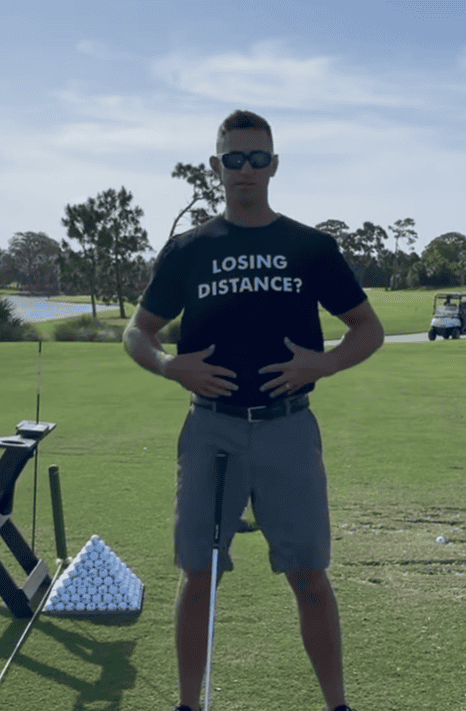
The key is making sure you can still breathe normally while keeping that core engaged.
Once the core is activated, it becomes much easier for the glutes to engage during the swing.
Step Two: Create Pressure Through the Inside of the Trail Foot
Next, focus on the pressure in your trail foot.
For a right-handed golfer, that means the right foot.
Instead of pushing through the arch or the toes, think about creating pressure through the inside of the big toe mound.
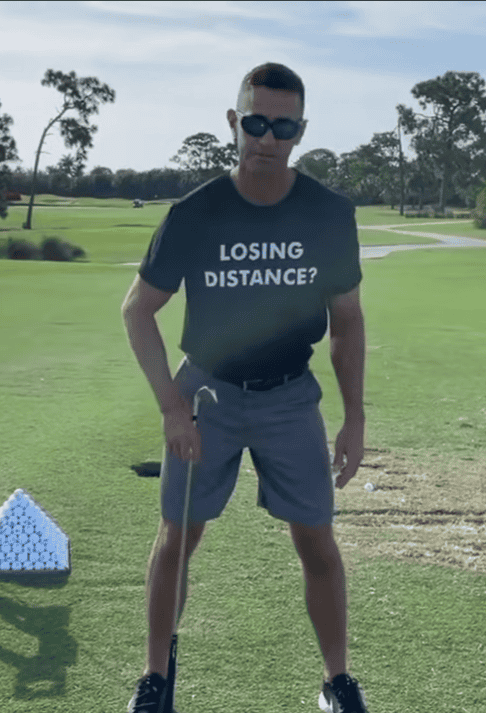
This pressure point helps activate the muscles in your hip and glute on the trail side.
Step Three: Increase Pressure During the Backswing
As you start the backswing, begin increasing pressure through that same spot in the trail foot.
Continue pushing into the ground as the club moves back.
At the same time:
- Keep your belly button pulled in
- Maintain soft knees
- Keep your hips pushed slightly back
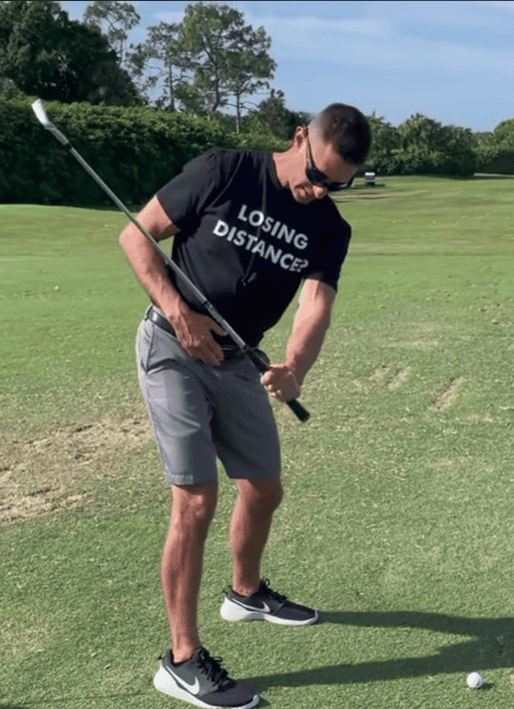
If you’re doing it correctly, you should start to feel the trail glute activating as the backswing develops.
If you don’t feel the glute working, chances are the pressure isn’t being applied correctly.
Step Four: Drive Through the Downswing
Once the backswing is complete, the movement simply reverses.
As the downswing begins, continue pushing through the inside of the trail foot even harder.
One way to visualize this is imagining there’s a cigarette underneath your foot that you’re trying to put out.
Another way to think about it is corkscrewing your foot into the ground.
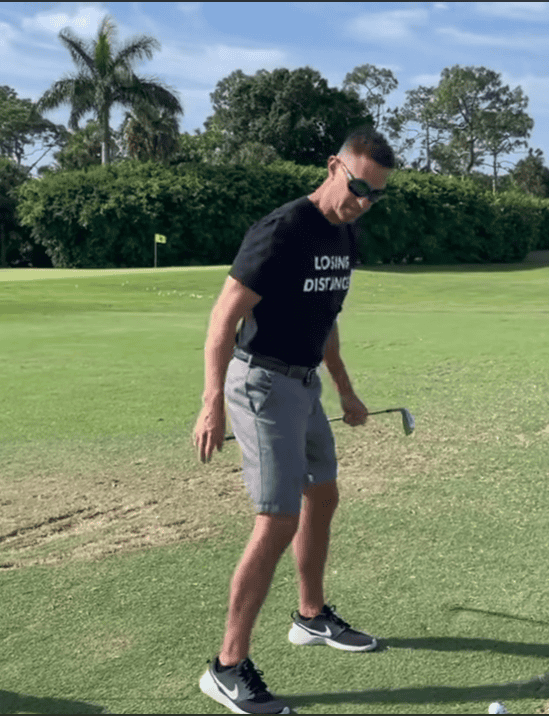
This movement helps activate the glutes and creates a powerful rotational force through the hips.
Why the Heel Lifts at Impact
When the glutes are working properly, your trail heel will naturally lift off the ground at impact.
This happens because your hips are moving forward and rotating toward the target.
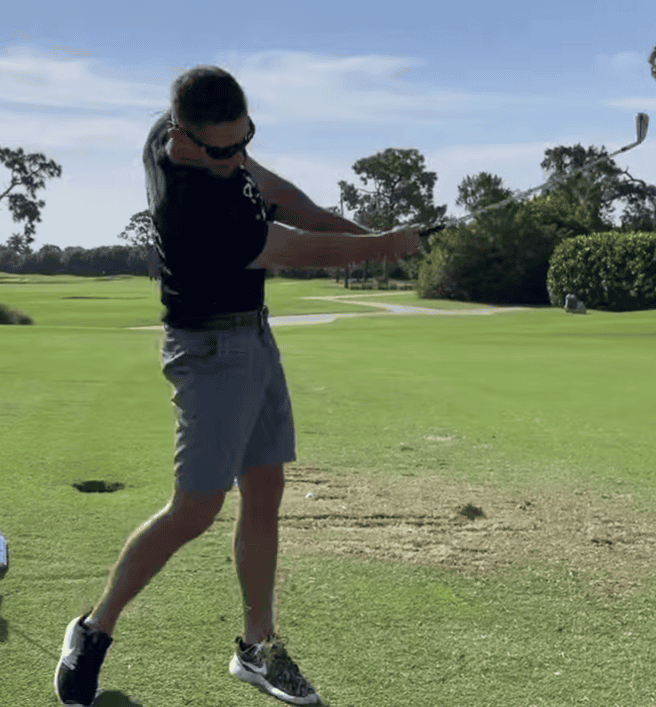
Your goal is to have:
- Hips ahead of the ball
- Head slightly behind the ball
This position allows you to strike the ball more solidly while generating more power.
If your back foot stays flat on the ground, it usually means the hips haven’t rotated properly.
Why This Matters for Senior Golfers
Many golf lessons focus only on swing positions.
But they rarely address whether your body is physically capable of creating those movements.
At Berman Golf, we focus on biomechanics first.
Instead of forcing positions, we help golfers understand how their bodies should move so they can generate power more efficiently.
When the glutes activate properly, the swing becomes more powerful without requiring extra effort.
Want a Blueprint Designed for Senior Golfers?
If you’re a senior golfer trying to gain distance without putting extra strain on your body, I created a simple blueprint specifically for you.
Inside, you’ll learn:
- How the aging body affects the golf swing
- Which muscles actually generate power
- How to improve consistency and distance
- Simple movement strategies designed for senior golfers
You can download a FREE digital copy here:
Bringing It All Together
If you want to add distance to your golf swing, don’t just focus on swinging harder.
Focus on activating the right muscles.
Start by engaging your core.
Create pressure through the inside of your trail foot.
Then increase that pressure during the backswing so the glutes activate and power the swing.
When the glutes fire correctly, the body generates power naturally—and the golf swing becomes much easier to repeat.
At Berman Golf, our goal is to help senior golfers move better so they can swing more efficiently and play the game they love for many years to come.

Dr. Jake Berman
Latest posts by Dr. Jake Berman (see all)
- Add Distance to Your Golf Swing With This Simple Glute Move (Senior Golfers) - April 10, 2026
- How Senior Golfers Can Generate More Power Using the Ground - April 8, 2026
- Fix Your Golf Backswing for More Distance (Senior Golfer Guide) - April 6, 2026