If your back is aching after a round, if your shoulders are sore, if you’re dealing with general stiffness and tightness that seems to get worse every time you play—the problem isn’t your age.
It’s three specific things you’re doing in your swing.
Not one thing. Three. And the frustrating part is that none of them feel wrong while you’re doing them. They’ve become so automatic that your body doesn’t even register them as mistakes anymore. It just keeps paying the price.
At Berman Golf, these three patterns show up in nearly every senior golfer we work with. And the fixes are simple—not easy, but simple. Once you understand what’s happening and why, you can start making adjustments immediately.
Let’s get into it.
Mistake #1: Your Posture at Address Is Setting You Up for Pain
Nine out of ten senior golfers do this.
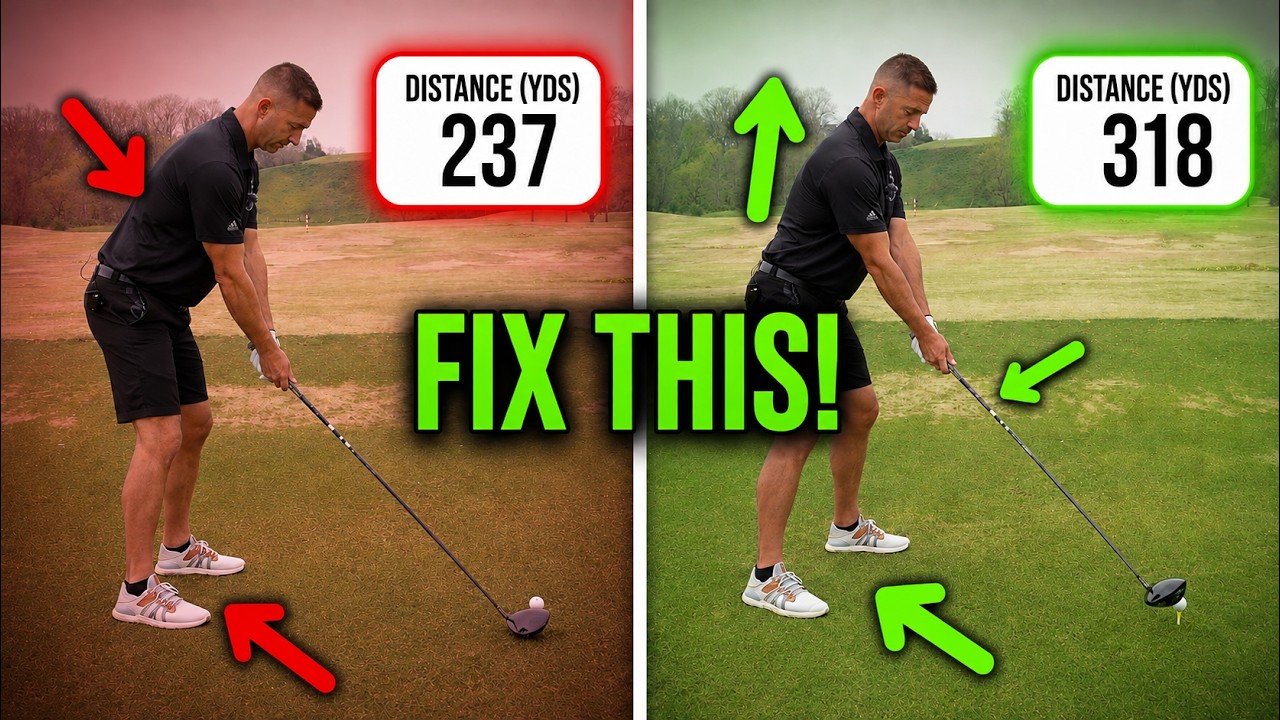
Instead of maintaining spine angle and hinging at the hips to get down to the ball, they round the upper back and slump toward it.
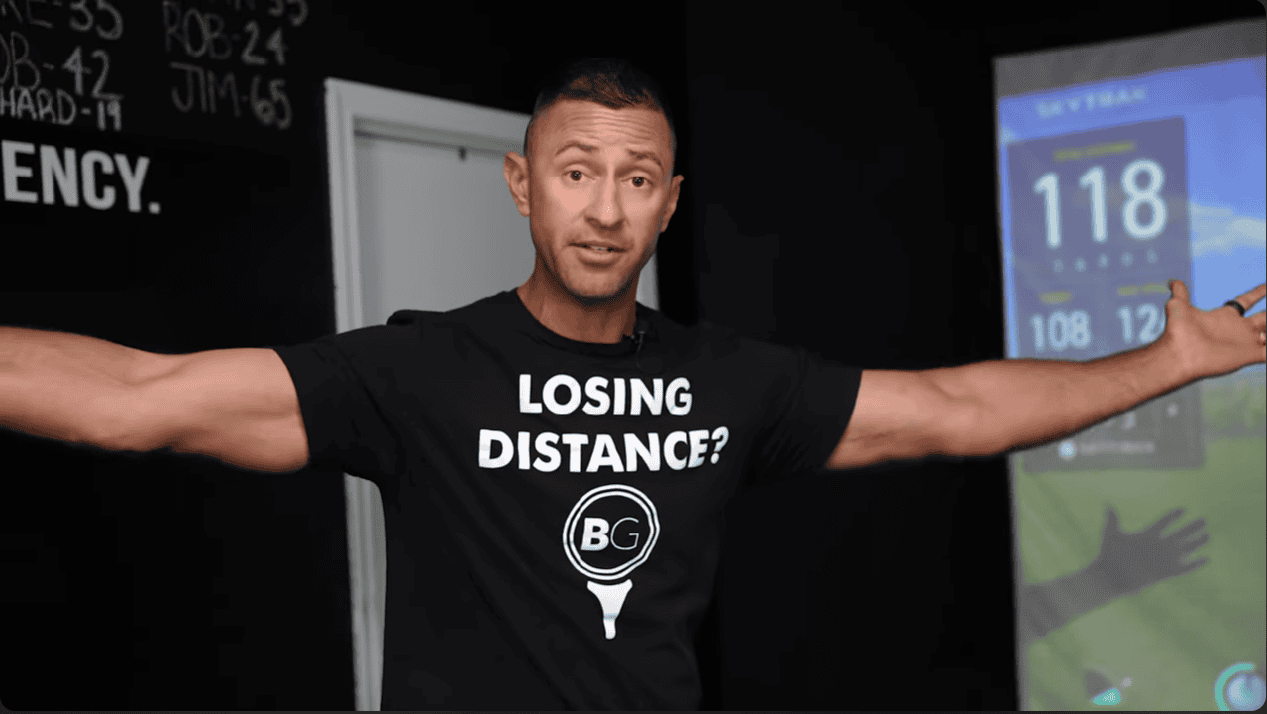
It doesn’t feel dramatic. It feels normal—because it’s been happening so long it has become normal. But here’s what that rounding is doing to you.
When you round down to the ball, you lock your thoracic spine. That’s your upper back. And when your thoracic spine is locked, you have physically blocked your shoulder turn before the swing even starts.
But the club still has to get back somehow. So what does the body do?
It gets the backswing from the lower back instead. And it dumps all the stress of the swing onto the shoulders to compensate for the rotation that the thoracic spine can no longer provide.
That’s why your back aches. That’s why your shoulders are sore. You’ve removed the biggest, most powerful rotator from the entire equation—the thoracic spine—and replaced it with two structures that were never designed to carry that load.
The Fix: The Two-Finger Drill
One finger on your belly button. One finger on your chest.
Pull the belly button in. Lift the chest up.
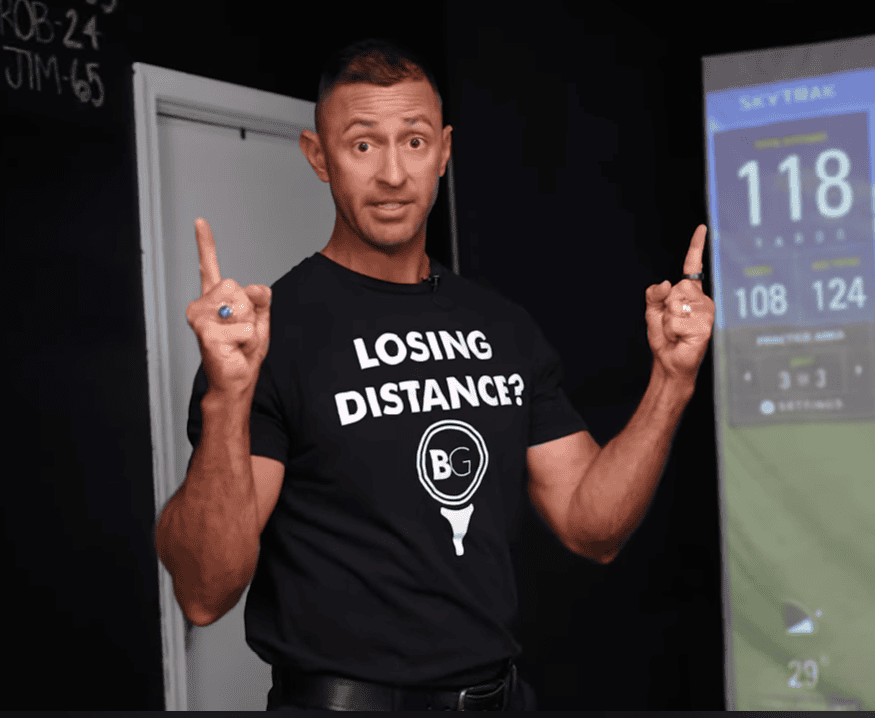
Now—without losing that posture—soften the knees and push the hips straight backward to get down to the ball. Think about shutting a door with your backside. Hinge at the hips. Reach backward.
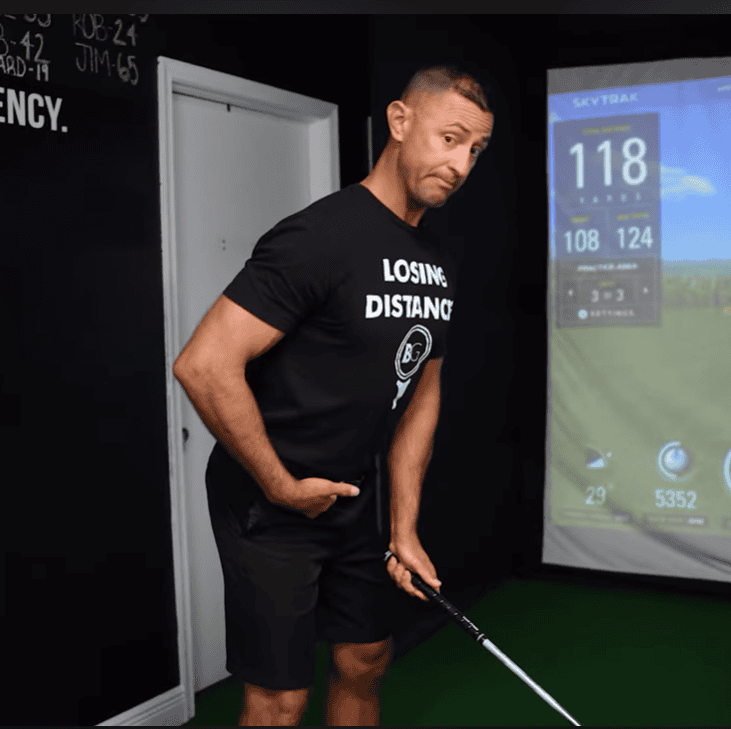
That’s spine angle. That’s the address position that keeps the thoracic spine free to rotate. That’s what allows the big power muscles to do their job—instead of forcing the back and shoulders to carry the entire load by themselves.
This one change alone will reduce aches and pains more than any stretch or exercise you’ve tried.
Mistake #2: You’re Starting the Backswing With Your Hands
Whatever moves first, the brain decides is the primary mover.
Read that again. Because it’s the reason this mistake is so hard to break.
When you initiate the backswing with your hands—even slightly, even subtly—your brain registers the hands as the engine of the golf swing. Every single time after that, when it comes time to actually execute a shot under real conditions, the brain goes back to what it knows.
The hands fire first. The body follows. And you whack the ball with your arms instead of swinging through it with your body.
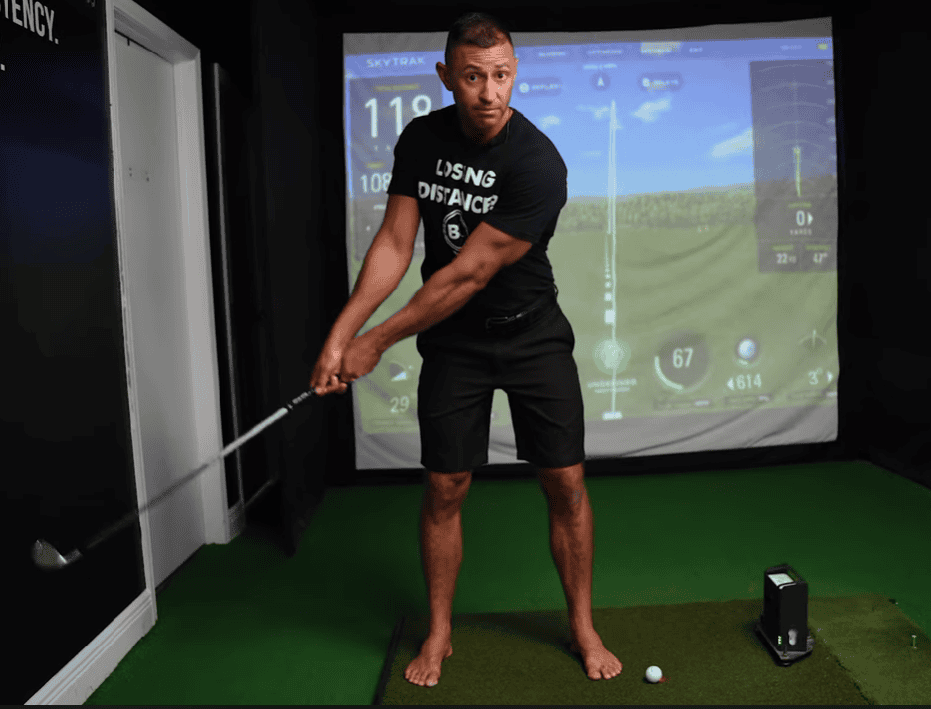
You can practice initiating the downswing with your body all day long on the range. But if the backswing started with the hands, the brain has already made its decision. By the time you get to the top, the override is in place—and the hands are going to take over whether you want them to or not.
The Fix: Initiate With the Belt Buckle
Right out of the gate, think about your belt buckle leading the backswing.
Not the hands. Not the club head. The belt buckle.
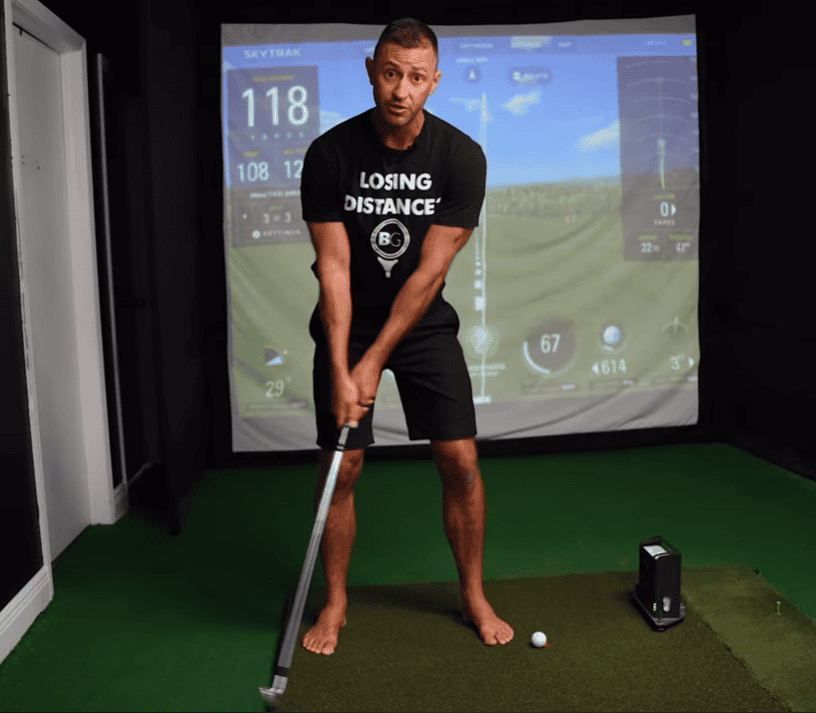
When the belt buckle moves first, the body becomes the primary mover. The brain locks that in. And when it comes time to swing for real, the body leads—the hands follow—and everything that happens after that is more powerful, more consistent, and dramatically less stressful on the joints.
One thought. One change. Massive downstream effect.
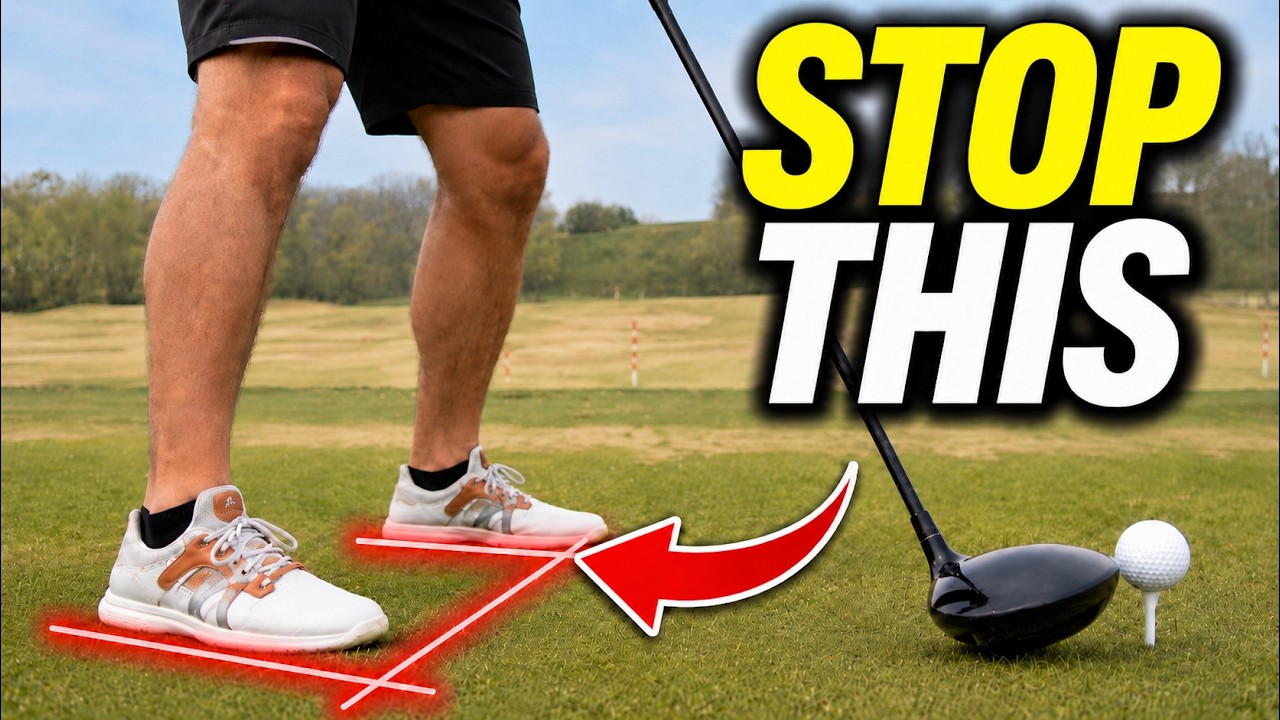
Mistake #3: You’re Straightening Your Trail Knee in the Backswing
This is the one that quietly steals power and quietly destroys the lower back—and most golfers have no idea they’re doing it.
When the trail knee straightens going into the backswing, the glute on that side turns off completely. Not partially—completely. And when the glute turns off, the back takes over. The shoulders overwork. The body loses its most powerful muscle group at the exact moment it needs it most.
When the glute is firing like crazy, the back isn’t. When the glute is firing, the core is engaged. When the core is engaged, the body is in the right position and the shoulders can relax.
The glute is the key to everything. And the trail knee position is the key to the glute.
The Fix: The Stress Ball Drill
Find a stress ball. If you don’t have one, roll a sock into a ball—same effect.
Place it under the arch of your trail foot. Not directly under the middle of the arch. Slightly forward, just behind the big toe joint, right at the front half of the arch.

Now get into your address position.
As you initiate the backswing with your belt buckle and good posture, think about increasing the pressure on that stress ball. Squish it harder as you turn. Exaggerate a squatting feeling—as if you’re sitting back and down into that trail hip as the turn maxes out.
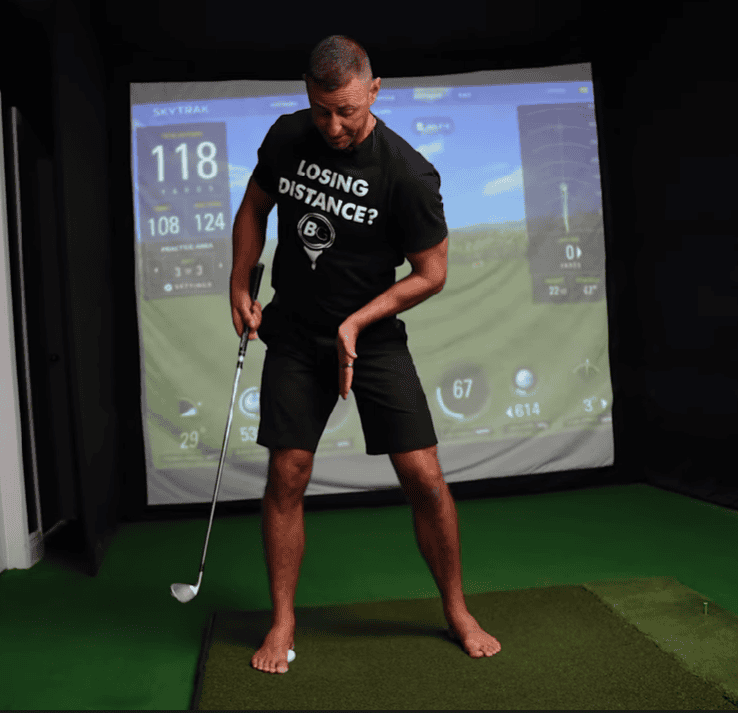
Here’s what you’ll discover immediately.
You cannot increase the pressure on the stress ball with a straight knee. It’s physically impossible. The moment you try to straighten the knee, the pressure releases. The only way to keep squishing the ball is to keep the knee bent—which keeps the glute loaded—which keeps the core engaged—which keeps the back out of it entirely.
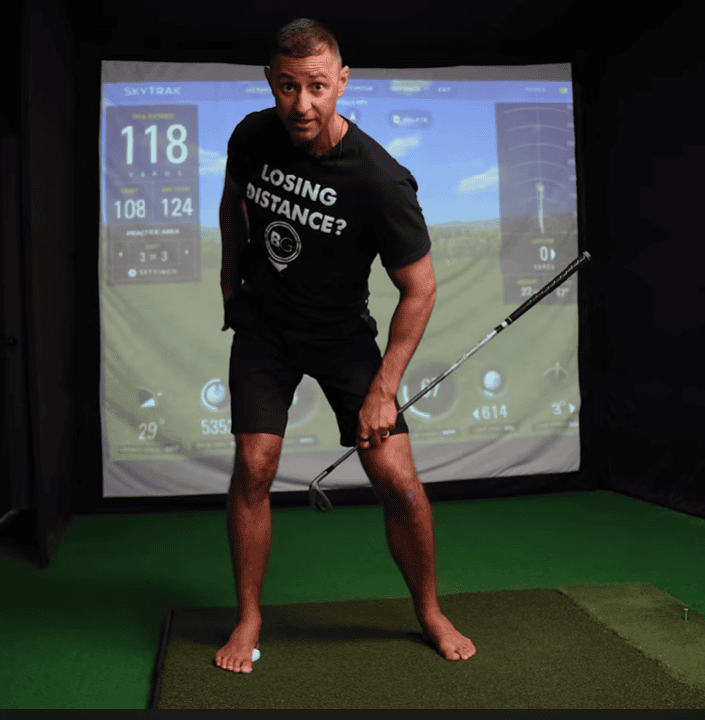
Feel your glute firing? That’s power. That’s what’s been missing. And notice what isn’t firing when the glute is working that hard—the back. The shoulders. All the structures that have been absorbing stress they were never designed to handle.
This is not a small drill. This is the most direct path to a more powerful, more pain-free golf swing that exists.
Why These Three Mistakes Work Together
Here’s what makes this important to understand.
These three mistakes aren’t independent. They feed each other.
Rounded posture locks the thoracic spine, which forces the back and shoulders to overwork. Hand initiation tells the brain the arms are in charge, which means the body never gets properly loaded. Straightened trail knee shuts off the glutes, which means there’s no power source—so the arms work even harder to compensate.
When all three are present at the same time, you’re not just hitting it shorter. You’re hitting it shorter and putting enormous stress on structures that can’t handle that stress round after round, year after year.
Fix all three, and the opposite happens. The thoracic spine rotates freely. The body initiates and leads. The glutes load and fire. The back and shoulders finally get to do the job they were designed for—not carry the load that belongs somewhere else.
Prepare Your Body Before You Even Tee Off
If you’re dealing with posture issues, thoracic tightness, or general aches and pains before you even get to the first tee, there’s one more tool that makes everything easier.
A free five-minute warm-up video built specifically for senior golfers. Do it right on the driving range—you won’t feel embarrassed doing it in front of anyone. Save it to your home screen and it works like an app.
Five minutes of targeted movement that wakes up the thoracic spine, gets the hips and glutes firing, and takes the stress off the lower back and shoulders before you ever swing a club.
Do it before every single round. Your first hole will feel different. Your last hole will feel different. And the day after the round will feel different too.
Want a Step-by-Step Blueprint?
If this resonates with you and you’re tired of advice designed for 25-year-old tour pros, I put together a simple blueprint specifically for senior golfers.
It breaks down:
- How the aging body changes
- Which muscles actually produce power
- How to gain distance without swinging harder
- How to improve consistency while reducing aches and pains
It’s written at a fifth-grade reading level with clear visuals and practical drills you can start immediately.
You can download a FREE digital copy at: 👉 gaindistance.com
No gimmicks. Just clarity on how your body should move so you can play better golf for years to come.
Bringing It All Together
If your body is hurting after golf, you don’t need to accept that as the price of playing. You need to find the three mistakes that are causing it—and fix them.
Rounded posture at address locks the thoracic spine and forces the back and shoulders to compensate. Hand initiation tells the brain the wrong muscles are in charge. A straightening trail knee shuts off the glutes and removes your most powerful muscle from the equation entirely.
Fix your posture with the two-finger drill. Start the backswing with the belt buckle. Load the trail glute with the stress ball.
Three adjustments. Three immediate changes to how your body experiences the golf swing.
At Berman Golf, we focus on biomechanics first. We don’t teach cookie-cutter swings. We teach you how your body should move—especially as it ages—so you can generate power safely and repeat it under pressure.
Our in-house and online coaching programs are built specifically for senior golfers who want more distance and better consistency without beating up their bodies.
If you’re tired of advice designed for tour pros and ready for a blueprint built for your body, we’re here to help.
Because when the right muscles are working at the right time, the pain stops being part of the game.
And when the pain stops, the game gets soooooo much easier!