

Michael was in his late 70s and on the verge of giving up golf entirely.
His back was hurting. His distances were dropping. He was counting pain pills before the round, at the turn, and at the 19th hole just to finish 18 holes. Golf—the game he’d loved for decades—was becoming something he dreaded.
Then something changed.
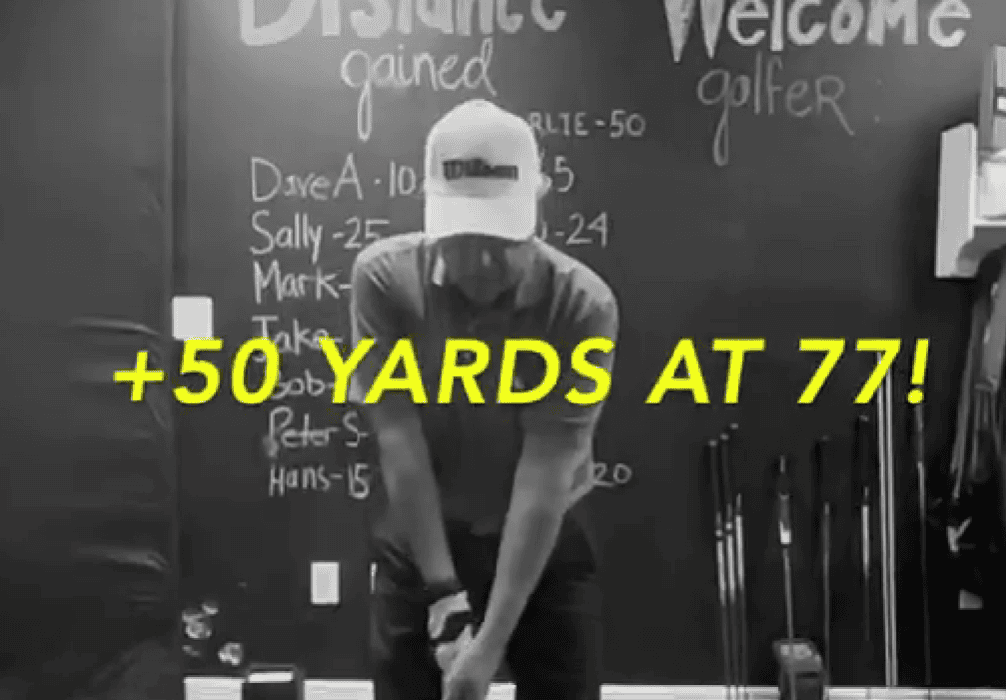
He gained 50 yards of carry with his driver. He joined the 200-yard club. He added 22 yards to his seven iron. His back pain disappeared completely. Zero pain medication. Zero injections. Zero surgery.
And he made the decision to stay in the club.
At Berman Golf, Michael’s story isn’t a miracle. It’s what happens when you stop treating symptoms and start fixing the actual problem.
The Numbers That Blew Our Minds
Let’s start with the results because they’re worth sitting with for a moment.
Michael joined two clubs in one program. The 50-yard club and the 200-yard club.
In years of doing this work, Michael is the first person to ever do both in the same program.
But here’s what matters more than the numbers. Before the program, Michael couldn’t get through a round without managing his pain every step of the way. After the program, the pain was gone. Not masked. Not managed. Gone.
That’s what happens when you fix the right thing.
The Real Problem Wasn’t What Anyone Expected
When Michael came to us, we didn’t go to the driving range. We didn’t hit golf balls. We didn’t look at his grip or his swing path or his club face angle.
We did a full physical assessment.
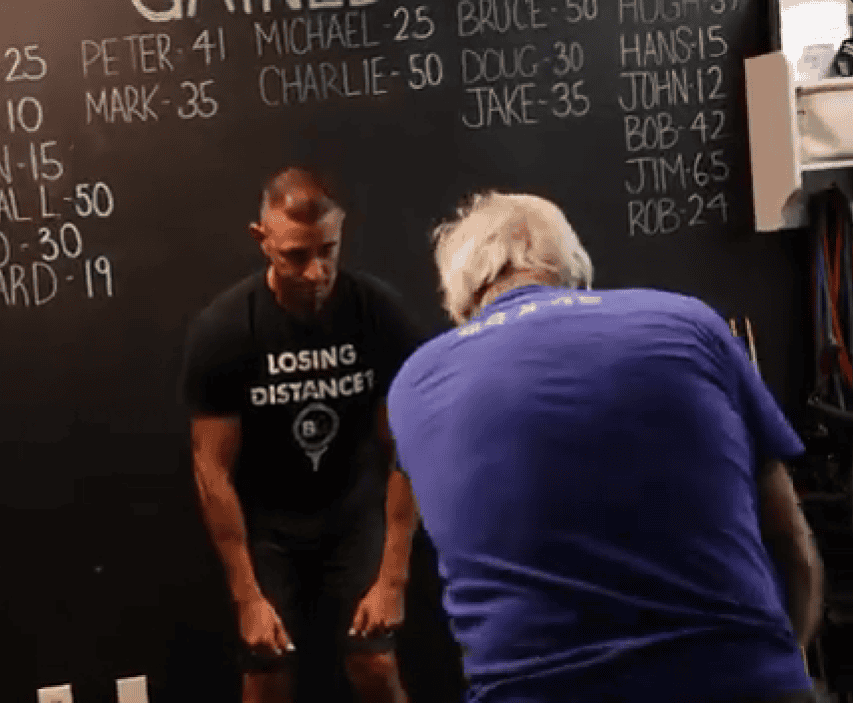
We looked at his rotation, his stability, his mobility, his hips, and his thoracic spine. And here’s what we found.
Michael moved phenomenally. Remarkable flexibility for any male—let alone a 77-year-old. On paper, his range of motion was impressive.
But that wasn’t the whole picture.
He didn’t have the stability and strength to match his flexibility. And that mismatch is where everything was falling apart.
Think of it this way. Ideally, your flexibility and your strength are equal. They balance each other. When you have excessive flexibility and not enough strength to support it, you get what we call a slop region. A zone of instability where the body doesn’t know exactly where it is in space.
Now swing a golf club at 100 miles per hour while trying to hit a small white ball as far as possible.
The pelvis goes out of alignment. The back locks up. Excruciating pain. You cannot power through it—no matter how tough you are, no matter how many pain pills you take. Your brain knows there’s a problem and it will not let you swing freely.
That was Michael.
Finding the Exact Muscle That Wasn’t Doing Its Job
Once we identified the slop region, we ran specific tests to track down exactly which muscle was failing.
It came down to one glute muscle that wasn’t activating when it was supposed to.
That’s it. One muscle. Not a mystery. Not a complicated diagnosis. One specific glute that had gone quiet—and in doing so, forced every smaller, weaker muscle around it to pick up the slack.
Here’s why that matters.
The glutes are designed to be the biggest, strongest muscles in the entire body. The golf swing is a tri-planar movement—rotation, lateral shift, and vertical loading all happening simultaneously. That is a violent, demanding sequence when you’re doing it over and over again trying to hit a ball as far as possible.
If the glutes aren’t doing their job, what fills the gap? The smaller muscles. The ones that were never built for this kind of load. And they will hold up for a while—until they can’t anymore.
That’s when the back locks up. That’s when the pain becomes unbearable. That’s when golfers like Michael start counting down to when they’ll have to give the game up.
The Fix: One Specific Exercise, Done Religiously
Once we identified the problem, the solution was targeted and exact.
We gave Michael one specific exercise to wake that glute up and bring it back into the movement pattern where it belonged. Not a generic core program. Not a series of stretches from the internet. One precise exercise, matched to his exact physical assessment.
Michael did his homework. He was diligent. He kept coming back.
And once his body started moving correctly—once the glute was doing its job again and the slop region closed up—the back pain faded. And when the back pain faded, everything else opened up.
Distance. Consistency. Confidence. Freedom.
Why Pain Pills Never Fixed It—And Never Will
This is the part of Michael’s story that matters most for anyone playing through pain right now.
Before working with us, Michael’s pre-round routine was pharmaceutical. How many pain pills before the round? How many at the turn? How many at the 19th to make it to the end?
Here’s what most people don’t understand about pain and the golf swing.
Your brain knows.
No matter how many pills you take. No matter how much you try to tough it out. No matter how good the cortisone injection felt for the first two weeks. Your brain is aware that a pain response is occurring, and it goes into protective mode.
And when the brain is in protective mode, there is zero chance—zero—of a fluid, smooth transition from backswing to downswing through impact to a finish position. The brain will not allow it. It is protecting you, whether you like it or not.
You can play through pain. You cannot play good golf through pain.
The only way out is to fix the root cause. When the root cause is addressed and the pain disappears for real, the brain gets the all-clear. Protective mode shuts off. The body relaxes. The swing flows the way it was always capable of flowing.
That’s when the 50 yards show up.
Building a Swing That Fits Michael’s Body—Not a Tour Pro’s
Once Michael’s body was moving correctly, we built a golf swing around his physical reality.
Not the swing you see on the Golf Channel. Not the position a PGA Tour player holds on Sunday afternoon. Those are elite athletes—some of the most physically gifted humans on the planet—with teams of five to fifteen people dedicated to keeping their bodies performing at that level.
That’s not us. That’s not Michael. And pretending otherwise is one of the biggest mistakes in golf instruction.
What we gave Michael wasn’t a golf lesson. It was a blueprint for his body. We identified what his body could do, built a swing that was powerful and repeatable within that reality, and then—and only then—applied golf-specific instruction on top of that foundation.
The result was a swing he could own. A swing that didn’t hurt. A swing that produced 50 more yards and a back that felt better after the round than it did going in.
What the Speed Stick Won’t Do for You
Here’s a word of caution for anyone reading this who has been looking for shortcuts.
The speed stick. The weighted training club. The idea that swinging something heavier faster will increase club head speed and add distance.
For a senior golfer, that approach doesn’t add distance. It accelerates how fast your body breaks down.
We want to work smarter, not harder. The goal is not more effort. The goal is more efficiency—using the right muscles at the right time so that the power you already have inside your body actually makes it to the golf ball.
Michael didn’t get stronger by swinging harder. He got better by moving correctly.
That’s the whole game.
Want a Step-by-Step Blueprint?
If this resonates with you and you’re tired of advice designed for 25-year-old tour pros, I put together a simple blueprint specifically for senior golfers.
It breaks down:
- How the aging body changes
- Which muscles actually produce power
- How to gain distance without swinging harder
- How to improve consistency while reducing aches and pains
It’s written at a fifth-grade reading level with clear visuals and practical drills you can start immediately.
You can download a FREE digital copy at: 👉 gaindistance.com
No gimmicks. Just clarity on how your body should move so you can play better golf for years to come.
Ready to Find Your Root Cause?
If you’re in pain, losing distance, or both—and you’ve already tried lessons, new equipment, stretches, and exercises without lasting results—Michael’s story is your story too.
The problem isn’t your swing. The problem is something deeper that nobody has identified yet.
Visit bermangolf.com and let’s do a consultation. A free Zoom call. Let me see you move. Within 15 to 20 minutes, I can usually tell you where the problem actually lives—and from there we can start fixing the real thing the right way.
Because the real win isn’t the number on the launch monitor. The real win is staying in the game. Enjoying your rounds with your friends. Feeling good while you do it.
Michael went from debilitated and ready to quit to hitting it 50 yards further with zero pain. His name is on the wall.
Yours can be too.
Bringing It All Together
Michael was on the verge of giving up golf at 77 years old.
He had excessive flexibility and not enough strength to support it. One glute muscle had gone quiet. The back was compensating. The pain was winning.
We found the root cause. We gave him one targeted exercise. His body started moving correctly. The back pain disappeared. The distances exploded. Fifty yards with the driver. Twenty-two yards with the seven iron. Zero medications. Zero injections. Zero surgery.
That’s not luck. That’s the Berman method.
Stop looking for a band-aid for your swing. Look deeper. Find the physical root cause and address it.
At Berman Golf, we focus on biomechanics first. We don’t teach cookie-cutter swings. We teach you how your body should move—especially as it ages—so you can generate power safely and repeat it under pressure.
Our in-house and online coaching programs are built specifically for senior golfers who want more distance and better consistency without beating up their bodies.
If you’re tired of advice designed for tour pros and ready for a blueprint built for your body, we’re here to help.
Because when the root problem is fixed, the symptoms disappear.
And when the symptoms disappear, the game gets soooooo much easier!

Dr. Jake Berman