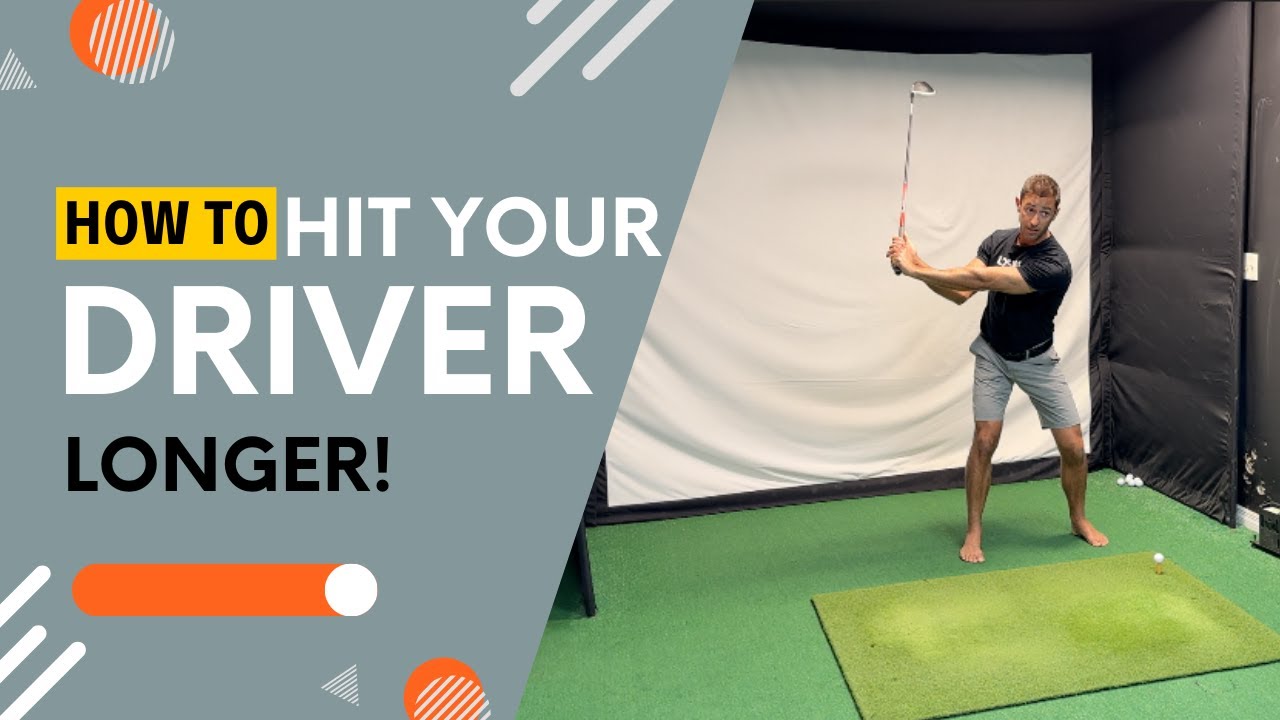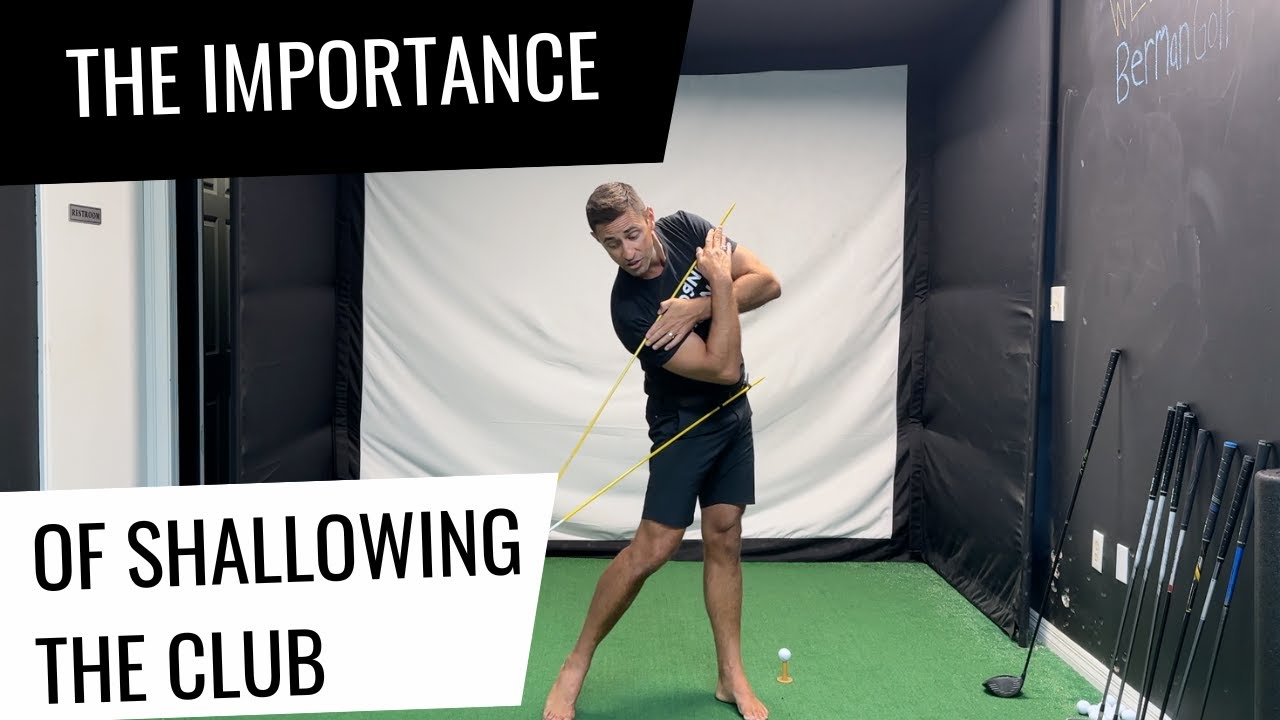
Golfers constantly search for more distance and better consistency, yet many overlook one of the simplest and most powerful swing fundamentals: shoulder turn.
If you’ve ever felt stuck in your backswing, forced to bend your elbow, hinge your wrists early, or manipulate the club just to complete the motion, the issue may not be your swing mechanics at all. It may be your posture.
At Berman Golf, we see this every day—especially in senior golfers. The problem isn’t effort. It’s how the body is positioned before the swing even begins.
The Real Reason Your Shoulder Turn Is Limited
Most golfers believe they lack flexibility. In reality, they lack positioning.
If you address the ball with a rounded upper back and collapsed chest, your shoulder turn becomes physically blocked. You simply cannot rotate fully from that position.

When posture is rounded:
- The thoracic spine becomes stiff
- The chest cannot lift or rotate properly
- The shoulders stop turning early
- The club keeps moving anyway
And that’s where compensations begin.
You might:
- Bend your trail elbow too early
- Over-hinge your wrists
- Straighten your trail knee
- Extend your lower back
- Shift weight improperly onto your front leg
- Reverse pivot

You can’t have one compensation without needing another compensation to fix the first one. That chain reaction is where inconsistency and frustration are born.
How Posture Instantly Increases Shoulder Turn
The quickest way to increase shoulder turn the right way is to fix your posture at address.
That’s it.
When you move from a rounded position to a properly stacked posture—chest up, core engaged—you immediately unlock more true shoulder rotation.
We’re not talking about dramatic change. Sometimes it’s a quarter inch of lift through the chest.
But that quarter inch can double your effective shoulder turn.
Here’s a simple way to feel it:
- Stand with your butt lightly touching a wall.
- Keep your knees soft.
- Pull your belly button inward to engage your core.
- Gently lift your chest without arching your lower back.
Now rotate.
Notice how much freer your shoulders feel compared to a rounded posture.
That difference is true shoulder turn.

True Shoulder Turn vs. Compensated Turn
A real shoulder turn loads the body. A compensated turn manipulates the club.
In a proper backswing checkpoint (about one-third to halfway back), you want alignment between:
- Belt buckle
- Hands
- Butt of the club
- Club head
At that position:
- The trail knee remains flexed
- Weight loads into the trail leg
- The trail glute is active
- The foot stays grounded
- The core is engaged
This creates stored power.
What most senior golfers look like at that same position is very different:
- Clubface already open
- Wrist overly hinged
- Trail elbow bending prematurely
- Weight drifting forward
- Heel rolling outward
That’s not power. That’s compensation.
And compensations don’t repeat under pressure.
Why This Is Especially Important for Senior Golfers
Many golfers over 60 are told to “just turn more” or “make a bigger backswing.” But if posture is limiting rotation, forcing more turn only increases strain on the lower back.
As a Doctor of Physical Therapy, I see this constantly. The aging body doesn’t move like a 25-year-old tour pro. Thoracic mobility decreases. Core engagement weakens. Glute activation slows down.
The answer isn’t swinging harder.
The answer is positioning the body so it can rotate efficiently.
When posture improves:
- Shoulder turn improves
- Glute loading improves
- Core stability improves
- Balance improves
- Power increases naturally
And distance becomes a byproduct of better movement—not more effort.
Want a Step-by-Step Blueprint?
If this resonates with you and you’re tired of advice designed for 25-year-old tour pros, I put together a simple blueprint specifically for senior golfers.
It breaks down:
- How the aging body changes
- Which muscles actually produce power
- How to gain distance without swinging harder
- How to improve consistency while reducing aches and pains
It’s written at a fifth-grade reading level with clear visuals and practical drills you can start immediately.
You can download a FREE digital copy at:
No gimmicks. Just clarity on how your body should move so you can play better golf for years to come.
The Top of the Backswing Doesn’t Matter
Most golfers obsess over where the club ends up at the top.
But the top of the backswing is irrelevant if you didn’t set yourself up correctly.
If you prepare for success at address—with proper posture and alignment—the rest of the swing unfolds naturally.
If you start from a compromised position, you’ll spend the entire swing trying to recover from it.
Consistency begins before the club even moves.
Small Changes Create Big Results
You don’t need a massive swing overhaul.
Sometimes going from “here” to “here”—a slight chest lift and better spinal alignment—is enough to unlock noticeable gains in:
- Shoulder turn
- Ball striking
- Distance
- Consistency
Small biomechanical adjustments compound quickly.
That’s how you build a repeatable swing.
Bringing It All Together
If you’ve been frustrated with limited shoulder turn, lack of power, or inconsistent ball striking, don’t immediately blame your swing plane or your grip.
Look at your posture.
True shoulder turn starts at address. When the body is positioned correctly, rotation improves naturally. When rotation improves naturally, compensations disappear. And when compensations disappear, consistency follows.
At Berman Golf, we focus on biomechanics first. We don’t teach cookie-cutter swings. We teach you how your body should move—especially as it ages—so you can generate power safely and repeat it under pressure.
Our in-house and online coaching programs are built specifically for senior golfers who want more distance and better consistency without beating up their bodies.
If you’re tired of advice designed for tour pros and ready for a blueprint built for your body, we’re here to help.
Because when your posture improves, your shoulder turn improves.
And when your shoulder turn improves, the game gets soooooo much easier!