Two tips. Both of them required. Neither one works without the other.
That is the honest truth about compressing the golf ball and hitting down on irons. Most golfers work on one piece and wonder why the divot never shows up. The reason is that both pieces have to be present at the same time, and most instruction only addresses one of them.
At Berman Golf, this is one of the most commonly asked about topics from the simulator, because slow motion video reveals the same two problems in almost every golfer who struggles with compression, and they always occur together.
What the Slow Motion Video Shows Every Time
Here is what the camera reveals when watching amateur golfers hit irons from a face on view.
At impact, the belt buckle, the hands, and the club head are all in a perfect line. All three aligned together at the exact same moment the club reaches the ball.
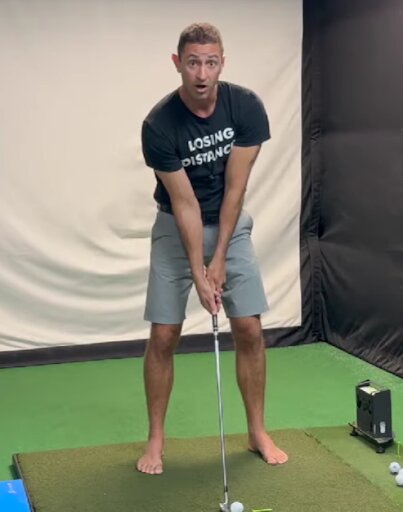
That alignment looks fine from a distance. From a biomechanics standpoint, it makes hitting down on the golf ball nearly impossible. When the belt buckle, hands, and club head all arrive at the ball at the same moment, there is no forward lean in the shaft. There is no lag. The low point of the arc is at the ball instead of after it. And if the low point is at the ball, the only option is to pick it clean or catch it thin. A proper descending blow and a divot after the ball cannot happen from that position.
Tip 1, Hips Have to Lead at Impact
Here is the first fix, and it is the foundation everything else builds on.
At impact, the hips have to be ahead of the hands. The hands have to be ahead of the club head. In that order. Hips, then hands, then club head.
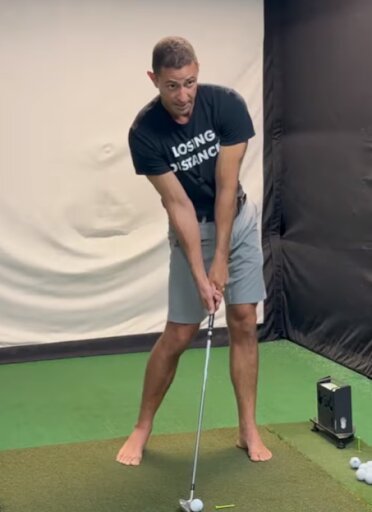
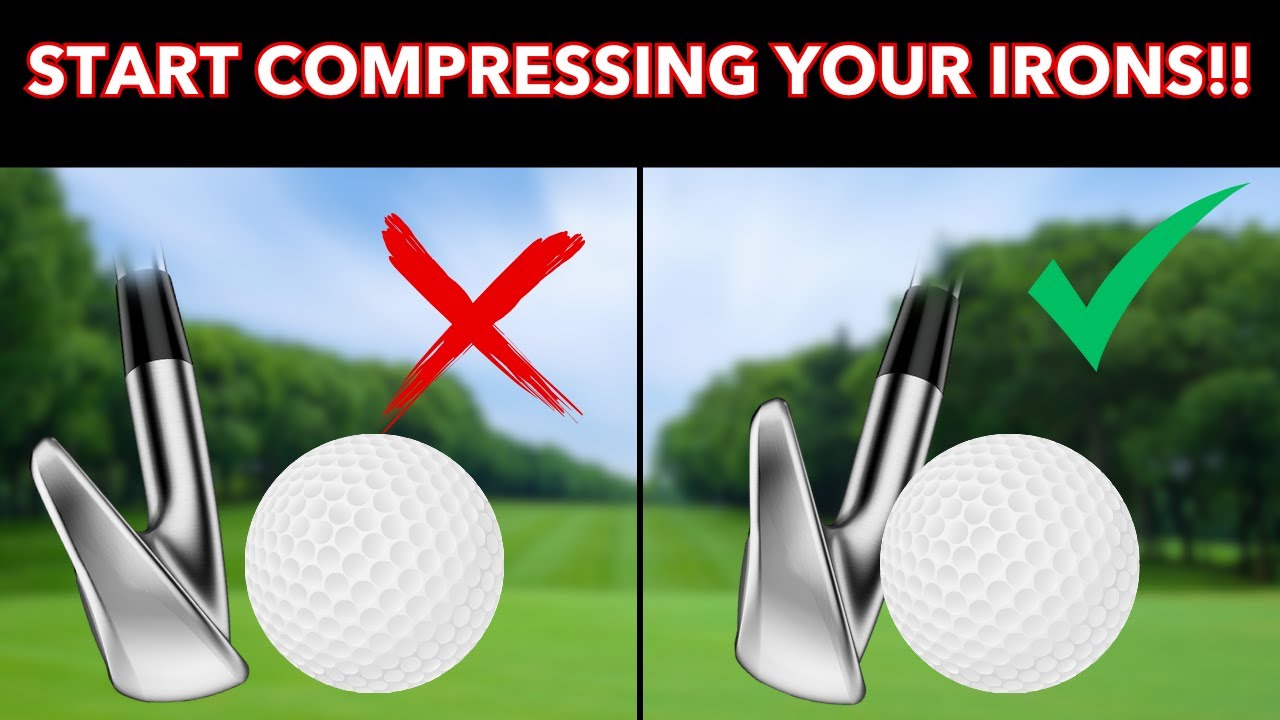
When the hips lead the way into impact and stay rotating through, the hands naturally end up ahead of the club head. That forward lean in the shaft is what creates compression. The club is still moving downward when it reaches the ball because the low point has been pushed forward past the ball by the leading hips.
Here is the part that surprises most golfers who are already trying to use their body in the downswing.
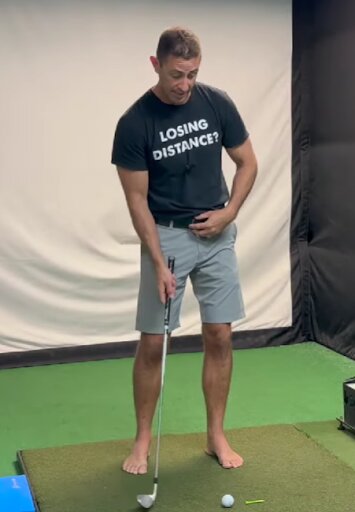
The body starts the downswing correctly with the hips leading. But somewhere before impact, the hips stall out. They stop rotating. The hands catch up. Everything arrives at impact in the same line and the flip happens. The swing looks like it was body led but the flip at impact proves the hips quit before the job was done.
This shows up in slow motion constantly. Golfers who are genuinely initiating the downswing with the body still end up flipping at impact because the hips stopped rotating too early. The fix is not just starting with the hips. It is keeping them rotating all the way through impact and past it.
Hips lead. Hips keep leading. Do not let them stall.
Tip 2, Hit Something After the Golf Ball
Here is the second tip, and this is the one that actually gets the brain to cooperate with tip one.
The lowest point of the swing arc has to be after the golf ball. Not at the ball. After it.
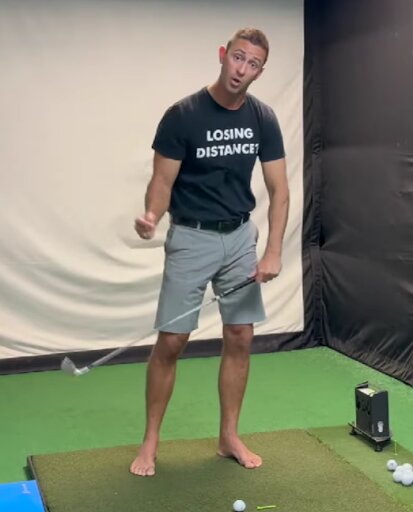
That sounds simple. The brain does not make it simple. Because the brain sees the ball, identifies it as the target, and automatically wants the swing to bottom out at the ball. That instinct is the enemy of compression. When the brain targets the ball as the low point, the club reaches its lowest point at the ball. No descent. No divot. No compression.
The fix is giving the brain a different target. Something past the ball.
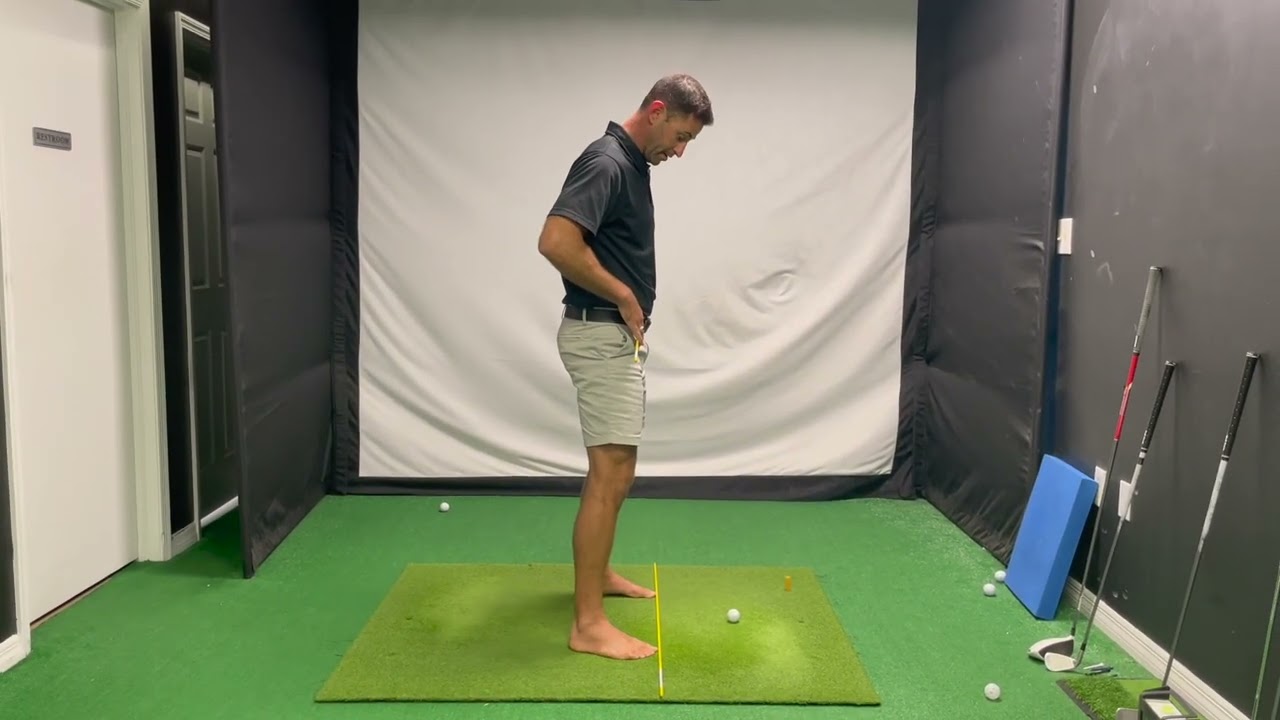
Here is the drill. Take a tee and place it about two inches in front of the golf ball, between the ball and the target.
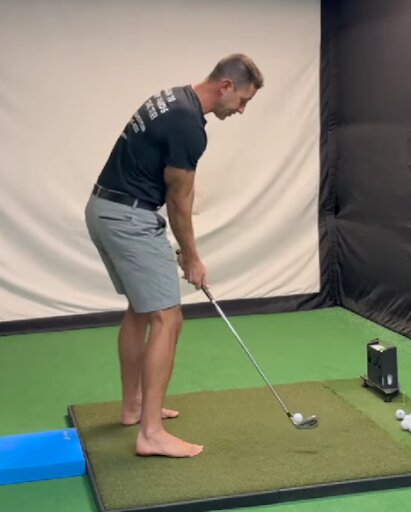
Set up to the golf ball normally. Then completely forget the ball exists. The only target is the head of that tee. Not the top of the tee. Not the front of it. The back of the tee head, sending it out toward the target.
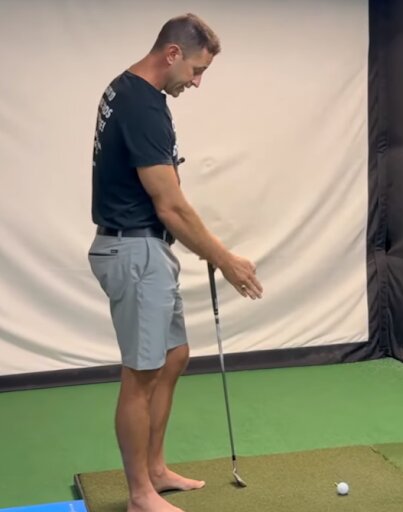
Go to the top of the backswing. Initiate with the hips. Come through and hit the back of that tee. The golf ball is irrelevant. The tee is the target.
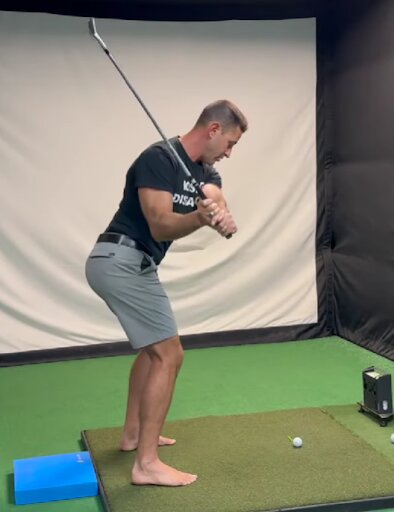
What happens when the brain targets the tee instead of the ball is exactly what needs to happen. The hips keep rotating to get to the tee. The hands stay ahead of the club head to reach it. The low point moves forward to where the tee is, after the ball. The ball gets compressed on the way through to the actual target.
Why Both Tips Have to Work Together
Here is the critical point that separates this from most compression advice.
Both tips are required simultaneously. Neither one alone produces the result.
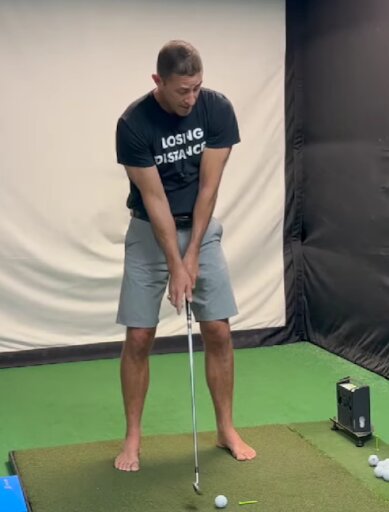
If the hips are leading correctly but the brain is still targeting the ball, the low point stays at the ball. The hips rotating does not automatically move the low point forward. The brain has to be redirected to a target past the ball for the low point to follow.
If the brain is targeting the tee but the hips and belt buckle are still aligned with the hands at impact, there is nothing driving the hands forward. The forward lean in the shaft cannot happen without the hips leading. Thinking about hitting the tee without the body sequencing correctly just leads to picking the ball thin instead of a proper descending blow.
Hips ahead of hands at impact, hips staying rotated through the shot. Brain targeting the tee two inches ahead of the ball. Both happening at the same time. That combination is what produces the descending blow, the compression, and the divot.
Taking It to the Range
Here is exactly how to practice this with a real ball.
Place a tee about two inches in front of the golf ball. Set up to the ball normally. Once in position, shift all focus to the tee. The ball becomes invisible. The tee is the only thing that exists.
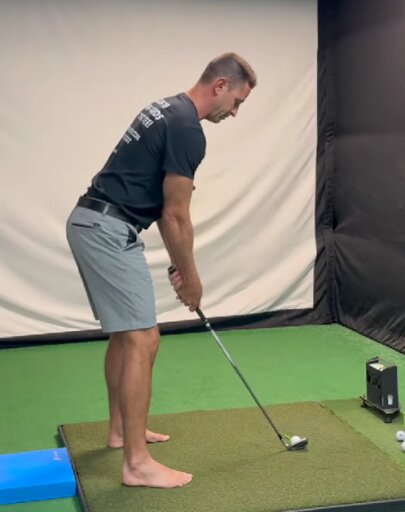
Top of the backswing. Hips initiate and stay rotating through. Hit the back of the tee head and send it toward the screen or the target.
If the tee gets hit and goes forward, the low point was past the ball. That is compression. That is a divot. That is exactly what should be happening on every iron shot.
Practice this until hitting the tee becomes the natural focus on every shot, and the golf ball becomes almost an afterthought on the way to the tee.
Get a Free Swing Analysis
Want to know whether the hips are stalling at impact right now and whether the low point is at the ball instead of after it?
Set the camera or phone up at two angles. One from the front, face on. One from behind, down the line. Film in slow motion. Swing.
Send both videos to gaindistance.com and Dr. Berman will give a free swing analysis. The first one is on him.
See exactly what the camera shows, not what the brain thinks is happening. The slow motion face on view will show immediately whether the belt buckle, hands, and club head are arriving together or whether the hips are actually leading the way through impact.
Want a Step-by-Step Blueprint?
If this resonates and the advice out there feels designed for 25-year-old tour pros, there is a simple blueprint built specifically for senior golfers.
It breaks down:
How the aging body changes Which muscles actually produce power How to gain distance without swinging harder How to improve consistency while reducing aches and pains
It is written at a fifth-grade reading level with clear visuals and practical drills that can start immediately.
A FREE digital copy is available at: 👉 gaindistance.com
No gimmicks. Just clarity on how the body should move to play better golf for years to come.
Bringing It All Together
Two tips. Both required at the same time.
Hips have to be ahead of the hands at impact and they have to stay rotating through the shot without stalling. When the hips stall, the hands catch up, the flip happens, and the low point stays at the ball.
The brain has to be given a target past the ball. A tee placed two inches in front of the ball gives the brain something concrete to aim at. When the brain targets the tee, the low point moves forward to where the tee is, past the ball, and the descending blow happens naturally.
Marry both things together and compression, lag, and a proper divot after the ball all become achievable on a consistent basis.
At Berman Golf, the focus is biomechanics first. Not cookie cutter swings. The goal is teaching the body how it should move, especially as it ages, so power can be generated safely and repeated under pressure.
The in-house and online coaching programs are built specifically for senior golfers who want more distance and better consistency without beating up their bodies.
For anyone tired of advice designed for tour pros and ready for a blueprint built for their body, help is available.
Because when the hips lead all the way through and the brain is chasing the tee instead of the ball, the lowest point of the arc finally ends up where it was always supposed to be.
And when the low point is after the ball, the game gets soooooo much easier!
If you enjoyed what you read and want to see it in action, watch the video below where Dr. Berman demonstrates both tips and the tee drill live on the simulator!