You already know your body doesn’t move the same way it did in your 20s or 30s. That’s not a secret. But here’s the problem—your brain hasn’t gotten the memo yet.
Your mind still wants to make that big, powerful swing. Your body taps out early. And what fills that gap? Your hands.
That right there is the root of your slice.
At Berman Golf, this is one of the most common patterns we see in senior golfers—and the fix isn’t more flexibility work. It’s one specific move at the finish that changes everything.
Your Belt Buckle Is Going to Right Field
Take a baseball analogy. If you’re finishing your swing with your belt buckle pointing to right field—not even right center, but right field—and you’re trying to hit the ball straight, something has to give.
That “something” is your hands.
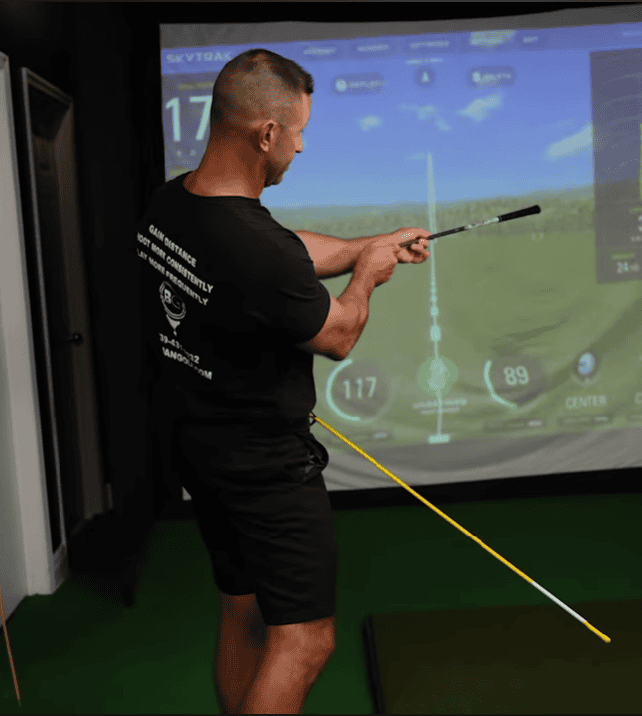
When your hips stall and your belt buckle never gets to the target, your brain panics. It knows the ball needs to go forward, so it sends a signal to your hands: flip it, manipulate it, make it work somehow.
The result? Horrible consistency. Because you can’t manufacture the same hand flip under pressure, round after round.
The goal has always been to hit the golf ball with your body—not your hands. When your finish breaks down, that goal becomes impossible.
The Fix: Straighten That Left Knee
Here’s the key most golfers miss entirely.
To get your belt buckle and chest rotating fully to the target, you have to straighten your lead (left) knee through impact and into the finish.
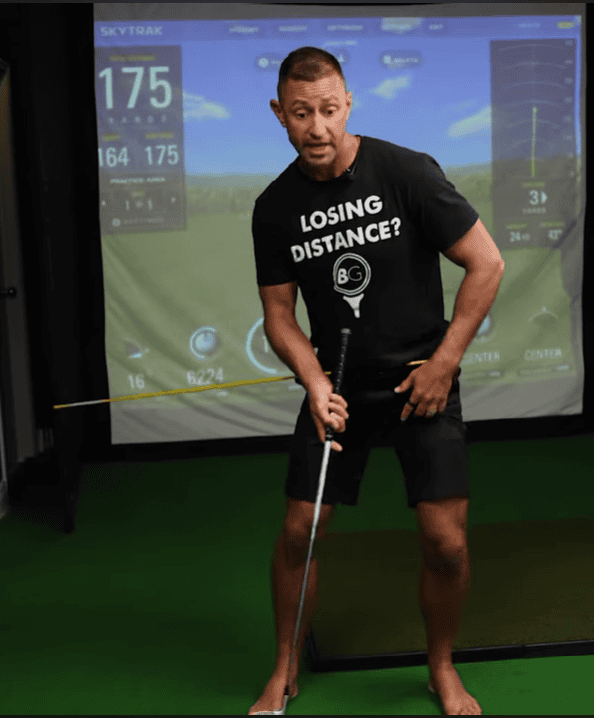
Think about it like throwing a baseball. When you throw, you naturally drive your hips toward the target. You don’t stop halfway and sidearm it. The body just knows to get there.
Golf is the same. When you pull that left knee straight and let the hips keep rotating, your brain gets confirmation: the body is finishing the swing. And when the brain trusts the body, it stops sending desperate signals to the hands to compensate.
No flip. No manipulation. Just a clean, repeatable release.
If you release the club head to the right of the target with a bent knee, manipulation is almost guaranteed. Straighten that knee and keep the hips going—and now you’re swinging with your body the way it was designed to move.
How to Train This Safely (Even With Bad Knees)
This is where it gets really practical—especially for golfers with arthritic knees, bone-on-bone issues, or meniscus problems.
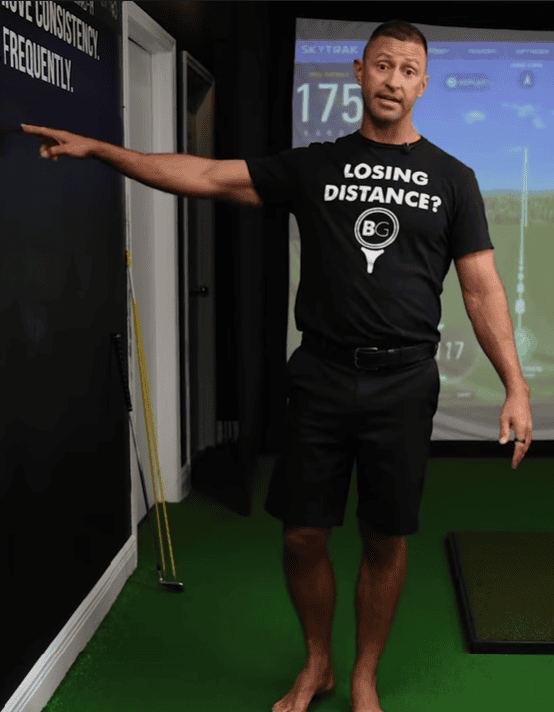
Grab a wall with your right hand.
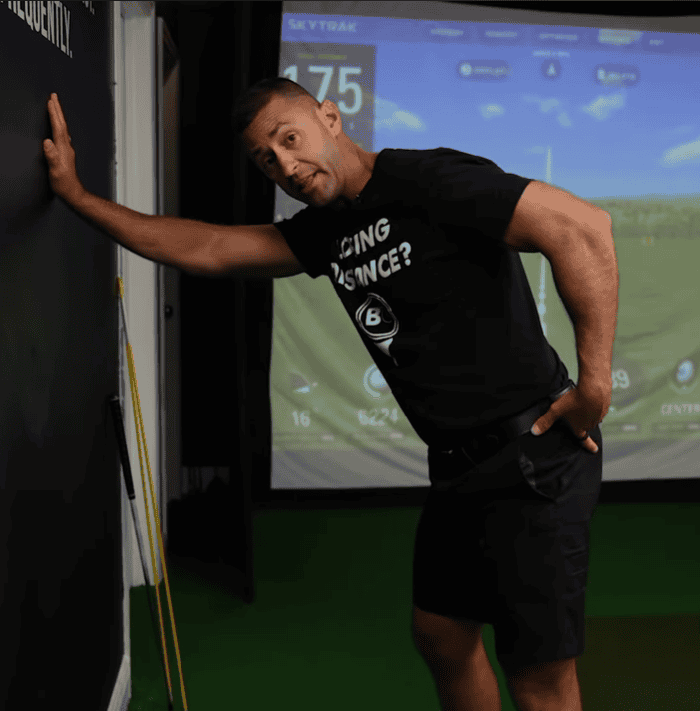
Here’s the drill:
- Soft stance, hips back
- Straighten your left knee as much as you can—then a little more
- Rotate your belt buckle to the target
The wall gives your brain a sense of security it doesn’t have in open space. That security matters. Your nervous system will allow your body to do things near a wall that it simply won’t do on its own.
You’ll probably feel tightness or stretching. That’s normal. Don’t push through sharp pain—but don’t confuse discomfort with danger.
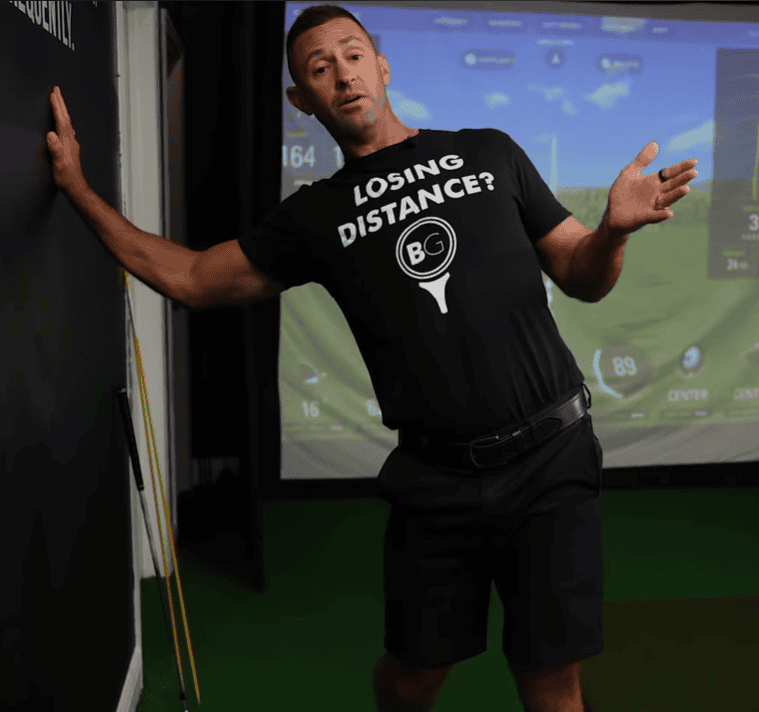
Once you feel comfortable with the wall, do the same movement without the wall and without a golf club. The moment you put a club in your hand, your brain gets distracted by the club and forgets what the body is supposed to be doing. Train the movement first. Add the club later.
Can’t Get Your Weight Over? Take This Test First
Here’s a pro tip that cuts straight to the truth.
If you’re struggling to transfer your weight fully onto the left side with a straight knee, there may be a deeper issue. Try this right now:
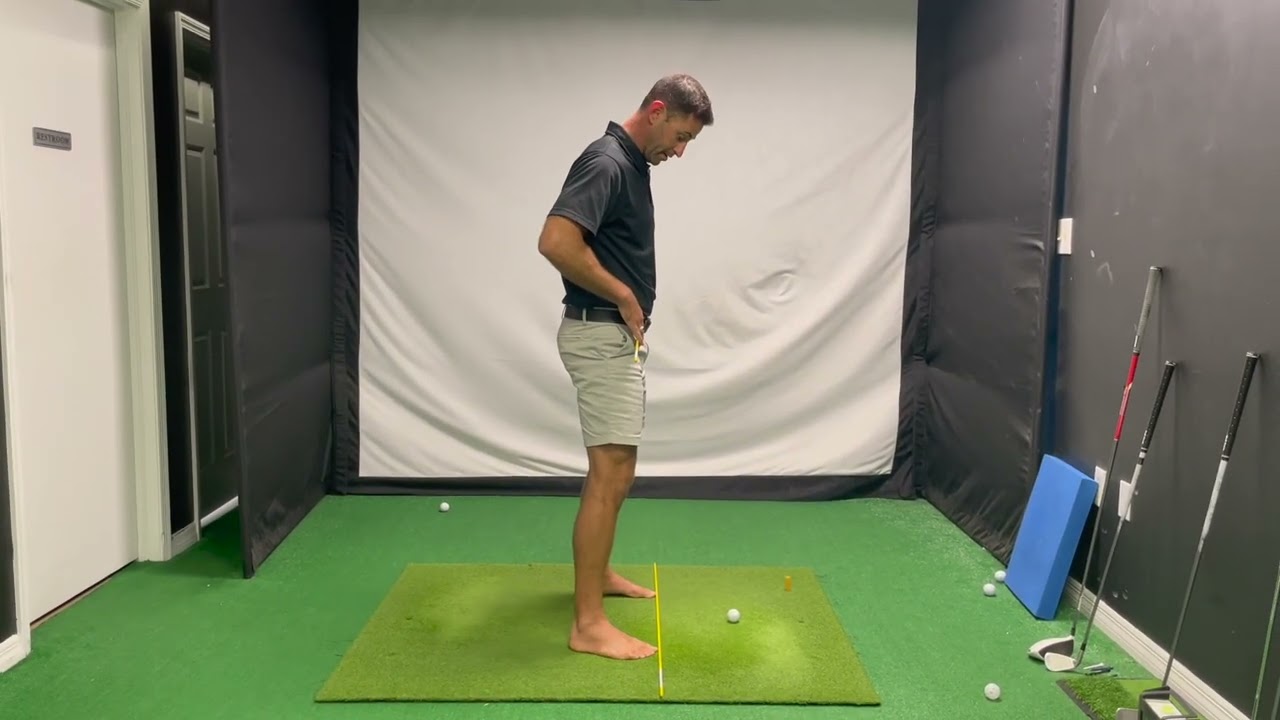
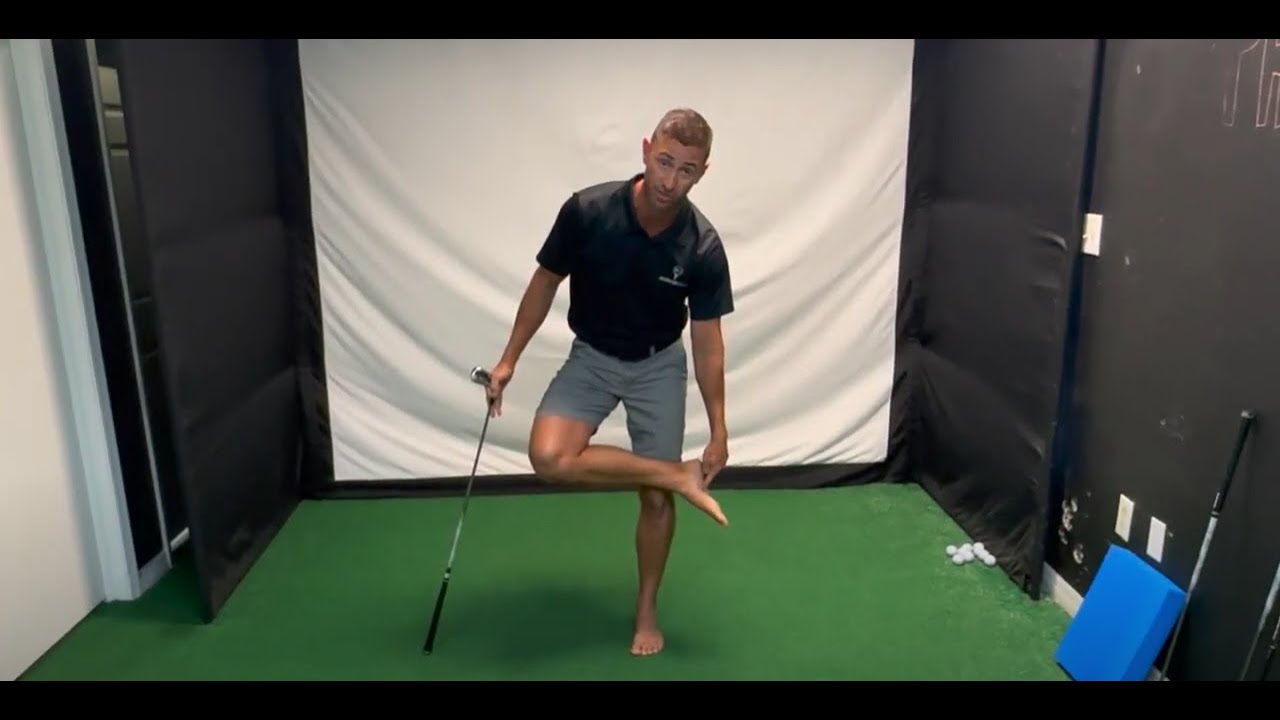
Hands on your hips. Pick your right leg straight up off the ground—no bending the knee, no letting the foot swing forward. Hold it.
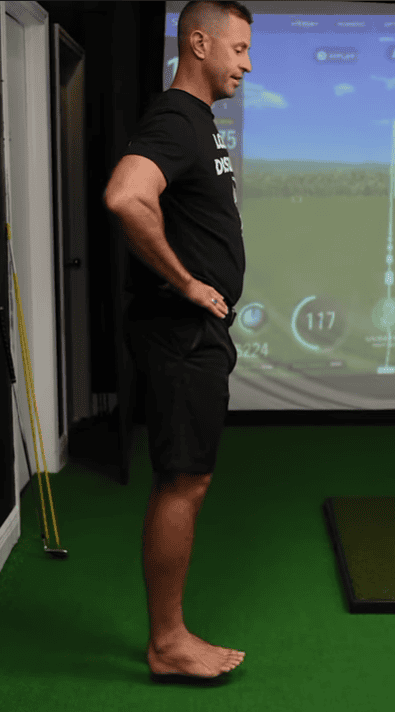
Can you hold that for 10 seconds without dancing like crazy?
If yes—you have the balance to physically transfer your weight to the lead side. The issue is mechanical, and the drills above will fix it.
If no—then you’re asking your body to do something it’s not yet capable of. Your brain will never fully commit to loading the lead leg if it doesn’t trust your ability to balance there. There’s no amount of swing instruction that overrides a nervous system protecting you from falling.
In that case, before working on your finish, work on this:
Stand on your left leg every day. Use the wall for support if needed. Within four to six weeks, most golfers can build enough single-leg balance to hold for 10 seconds comfortably.
That foundation changes everything else.
Work Smarter, Not Harder
Your golf pro isn’t going to ask if you can stand on one leg. They’re going to tell you to “turn more” or “swing through the ball”—advice designed for a 25-year-old tour pro.
As a Doctor of Physical Therapy, I look at the real problem: can your body actually do what the swing requires? If not, let’s fix that first—not treat the symptoms.
When the finish improves, the slice improves. When the slice improves, fairways open up. When fairways open up, the game gets a whole lot more fun.
Want the Full Blueprint?
If this resonates with you, I put together a free digital guide specifically for senior golfers—written at a fifth-grade reading level, filled with pictures and drills you can start immediately.
It covers how the aging body changes, which muscles actually produce power, and how to gain distance without swinging harder.
👉 Download your FREE copy at gaindistance.com
No gimmicks. Just clarity on how your body should move so you can find more fairways, stick more greens, and play better golf for years to come.