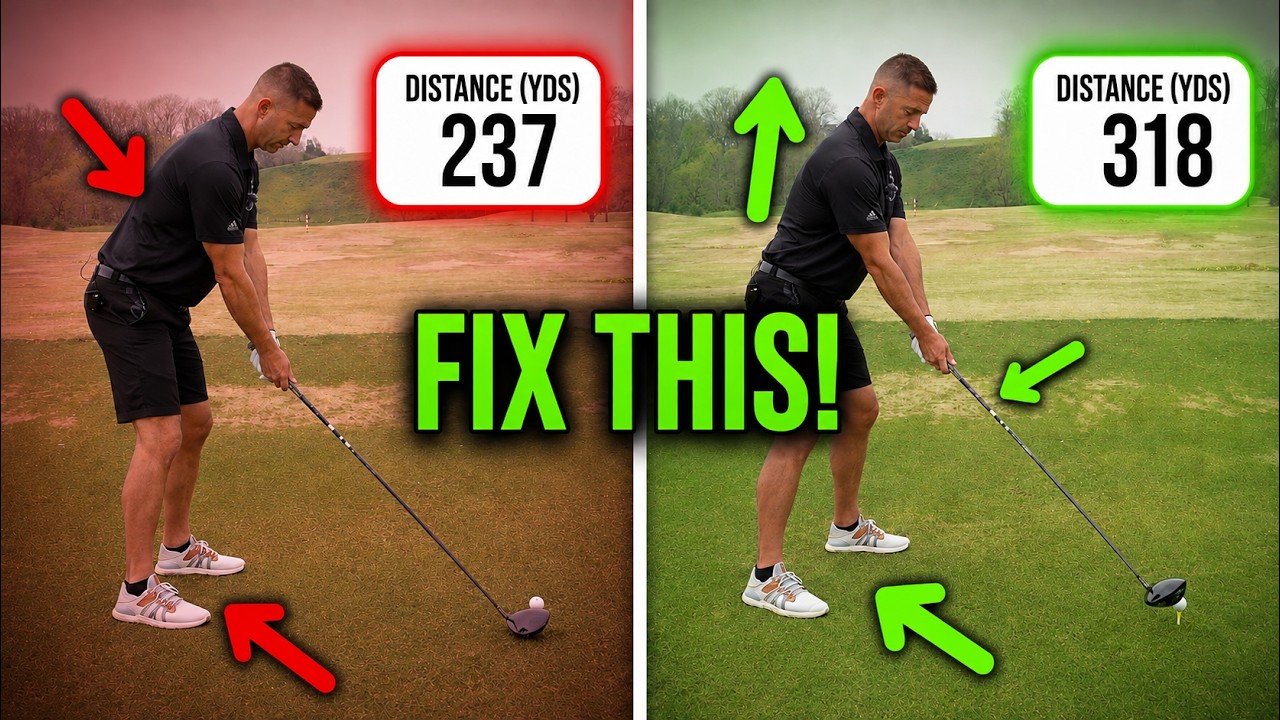
Every year a new driver comes out guaranteed to give you 20 more yards.
Every year it costs more than the last one. And every year, the distance problem for most senior golfers stays exactly the same.
Here’s what actually moves the needle: a $20 foam roller and 60 seconds a day.
Not 60 minutes. Not a gym membership. Not a range session. Sixty seconds. And when done correctly, this drill improves flexibility, increases shoulder turn, fires the core and glutes, and trains the hip-to-shoulder dissociation that is the single biggest factor separating golfers who gain distance as they age from golfers who keep losing it.
At Berman Golf, this is one of the most popular drills we’ve ever given senior golfers. And after years of seeing it work—for golfers with bad backs, bad knees, bad shoulders, and limited flexibility of every kind—we’re giving you the complete breakdown right here.
The Setup: Get This Right Before You Rotate
All you need is a 36-inch foam roller. Twenty dollars on Amazon. If you don’t have one yet, get one today.
Start with good posture. Not rounded. Chest way up. Belly button pulled in toward the spine. This is non-negotiable because rounded shoulders at address mean the thoracic spine is already locked before the drill even begins—and a locked thoracic spine means no real rotation is possible.

Place the foam roller directly on your sternum—right in the center of your chest. Reach your arms out straight. No bent elbows. No rounding the shoulders as you reach. Keep the chest tall as the arms extend.

Now get into your golf stance. Soft knees—don’t squat, don’t bend dramatically, just soften. Then push the hips straight backward. This is the hip hinge that keeps the spine angle intact. The roller should be pointing roughly at a 45-degree angle—not straight down at the ground where the ball would be.
Find a spot on the floor in front of you and keep your eyes there throughout the drill. This stops the slide. This keeps the rotation honest.
Now you’re ready.
Part One: The Backswing
Go into the backswing.
As you rotate, three things have to happen simultaneously—and each one matters.
Keep the trail knee bent.

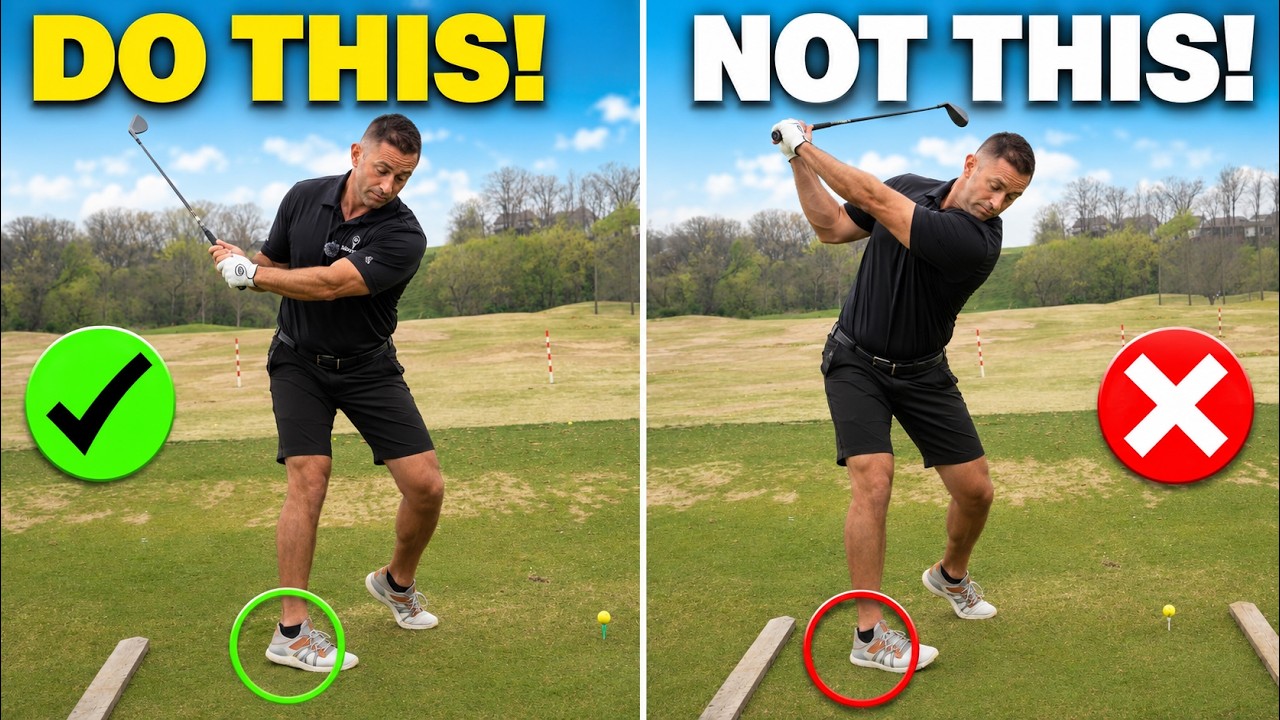
As you turn, increase the pressure through your trail foot arch. Drive that foot into the ground. Don’t let it roll out. When the foot stays grounded and the knee stays bent, the glute fires. When the glute fires, the core engages. When the core engages, the whole power chain activates—and the back stops absorbing the stress it was never supposed to carry.
Keep the right hand on top of the left hand.
This is the cue that most senior golfers have never heard—and it’s the one that changes everything.

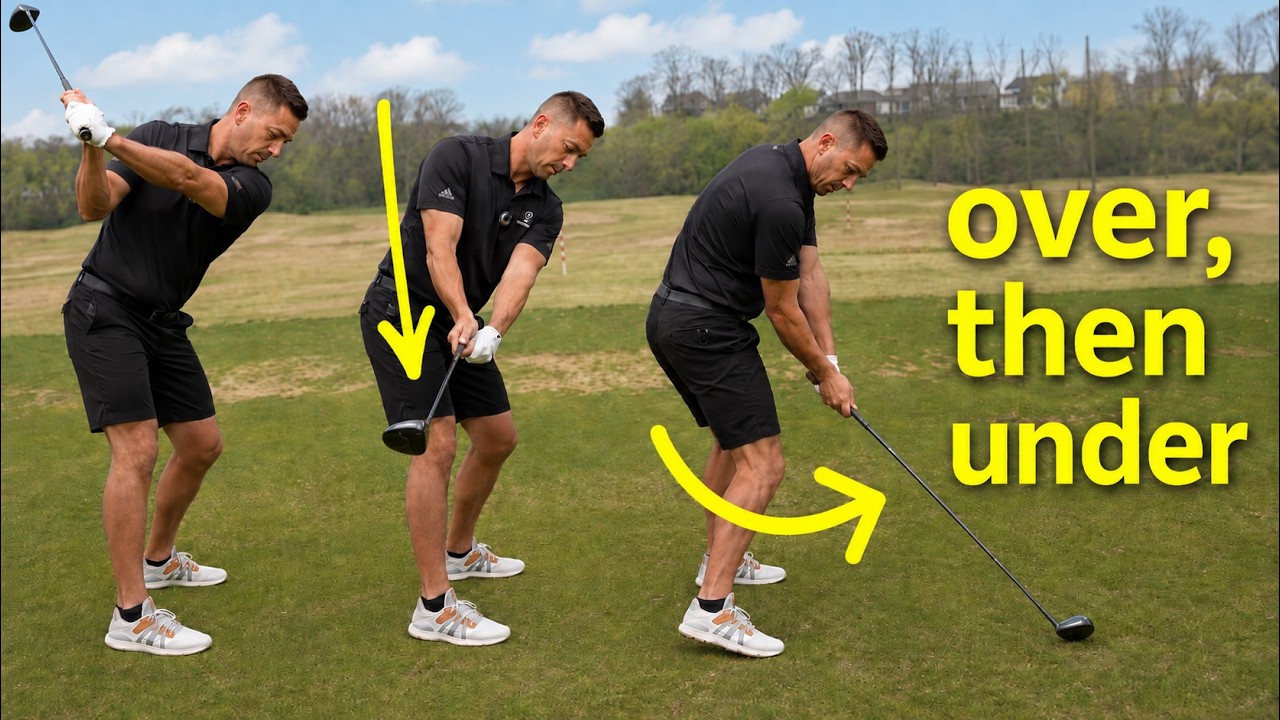
Most senior golfers, as they rotate into the backswing, let the hands flip so they’re facing each other instead of one on top of the other. That flip is a sign that the spine angle has been lost—the shoulders have leveled out, the body has gotten taller, and every compensation that follows is now inevitable. Over the top. Yanked shots. Shanks. Loss of club head speed.
When the trail hand stays on top of the lead hand, the left shoulder has to tilt down toward the golf ball. Spine angle is maintained. The rotation is real—not a compensation pretending to be a rotation.
Exaggerate it if you need to at first. Exaggerating the correct position is always better than subtly maintaining the wrong one.
Now unlock extra inches with the belt buckle
Here’s where the flexibility gains come from.
When you’ve rotated as far as you think you can go—when you feel stuck—take the belt buckle and turn it just a hair farther. One inch. Maybe less.

What happens next will surprise you.
That one extra inch from the hips unlocks three, four, sometimes five additional inches of shoulder turn. The hips lead and the shoulders follow—and when you give the hips just a little more, the shoulders get a lot more.
That’s not flexibility you didn’t have. That’s flexibility that was already there, locked behind a hip turn that was stopping short of its actual limit.
Do this ten times. Backswing and return. Each rep building the pattern a little deeper into the brain’s motor memory.
Part Two: The Follow-Through
A beautiful backswing that can’t get through the ball is useless. So here’s the second half of the drill.
Same position. Foam roller on the chest. Straight arms. Soft knees. Hips back.
Now instead of rotating away from the target, rotate toward it.

Drive the belt buckle toward the target. Straighten the lead knee. Roll onto the outside of the lead foot. Push through the trail leg.
The foam roller stays flat—it does not rotate with the hips. That’s the whole point. The lower half is moving to the target while the upper half—held by the foam roller against the chest—stays back.
That separation is called dissociation. And dissociation is where lag comes from. It’s where distance comes from. It’s what allows the hips to get through the ball while the hands lag behind, creating that stored energy that gets released at impact.

Most senior golfers have no dissociation at all. The hips and shoulders spin together as one unit—and when everything moves at the same time, nothing accelerates. The ball goes nowhere because there’s no differential, no loading, no release.
Here’s one thing to watch carefully: do not rotate and fall back onto the trail leg. The hips have to drive through to the target—not spin in place and retreat. Think about pushing the hips toward the camera, getting your head over the inside of the trail foot, and feeling the stretch through the lead hip and oblique.

That stretch is tight. That stretch is uncomfortable. That’s the exact limitation that’s been blocking your follow-through—and that’s exactly why we do this in a controlled, low-load environment without a club before we ever try to do it in a real swing.
Do ten repetitions toward the target after your ten backswing reps.
The Full Sequence: 60 Seconds a Day
Ten backswing reps. Ten follow-through reps. That’s it.

Done correctly, with the right focus on each cue, the whole thing takes less than sixty seconds.
In sixty seconds you get:
- Improved flexibility into the backswing
- Increased shoulder turn from unlocking the hips
- Core and glute activation in a golf-specific pattern
- Hip-to-shoulder dissociation for the downswing and follow-through
- Spine angle training without the pressure of hitting a ball
That’s a better return on investment than a $1,000 driver. Every single time.
Why This Works When Nothing Else Does
Here’s the reason this drill is so effective for senior golfers specifically.
It removes the ball from the equation.
The moment a ball is on the ground, the brain shifts its priority from “move correctly” to “get that thing airborne.” And every unconscious compensation pattern you’ve ever developed floods back in—because the brain is chasing a result instead of building a movement.
This drill trains the movement. Without the result getting in the way. In a controlled, specific, golf-posture pattern that directly translates to what happens when the club is in your hands.
Your brain learns what proper rotation feels like. What spine angle feels like. What dissociation feels like. And once the brain knows what those things feel like, it can start to reproduce them when it matters.
Start Here Before Every Round
To take everything this drill builds and carry it into your actual round, go to:
A free five-minute warm-up video built specifically for senior golfers. Do it on the driving range before you hit a single ball. Save it to your home screen—it works like an app. Less than five minutes. You will not feel embarrassed doing it.
It gets the shoulder turn, hip turn, core, and glutes ready to actually perform—so when you step up to the first tee, the muscles this drill woke up are still awake.
Want a Step-by-Step Blueprint?
If this resonates with you and you’re tired of advice designed for 25-year-old tour pros, I put together a simple blueprint specifically for senior golfers.
It breaks down:
- How the aging body changes
- Which muscles actually produce power
- How to gain distance without swinging harder
- How to improve consistency while reducing aches and pains
It’s written at a fifth-grade reading level with clear visuals and practical drills you can start immediately.
You can download a FREE digital copy at: 👉 gaindistance.com
No gimmicks. Just clarity on how your body should move so you can play better golf for years to come.
Bringing It All Together
Stop buying drivers. Start building the body that can use the driver you already have.
Twenty dollars. Sixty seconds a day. Ten backswing reps with the trail hand on top, the trail knee loaded, and the belt buckle squeezing out one extra inch at the end. Ten follow-through reps with the hips driving toward the target, the lead knee straightening, and the foam roller staying flat while the lower body separates from the upper.
That’s the drill. That’s the flexibility. That’s the dissociation. That’s the shoulder turn. That’s the distance.
At Berman Golf, we focus on biomechanics first. We don’t teach cookie-cutter swings. We teach you how your body should move—especially as it ages—so you can generate power safely and repeat it under pressure.
Our in-house and online coaching programs are built specifically for senior golfers who want more distance and better consistency without beating up their bodies.
If you’re tired of advice designed for tour pros and ready for a blueprint built for your body, we’re here to help.
Because when the body moves correctly for sixty seconds a day, the game changes.
And when the game changes, everything gets soooooo much easier!