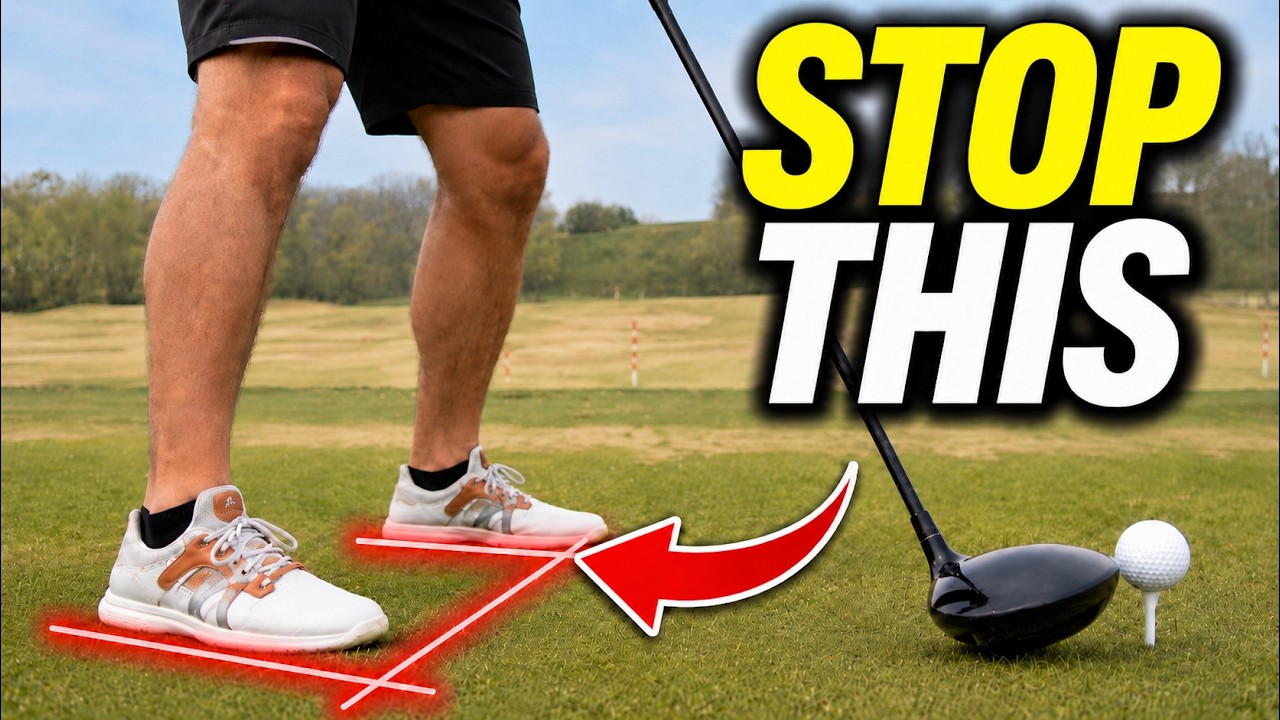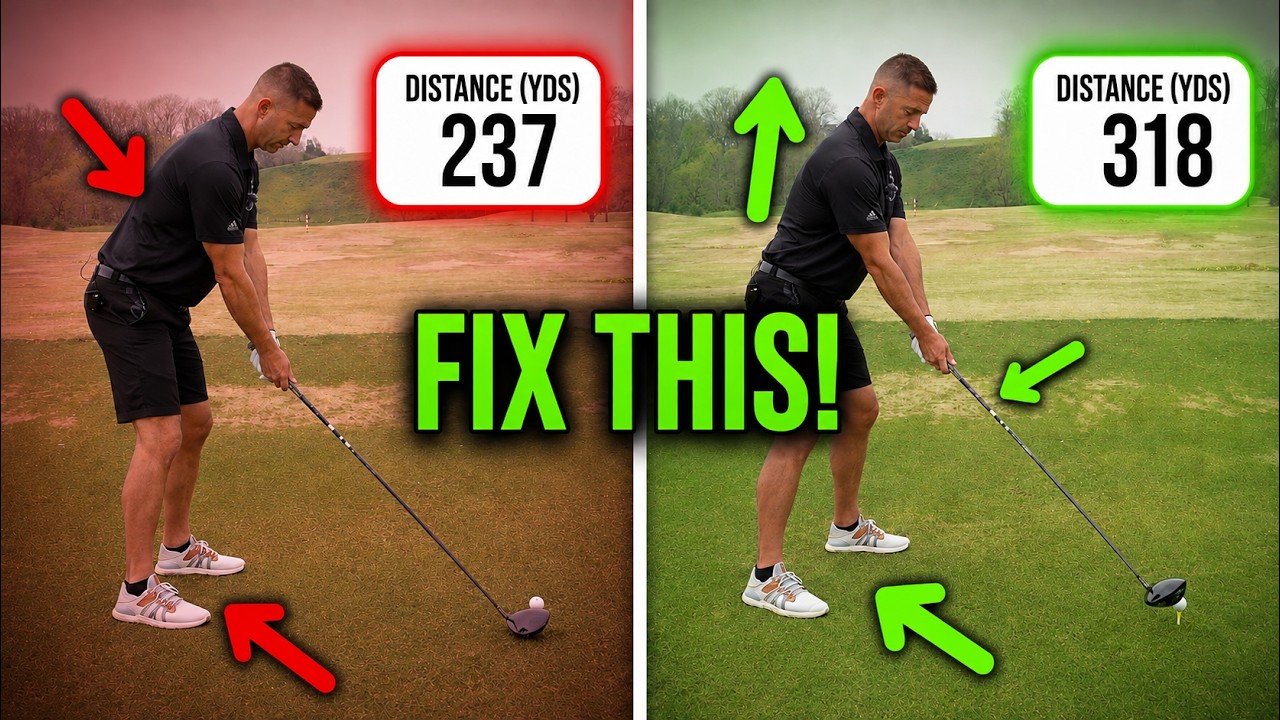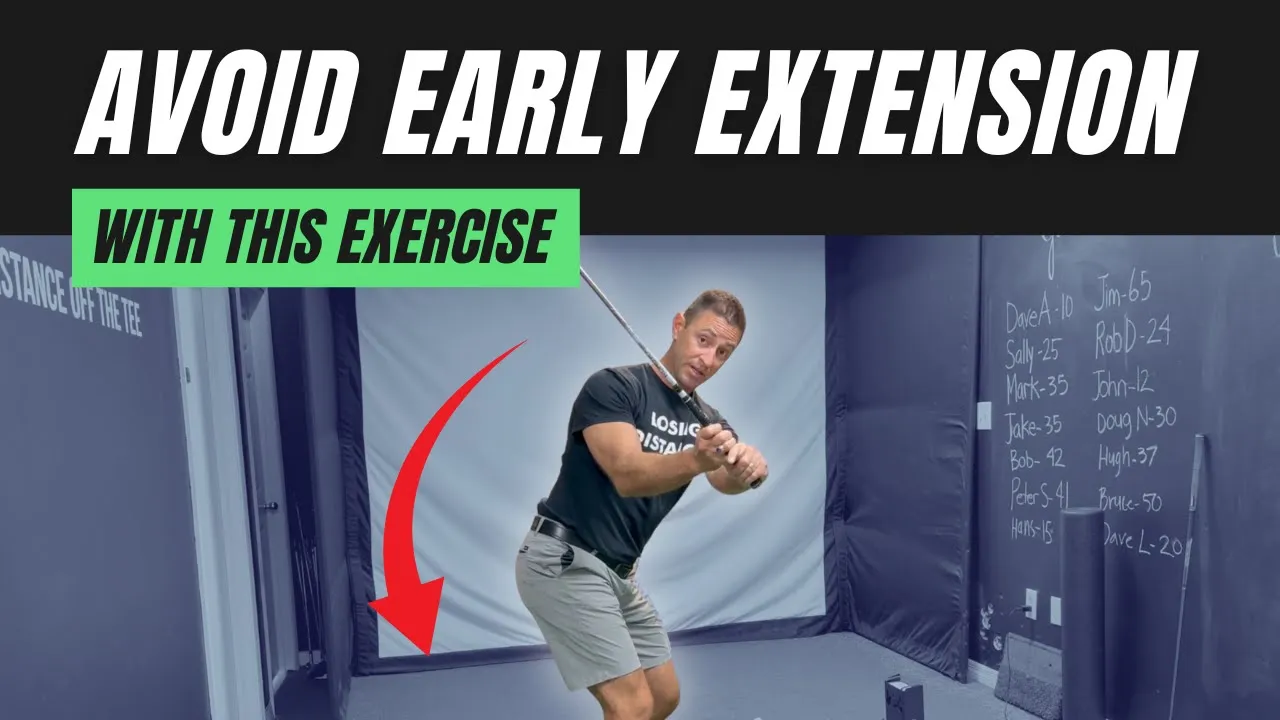
Early extension is one of those swing problems that frustrates golfers for years because they keep trying to fix the wrong thing.
The extension itself is not the problem. It is the result of something that happened earlier in the swing, and no amount of trying to stop the extension directly will fix it. The brain caused the extension on purpose, and it had a very good reason for doing it.
At Berman Golf, understanding why the brain forces early extension is the first step to actually fixing it. Once that reason is clear, the solution becomes simple. Not easy, but simple.
Why the Brain Forces Early Extension
Here is exactly what is happening and why.
When the downswing initiates with the hands and arms, the club comes down on a steep path. Too steep. Steep enough that if nothing changed, the club would drive straight into the ground before ever reaching the ball.
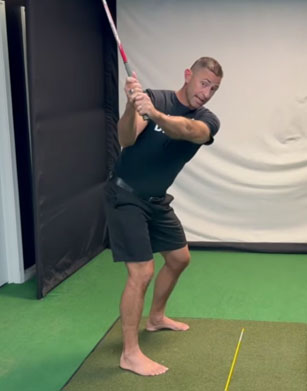
The brain recognizes that collision course immediately. So it does the only thing available to avoid it. It forces the body to extend upward, standing up out of the shot, to shallow the club path just enough to get through the ball.
That extension is not a flaw the brain invented on its own. It is a perfectly logical response to the steep path created by initiating with the hands. The brain is protecting the swing from going into the ground.
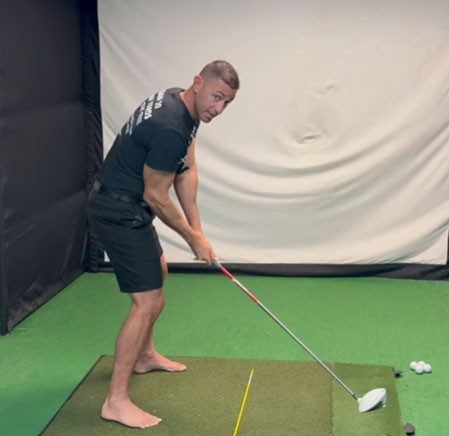
This is why trying to stop the extension directly never works. The brain will keep doing it as long as the steep initiation is happening, because from the brain’s perspective, the extension is the correct and necessary response. The root cause has to be addressed first.
The Real Fix, Squat and Rotate
Here is what needs to happen instead of extending upward.
At the top of the backswing, the first move of the downswing is a squat. The hips move back and away from the ball, as if sitting back onto a low seat behind the body.
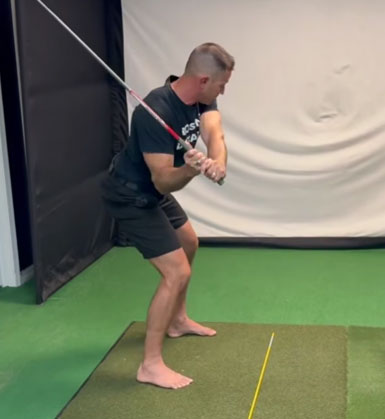
That squat creates room. Instead of the club coming straight down on a steep path with nowhere to go, squatting the hips back opens up space for the club to shallow automatically. The club path changes without any conscious hand manipulation, simply because the hips got out of the way and created the room for it.
From that squatted position, the belt buckle rotates toward the target. Squat, then rotate. In that order.
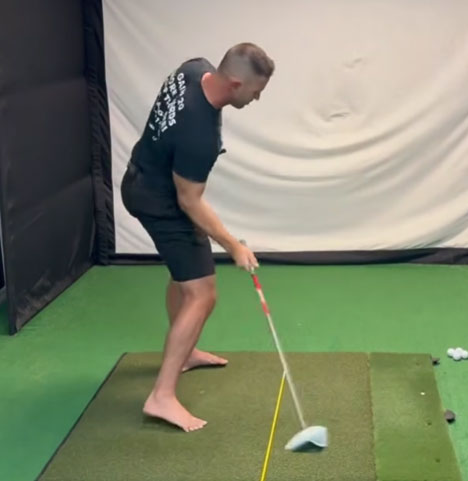
Look at what the club shaft does when the squat and rotate happen correctly. It shallows on its own. No hand action involved. No conscious attempt to flatten the path. Just squatting the hips back and rotating the belt buckle, and the club finds the shallow path automatically.
What Most Golfers Do Instead
Here is the opposite of what this drill teaches, and it is what the vast majority of amateur golfers do on every single swing.
Backswing. Hands initiate the downswing and start pulling the club straight down. Too steep. Brain extends the body to shallow the club. Ball gets hit from an early extension position with no power and no consistency.
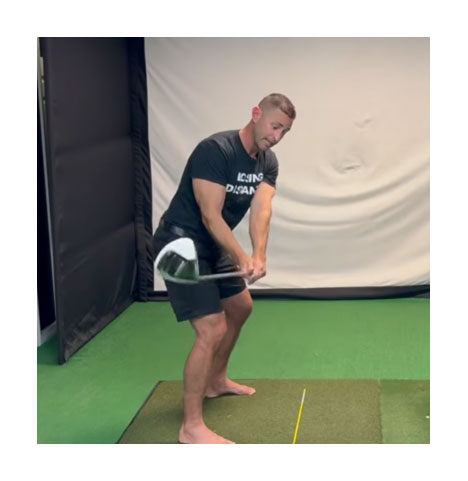
That pattern feels normal because it has been repeated thousands of times. The brain is very good at it. But it is a compensation chain, not a swing, and it can never be made truly consistent because it relies on a last second extension to save a steep path that never should have happened in the first place.
The squat and rotate drill replaces that compensation chain with an actual sequence.
How to Train It, Slow and Repetitive
Here is where most golfers make the second mistake with this drill.
They do it five times, feel like they have it, and head straight to the driving range to hit balls with it.
Do not do that.
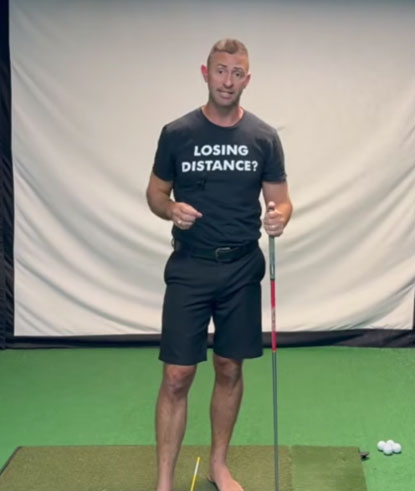
Only after hundreds of slow repetitions does it make sense to try this with a ball. And even then, start with slow motion practice swings at the range before going to full speed. The brain needs time to overwrite a pattern that has probably existed for years.
The Three Word Sequence to Remember
Here is the entire drill reduced to three words.
Back. Squat. Rotate.
Backswing. Squat the hips away from the ball. Rotate the belt buckle toward the target. That sequence shallows the club, creates room to come through, and removes the need for early extension because the brain no longer sees the ground as a threat.
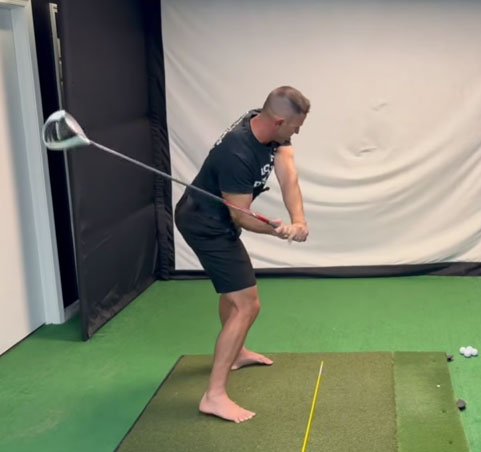
No hand action needed. No conscious shallowing required. The squat does the shallowing automatically, and the rotate finishes the swing.
Get a Free Swing Analysis
Want to know whether early extension is showing up in the swing right now and exactly what is causing it?
Set the camera or phone up at two angles. One from the front, face on. One from behind, down the line. Film in slow motion. Swing.
Send both videos to gaindistance.com and Dr. Berman will give a free swing analysis. The first one is on him.
See exactly what the camera shows, not what the brain thinks is happening. Then there is clarity on whether the initiation is too steep and whether the early extension is being triggered as a result.
Want a Step-by-Step Blueprint?
If this resonates and the advice out there feels designed for 25-year-old tour pros, there is a simple blueprint built specifically for senior golfers.
It breaks down:
How the aging body changes Which muscles actually produce power How to gain distance without swinging harder How to improve consistency while reducing aches and pains
It is written at a fifth-grade reading level with clear visuals and practical drills that can start immediately.
A FREE digital copy is available at: 👉 gaindistance.com
No gimmicks. Just clarity on how the body should move to play better golf for years to come.
Bringing It All Together
Early extension is not the problem. It is the brain’s automatic response to a steep downswing initiated by the hands. Fix the initiation and the extension disappears, because the brain no longer needs it.
Back. Squat. Rotate. Squat the hips away from the ball at the top of the backswing to create room, then rotate the belt buckle toward the target. The club shallows automatically. The extension is no longer necessary. The swing comes through the ball instead of up and out of it.
Do it a hundred times. Slowly. Then another hundred. Then another hundred after that. Only then bring a ball into it.
At Berman Golf, the focus is biomechanics first. Not cookie cutter swings. The goal is teaching the body how it should move, especially as it ages, so power can be generated safely and repeated under pressure.
The in-house and online coaching programs are built specifically for senior golfers who want more distance and better consistency without beating up their bodies.
For anyone tired of advice designed for tour pros and ready for a blueprint built for their body, help is available.
Because when the squat creates the room and the rotation finishes the swing, early extension stops being necessary and the ball gets compressed the way it was always supposed to.
And when the ball gets compressed properly, the game gets soooooo much easier!
If you enjoyed what you read and want to see it in action, watch the video below where Dr. Berman walks through the full squat and rotate drill!