One position. That is the entire focus of this drill.
Not a full swing thought. Not a sequence of ten things to remember at the top of the backswing. Just one specific position to practice getting into, over and over, until the lower body learns to lead the downswing automatically instead of the arms jumping in and taking over.
At Berman Golf, this is one of the clearest ways to make the correct downswing initiation feel tangible instead of abstract. Practice the position. Build the feel. Then let it carry over into the actual swing.
The Starting Point, Top of the Backswing
Get into address position and swing to the top of the backswing. That is the starting point for this drill every single time.
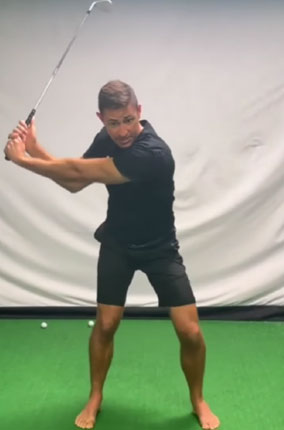
From the top, the only thought is this. Initiate with the lower half. Not the arms. Not the shoulders. The lower half goes first, and everything else follows.
The Goal, Get Posted Up on the Lead Side
Here is exactly where that lower body initiation needs to lead.
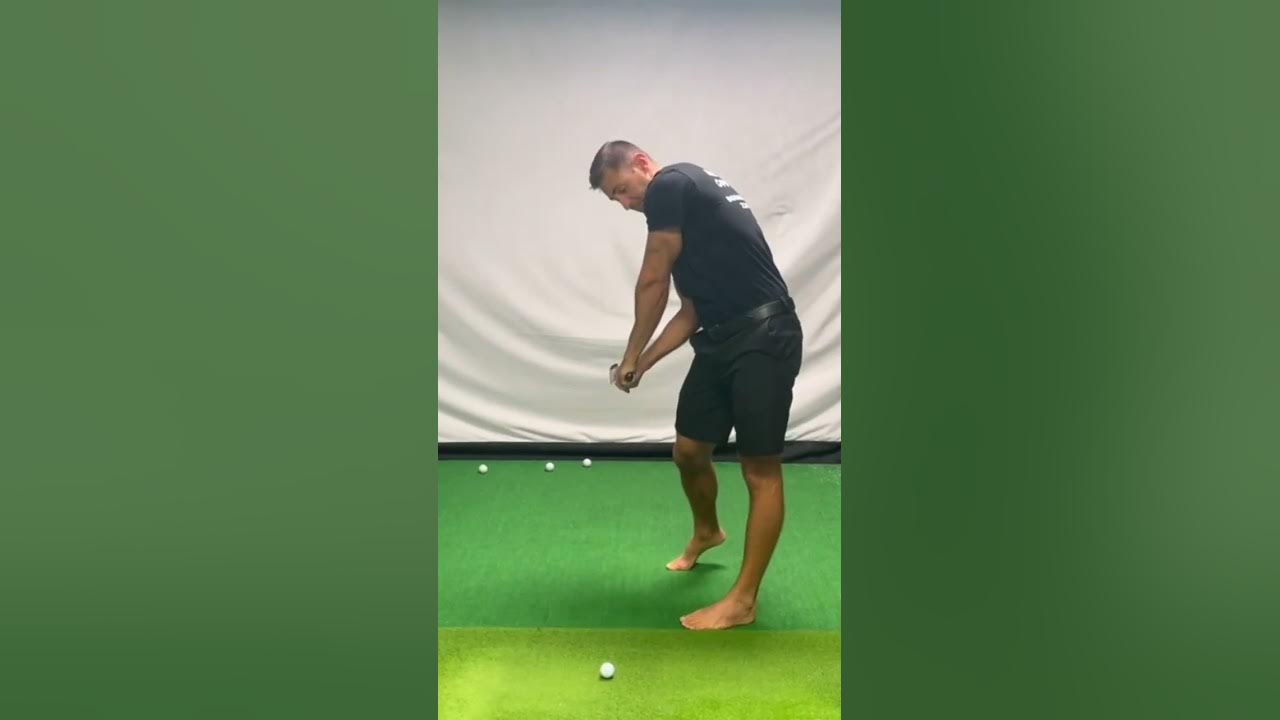
Shift and turn from the lower half until fully posted up on the lead side. Weight transferred, lead leg straightening, belt buckle rotating through toward the target.
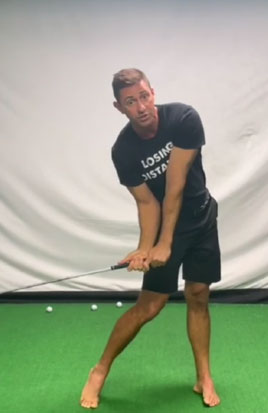
That posted up position is the goal of this drill. Not impact. Not a full follow through. Just getting to that position cleanly, with the lower body having led the entire move.
What It Looks Like From the Side
From a direct side view, the posted up position is unmistakable. The lead leg is firm, the weight is clearly over the lead side, and the upper body is still behind while the lower half has already moved through.
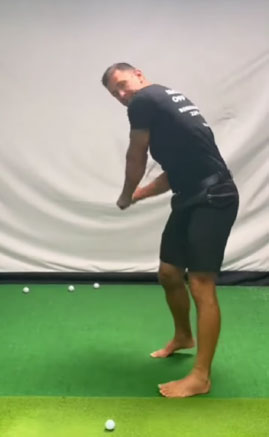
Many older amateur golfers struggle to get here. Instead of posting up, they stay stuck back on the trail side through impact. Staying stuck there makes finishing the swing impossible and is exactly what causes flipping at the ball, because the body has nowhere left to go and the hands take over to try to make something happen.
Practice getting into this posted up position on its own. Not as part of a full swing yet. Just get here, feel what it is like to be properly loaded onto the lead side, and build the motor pattern from that sensation.
Step 2, Bring the Club Head Down From There
Once the posted up position feels accessible and repeatable, here is the next step.
From that posted up position, bring the club head down.
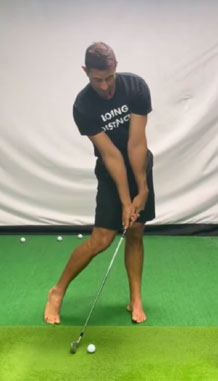
At this point, the hands should be way ahead of the club head. That gap between the hands and the club head is lag. This is exactly how lag gets built into the swing, not through any wrist manipulation or conscious holding of an angle, but through the lower body initiating first and the club head simply catching up from behind.
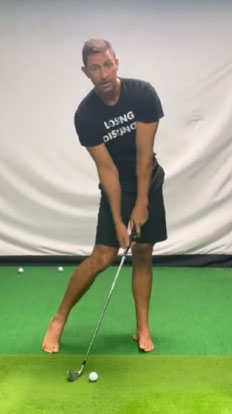
That is the full drill. Address. Top of the backswing. Initiate with the lower half. Post up on the lead side. Bring the club head down with the hands leading. That is how the downswing gets initiated correctly.
Why This Drill Works
Here is the reason this two step drill produces real results faster than most swing thoughts.
The posted up position gives the brain a concrete target instead of a vague instruction. Rather than trying to remember to initiate with the lower body during the chaos of a full speed swing, the brain practices getting to a specific physical position. That position becomes the reference point.
Once the body knows what posted up feels like, reaching for that position at the top of the backswing becomes the dominant thought, and the lower body naturally leads the way to get there. The arms and club follow passively, which is exactly when lag appears without any conscious effort to create it.
Get a Free Swing Analysis
Want to know whether the lower body is actually initiating the downswing right now, or whether the arms are still jumping in first?
Set the camera or phone up at two angles. One from the front, face on. One from behind, down the line. Film in slow motion. Swing.
Send both videos to gaindistance.com and Dr. Berman will give a free swing analysis. The first one is on him.
See exactly what the camera shows, not what the brain thinks is happening. Then there is clarity on whether the posted up position is actually being reached or whether the swing is stalling back on the trail side.
Want a Step-by-Step Blueprint?
If this resonates and the advice out there feels designed for 25-year-old tour pros, there is a simple blueprint built specifically for senior golfers.
It breaks down:
How the aging body changes Which muscles actually produce power How to gain distance without swinging harder How to improve consistency while reducing aches and pains
It is written at a fifth-grade reading level with clear visuals and practical drills that can start immediately.
A FREE digital copy is available at: 👉 gaindistance.com
No gimmicks. Just clarity on how the body should move to play better golf for years to come.
Bringing It All Together
One position. Get posted up on the lead side by initiating with the lower half from the top of the backswing. Practice getting there on its own until it feels natural. Then bring the club head down from that posted up position and watch the hands end up way ahead of the club head automatically.
That gap is lag. And lag built this way is real, repeatable, and does not require any hand tricks to maintain.
At Berman Golf, the focus is biomechanics first. Not cookie cutter swings. The goal is teaching the body how it should move, especially as it ages, so power can be generated safely and repeated under pressure.
The in-house and online coaching programs are built specifically for senior golfers who want more distance and better consistency without beating up their bodies.
For anyone tired of advice designed for tour pros and ready for a blueprint built for their body, help is available.
Because when the lower half initiates and the body posts up on the lead side, the lag takes care of itself and the club head finally arrives with real speed.
And when the club head arrives with real speed, the game gets soooooo much easier!
If you enjoyed what you read and want to see it in action, watch the video below where Dr. Berman demonstrates the full drill from address to lag!