If you’re a senior golfer dealing with back pain, shoulder stiffness, or soreness after a round, you’re probably swinging harder… not smarter.
Most aches and pains in golf aren’t caused by the number of holes you play.
They’re caused by poor biomechanics.
Here are the three most common swing mistakes that are quietly destroying senior golfers’ bodies—and the simple adjustments that can immediately reduce stress and improve performance.
Mistake #1: Rounding Your Posture at Address
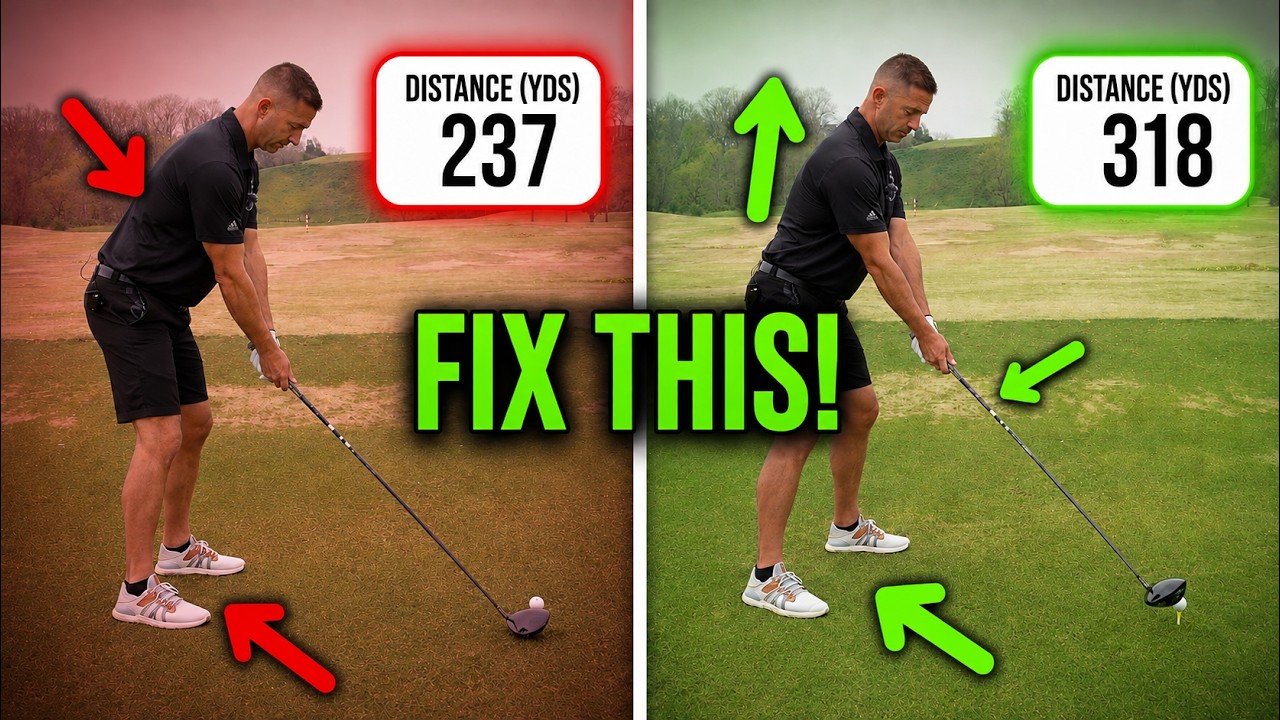
Your posture at address sets the entire swing in motion.
And nine out of ten senior golfers start in a compromised position.
Instead of maintaining spine angle, they round toward the ball.
When you round:
- Your thoracic spine (upper back) locks up
- Your shoulder turn becomes restricted
- Your body loses rotational capacity
But you still take the club back.
So where does that motion come from?
- Your lower back
- Your shoulders
Now all the stress that should be shared through your upper back and hips gets dumped into your lumbar spine and shoulders.
No wonder your back and shoulders ache.
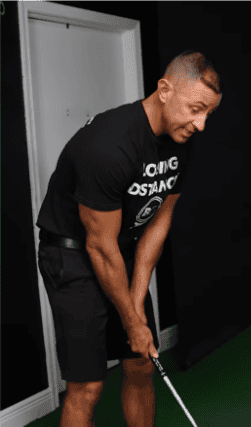
The Simple Fix: The Two-Finger Posture Drill
This drill is simple—but extremely effective.
- Place one finger on your belly button.
- Place one finger on your chest.
- Pull your belly button inward.
- Lift your chest upward.

Now hold that.
Instead of rounding down to the ball, soften your knees and push your hips backward—like you’re shutting a car door with your glutes.
That hip hinge maintains posture while allowing you to reach the ball.
Posture unlocks rotation.
Rotation reduces stress.
Bonus: Warm Up Before You Swing
If you’re struggling with posture, thoracic stiffness, or general aches and pains, a proper warm-up is non-negotiable.
A quick five-minute mobility routine before you hit balls can:
- Improve thoracic mobility
- Activate glutes
- Engage core muscles
- Reduce stress on your lower back
Simply go to seniorwarmup.com to see what I recommend!
Warming up correctly often eliminates pain before the round even starts.
Mistake #2: Initiating the Backswing With Your Hands
This one is subtle—but powerful.
Most senior golfers start their backswing with their hands.
The body stays quiet. The club moves first.
Here’s the problem:
Whatever moves first, your brain identifies as the primary mover.
If your hands initiate the backswing, your brain will default to using your hands during the downswing—even if you’ve practiced starting with your body.
That leads to:
- Flipping
- Early extension
- Loss of compression
- Overuse of shoulders
- Inconsistent contact
You cannot fix the downswing if you start the backswing incorrectly.
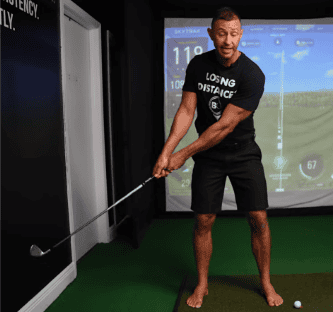
The Fix: Start With the Belt Buckle
From address, think about rotating your belt buckle first.
Let your body initiate the swing.
When the body moves first:
- Hips begin rotating
- Core engages
- Shoulders follow naturally
- Arms respond instead of dominate
That sequencing dramatically reduces stress on the shoulders and low back.

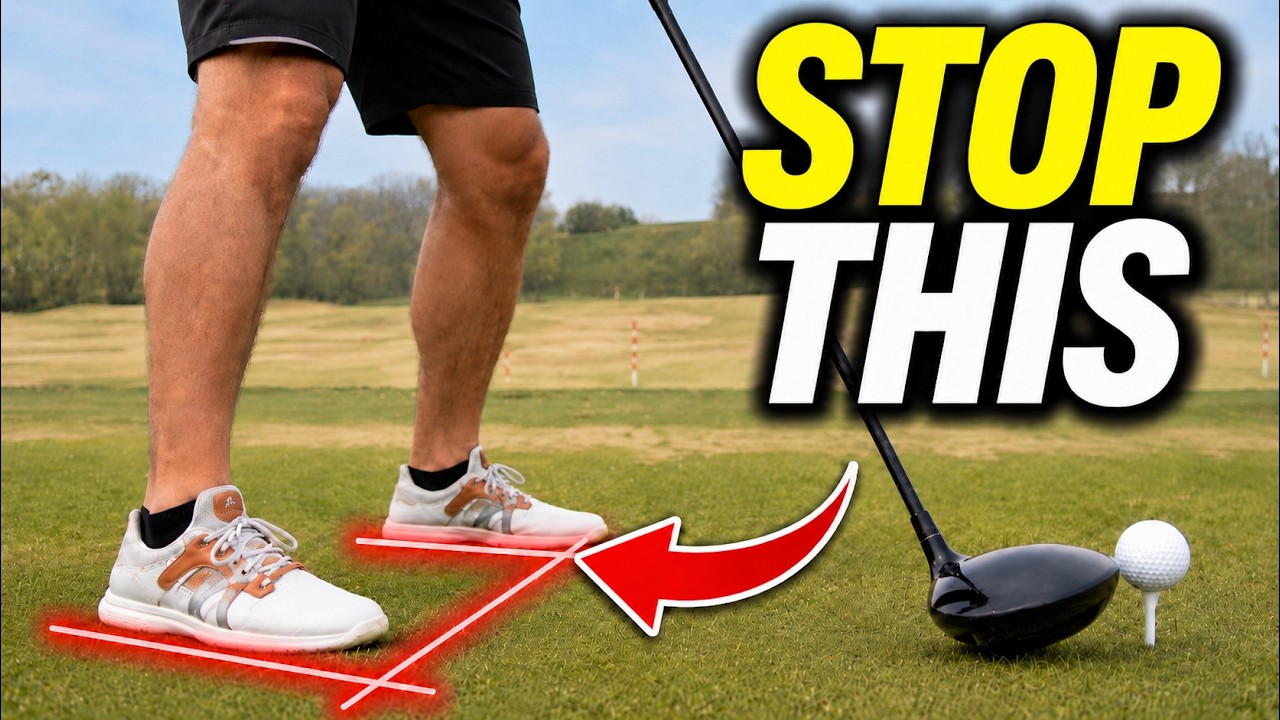
Mistake #3: Straightening the Trail Knee in the Backswing
This is one of the biggest distance killers—and one of the biggest stress creators.
As you go into the backswing, many senior golfers:
- Straighten the trail knee
- Shift laterally
- Lose glute activation
When the trail knee straightens, the glute turns off.
When the glute turns off, the lower back takes over.
And when the lower back takes over, pain follows.
The Fix: The Stress Ball Drill
All you need is:
- A small stress ball
- Or a rolled-up sock
Place it under your trail foot—just forward of the center of your arch and just behind the big toe joint.
You’re essentially cutting the ball in half with your foot.
Now, as you initiate the backswing with your belt buckle:
- Maintain flex in the trail knee
- Increase pressure into that stress ball
- Exaggerate a slight “squatty” feeling in the trail hip

If you straighten the knee, you’ll lose pressure immediately.
If you maintain flex and load correctly, you’ll feel:
- Trail glute firing
- Core engaging
- Stable spine
- Reduced strain on your lower back
When your glutes are firing, your back doesn’t have to.
When your core is active, your shoulders don’t have to overwork.
That’s how you swing with power—without pain.
Why These Adjustments Work
Pain in the golf swing usually comes from compensation.
When:
- Posture is poor
- The hands dominate
- The trail leg doesn’t load
The body finds motion somewhere else.
And that “somewhere else” is usually your lower back or shoulders.
Fixing these three issues restores proper sequencing:
- Posture unlocks thoracic rotation
- Belt buckle initiation improves timing
- Trail leg loading activates glutes and core
The result?
Less stress.
More power.
Better consistency.
The Biomechanics Advantage
As a Doctor of Physical Therapy with over 15 years of experience working specifically with senior golfers, Dr. Berman specializes in helping aging athletes generate more power and consistency through biomechanics-based movement training.
The goal isn’t to swing harder.
It’s to move efficiently.
When your body works the way it was designed to work, distance increases and pain decreases at the same time.
Want a Step-by-Step Blueprint?
If this resonates with you and you’re tired of advice designed for 25-year-old tour pros, I put together a simple blueprint specifically for senior golfers.
It breaks down:
- How the aging body changes
- Which muscles actually produce power
- How to gain distance without swinging harder
- How to improve consistency while reducing aches and pains
It’s written at a fifth-grade reading level with clear visuals and practical drills you can start immediately.
You can download a FREE digital copy at:
No gimmicks. Just clarity on how your body should move so you can play better golf for years to come.
Bringing It All Together
If you’re a senior golfer dealing with:
- Back pain
- Shoulder soreness
- Stiffness during or after rounds
Start here:
- Fix your posture.
- Initiate with your belt buckle.
- Load your trail leg correctly.
These aren’t complicated changes.
But they’re powerful.
At Berman Golf, our in-house and online programs are built specifically for senior golfers who want to move better, gain distance, improve consistency, and play more frequently without aches and pains.
Because when you swing smarter—not harder—your body lasts longer.
And your scores improve.