You’ve seen the videos. Bryson DeChambeau doing something wild with his forearm rotation, his forward press, his attack angle into the ball. And somewhere in the back of your mind, a voice says—maybe I should try that.
Here’s what I’m telling you as a Doctor of Physical Therapy who has worked with thousands of senior golfers:
No. You don’t. You really, really don’t.
This isn’t about effort or dedication. It’s about biomechanics. What Bryson does with a golf club is so far outside the physical capabilities of the average senior golfer that attempting to replicate it doesn’t just fail—it fails in ways that hurt you.
But buried inside all of that elite-level complexity is one concept every senior golfer can and should steal. We’ll get to that.
First, let’s talk about what’s actually happening.
The Low Point Problem Nobody Talks About
One of the most common patterns we see at Berman Golf is a low point that arrives before the golf ball.
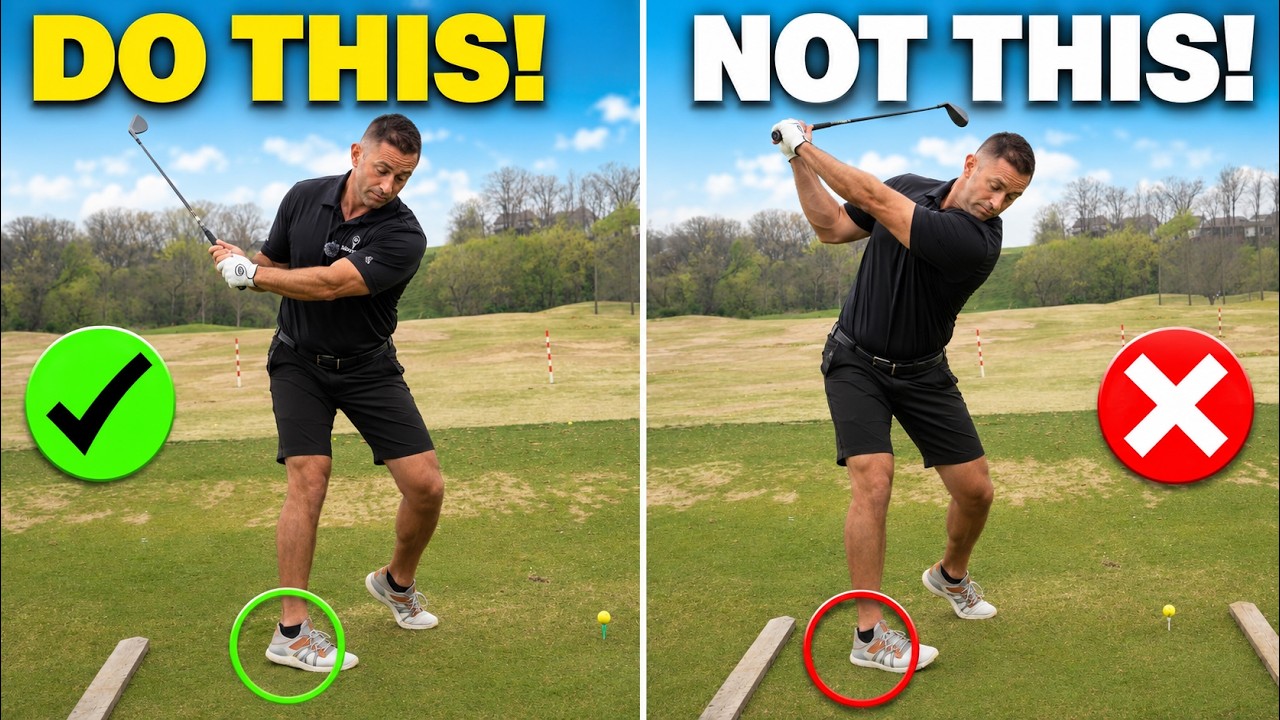
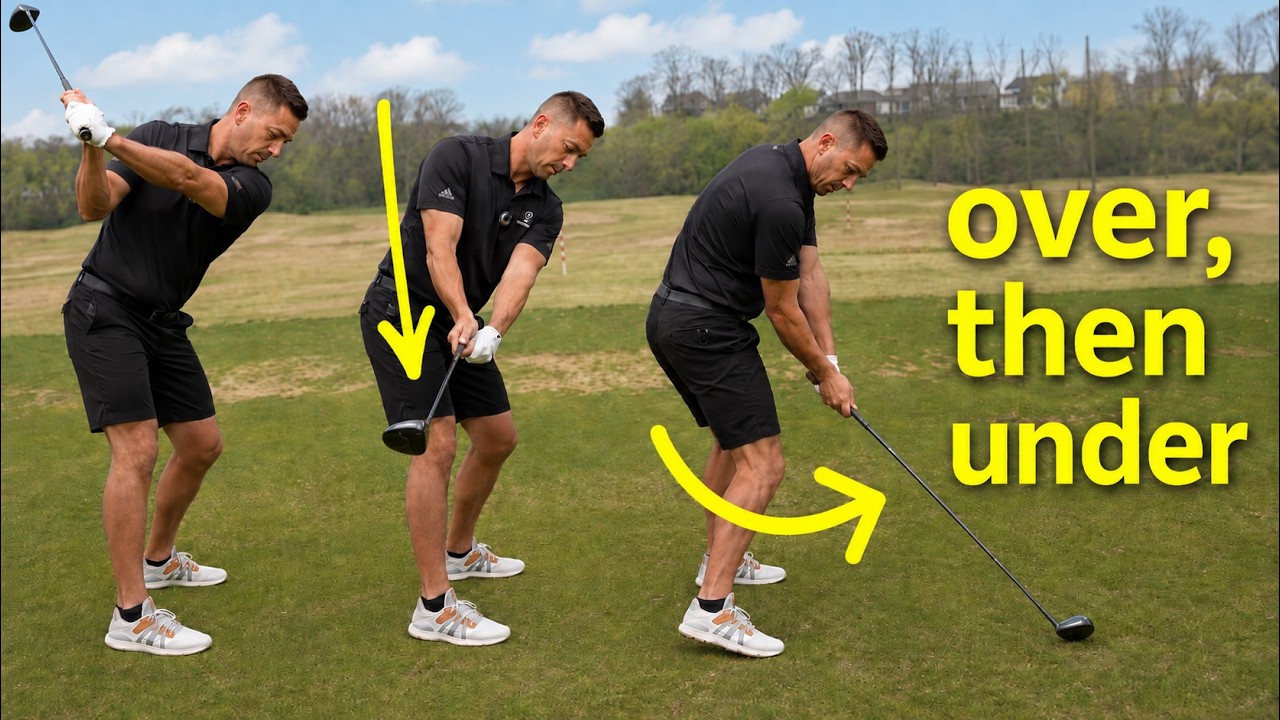
Here’s what that means in plain terms. The sternum rises. The hands get ahead of themselves. And by the time the club finally reaches the ball, the only direction it can go is up.
So instead of compressing the ball into the ground and letting the loft do its job, you’re scooping. You’re picking it. You’re lifting it into the air.
And when that pattern combines with a club face that’s wide open at impact—which it will be, because the timing is completely off—you get a shank that goes nowhere near where you were aiming.
That’s not a swing flaw. That’s a physical limitation expressing itself through the swing. And no amount of watching Bryson DeChambeau is going to fix it.
What It Actually Takes to Do What Bryson Does
Here’s the part the camera doesn’t show you.
In this footage, Bryson is working on hitting down into the ball—compressing it, creating a proper divot, making the kind of ball-first contact that generates real power and spin.
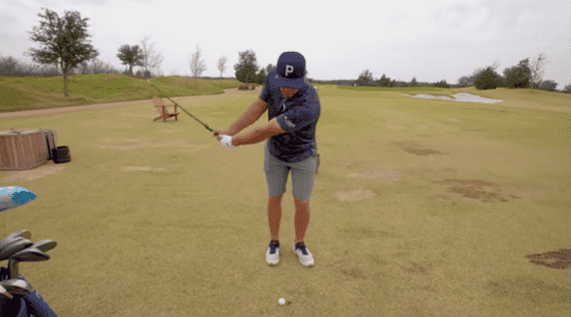
Notice something. Between one scene and the next, the sun has moved on Bryson’s face. Look at how much dirt is showing in the ground. He didn’t get this in three swings. He didn’t get it in ten. He worked through dozens and dozens of attempts—on camera, with all the resources in the world—before it clicked.
That’s the magic of the camera. It compresses time. It makes elite-level skill acquisition look achievable in an afternoon.
It isn’t.
Out of the thousands of senior golfers I’ve worked with over the years, maybe a handful could physically achieve what Bryson is doing in that video. And that’s just the physical component—not even the mental and technical pieces layered on top.
When an amateur attempts the same drill, look at what happens to the ground. Giant excavation. Divots everywhere. Dirt flying. Because the body doesn’t have the precision, the strength, or the sequencing to do what Bryson makes look effortless.
Seventy-year-old Bob should not be watching Bryson and taking notes. I say that with full respect and zero judgment—because I’d be making the same divots.
The Real Reason Feel Matters More Than Mechanics
Here’s something that doesn’t get enough attention in golf instruction.
You can think about firing your glutes all day long. You can do glute bridges. You can do squats. You can feel your glutes working perfectly in those exercises.
And then you get into a golf swing—a tri-planar, half-hinged, rotating movement—and none of that translates.
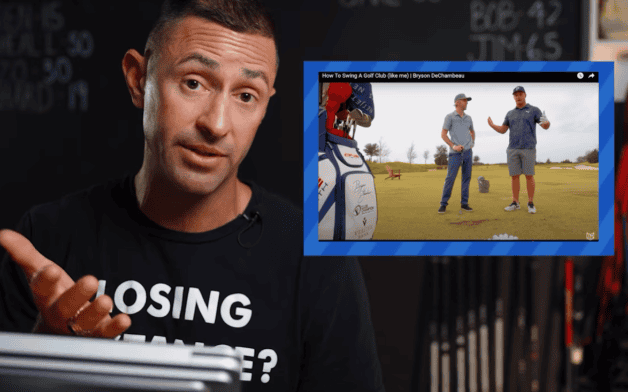
Firing your glutes in a squat and firing your glutes in a golf swing are completely different neurological events. The position is different. The load is different. The sequence is different.
Your brain has to learn to connect to that specific muscle in that specific position. Until it does, you can think about it all you want—it’s not going to happen.
That connection—brain to muscle, in the exact position the golf swing requires—is everything. When someone communicates a movement concept to you in a way that finally makes sense, and your brain lights up and the muscle actually fires at the right time, that’s when you feel it for the first time.
That’s the moment you’ve been chasing.
And you cannot get there by watching Bryson DeChambeau and trying to copy his forearm rotation.
The One Thing Every Senior Golfer CAN Take From This
Here’s the good news.
Buried at the very end of the video Bryson is filming—after all the complex mechanics, all the elite-level movement patterns, all the things that have no business being in a senior golfer’s practice plan—is one drill that actually translates.
Fairway bunker shot practice.
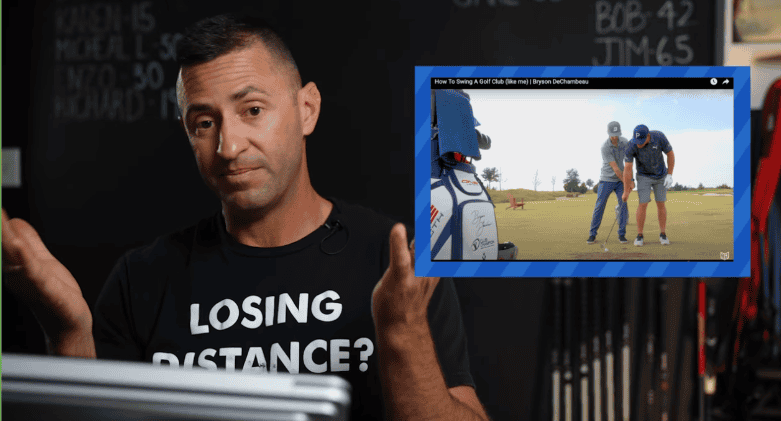
Not because it’s easy. Because it’s one of the most effective ball-striking drills available to an amateur golfer.
When you practice from a fairway bunker lie—or simulate that tight, unforgiving surface—the penalty for scooping is immediate. You can’t pick the ball up. You can’t lift it. The ground doesn’t give you any margin for error. You either hit down through the ball or you hit it fat, thin, or into the next county.
That feedback loop is extraordinarily powerful for training a proper low point. For learning what ball-first contact actually feels like. For connecting the brain to the muscles in a way that translates directly into better iron play.
Is it hard? Yes. Is it going to take repetition and patience? Absolutely. But unlike everything else in that Bryson video, this one is actually accessible to senior golfers who are willing to put in the work.
If you can develop the discipline to practice this drill consistently, your ball striking will improve. That’s not a maybe. That’s physics.
What You Need Before Any of This Works
Here’s the bottom line from a biomechanics standpoint.
You cannot show up stiff and cold and execute any of the techniques being discussed. Not the bunker drill. Not the forward press. Not the downward strike. Nothing.
The thoracic spine has to be moving. The glutes and core have to be activated. The hip mobility has to be available. Without those physical prerequisites in place before you start, all of the technique in the world sits on top of a broken foundation.
This is exactly what the free five-minute warm-up at seniorgolfwarmup.com is designed to address.
It takes you through simple, specific movements that wake up the thoracic spine, activate the glutes and core, and open the hips—so that when you step to the first tee or the driving range, your body is actually capable of doing what you’re asking it to do.
Do it right on the driving range. You won’t feel embarrassed. It takes five minutes. And the difference it makes in how freely you move for the first several holes is something you’ll feel immediately.
👉 seniorgolfwarmup.com — free, instant access, save it to your home screen.
Want a Step-by-Step Blueprint?
If this resonates with you and you’re tired of advice designed for 25-year-old tour pros, I put together a simple blueprint specifically for senior golfers.
It breaks down:
- How the aging body changes
- Which muscles actually produce power
- How to gain distance without swinging harder
- How to improve consistency while reducing aches and pains
It’s written at a fifth-grade reading level with clear visuals and practical drills you can start immediately.
You can download a FREE digital copy at: 👉 gaindistance.com
No gimmicks. Just clarity on how your body should move so you can play better golf for years to come.
Bringing It All Together
Bryson DeChambeau is a physical freak of nature who practices more hours in a week than most senior golfers practice in a month. His swing is built on a foundation of elite athleticism, obsessive repetition, and a team of professionals supporting every aspect of his physical performance.
That’s not us. And that’s okay.
What we can do is understand the principles underneath what he’s doing—compress the ball, keep the sternum moving, keep the hands in front of the chest, get the glutes and core firing in the right sequence—and then build toward those principles using drills and progressions that match what our bodies can actually do.
The bunker drill. The physical warm-up. The brain-to-muscle connection that only comes from sport-specific training in the exact positions the golf swing demands.
That’s the Berman method. Work smarter, not harder.
At Berman Golf, we focus on biomechanics first. We don’t teach cookie-cutter swings. We teach you how your body should move—especially as it ages—so you can generate power safely and repeat it under pressure.
Our in-house and online coaching programs are built specifically for senior golfers who want more distance and better consistency without beating up their bodies.
If you’re tired of advice designed for tour pros and ready for a blueprint built for your body, we’re here to help.
Because when the body moves the way it’s supposed to, the technique finally makes sense.
And when the technique finally makes sense, the game gets soooooo much easier!