

Peter is 78 years old.
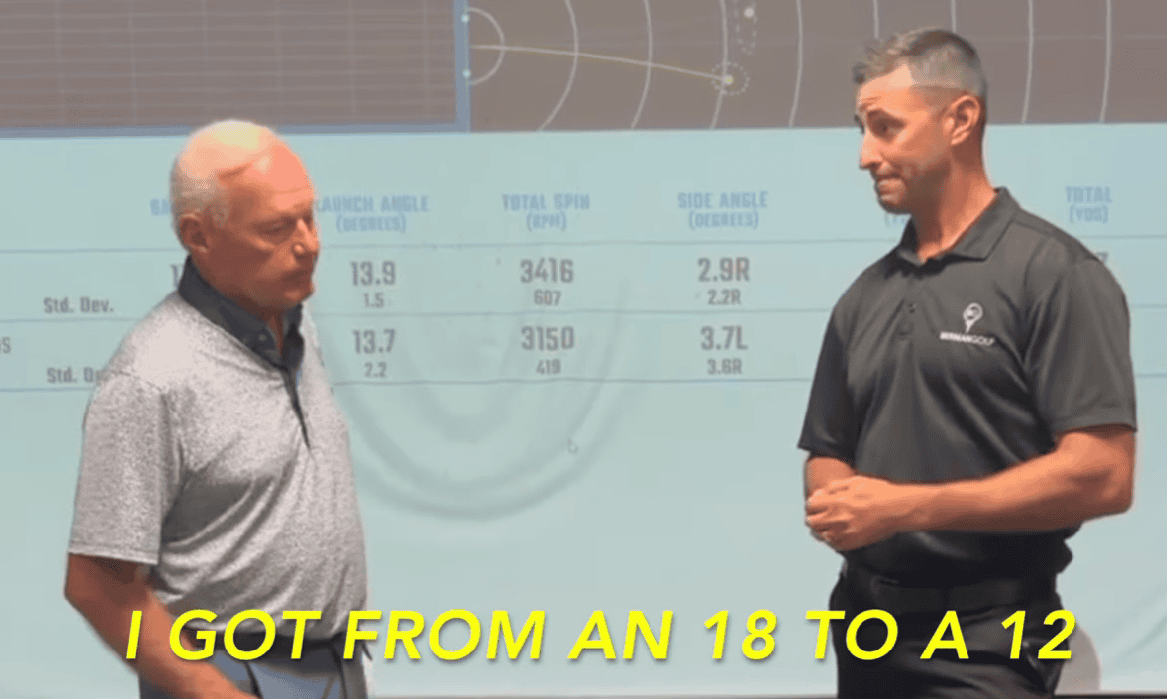
He gained 41 yards with his driver. His handicap dropped from an 18 to a 12. And he went from averaging 165 yards off the tee to consistently pounding it past 200—regularly reaching 220 yards.
We spoke with him recently. He’s now 80. Still doing it. Still hitting it 220. Still shooting great golf.
That’s not a lucky streak. That’s not a new driver. That’s what happens when you fix the right problem in the right order.
At Berman Golf, Peter’s story isn’t a miracle. It’s a blueprint. And today I’m going to break down exactly what we did—and what it means for you.
The Chicken or the Egg Problem Most Golfers Never Solve
Here’s the situation most senior golfers find themselves in.
Distance is dropping. Ball striking is inconsistent. So they try lessons. They buy a new driver. They stretch. They exercise. And nothing sticks.
The reason nothing sticks is because they’re solving the wrong problem first.
Think about using a sledgehammer to knock a tiny finish nail into your baseboard. What’s your success rate? That’s what happens when you hand an improperly fit set of clubs to a body that isn’t moving correctly yet. Wrong tool. Wrong timing. Wrong order.
Most amateur senior golfers have no idea how much their equipment affects their body’s ability to execute the golf swing. But here’s the thing—equipment isn’t the first problem to solve. It’s the second.
We have to fix the right problem at the right time.
Step One: Fix the Body First. Everything Else Waits.
When Peter started our group performance program, we didn’t touch his equipment.
Not once.
It didn’t matter if he had a brand new cutting-edge driver fresh out of the box or a set of clubs from the 1980s. We didn’t care. Because until the body is moving correctly, no club in the world is going to fix what’s wrong.
We focused entirely on one thing: how the body is supposed to work, and when.
And as a senior golfer, that matters more than it does for a 25-year-old. Your body doesn’t move the same way it did decades ago. That’s not an opinion—it’s a biomechanical reality. Which means you need more focused attention on the fundamentals, not less.
The Biggest Power Leak Nobody Is Talking About
Here’s what we discovered working with Peter—and what we’ve discovered working with every single golfer we’ve ever coached.
Zero of them—not one—had properly activated their core at address before being specifically taught how to do it.
Not the couch potato. Not the person in the best shape of their life. Not the guy who exercises six days a week. Zero.
Let that sink in.
If you are not properly activating your core at address—and then maintaining and increasing that activation through the backswing and into the transition to the downswing—power is leaking out of your swing at every single moment.
That’s the leak. That’s where Peter’s distance was going. That’s where yours is going too.
The core is not just an ab exercise. In the golf swing, it is the bridge between the lower body generating power and the upper body delivering it. When it’s not firing at the right time and in the right sequence, that bridge collapses—and the power disappears before it ever reaches the club head.

Once we taught Peter how to activate his core correctly—through the backswing, through the transition, into the downswing—everything changed.
He started moving better. He started hitting it longer. He started hitting it straighter. And he gained 41 yards.
It was a no-brainer once the body was doing its job.
Step Two: Now Match the Equipment to the New Swing
Here’s where the story gets even better.
Once Peter’s body was moving correctly, we brought in a proper custom club fitting. And this is where the chicken-or-the-egg problem becomes crystal clear.
The fitter at TrueSpec used real-time data to identify the difference between Peter’s good shots and his bad shots. That gap? Forty yards. Just from equipment mismatch alone.
With a properly matched shaft and club head—not what the marketing on the Golf Channel tells you to buy, but what the actual numbers say is right for your specific swing—Peter’s results compounded.
That’s what TrueSpec does that most fittings don’t. They’re agnostic. They’ll take five name brands, five different shafts, five different club heads, and mix and match until the numbers on the screen are the best numbers for you. Not for a tour pro. Not for the average golfer. For you.
But here’s the critical point.
That fitting only works because the body was already moving correctly. If you go get fit before your body mechanics are dialed in, you’re getting fit for a broken swing. And a club built for a broken swing doesn’t fix the swing—it just optimizes the dysfunction.
Body first. Equipment second. In that order. Always.
What Peter’s Results Actually Mean
Let’s be specific about what changed for Peter.
He went from averaging 165 yards with his driver—maybe reaching 180 on a good day—to consistently pounding it past 200 and regularly reaching 220.
His handicap went from an 18 to a 12. That’s not just a number on a scorecard. That’s the difference between lucky to shoot in the 90s and solid rounds in the 80s. That’s walking to the 19th hole feeling proud of your round instead of making excuses for it.
And it’s lasting. At 80 years old, he’s still doing it. The results didn’t fade when the program ended. Because when you fix how the body moves, the improvement becomes part of how you play—not a temporary patch.
That is a better return on investment than endless traditional lessons that cost more and deliver less. That is a better return than buying a new driver every couple of years because your buddy hit three good shots with one last round.
Fix the body. Match the equipment. Watch the scores drop.
Want a Step-by-Step Blueprint?
If this resonates with you and you’re tired of advice designed for 25-year-old tour pros, I put together a simple blueprint specifically for senior golfers.
It breaks down:
- How the aging body changes
- Which muscles actually produce power
- How to gain distance without swinging harder
- How to improve consistency while reducing aches and pains
It’s written at a fifth-grade reading level with clear visuals and practical drills you can start immediately.
You can download a FREE digital copy at: 👉 gaindistance.com
No gimmicks. Just clarity on how your body should move so you can play better golf for years to come.
Ready to Find Out What’s Possible for You?
Peter’s story is one of many on the wall at Berman Golf. But his story has a specific lesson that applies to every senior golfer reading this right now.
You don’t have a driver problem. You don’t have a lesson problem.
You have a body mechanics problem that nobody has addressed properly yet.
Fix that first. Then—and only then—match the right equipment to your new and improved swing.
When you have the right body motion and the right tool working together, everything gets easier. The scores drop faster. The distance comes back. And the game becomes fun again in a way it hasn’t been in years.
Visit bermangolf.com and book a consultation. Let’s find out what’s possible for you.
Bringing It All Together
Peter went from 165 yards to 220. From an 18 handicap to a 12. At 78 years old. Still going at 80.
None of that happened because of a new driver. None of it happened because of a random tip from a YouTube video or a quick lesson on the range.
It happened because we fixed the right problem in the right order. Body first. Core activation. Proper mechanics for an aging body. Then—once the body was doing its job—equipment that matched the swing.
At Berman Golf, we focus on biomechanics first. We don’t teach cookie-cutter swings. We teach you how your body should move—especially as it ages—so you can generate power safely and repeat it under pressure.
Our in-house and online coaching programs are built specifically for senior golfers who want more distance and better consistency without beating up their bodies.
If you’re tired of advice designed for tour pros and ready for a blueprint built for your body, we’re here to help.
Because when your body moves the right way and your equipment matches your swing, the game gets soooooo much easier!

Dr. Jake Berman