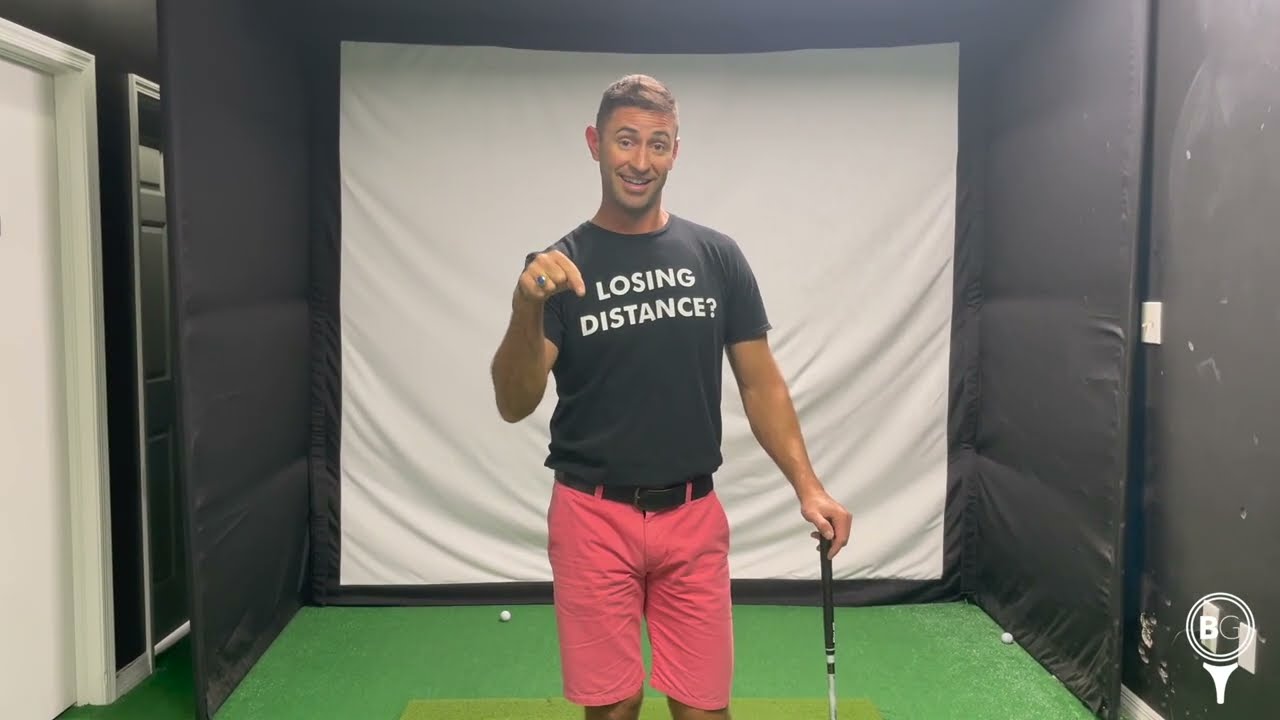
Someone is probably telling you that you need a bigger backswing.
More turn. Get that shaft parallel. Load into the back heel so the hips can rotate farther.
It sounds logical. More range of motion should equal more power, right?
Wrong.
And as a Doctor of Physical Therapy and biomechanics expert, I can tell you exactly why that advice—while well-intentioned—is quietly stealing distance from senior golfers every single day.
The “Big Backswing” Myth
Here’s what’s being taught to seniors across the country.
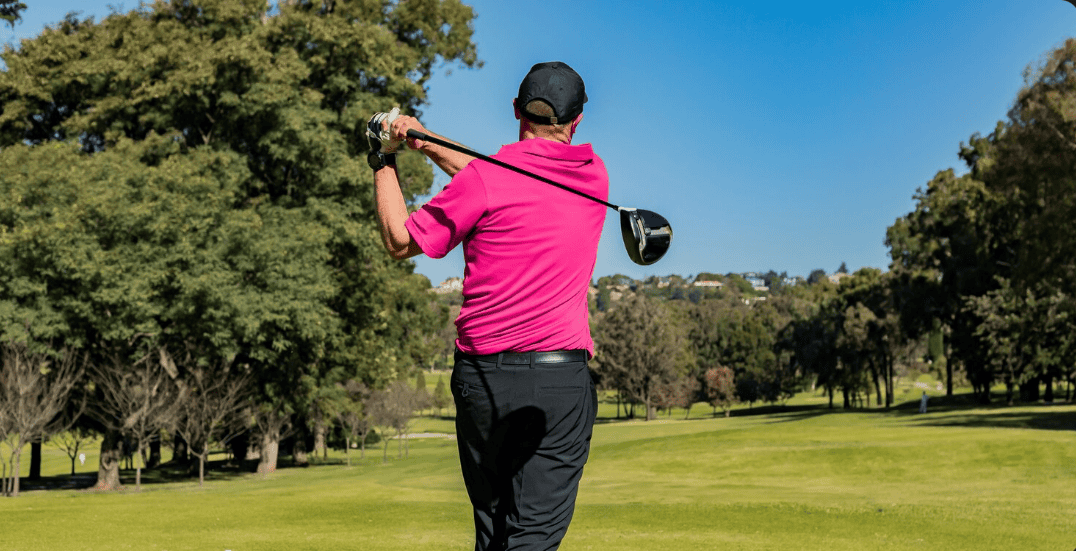
Get into the backswing, shift your weight into the back heel, let the hips turn farther, get the shoulders turning farther, and chase that big shaft-parallel position at the top—just like Dustin Johnson on tour.
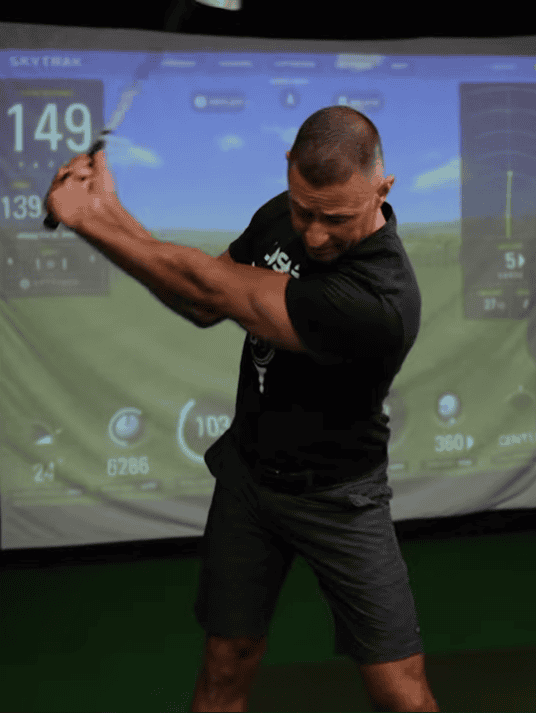
The logic makes sense on the surface. More range of motion equals more speed. More speed equals more distance.
But here’s the reality.
That position—weight in the heel, knee drifting straight—adds range of motion to the swing, yes. But it takes away the power. Because from that position, as a senior golfer, you simply cannot fire the big power muscles.
More range of motion without the ability to use it is not power. It’s just movement.
Dustin Johnson vs. Jon Rahm: The Comparison That Changes Everything
Let’s look at the two most extreme examples on tour.
Dustin Johnson has the biggest backswing in professional golf. His shaft is parallel to the ground at the top—you couldn’t get it further back if you tried.
Jon Rahm has one of the smallest backswings. His shaft barely gets past straight up and down.
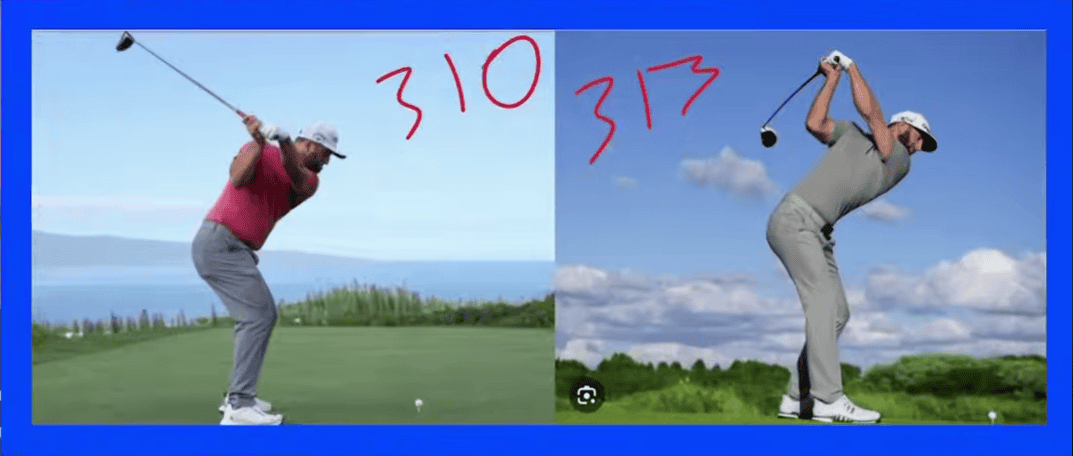
Now here’s where it gets interesting.
Dustin Johnson averages 313 yards off the tee. Jon Rahm averages 310 yards. Essentially identical distance—with completely opposite backswings.
How is that possible?
Look at their lower bodies.
Dustin Johnson’s trail knee is almost completely straight at the top of his backswing. His weight is rolling into that back heel.
Jon Rahm looks like he’s about to run through a wall. Feet flat. Knees flexed. Squatted into the ground like a lineman. His legs—famously described as tree trunks—are loaded.
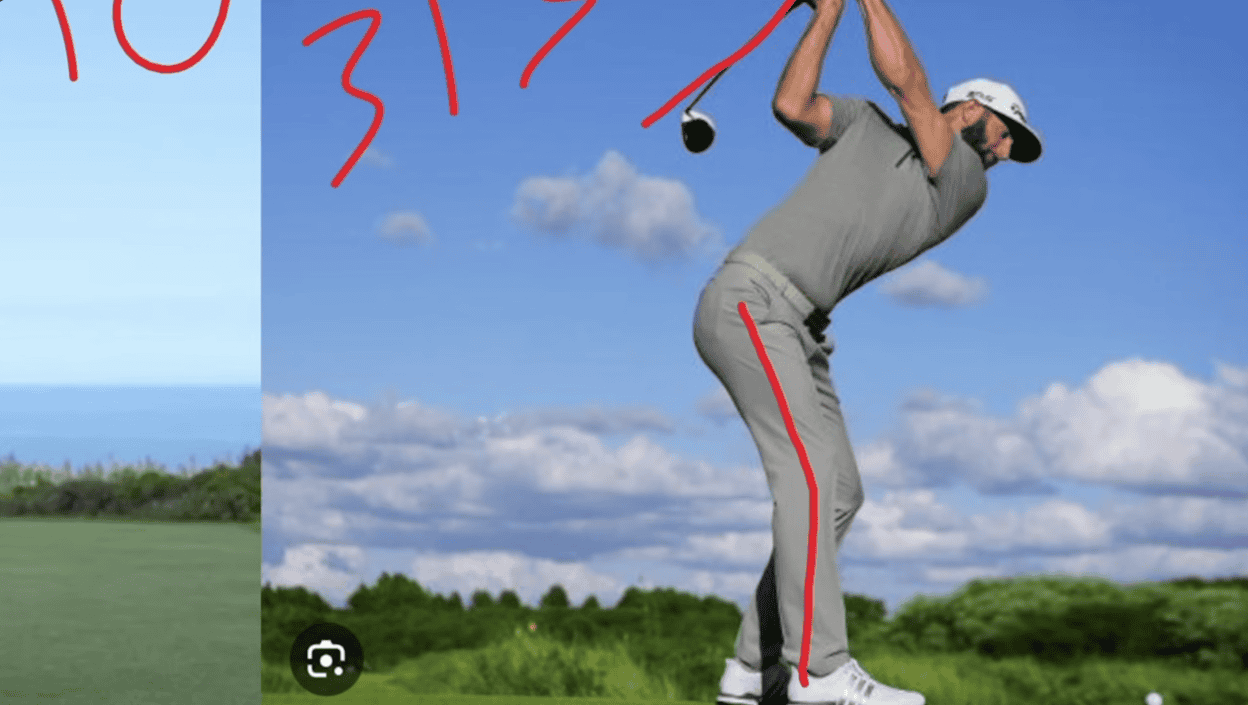
Rahm can’t physically get back like DJ does. But instead of fighting that limitation, he uses it. He loads through his right leg, generates massive power from the ground up, and explodes through the golf ball.
That’s not a weakness. That’s a blueprint for every senior golfer reading this right now.
Why Weight in the Heel Kills Power
From a pure biomechanics standpoint, this is the issue.
When your weight rolls into your back heel at the top of the backswing, you lose your connection to the ground. And when you lose your connection to the ground, you lose access to the big power muscles—the glutes, the core, the legs.
You end up with a big, wide swing that feels powerful but has nowhere to go. The body can’t fire. The hands take over. And the ball goes nowhere near as far as it should.
Senior bodies don’t move the same way they did at 25 or 30. Trying to force a Dustin Johnson backswing into a 65-year-old body doesn’t create power. It creates strain—and strips away the power that’s actually available.
The 99-Cent Tool That Fixes All of This
Here’s how to find the right muscles and train your body to load correctly.
All you need is a stress ball.
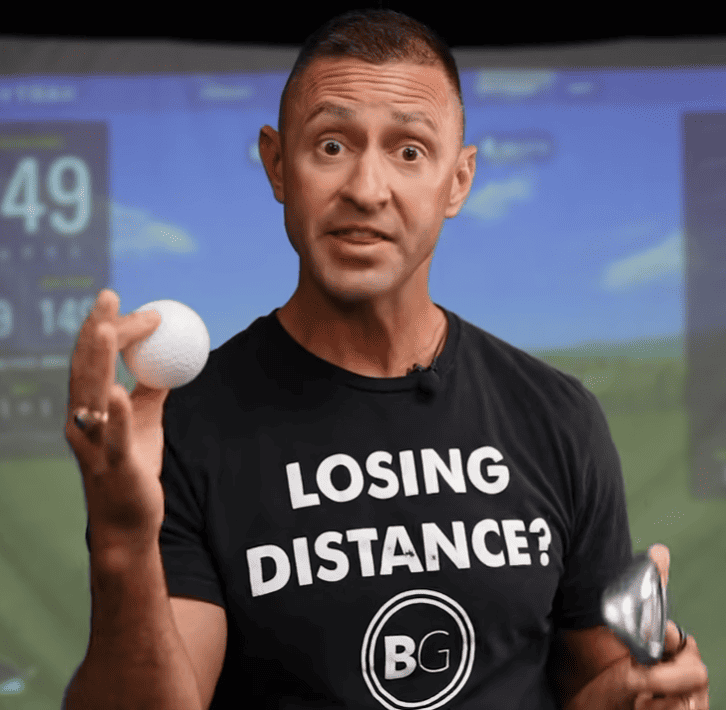
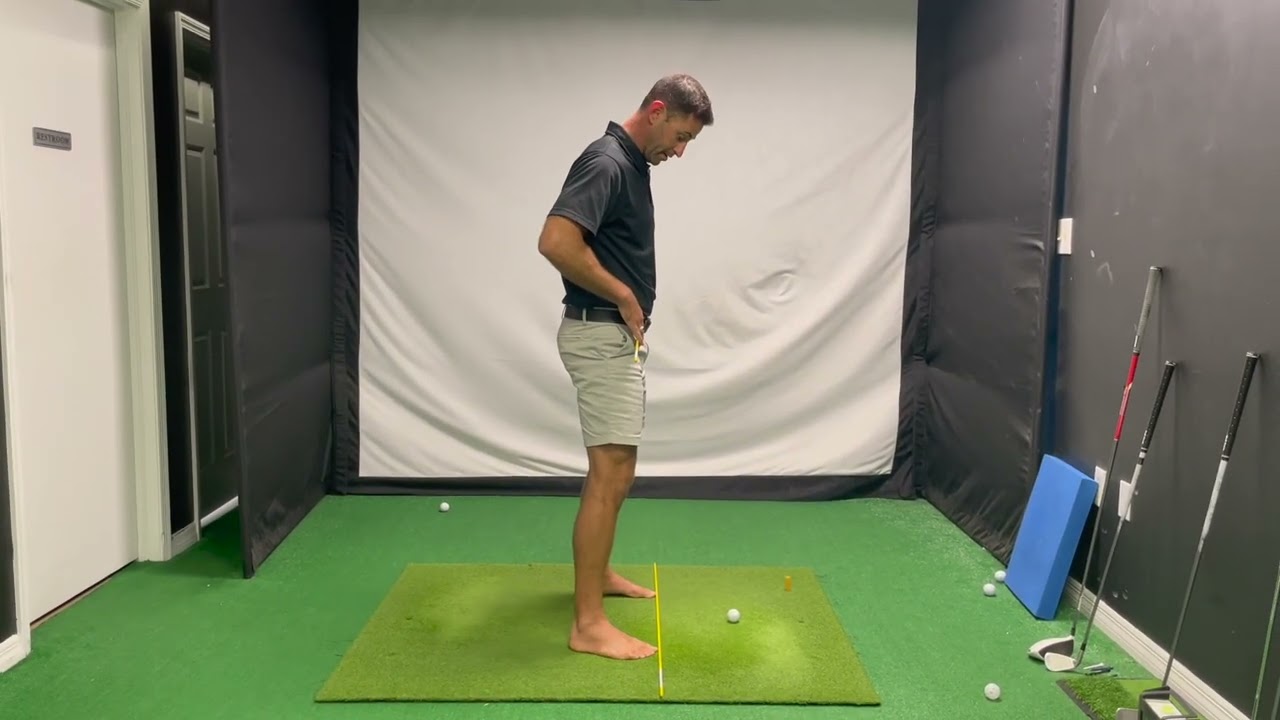
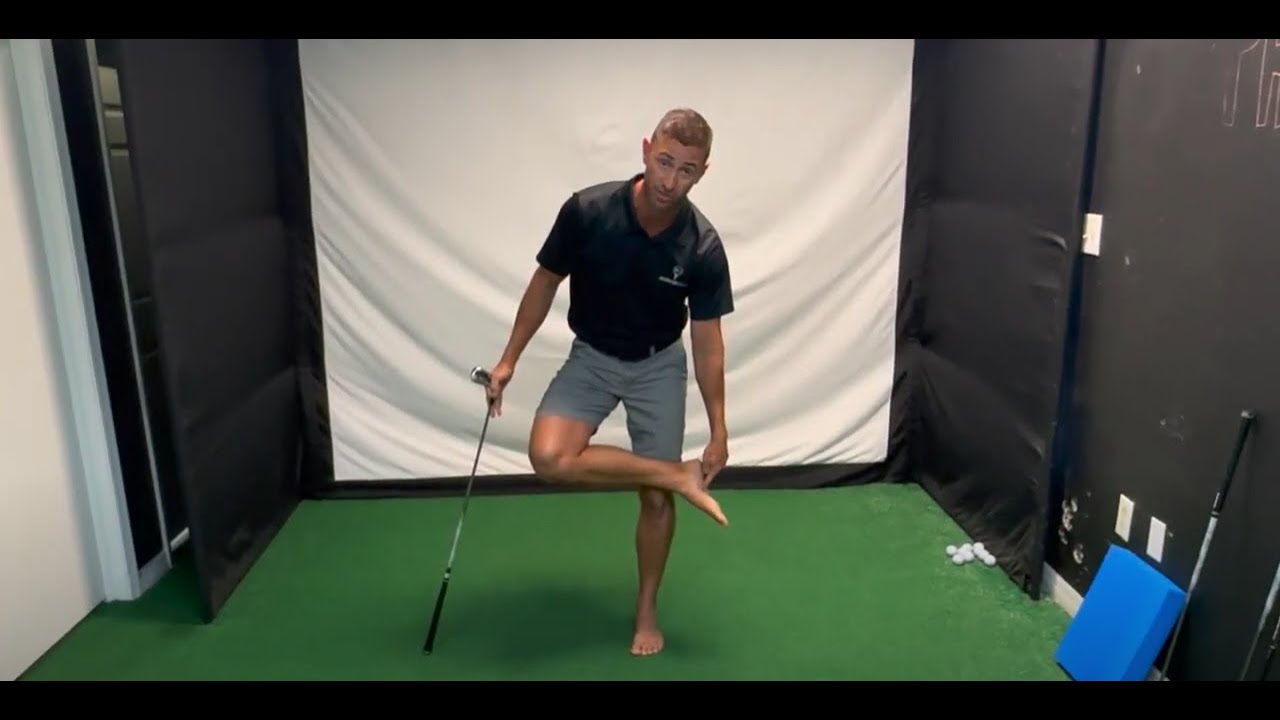
Place it under the arch of your trail foot—not in the middle of the arch, but cheated slightly forward toward the big knuckle of your foot. You want to feel it right in the ball of that arch.
You’ll need to be barefoot for this. Here’s why.
You have 16 muscles in the arch of your foot. Sixteen. If those muscles aren’t awake and activated, everything above them—the glutes, the core, the legs—struggles to do its job. The foot is the foundation of the whole power chain.
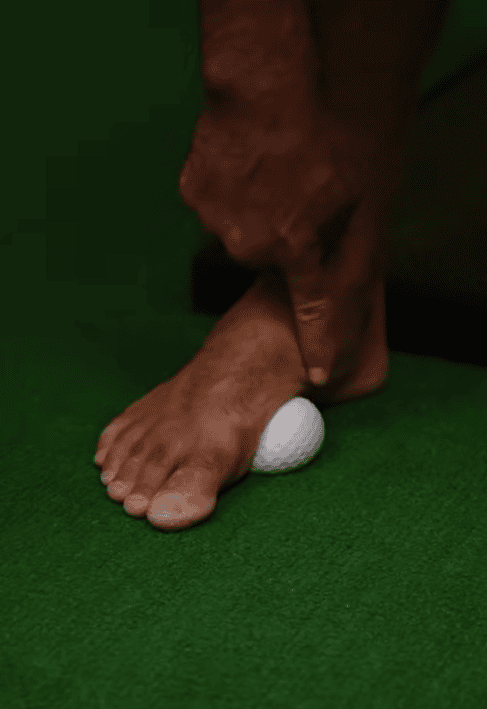
Here’s the drill:
Get into your address position. Pull your belly button in. Now try to squeeze that stress ball—squish it harder—without letting your knee buckle inward.
That last part is the key. The moment the knee caves in, you’ve lost it. The challenge is to press down and squeeze without the knee moving.
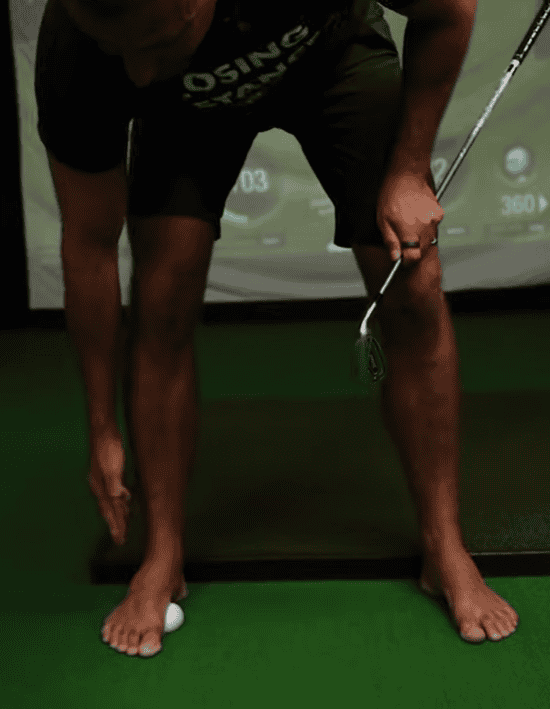
Now slowly rotate into your backswing. Belt buckle turns. Hips turn.
And here’s the moment that matters:
When your belt buckle reaches its max turn—when it physically can’t go any further—squeeze that ball even harder. Exaggerate it. Imagine you’re trying to squat down and split that ball in half.
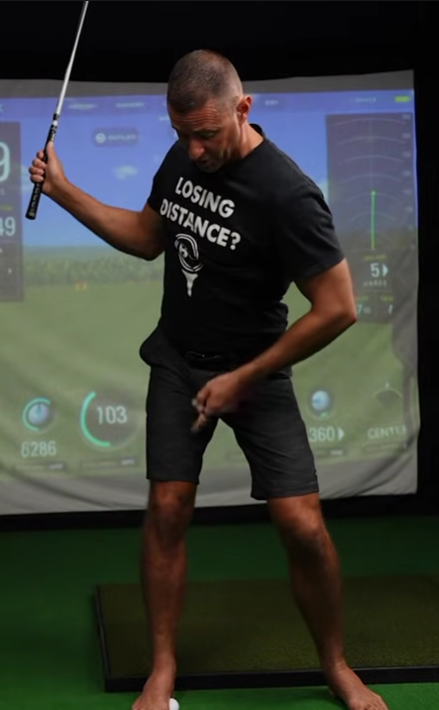
You will feel your foot muscles working. Your glutes firing. Your core activating. Everything turning on at once.
That’s the power position. That’s what you’ve been missing.
Notice what also happened: your weight didn’t roll into the heel. It did the exact opposite. Your foot stayed connected to the ground—and that connection is what allows everything above it to actually fire.
Why This Matters More as You Age
If you’re in your 20s or 30s, rolling into the heel works. Your body is athletic and flexible enough to unwind from that position and recover the power on the way down.
Senior bodies don’t move that way anymore.
And deep down, you already know that. You’ve felt it. The big backswing that used to feel powerful now feels forced. The recovery isn’t there. The ball flight doesn’t match the effort.
Stop chasing the backswing you had at 35. Start building the power position your body can actually use today.
Want a Step-by-Step Blueprint?
If this resonates with you and you’re tired of advice designed for 25-year-old tour pros, I put together a simple blueprint specifically for senior golfers.
It breaks down:
- How the aging body changes
- Which muscles actually produce power
- How to gain distance without swinging harder
- How to improve consistency while reducing aches and pains
It’s written at a fifth-grade reading level with clear visuals and practical drills you can start immediately.
You can download a FREE digital copy at: 👉 gaindistance.com
No gimmicks. Just clarity on how your body should move so you can play better golf for years to come.
One More Thing Before You Head to the Range
Don’t take this drill straight to the driving range tomorrow.
Practice the stress ball drill at home—slowly, deliberately—until the feeling becomes automatic. Until your body knows exactly what it means to load through the arch, keep the knee stable, and feel those muscles fire at the top.
Once that’s automatic, then bring it to the range.
If you skip that step, you’ll be thinking about a stress ball while trying to hit a golf ball, and it’ll be a disaster.
Build the pattern first. The range rewards the prepared.
Bringing It All Together
If you’ve been losing distance and someone told you the answer was a bigger backswing, they weren’t trying to hurt you. They just weren’t thinking about your body.
True power doesn’t come from range of motion. It comes from ground connection—from loading the right muscles in the right position so that when you unwind, everything fires together.
Jon Rahm doesn’t have a big backswing. He has a loaded one.
That’s the difference. And that’s exactly what a 99-cent stress ball can teach your body to do.
At Berman Golf, we focus on biomechanics first. We don’t teach cookie-cutter swings. We teach you how your body should move—especially as it ages—so you can generate power safely and repeat it under pressure.
Our in-house and online coaching programs are built specifically for senior golfers who want more distance and better consistency without beating up their bodies.
If you’re tired of advice designed for tour pros and ready for a blueprint built for your body, we’re here to help.
Because when your foot connects to the ground, your power muscles wake up.
And when your power muscles wake up, the game gets soooooo much easier!