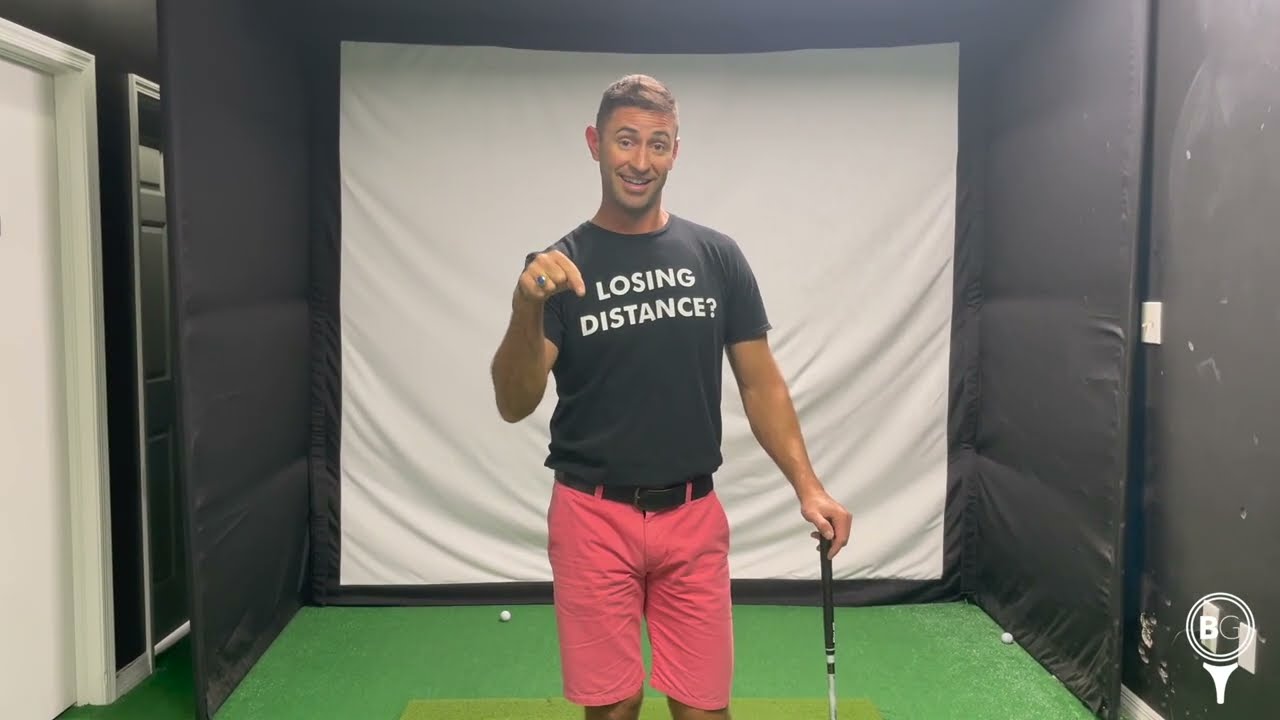
If you want to swing easier, hit it farther, and stop hurting after every round—it starts before the club ever moves.
Most senior golfers are focused on what happens during the swing. But the foundation that determines everything—distance, consistency, and how your body feels afterward—is built in the four moves that happen before and at the very start of the swing.
Get these four right and the rest of the swing has a fighting chance. Get them wrong and you’re compensating from the very first move—and paying for it in distance, ball striking, and body pain for the rest of the round.
At Berman Golf, these are the four fundamentals we address with every senior golfer we work with. And every single one of them is fixable—starting today.
Fundamental #1: Stop Squatting Down to the Ball
This is the number one most important thing that sets you up for success as a senior golfer—and the most commonly done wrong.
When you squat down to address the ball, your toes naturally lift. Your knees push forward. And the moment that happens, your hips’ ability to turn gets blocked.

Right out of the gate—before you’ve taken the club back a single inch—you’ve cut your rotation in half. And when the hips can’t turn, the body forces itself to stand up and compensate through the swing just to get any kind of turn at all.
That compensation is where everything falls apart.
Here’s the fix.
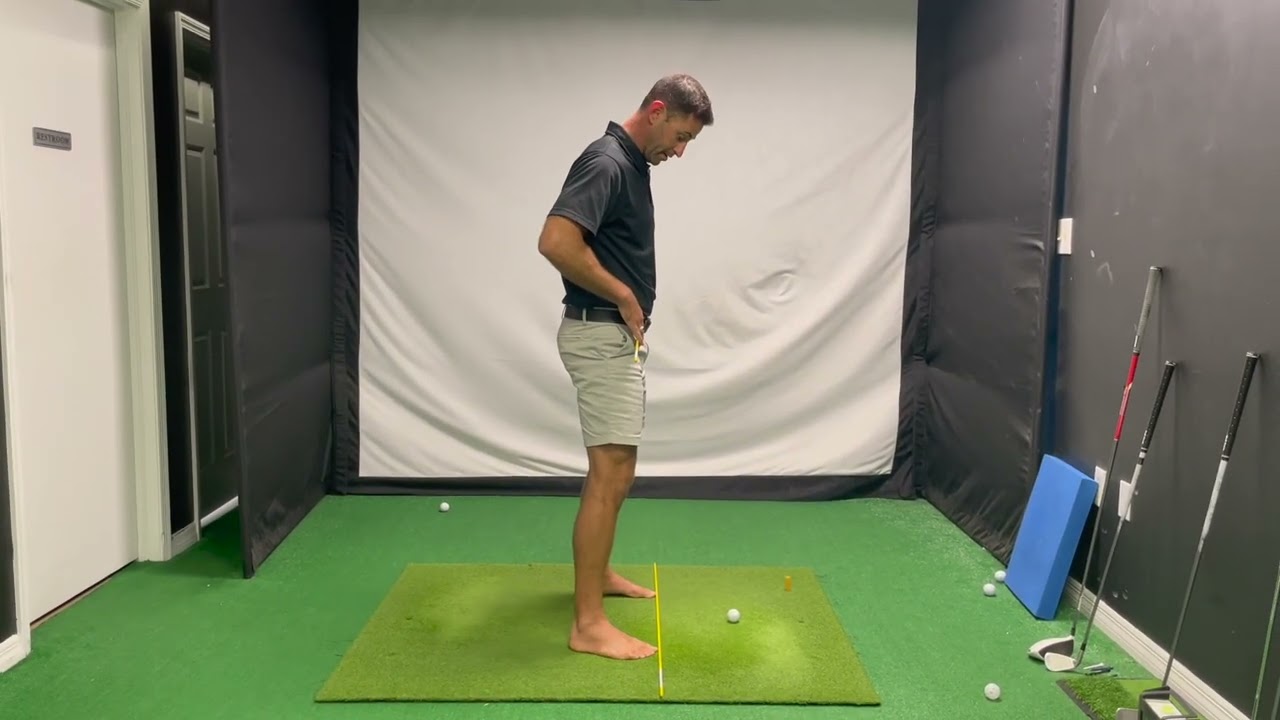
Stand tall. Soften the knees—don’t bend them, soften them. Then push your hips straight backward.

That’s a true hip hinge. It almost looks like the legs are straight—but they’re not. They’re soft. And from that position, the hips are free. The thoracic spine can rotate. The whole swing has a chance to work correctly.
Look at every tour pro who plays on Sunday. Not one of them is squatting at address. Soft knees, hips back. Every single one. That’s not a coincidence—it’s the biomechanical foundation of a swing that actually works.
Fundamental #2: Stop Closing Your Stance to Get More Turn
Here’s one of the most common pieces of wrong advice given to senior golfers.
If you want a bigger shoulder turn, close your stance. Drop that trail leg back. That will give you more room to rotate.

Please don’t do this.
A closed stance doesn’t create more shoulder turn. It creates more compensation. And you cannot add one compensation without mandatorily adding another to compensate for the first.
Here’s exactly what happens. Closing the stance brings the club back too far to the inside. When the club comes back that far inside, getting it back on the correct path on the way down becomes almost impossible. So the body goes over the top to compensate. Early extension follows to compensate for the over-the-top move. And now you’ve got three compensations all chained together—starting from one bad piece of advice at address.

You don’t need a bigger shoulder turn. You need a more efficient one.
A square stance with a properly loaded trail leg and an engaged core will produce more usable rotation than a closed stance with a wide-open compensation chain every single time.
Fundamental #3: Initiate the Backswing With the Belt Buckle, Not the Hands
Whatever moves first, the brain decides is the primary driver.
That’s not a coaching opinion. That’s neuroscience. And it has enormous implications for every golf swing you’ve ever made.

If the hands move first in the backswing—even slightly, even subtly—the brain registers the hands as the engine. And no matter how much you practice initiating the downswing with the body, no matter how many drills you do on the range trying to get the hips to clear first, it doesn’t matter. The brain already made its decision going back. The hands will fire first on the way down too.
This is why so many senior golfers who do all the right range work fall apart when it’s time to actually play. The backswing initiation undoes everything before the downswing even begins.
The fix is simple but requires retraining.
Right out of the gate, think about the belt buckle initiating the backswing. The hands and belt buckle will move at essentially the same time—but the thought has to be the belt buckle. That shifts what the brain establishes as the primary driver.

When the body leads, the brain knows the body is in charge. The downswing follows the same pattern. The hips clear. The hands drop into the slot. And the club delivers power instead of manipulation.
One thought. Enormous downstream effect.
Fundamental #4: Keep That Lead Elbow Straight at the Top
This is the hardest one. And it’s the one nine out of ten senior golfers struggle with.
At the top of the backswing, the lead elbow bends. Sometimes dramatically. Sometimes subtly. But almost universally.

And when that elbow bends, the arc collapses. The hands get pulled toward the body instead of extending away from it. Club head speed falls. The club face opens. And the consistent ball striking that requires a wide, controlled arc becomes a matter of luck rather than mechanics.
The lead elbow at the top is the last piece of the mechanical foundation—and it’s the piece that determines whether all the correct work done below it actually delivers power to the ball.
Here’s how to build it if you don’t have it yet.
Start with an alignment stick. It’s light—much lighter than a club—which means the muscles responsible for keeping the elbow straight can actually do their job without being overpowered.

Grip it like a club. Go to the top of the backswing and think about pushing your lead knuckles away from the target. Not around the body—away from the target.
That thought—away, not around—is what keeps the elbow from bending. It keeps the lead arm parallel to the ground. It wakes up the muscles that maintain the arc. And it gives you the width at the top that translates directly into more club head speed at the bottom.

Once you can hold that position comfortably with the alignment stick, move to a regular club. Then work toward doing it statically—holding the top of the backswing for five to ten seconds—until the muscles are strong enough to maintain it in a real swing.
Do not rush this step. Build the strength first. Then the swing will follow.
Why All Four Work Together
Here’s the thing about these four fundamentals—they’re not independent. They build on each other.
A proper hip hinge at address keeps the hips free to rotate. Free hips allow a square stance to work correctly without compensation. A square stance and free hips allow the belt buckle to initiate the backswing efficiently. And an efficient backswing loaded by the belt buckle gives the body the platform it needs to maintain a straight lead elbow at the top without forcing it.
Miss any one of the four and the others get harder. Get all four right and the swing becomes dramatically easier—on the brain, on the muscles, and on the body.

This is not about swinging like a 25-year-old tour pro. It’s about swinging as efficiently as possible within the body you have right now—at whatever age, with whatever flexibility you bring to the first tee.
Work smarter. Not harder.
Start Here Before You Hit a Single Ball
If you’re struggling with any of these four fundamentals—especially address posture and thoracic mobility—there’s a free resource that directly addresses the physical foundation you need.
A free five-minute warm-up video built specifically for senior golfers. Do it on the driving range before you ever tee off. You won’t feel embarrassed doing it in front of anyone. Save it to your home screen and it works like an app.
It addresses posture, hip mobility, thoracic rotation, and glute and core activation—everything that makes these four fundamentals physically possible for the body you’re working with today.
Want a Step-by-Step Blueprint?
If this resonates with you and you’re tired of advice designed for 25-year-old tour pros, I put together a simple blueprint specifically for senior golfers.
It breaks down:
- How the aging body changes
- Which muscles actually produce power
- How to gain distance without swinging harder
- How to improve consistency while reducing aches and pains
It’s written at a fifth-grade reading level with clear visuals and practical drills you can start immediately.
You can download a FREE digital copy at: 👉 gaindistance.com
No gimmicks. Just clarity on how your body should move so you can play better golf for years to come.
Bringing It All Together
The perfect golf swing for senior golfers doesn’t look like what you see on the Golf Channel. It looks like a swing that’s built correctly for the body doing the swinging.
And it starts with four fundamentals.
Soft knees, hips back—not squatting. Square stance—no closed stance compensation. Belt buckle initiating the backswing—not the hands. Lead elbow staying straight at the top—not folding across the chest.
Get these four right and the swing becomes exponentially easier. The compensations disappear. The distance comes back. The body stops hurting after the round.
At Berman Golf, we focus on biomechanics first. We don’t teach cookie-cutter swings. We teach you how your body should move—especially as it ages—so you can generate power safely and repeat it under pressure.
Our in-house and online coaching programs are built specifically for senior golfers who want more distance and better consistency without beating up their bodies.
If you’re tired of advice designed for tour pros and ready for a blueprint built for your body, we’re here to help.
Because when the four fundamentals are in place, everything downstream gets easier.
And when everything gets easier, the game gets soooooo much easier!